
1.155.742
kiadvánnyal nyújtjuk Magyarország legnagyobb antikvár könyv-kínálatát

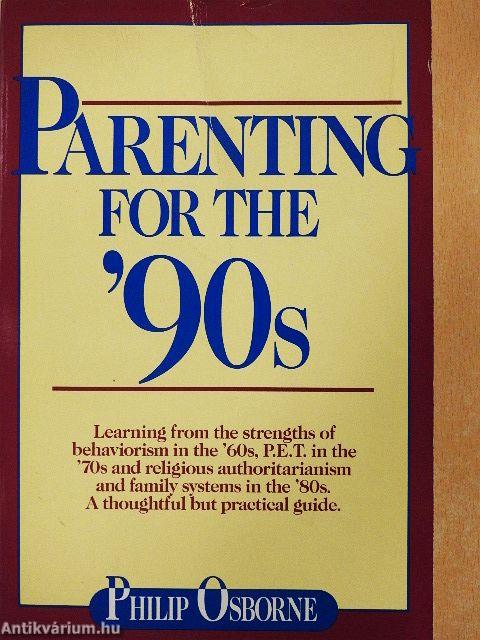
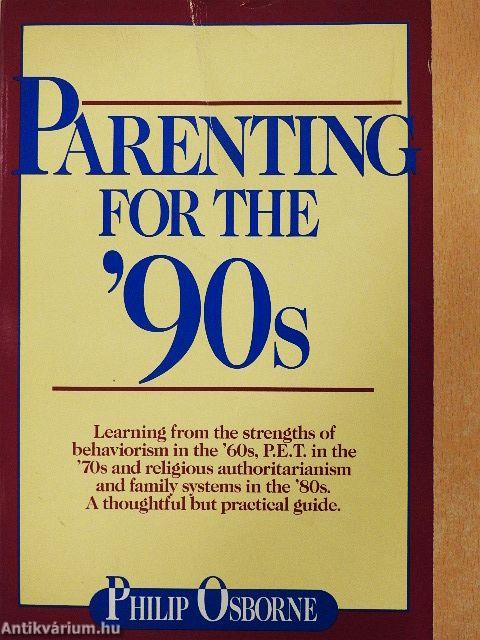
Parenting for the '90s
Learning from the strengths of behaviorism in the '60s, P.E.T. in the '70s and religious authoritarianism and family systems in the '80s. A thoughtful but practical guide

London
| Kiadó: | Good Books Limited |
|---|---|
| Kiadás helye: | London |
| Kiadás éve: | |
| Kötés típusa: | Varrott papírkötés |
| Oldalszám: | 317 oldal |
| Sorozatcím: | |
| Kötetszám: | |
| Nyelv: | Angol |
| Méret: | 23 cm x 15 cm |
| ISBN: | 0-934672-73-3 |
Értesítőt kérek a kiadóról
A beállítást mentettük,
naponta értesítjük a beérkező friss
kiadványokról
naponta értesítjük a beérkező friss
kiadványokról
A beállítást mentettük,
naponta értesítjük a beérkező friss
kiadványokról
naponta értesítjük a beérkező friss
kiadványokról
Előszó
Tovább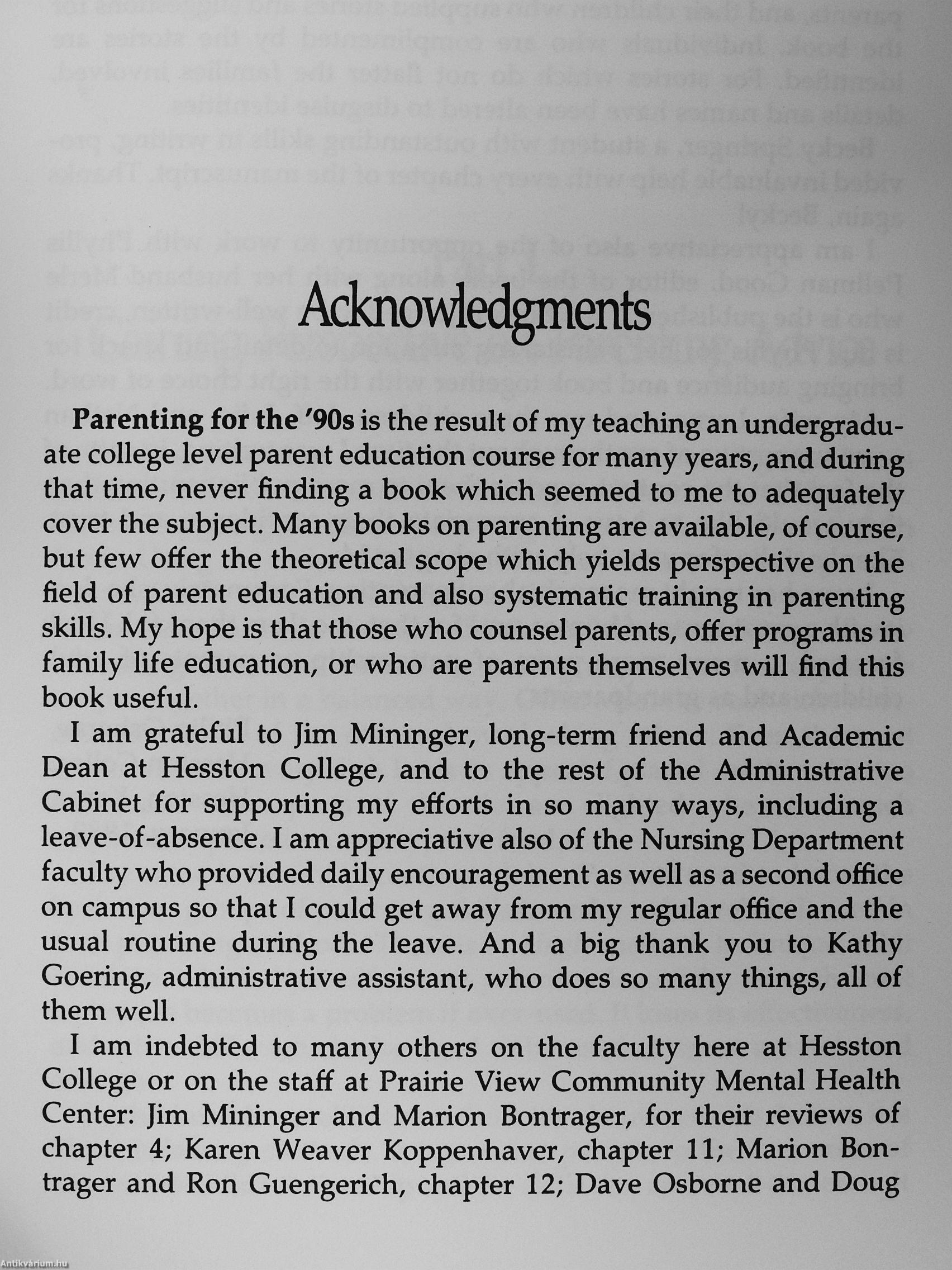
Fülszöveg
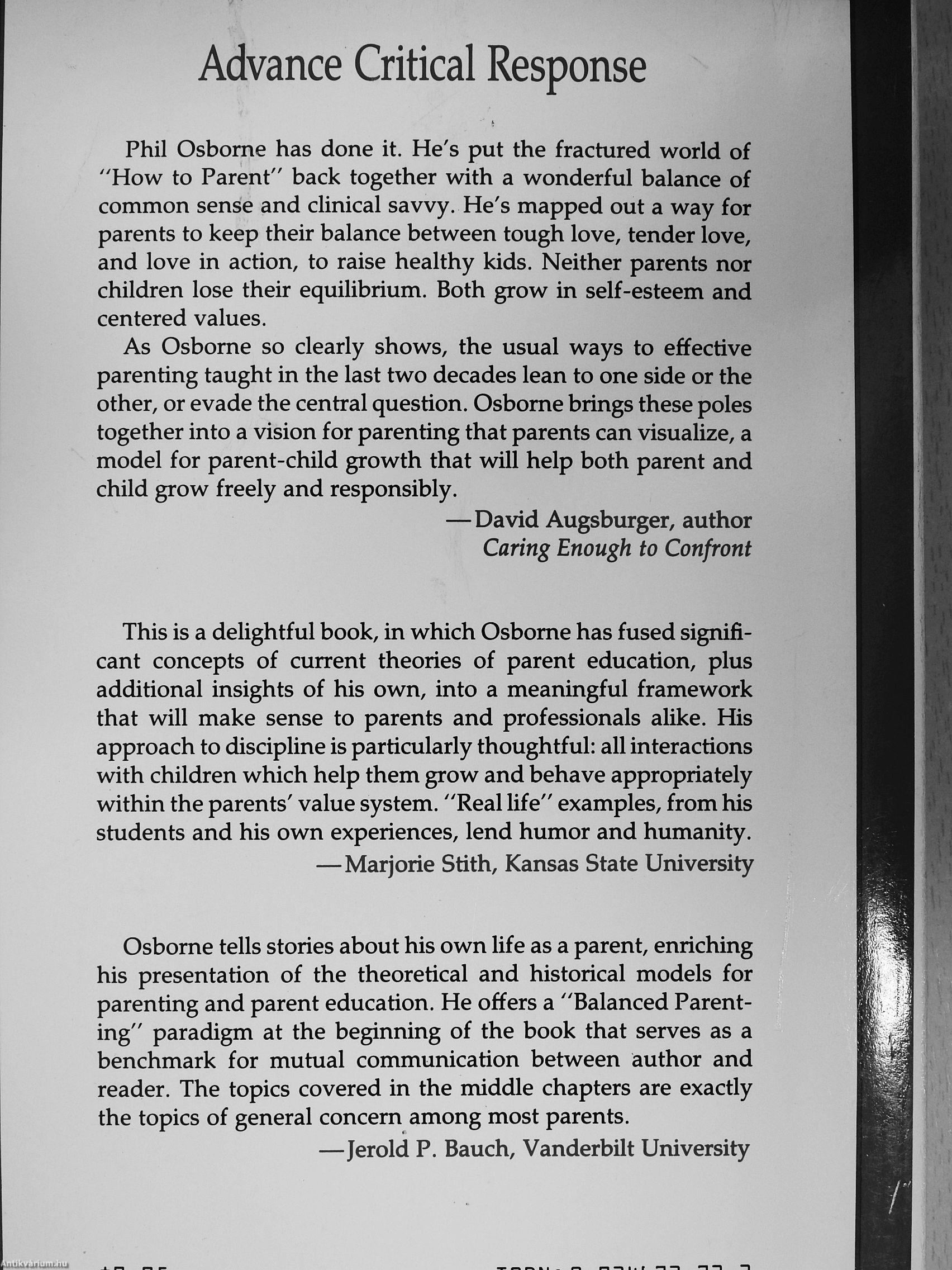
Advance Critical Response
Phil Osbome has done it. He's put the fractured world of "How to Parent" back together with a wonderful balance of common sense and clinical savvy. He's mapped out a way for parents to keep their balance between tough love, tender love, and love in action, to raise healthy kids. Neither parents nor children lose their equilibrium. Both grow in self-esteem and centered values.
As Osborne so clearly shows, the usual ways to effective parenting taught in the last two decades lean to one side or the other, or evade the central question. Osbome brings these poles together into a vision for parenting that parents can visualize, a model for parent-child growth that will help both parent and child grow freely and responsibly.
—David Augsburger, author Caring Enough to Confront
This is a delightful book, in which Osbome has fused significant concepts of current theories of parent education, plus additional insights of his own, into a meaningful framework that... Tovább
Fülszöveg
Advance Critical Response
Phil Osbome has done it. He's put the fractured world of "How to Parent" back together with a wonderful balance of common sense and clinical savvy. He's mapped out a way for parents to keep their balance between tough love, tender love, and love in action, to raise healthy kids. Neither parents nor children lose their equilibrium. Both grow in self-esteem and centered values.
As Osborne so clearly shows, the usual ways to effective parenting taught in the last two decades lean to one side or the other, or evade the central question. Osbome brings these poles together into a vision for parenting that parents can visualize, a model for parent-child growth that will help both parent and child grow freely and responsibly.
—David Augsburger, author Caring Enough to Confront
This is a delightful book, in which Osbome has fused significant concepts of current theories of parent education, plus additional insights of his own, into a meaningful framework that will make sense to parents and professionals alike. His approach to discipline is particularly thoughtful: all interactions with children which help them grow and behave appropriately within the parents' value system. "Real life" examples, from his students and his own experiences, lend humor and humanity.
—Marjorie Stith, Kansas State University
Osborne tells stories about his own life as a parent, enriching his presentation of the theoretical and historical models for parenting and parent education. He offers a "Balanced Parenting" paradigm at the beginning of the book that serves as a benchmark for mutual communication between author and reader. The topics covered in the middle chapters are exactly the topics of general concem among most parents.
—Jerold P. Bauch, Vanderbilt University Vissza
Témakörök
Philip Osborne
Philip Osborne műveinek az Antikvarium.hu-n kapható vagy előjegyezhető listáját itt tekintheti meg: Philip Osborne könyvek, művekMegvásárolható példányok
Állapotfotók
Állapot:
Jó
3.580 ,-Ft
18
pont kapható
Kosárba
 Folytatás Microsoft-tal