
1.155.113
kiadvánnyal nyújtjuk Magyarország legnagyobb antikvár könyv-kínálatát

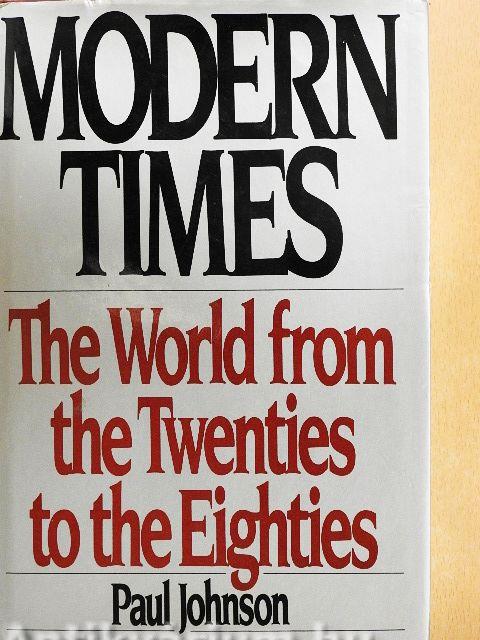
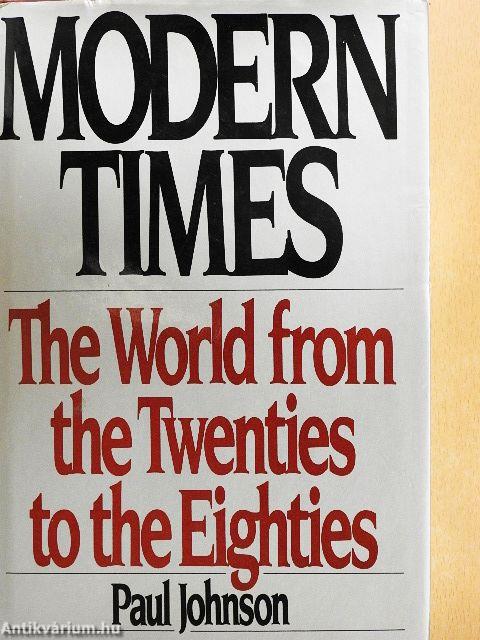
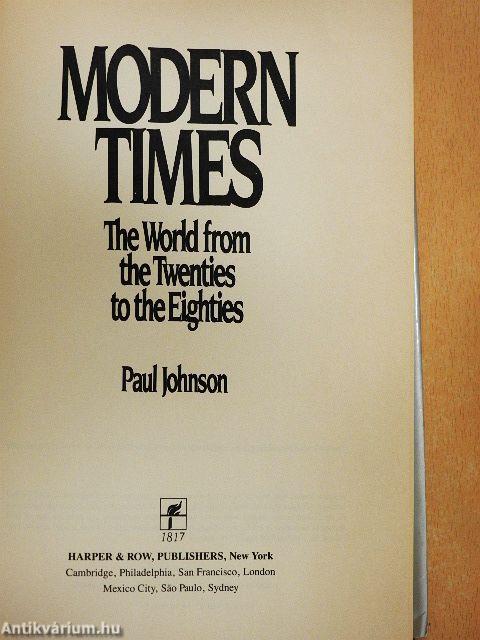
Modern Times
The World from the Twenties to the Eighties
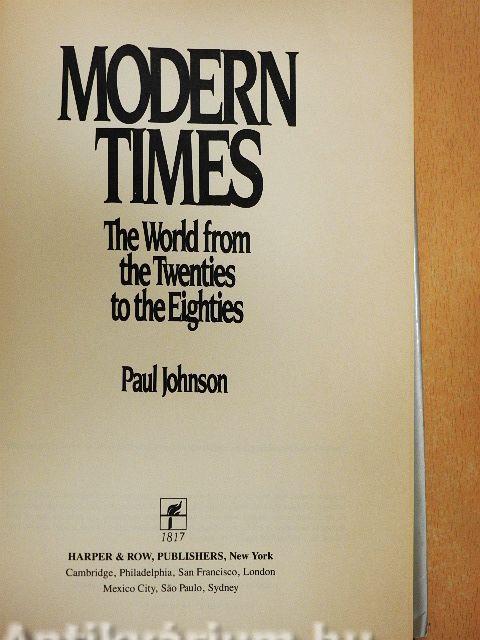
New York
| Kiadó: | Harper & Row, Publishers |
|---|---|
| Kiadás helye: | New York |
| Kiadás éve: | |
| Kötés típusa: | Vászon |
| Oldalszám: | 817 oldal |
| Sorozatcím: | |
| Kötetszám: | |
| Nyelv: | Angol |
| Méret: | 24 cm x 16 cm |
| ISBN: | 0-06-015159-5 |
Értesítőt kérek a kiadóról
A beállítást mentettük,
naponta értesítjük a beérkező friss
kiadványokról
naponta értesítjük a beérkező friss
kiadványokról
A beállítást mentettük,
naponta értesítjük a beérkező friss
kiadványokról
naponta értesítjük a beérkező friss
kiadványokról
Előszó
Tovább
Fülszöveg
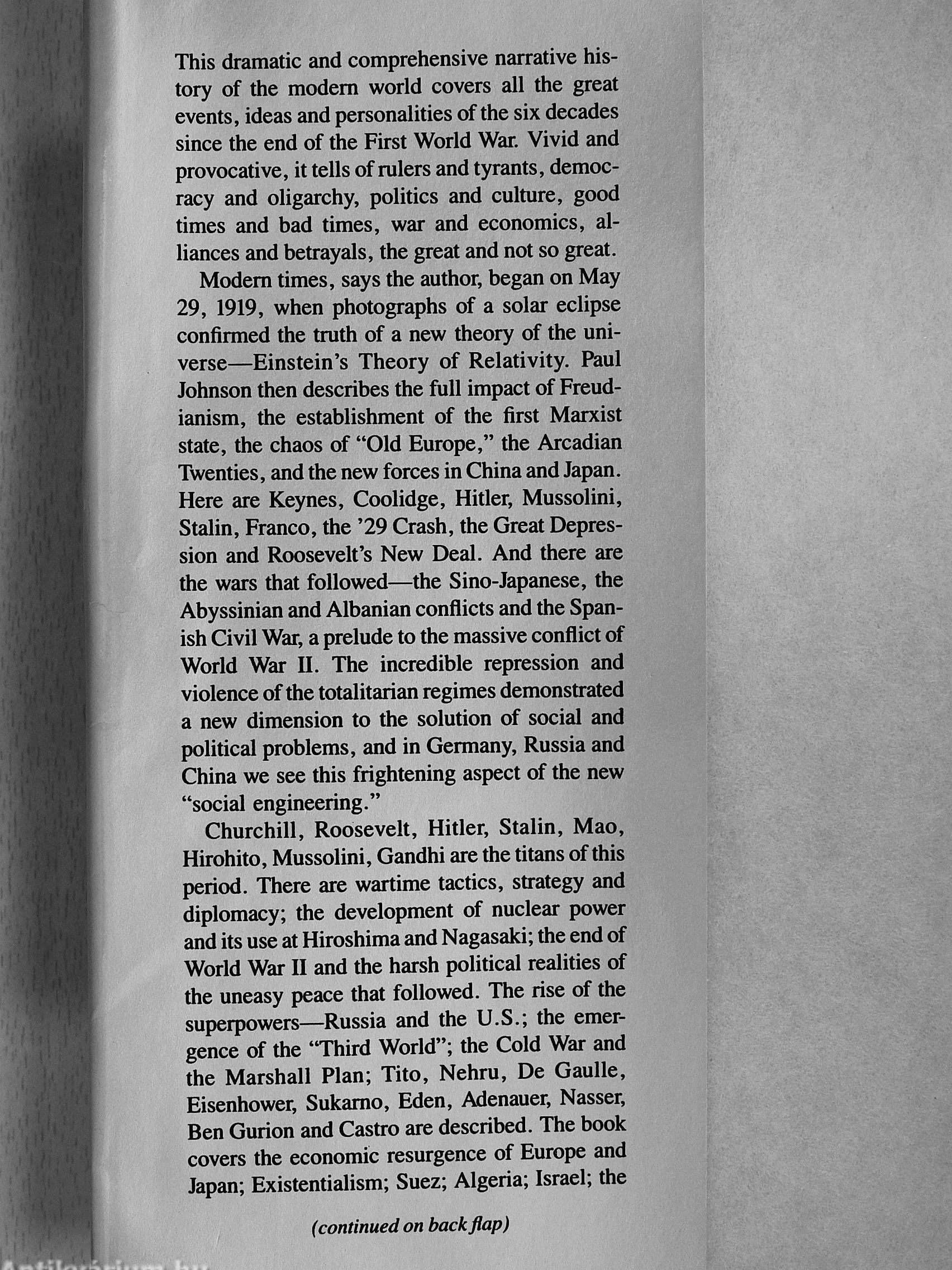
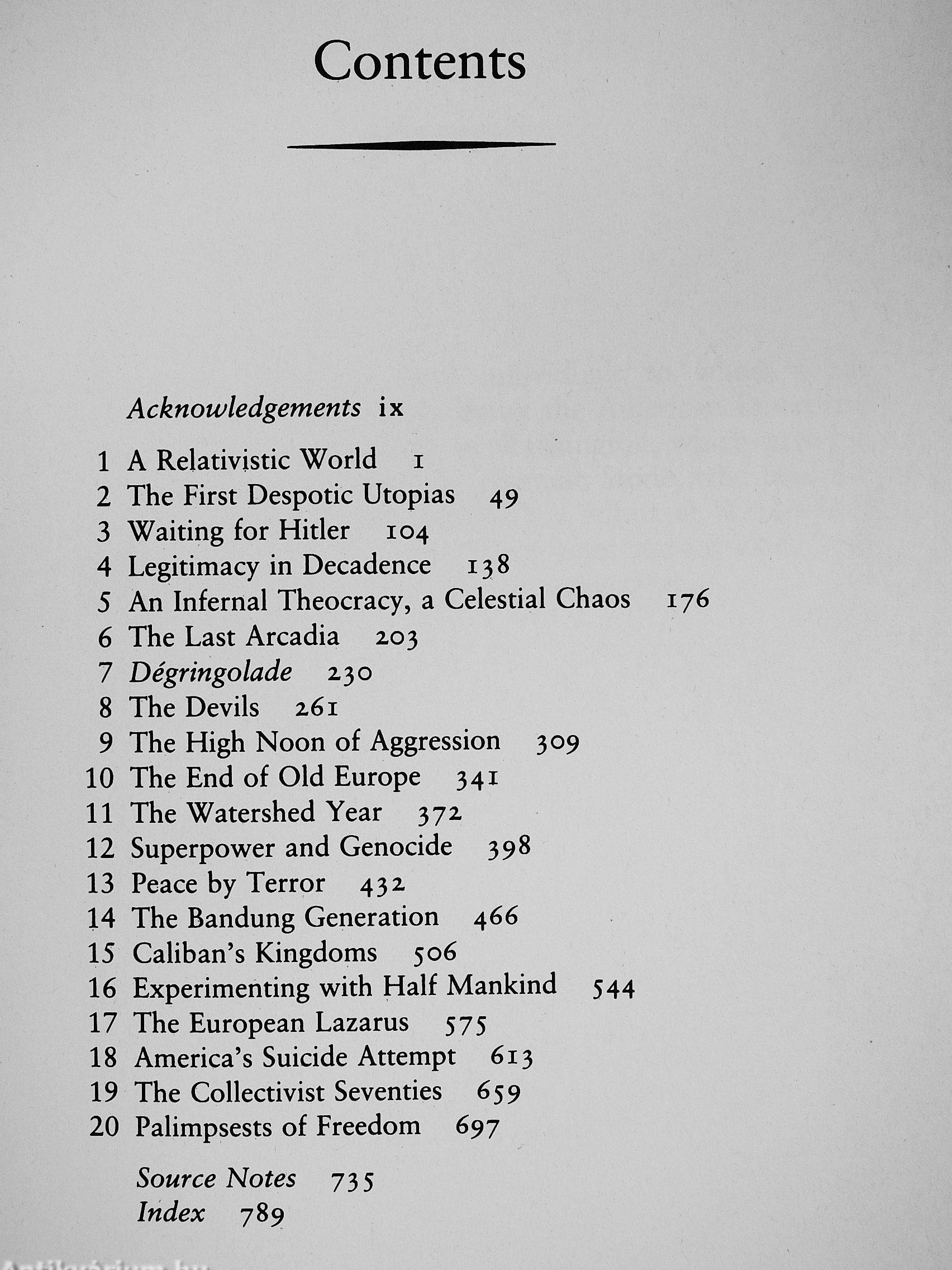
This dramatic and comprehensive narrative history of the modem world covers all the great events, ideas and personalities of the six decades since the end of the First World War. Vivid and provocative, it tells of rulers and tyrants, democracy and oligarchy, politics and culture, good times and bad times, war and economics, alliances and betrayals, the great and not so great.
Modem times, says the author, began on May 29, 1919, when photographs of a solar eclipse confirmed the truth of a new theory of the universe—Einstein's Theory of Relativity. Paul Johnson then describes the full impact of Freud-ianism, the establishment of the first Marxist state, the chaos of "Old Europe," the Arcadian Twenties, and the new forces in China and Japan. Here are Keynes, Coolidge, Hitler, Mussolini, Stalin, Franco, the '29 Crash, the Great Depression and Roosevelt's New Deal. And there are the wars that followed—the Sino-Japanese, the Abyssinian and Albanian conflicts and the Spanish Civil War,... Tovább
Fülszöveg
This dramatic and comprehensive narrative history of the modem world covers all the great events, ideas and personalities of the six decades since the end of the First World War. Vivid and provocative, it tells of rulers and tyrants, democracy and oligarchy, politics and culture, good times and bad times, war and economics, alliances and betrayals, the great and not so great.
Modem times, says the author, began on May 29, 1919, when photographs of a solar eclipse confirmed the truth of a new theory of the universe—Einstein's Theory of Relativity. Paul Johnson then describes the full impact of Freud-ianism, the establishment of the first Marxist state, the chaos of "Old Europe," the Arcadian Twenties, and the new forces in China and Japan. Here are Keynes, Coolidge, Hitler, Mussolini, Stalin, Franco, the '29 Crash, the Great Depression and Roosevelt's New Deal. And there are the wars that followed—the Sino-Japanese, the Abyssinian and Albanian conflicts and the Spanish Civil War, a prelude to the massive conflict of World War II. The incredible repression and violence of the totalitarian regimes demonstrated a new dimension to the solution of social and political problems, and in Germany, Russia and China we see this frightening aspect of the new "social engineering."
Churchill, Roosevelt, Hitler, Stalin, Mao, Hirohito, Mussolini, Gandhi are the titans of this period. There are wartime tactics, strategy and diplomacy; the development of nuclear power and its use at Hiroshima and Nagasaki; the end of World War II and the harsh political realities of the uneasy peace that followed. The rise of the superpowers—Russia and the U.S.; the emergence of the "Third Worid"; the Cold War and the Marshall Plan; Tito, Nehru, De Gaulle, Eisenhower, Sukarno, Eden, Adenauer, Nasser, Ben Gurion and Castro are described. The book covers the economic resurgence of Europe and Japan; Existentialism; Suez; Algeria; Israel; the
(continued on back flap)
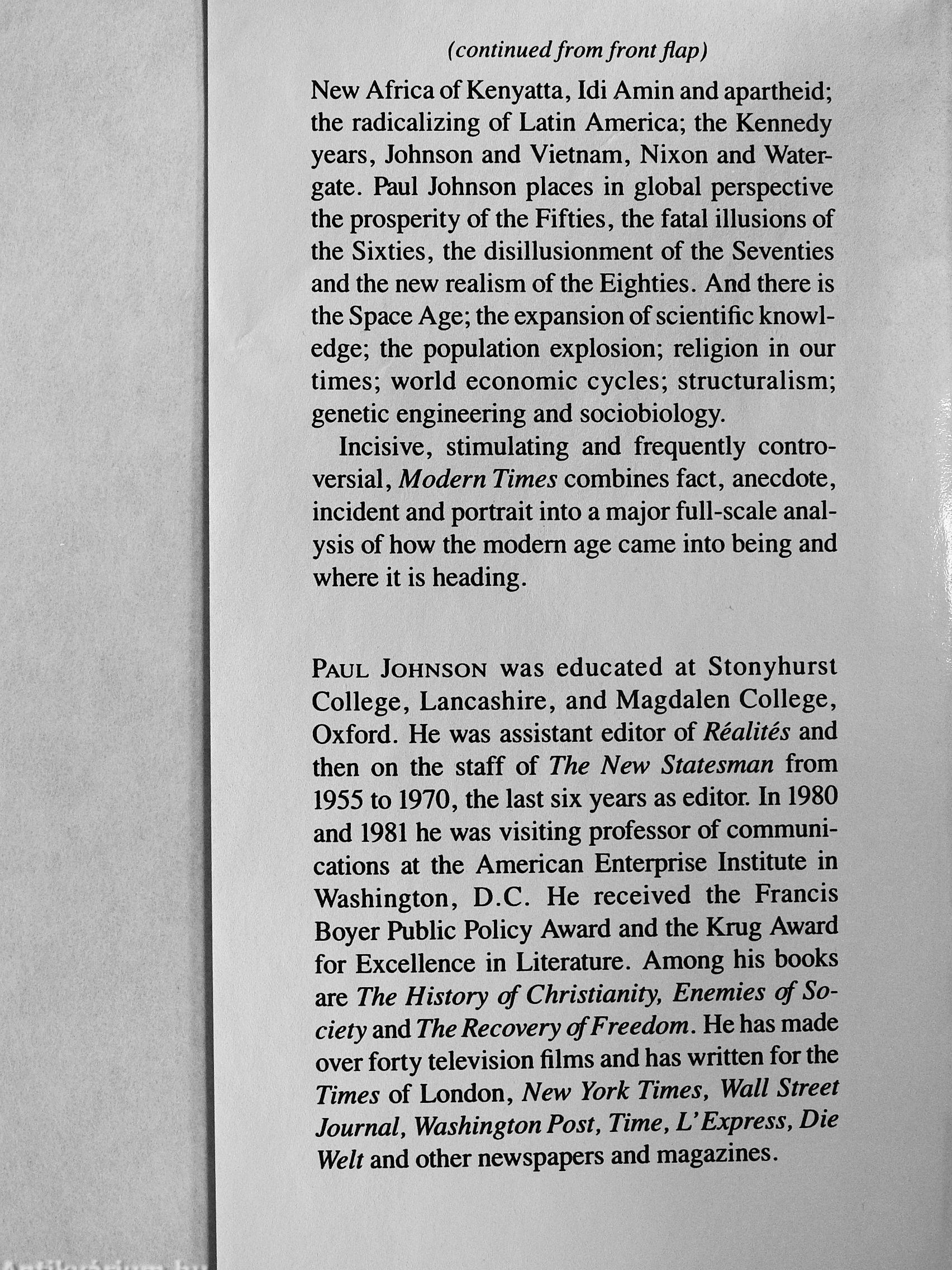
(continued from front flap)
New Africa of Kenyatta, Idi Amin and apartheid; the radicahzing of Latin America; the Kennedy years, Johnson and Vietnam, Nixon and Watergate. Paul Johnson places in global perspective the prosperity of the Fifties, the fatal illusions of the Sixties, the disillusionment of the Seventies and the new realism of the Eighties. And there is the Space Age; the expansion of scientific knowledge; the population explosion; religion in our times; world economic cycles; structuralism; genetic engineering and sociobiology.
Incisive, stimulating and frequently controversial, Modern Times combines fact, anecdote, incident and portrait into a major full-scale analysis of how the modem age came into being and where it is heading.
Paul Johnson was educated at Stonyhurst College, Lancashire, and Magdalen College, Oxford. He was assistant editor of Réalités and then on the staff of The New Statesman from 1955 to 1970, the last six years as editor. In 1980 and 1981 he was visiting professor of communications at the American Enterprise Institute in Washington, D.C. He received the Francis Boyer Public Policy Award and the Krug Award for Excellence in Literature. Among his books are The History cf Christianity, Enemies cf Society and The Recovery cf Freedom. He has made over forty television films and has written for the Times of London, New York Times. Wall Street Journal, Washington Post, Time, L'Express, Die Welt and other newspapers and magazines. Vissza
Témakörök
Paul Johnson
Paul Johnson műveinek az Antikvarium.hu-n kapható vagy előjegyezhető listáját itt tekintheti meg: Paul Johnson könyvek, művekMegvásárolható példányok
Állapotfotók
Állapot:
Jó
8.900 ,-Ft
45
pont kapható
Kosárba
 Folytatás Microsoft-tal