
1.119.662
kiadvánnyal nyújtjuk Magyarország legnagyobb antikvár könyv-kínálatát

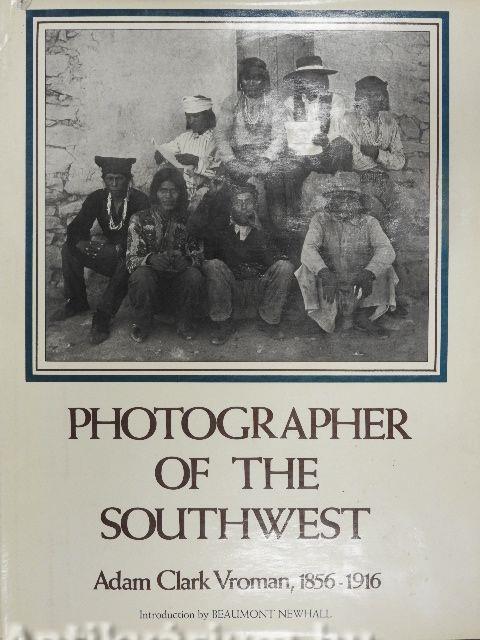
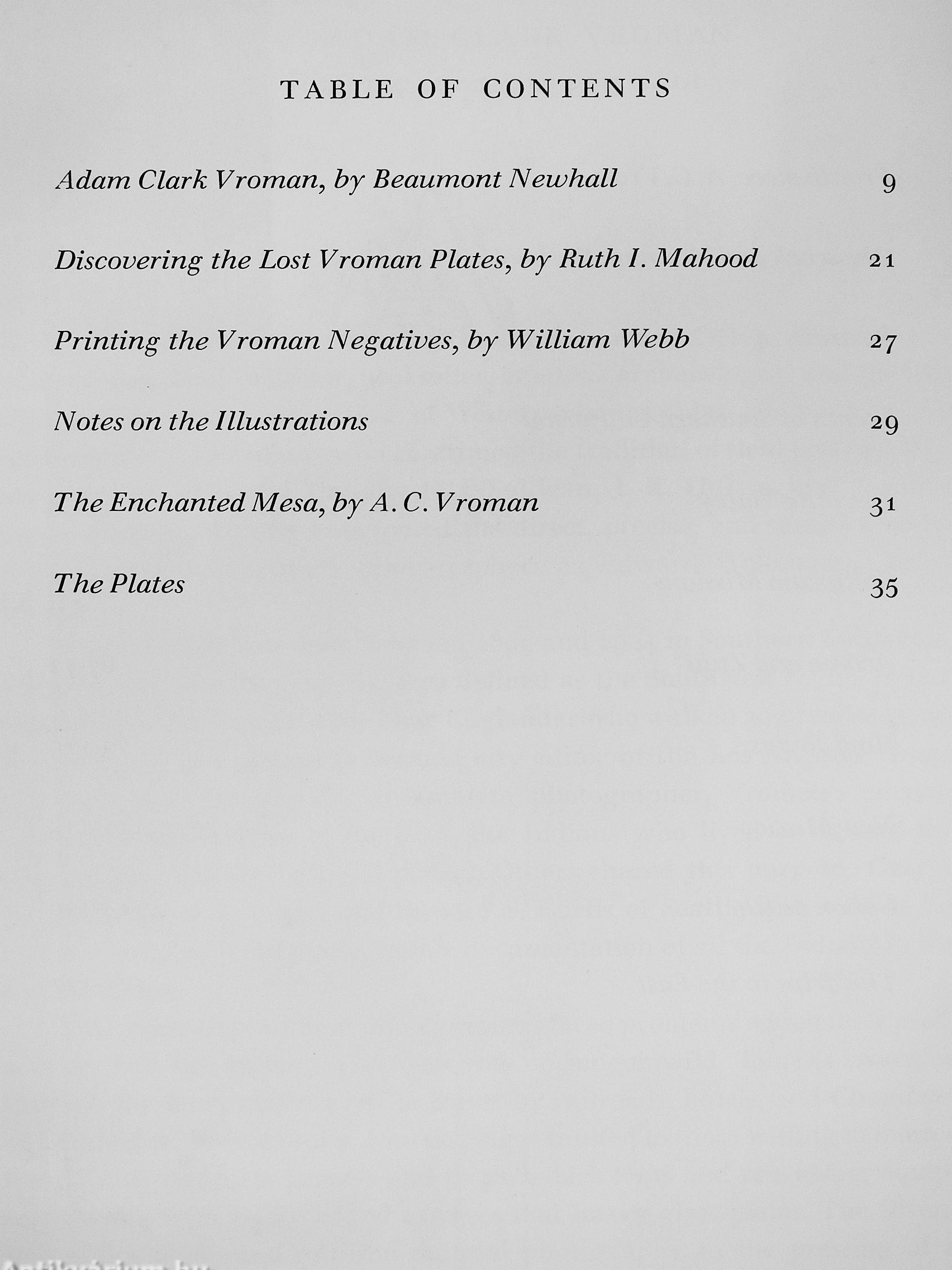
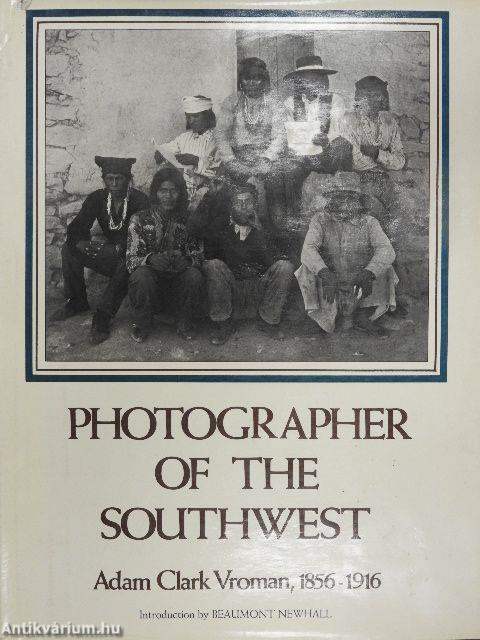
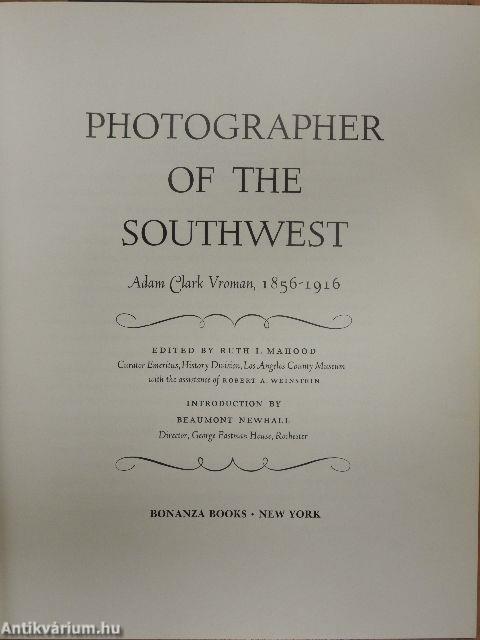
Photographer of the Southwest
Adam Clark Vroman, 1856-1916
New York
| Kiadó: | Bonanza Books |
|---|---|
| Kiadás helye: | New York |
| Kiadás éve: | |
| Kötés típusa: | Félvászon |
| Oldalszám: | 127 oldal |
| Sorozatcím: | |
| Kötetszám: | |
| Nyelv: | Angol |
| Méret: | 29 cm x 23 cm |
| ISBN: | 0-517-18616-0 |
| Megjegyzés: | Fekete-fehér fotókkal. |
Értesítőt kérek a kiadóról
A beállítást mentettük,
naponta értesítjük a beérkező friss
kiadványokról
naponta értesítjük a beérkező friss
kiadványokról
A beállítást mentettük,
naponta értesítjük a beérkező friss
kiadványokról
naponta értesítjük a beérkező friss
kiadványokról
Előszó
Tovább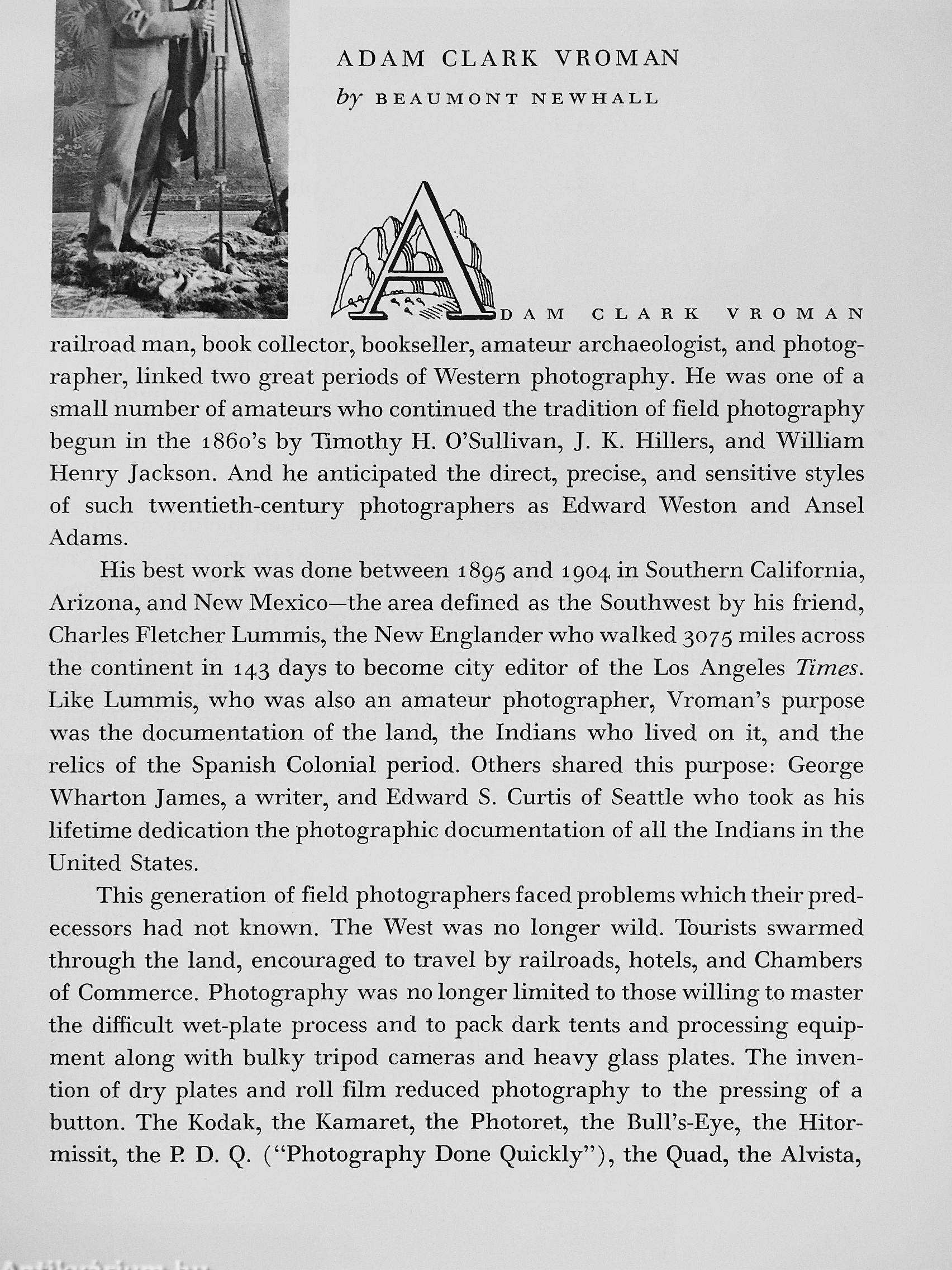
Fülszöveg
PHOTTOGRAPHER OF THE SOUTHWEST
Adam Clarit Vroman, 1856-1916
Introduction by BEAUMONT NEWHALL
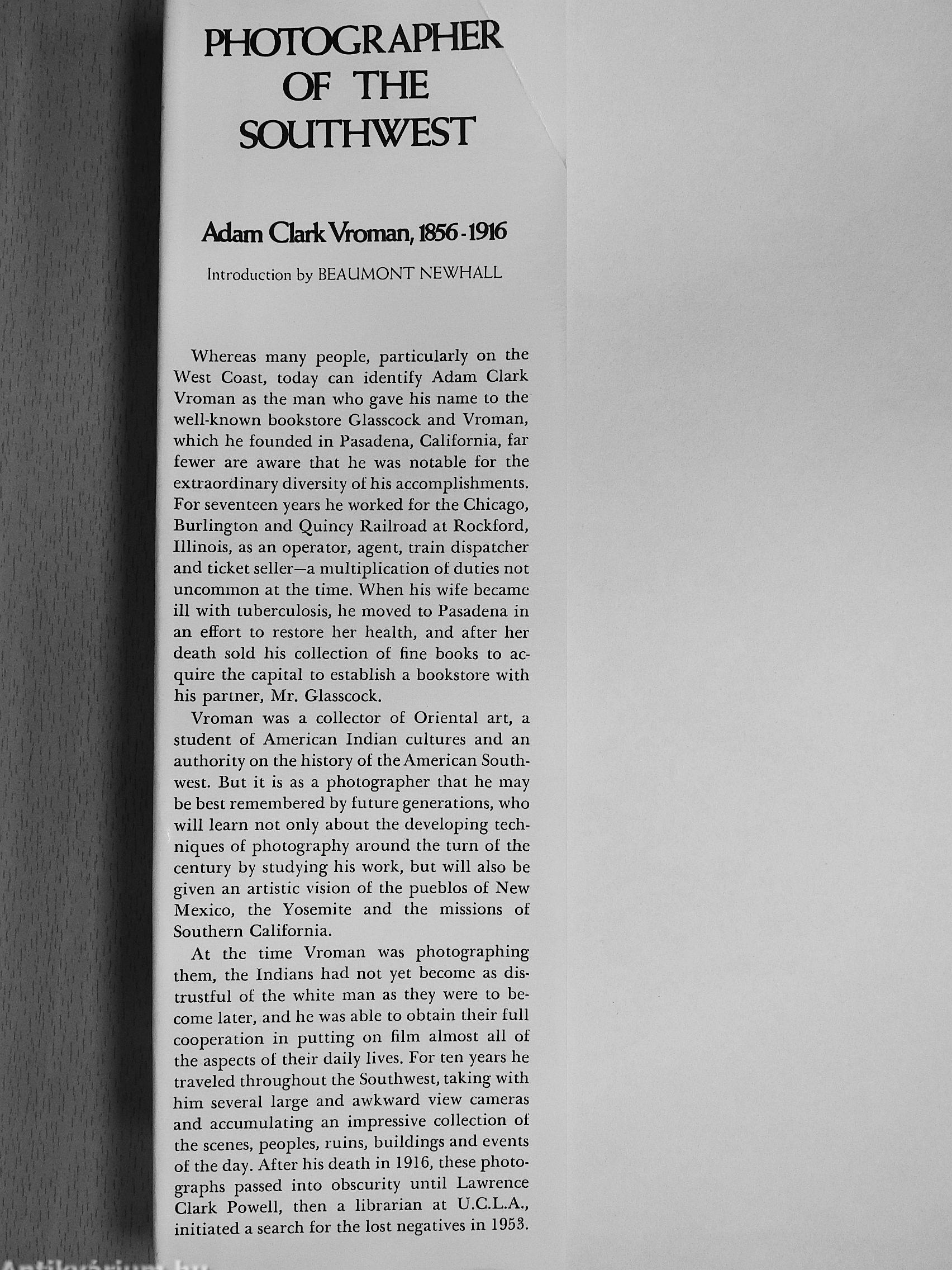
Whereas many people, particularly on tlie West Coast, today can identify Adam Clark Vroman as the man who gave his name to the well-known bookstore Glasscock and Vroman, which he founded in Pasadena, California, far fewer are aware that he was notable for the extraordinary diversity of his accomplishments. For seventeen years he worked for the Chicago, Burlington and Quincy Railroad at Rockford, Illinois, as an operator, agent, train dispatcher and ticket seller-a multiplication of duties not uncommon at the time. When his wife became ill with tuberculosis, he moved to Pasadena in an effort to restore her health, and after her death sold his collection of fine books to acquire the capital to establisli a bookstore with his partner, iVIr. Glasscock.
Vroman was a collector oL Oriental art, a student of American Indian cultures and an authority on the history of the American Southwest.... Tovább
Fülszöveg
PHOTTOGRAPHER OF THE SOUTHWEST
Adam Clarit Vroman, 1856-1916
Introduction by BEAUMONT NEWHALL
Whereas many people, particularly on tlie West Coast, today can identify Adam Clark Vroman as the man who gave his name to the well-known bookstore Glasscock and Vroman, which he founded in Pasadena, California, far fewer are aware that he was notable for the extraordinary diversity of his accomplishments. For seventeen years he worked for the Chicago, Burlington and Quincy Railroad at Rockford, Illinois, as an operator, agent, train dispatcher and ticket seller-a multiplication of duties not uncommon at the time. When his wife became ill with tuberculosis, he moved to Pasadena in an effort to restore her health, and after her death sold his collection of fine books to acquire the capital to establisli a bookstore with his partner, iVIr. Glasscock.
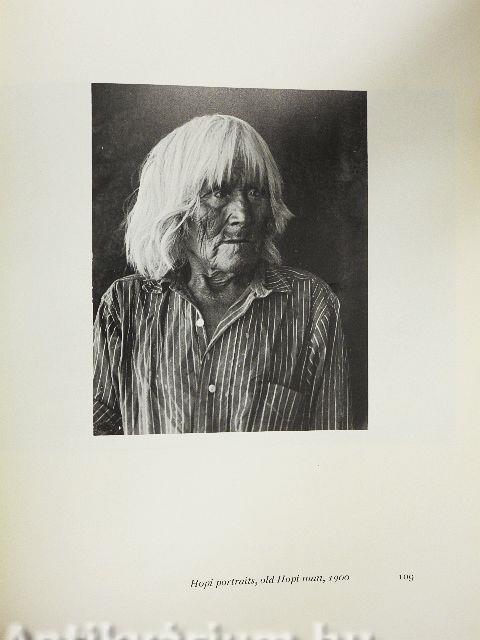
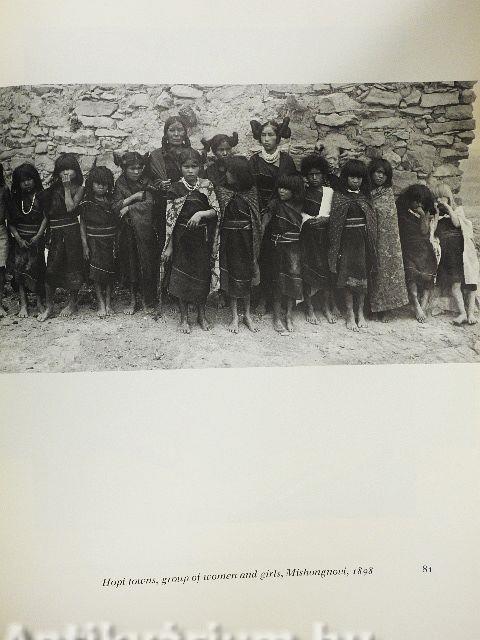
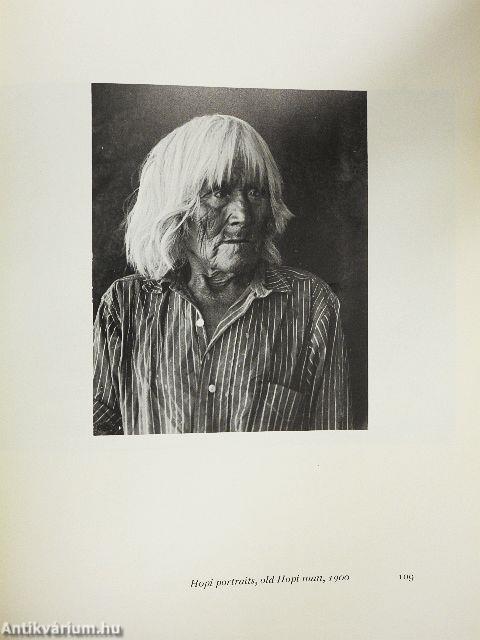
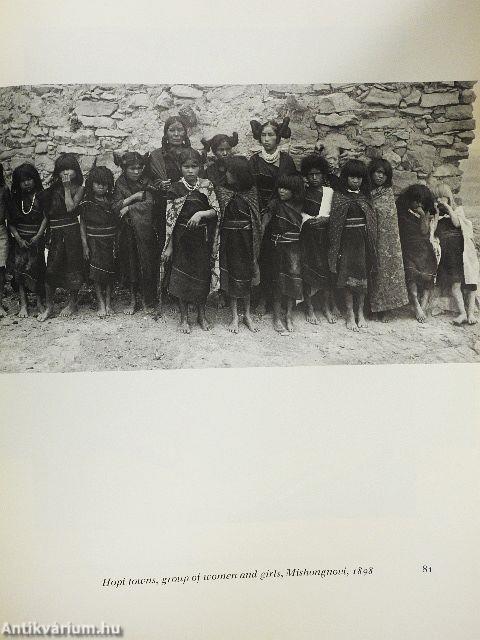
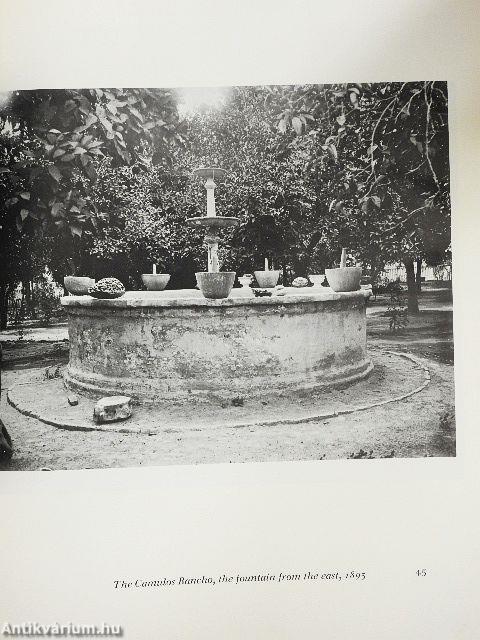
Vroman was a collector oL Oriental art, a student of American Indian cultures and an authority on the history of the American Southwest. But it is as a photographer that he may be best remembered by future generations, who will learn not only about the developing techniques of photography around the turn of the century by studying his work, but will also be given an artistic vision of the pueblos of New Mexico, the Yosemite and the missions of Southern California.
At the time Vroman was photographing them, the Indians had not yet become as distrustful of the white man as they were to become later, and he was able to obtain their full cooperation in putting on film almost all of the aspects of their daily lives. For ten years he traveled throughout the Southwest, taking with liim several large and awkward view cameras and accumulating an impressive collection of the scenes, peoples, ruins, buildings and events of the day. After his death in 1916, these photographs passed into obscurity until Lawrence Clark Powell, then a librarian at U.C.L.A., initiated a search for the lost negatives in 1953.
(continued from front flap)
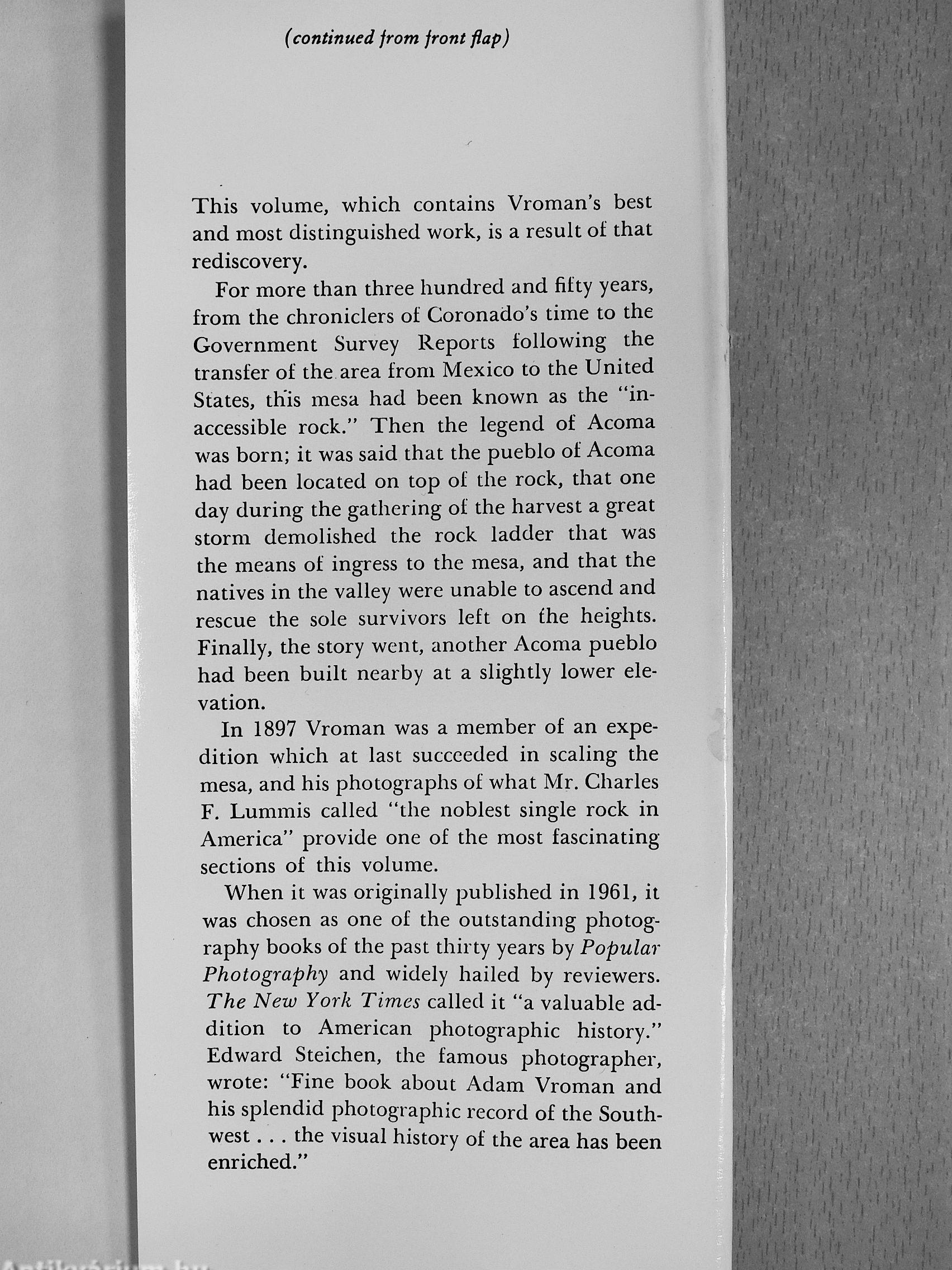
This volume, which contains Vroman's best and most distinguished work, is a result ot that rediscovery.
For more than three hundred and fifty years, from the chroniclers of Coronado's time to the Government Survey Reports following the transfer of the area from Mexico to the United States, this mesa had been known as the "inaccessible rock." Then the legend of Acoma was born; it was said that the pueblo of Acoma had been located on top of the rock, that one day during the gathering of the harvest a great storm demolished the rock ladder that was the means of ingress to the mesa, and that the natives in the valley were unable to ascend and rescue the sole survivors left on ihe heights. Finally, the story went, another Acoma pueblo had been built nearby at a slightly lower elevation.
In 1897 Vroman was a member of an expedition which at last succceded in scaling the mesa, and his photographs of what Mr. Charles F. Lummis called "the noblest single rock in America" provide one of the most fascinating sections of this volume.
When it was originally published in 1961, it was chosen as one of the outstanding photography books of the past thirty years by Popular Photography and widely hailed by reviewers. The New York Times called it "a valuable addition to American photographic history." Edward Steichen, the famous photographer, wrote: "Fine book about Adam Vroman and his splendid photographic record of the Southwest the visual history of the area has been enriched."
¦'h*: ' , d'' ' 'I
SI 'v:,v Vissza
Témakörök
- Idegennyelv > Idegennyelvű könyvek > Angol > Művészetek > Fotóművészet
- Művészetek > Fotóművészet > Életrajzok > Külföldi
- Művészetek > Fotóművészet > Fotográfia története > Külföldi
- Művészetek > Fotóművészet > Albumok > Külföldi
- Művészetek > Fotóművészet > Albumok > Tematikus
- Művészetek > Fotóművészet > Idegen nyelv > Angol
- Művészetek > Fotóművészet > Témái > Fotódokumentumok
- Életrajz > Művészet > Egyéb
- Idegennyelv > Idegennyelvű könyvek > Angol > Életrajz > Művészet > Egyéb
Megvásárolható példányok
Állapotfotók
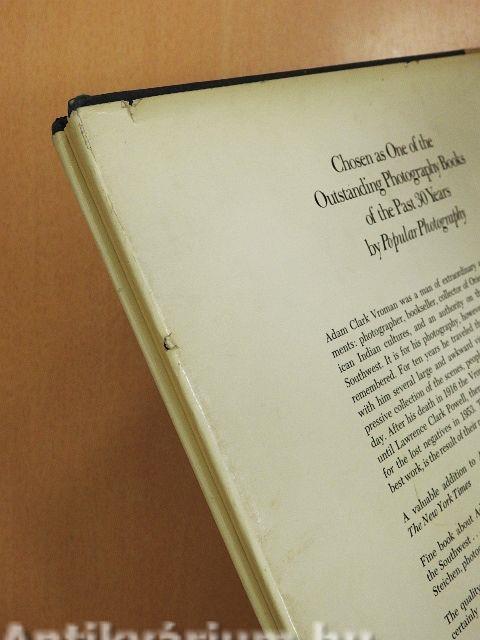


A védőborító szakadozott. A borító foltos.
Állapot:
Jó
12.000 ,-Ft
60
pont kapható
Kosárba
 Folytatás Microsoft-tal