
1.136.106
kiadvánnyal nyújtjuk Magyarország legnagyobb antikvár könyv-kínálatát

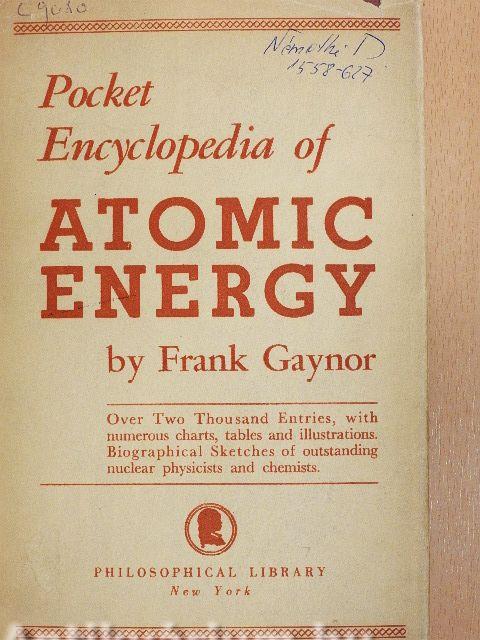
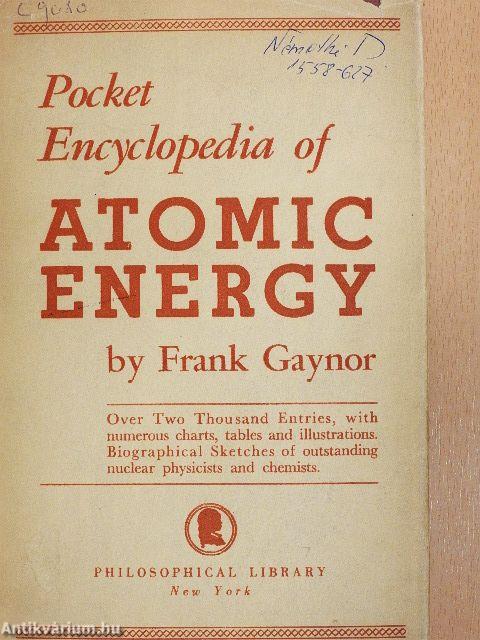
Pocket Encyclopedia of Atomic Energy

New York
| Kiadó: | Philosophical Library |
|---|---|
| Kiadás helye: | New York |
| Kiadás éve: | |
| Kötés típusa: | Varrott keménykötés |
| Oldalszám: | 204 oldal |
| Sorozatcím: | |
| Kötetszám: | |
| Nyelv: | Angol |
| Méret: | 22 cm x 14 cm |
| ISBN: | |
| Megjegyzés: | Fekete-fehér ábrákkal. |
Értesítőt kérek a kiadóról
A beállítást mentettük,
naponta értesítjük a beérkező friss
kiadványokról
naponta értesítjük a beérkező friss
kiadványokról
A beállítást mentettük,
naponta értesítjük a beérkező friss
kiadványokról
naponta értesítjük a beérkező friss
kiadványokról
Előszó
Tovább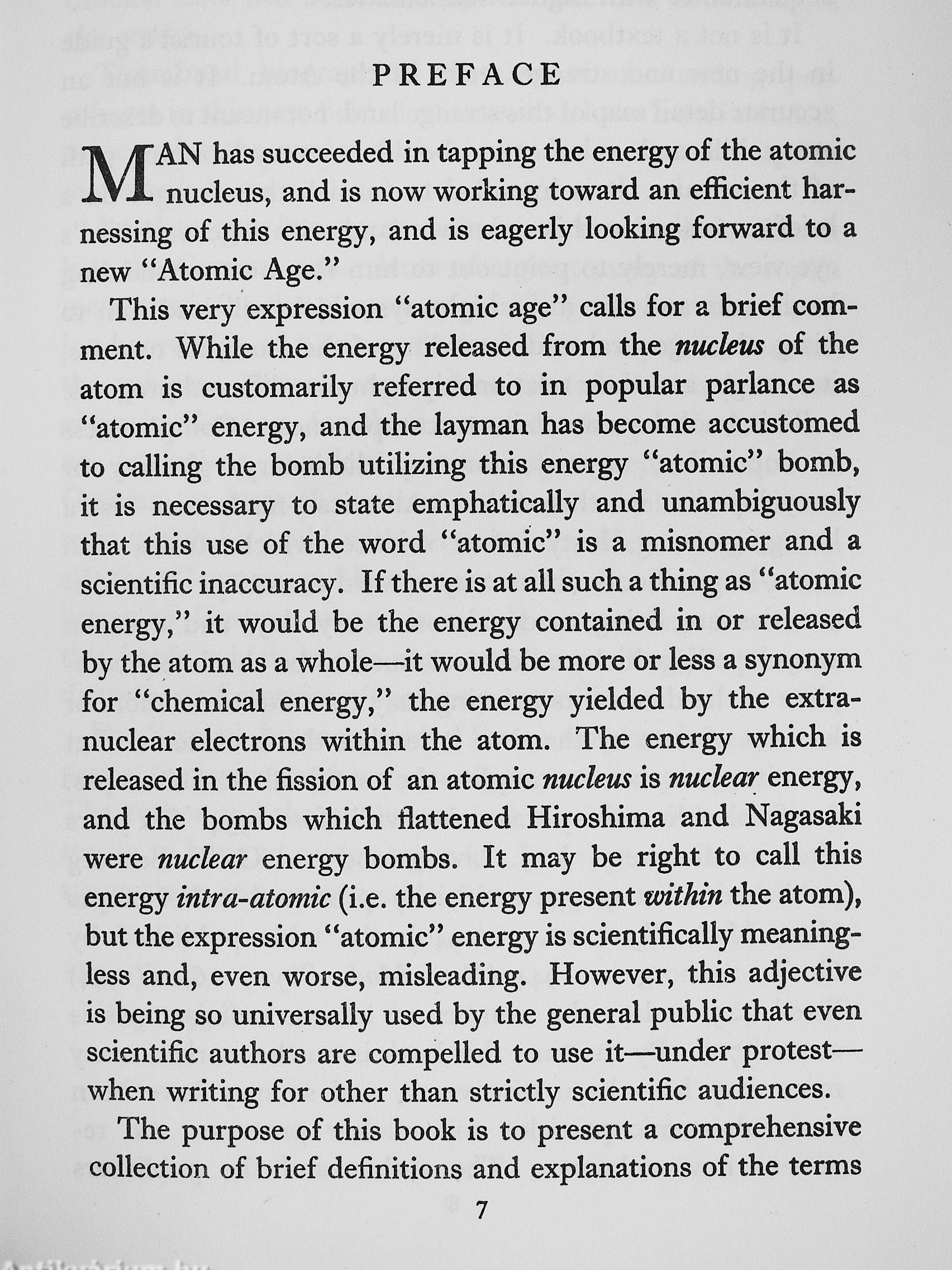
Fülszöveg
POCKET ENCYCLOPEDIA OF ATOMIC ENERGY
By Frank Gaynor
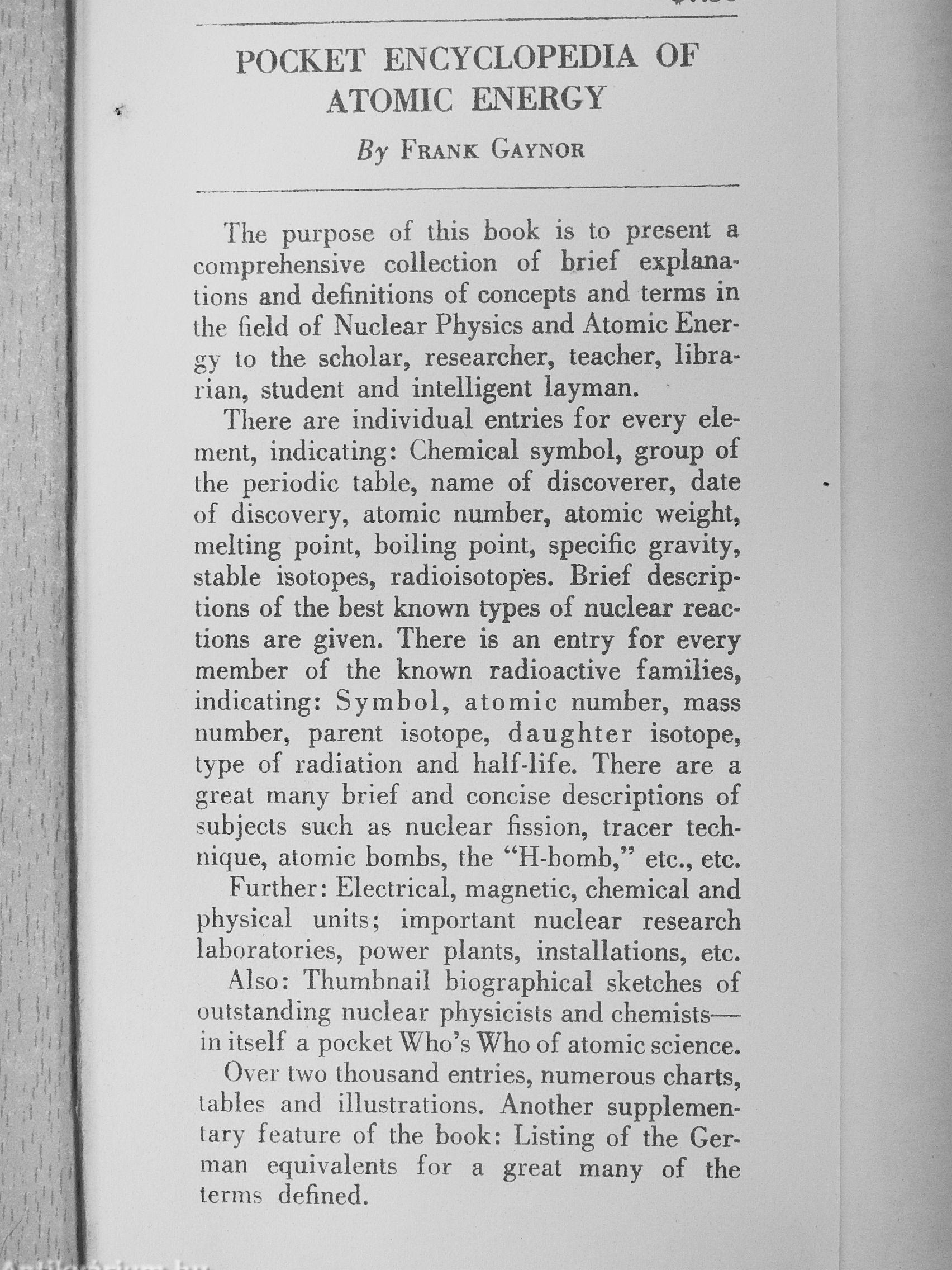
The purpose of this book is to present a comprehensive collection of brief explanations and definitions of concepts and terms in the field of Nuclear Physics and Atomic Energy to the scholar, researcher, teacher, librarian, student and intelligent layman.
Tliere are individual entries for every element, indicating: Chemical symbol, group of the periodic table, name of discoverer, date of discovery, atomic number, atomic weight, melting point, boiling point, specific gravity, stable isotopes, radioisotopes. Brief descriptions of the best known types of nuclear reactions are given. There is an entry for every member of the known radioactive families, indicating: Symbol, atomic number, mass number, parent isotope, daughter isotope, type of radiation and half-life. There are a great many brief and concise descriptions of subjects such as nuclear fission, tracer technique, atomic bombs, the "H-bomb," etc., etc.
Further:... Tovább
Fülszöveg
POCKET ENCYCLOPEDIA OF ATOMIC ENERGY
By Frank Gaynor
The purpose of this book is to present a comprehensive collection of brief explanations and definitions of concepts and terms in the field of Nuclear Physics and Atomic Energy to the scholar, researcher, teacher, librarian, student and intelligent layman.
Tliere are individual entries for every element, indicating: Chemical symbol, group of the periodic table, name of discoverer, date of discovery, atomic number, atomic weight, melting point, boiling point, specific gravity, stable isotopes, radioisotopes. Brief descriptions of the best known types of nuclear reactions are given. There is an entry for every member of the known radioactive families, indicating: Symbol, atomic number, mass number, parent isotope, daughter isotope, type of radiation and half-life. There are a great many brief and concise descriptions of subjects such as nuclear fission, tracer technique, atomic bombs, the "H-bomb," etc., etc.
Further: Electrical, magnetic, chemical and physical units; important nuclear research laboratories, power plants, installations, etc.
Also: Thumbnail biographical sketches of outstanding nuclear physicists and chemists— in itself a pocket Who's Who of atomic science.
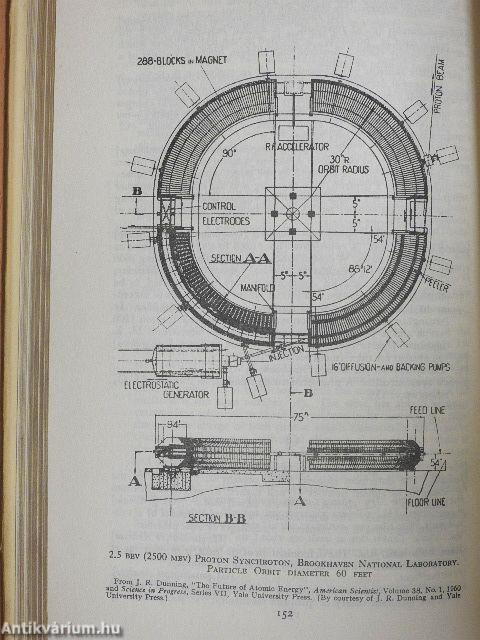
Over two thousand entries, numerous charts, tables and illustrations. Another supplementary feature of the book: Listing of the German equivalents for a great many of the terms defined. Vissza
Témakörök
Megvásárolható példányok
Nincs megvásárolható példány
A könyv összes megrendelhető példánya elfogyott. Ha kívánja, előjegyezheti a könyvet, és amint a könyv egy újabb példánya elérhető lesz, értesítjük.
 Folytatás Microsoft-tal