A beállítást mentettük, naponta értesítjük a beérkező friss kiadványokról
A beállítást mentettük, naponta értesítjük a beérkező friss kiadványokról
Előszó
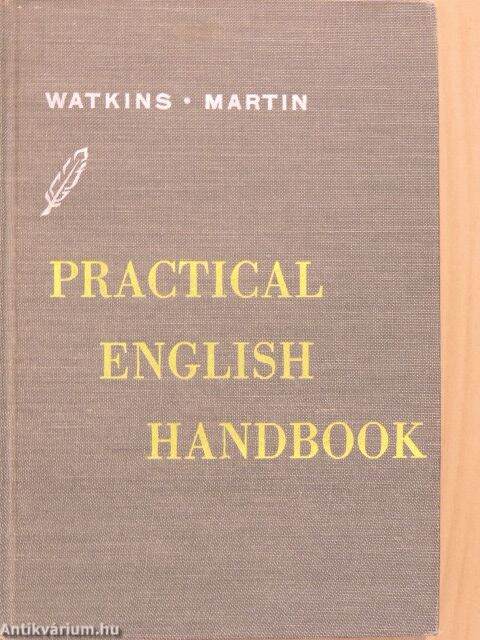
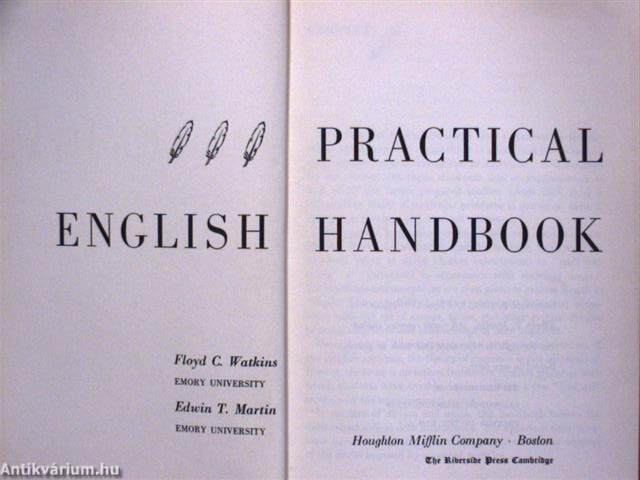
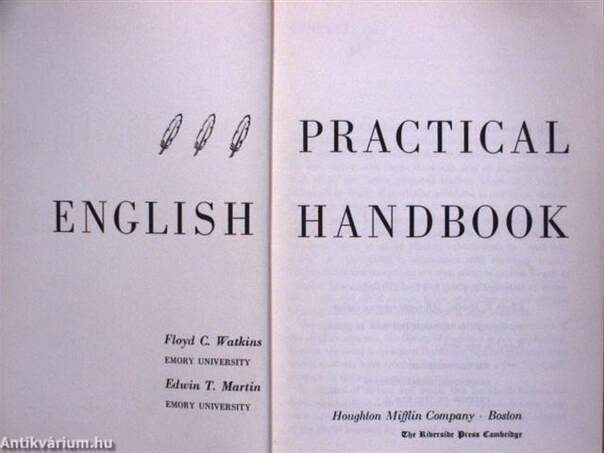
This Practical English Handbook aims at presenting the elements of language and composition in a way that is concise and clear without being oversimplified or superficial. It is designed for the...
Tovább
Előszó
This Practical English Handbook aims at presenting the elements of language and composition in a way that is concise and clear without being oversimplified or superficial. It is designed for the student who needs classroom drill on fundamentals as well as for the better prepared student whose chief need is independent study of particular problems in grammar, diction, mechanics, rhetoric, and research technique. The approach is practical and functional, and instructions are specific. Principles are stated explicitly in heavy type, and care has been taken to avoid blanket exhortations to "spell correctly" or "punctuate in accordance with standard usage." Explanations and exceptions are then given at greater length in "regular" type; and all these are generously illustrated, sometimes with the aid of arrows, boxes, and other graphic devices to make structures and relationships at once apparent. Beyond a brief introductory review of the basic structure of the English sentence, the theory of grammar is not emphasized. Rather, the focus is on salient features of English grammar with which students have trouble, beginning with a few "first aid" sections on the most common errors. In matters of diction and usage, this handbook follows the most recent college desk dictionaries. The approach thus recognizes linguistic findings without denying students the support of the limits imposed by accepted practice.
Vissza
Tartalom
CONTENTS ^
part one: Sentence Structure and Grammar
The Sentence Pattern 3
Subject, Verb, and Complement 3
Modifiers 8
Phrases 10
Clauses 14
First Aid for Sentences 24
1 Sentence Fragment 25
2 Comma Fault 27
3 Fused Sentence 28
4 Choppy Sentences 31
5 Excessive Coordination 34
6 Improper Subordination 35
a. Upside-down subordination 36
b. Overlapping subordination 36
Grammar: The Forms of Words 39
7 Verb Forms 39
8 Tense and Sequence of Tenses 42
9 Voice 46
10 Mood 47
a. Subjunctive 48
b. Sequence of tenses and moods 49
11 Agreement - Subject and Verb 50
a. Compound subject with and 51
b. Compound subject with or, nor, etc. - number . 52
c. Compound subject with or, nor, etc. - person ... 52
d. Intervening phrases or clauses 52
e. Collective nouns 53
f. Nouns plural in form, singular in meaning 53
g. Indefinite pronouns 54
h. None, somé, part, etc 54
i. There, here 55
j. Agreement with subject, not subjective complement . 55
k. Relative pronouns 56
1. Titles 56
12 Agreement and Reference of Pronouns 58
a. Compound antecedent with and 58
b. Compound antecedent with or, nor, etc 58
c. Collective noun as antecedent 59
d. Each, either, etc., as antecedents 59
e. Which, who, that 59
f. Ambiguous antecedents - this, which, it ... 60
g. Ambiguous antecedents - personal pronouns ... 61
13 Case 64
a. Subjects and subjective complements 65
b. Object of preposition 65
c. Subject or complement of an infinitive 66
d. Appositive 66
e. Pronoun after than or as 67
f. Word before a gerund 67
g. 0/-phrase for possession 68
h. Personal and indefinite pronouns 68
i. Interrogative and relative pronouns 68
14 Adjectives and Adverbs 73
a. Form of comparative and superlative degrees ... 74
b. Comparative, two things; superlative, more than two 75
c. After is, seems, becomes, etc 75
d. After keep, build, hold, etc 75
Grammar: The Position of Words 77
15 Modifiers 77
a. Dangling 78
b. Misplaced 80
c. Squinting 82
16 Unnecessary Separation 84
17 Parallelism 86
a. With coordinating conjunctions 86
b. With correlative conjunctions 88
Grammar: Completeness and Consistency 92
18 Completeness 92
a. After so, such, too 93
b. "Understood" prepositions 93
c. "Understood" verb forms 94
d. Repeating article, auxiliary verb, etc 94
e. Omission of that 95
19 Comparisons 95
20 Consistency 100
a. Shifts in tense 100
b. Shifts in person 101
c. Shifts in mood 102
d. Shifts in voice 102
e. Shifts in relatíve pronoun 102
f. Shifts in discourse 102
part two: Conventions
Punctuation 107
21 End Punctuation 108
a. Period at end of sentence 108
b. Period after abbreviations 108
c. Punctuation after a title 109
d. Question mark at end of sentence 109
e. Question mark within sentence 109
f. Exclamation point 110
g. Two end marks not used together 110
22 The Comma 111
a. Between independent clauses 112
b. Between members of a series 112
c. Between coordinate adjectives 114
d. After introductory phrases and clauses 116
e. With nonrestrictive appositives, phrases, and clauses . 117
f. With sentence modifiers 121
g. With dates, places, addresses 122
h. For contrast or emphasis 124
i. With mild interjections 124
j. With direct address 125
k. With expressions like he said 125
1. With absolute phrases 125
m. To mark an omission 125
23 Unnecessary Commas 128
a. Between subject and verb, etc 128
b. In compound constructions of two parts 128
c. Between dependent clauses 129
d. Between adjective and word modified 129
e. Before than, between as . . . as, etc 129
f. After like, such as 129
g. With other punctuation 130
h. Before parenthesis 130
i. After short introductory phrases or clauses . . . 130
j. Restrictive clauses, phrases, appositives 130
k. Between noncoordinate adjectives 131
24 The Semicolon 132
a. Between independent clauses with no coordinating
conjunction 132
b. Between independent clauses for emphasis 133
c. Between independent clauses with internál punctuation 133
d. Between items in a series 134
e. Not between noncoordinate elements 134
25 The Colon 135
a. Before elements introduced formally 135
b. Between independent clauses 136
c. Before formai appositives 136
d. Miscellaneous formai uses 136
e. Not after linking verb, preposition, informál
introduction 136
26 The Dash 137
a. For sudden interruptions, etc. • 137
b. For emphasis 137
c. Before a summary 137
d. To be used sparingly 138
27 Parentheses 138
28 Brackets 139
29 Quotation Marks 141
a. For direct quotations and dialogue 141
b. Quotations within quotations 142
c. For titles 142
d. When not to use 142
e. With other punctuation 143
Manuscript Form and Mechanics 149
30 Manuscript Form 149
a. Paper and ink 149
b. Piacement, margins, etc 150
c. Only one side of sheet to be used 150
d. Neatness and legibility 150
e. Prescribed form 152
f. Proofreading 152
31 Revision and Correction 152
32 Italic Type and Underlining 153
a. For titles 153
b. For names of ships and trains 153
c. For foreign words 154
d. For words used as words 154
e. For emphasis 154
33 Spelling 155
a. i-e or e-i? 156
b. Dropping fmal 157
c. Changing y to i 157
d. Doubling final consonant 158
e. Adding s or es 159
34 The Hyphen and Syllabication 163
a. Compound words 163
b. Compound adjectives 164
c. Compound numbers 164
35 The Apostrophe 165
a. Nouns not ending in s 165
b. Singular nouns ending in s 165
c. Plural nouns ending in s 165
d. Indefinite pronouns 165
e. Joint possession 166
f. Omissions or contractions 166
g. Plural of numbers, letters, etc 166
36 Capitals 166
37 Numbers 172
a. Written out in one or two words 172
b. Dates, street numbers, etc 172
c. Series and statistics 172
38 Contractions 173
39 Abbreviations 174
part three: Words
The Dictionary 179
40 Using a Dictionary 181
a. Preferred and variant spellings 181
b. Syllabication and compound words 186
c. Accent and pronunciation 187
d. Etymologies 189
e. Order of definitions 190
f. Parts of speech 190
g. Synonyms 191
h. Labels 192
i. Inflectional forms 192
j. Idioms 193
k. Prefixes and suffixes 194
1. Foreign words 194
m. Proper names 195
Diction 196
The hangé of English 196
41 Standard and Nonstandard English 196
42 Yarieties of Standard English 198
a. Formai English 199
b. Informál English 200
c. Colloquial English 203
Appropriateness and Special Problems 208
43 Technical English and Gobbledygook 208
44 Slang 210
45 Dialect 212
46 Archaic and Obsolete Words 214
47 Improprieties 214
48 Idioms 216
49 Triteness 218
Vocabulary 220
50 Yocabulary Building 220
Style 232
Effective Use of Words 232
51 Wordiness 233
a. Needless words and ideas 233
b. One word for many 233
c. Active voice for conciseness 234
d. Revising for conciseness 234
52 Repetition 236
a. For emphasis or clarity 236
b. Ineffective repetition 237
c. Vague and awkward synonyms 238
d. Bad repetition of sounds 238
53 Specific and Concrete Words 242
54 Connotation 246
55 Figurativeness 250
a. Figurative comparisons 251
b. Mixed and inappropriate figures 252
56 Fine Writing 256
Effective Sentences 257
57 Periodic Sentences 257
58 Balanced Sentences 258
59 Climactic Order 258
60 Sentence Variety 261
part four: Larger Units
The Paragraph 273
61 Paragraph Unity 273
62 Topic Sentences 275
63 Paragraph Development 281
64 Sentence Sequence 287
65 Transition 290
The Theme 299
66 Choosing an Interesting Subject 299
67 Limiting the Subject 304
68 Suitable Treatment 306
a. Kinds of themes 306
b. Kinds of treatment 306
c. Tone 308
69 Planning and Organizing 309
a. Topic outline 312
b. Sentence outline . 313
70 Detail 314
Building a Theme: A Case Study 317
71 Check List of Essentials 336
a. Title 336
b. Introduction 336
c. Body 337
d. Transitions 337
e. Conclusion 337
f. Proofreading 338
g. Final mechanical matters 338
The Research Paper 347
72 Choosing a Subject 348
a. Choosing a generál subject area 348
b. Limiting the subject 349
c. Avoiding inappropriate subjects 350
73 Compiling a Working Bibliography 352
a. Use of the library 352
b. Controlled research 358
74 Primary and Secondary Materials 360
75 Gathering and Organizing Materials 361
a. Taking notes 361
b. Outlining 370
76 Documentation 371
a. Quoting, paraphrasing, and footnoting 371
b. Mechanics of documentation 373
77 Writing the Paper 377
Clear Thinking 403
78 Avoiding Common Errors in Content and Thought . . 403
a. Accurate data 403
b. Reliable authority 404
c. Sweeping generalizations 405
d. Specific evidence 406
CONTENTS
e. Representative instances 406
f. Sticking to the point 407
g. Conflicting evidence 407
h. Begging the question 408
i. Unstated assumptions 409
j. Appeal to emotions 409
k. Cause and effect 411
1. Moderation 411
m. Adequate alternatives 411
GLOSSARY OF USAGE
79 Glossary of Usage 417
INDEX
Google, Facebook, Apple, Microsoft fiókkal való belépés/regisztráció eseténautomatikusan elfogadja az Általános Szerződési Feltételeket.
Elfelejtett jelszó
Kérjük, adja meg azonosítóját, és a hozzá tartozó email címet, hogy jelszavát elküldhessük Önnek!
A *-gal jelölt mezők kitöltése kötelező!
Azonosító név/E-mail cím* Azonosító és e-mail cím megegyező
E-mail cím*
(2009 március óta a regisztrált ügyfelek azonosító neve megegyezik az email címmel)
Ha az azonosítóját sem tudja megadni, kérjük, hívja az ügyfélszolgálati vonalat:
+36-62-452-833
1
2
3
Regisztráció
Regisztráció
Regisztrációja sikeresen megtörtént.
Megadott e-mail címére megerősítő e-mailt küldtünk. Ahhoz, hogy a regisztrációja véglegesedjen, és le tudja adni rendeléseit, kérjük, kattintson a levélben található linkre. A megerősítő link a kiküldéstől számított 48 óráig érvényes, ezután a regisztrációs adatok törlésre kerülnek.
Kérjük, jelölje meg az érdeklődési körébe tartozó témaköröket!
Regisztráció
Az ön által megjelölt témakörök:
Temakor_1
Beállíthatja, hogy emailben értesítőt kapjon az újonnan beérkezett példányokról a bejelölt témaköröknek megfelelően.
Beállított értesítőit belépés után bármikor módosíthatja az Értesítő menüpont alatt:
létrehozhat új témaköri értesítőt
inaktiválhatja értesítőjét, ha éppen nem kíván a megadott témában értesítőt kapni
törölheti véglegesen az adott értesítőjét
szerkesztheti jelenlegi értesítőjét, ha még részletesebben szeretné megadni mi érdekli.
Az Ön választása alapján naponta vagy 3 naponta kap tőlünk emailt a beállított értesítőjéről.



 Folytatás Microsoft-tal