
1.153.930
kiadvánnyal nyújtjuk Magyarország legnagyobb antikvár könyv-kínálatát

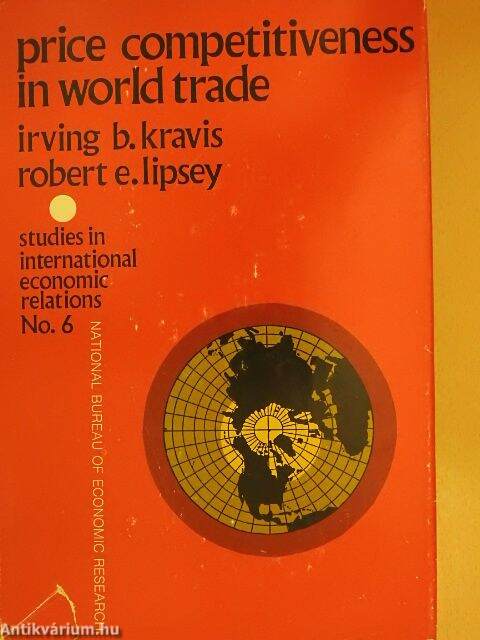
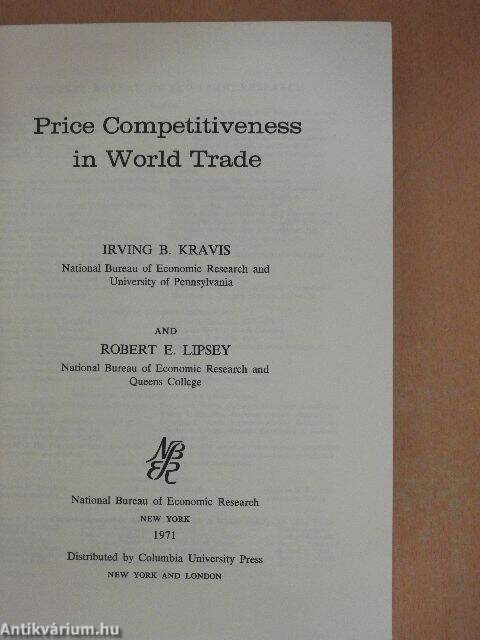
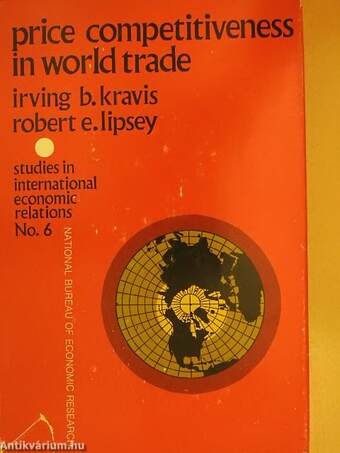
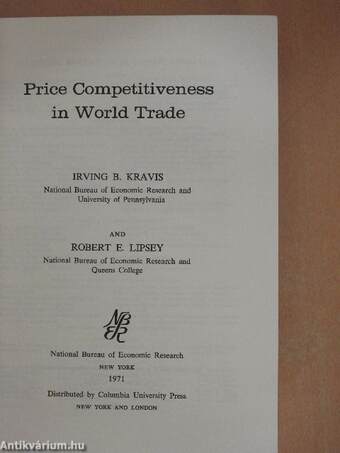
Price Competitiveness in World Trade
New York-London
| Kiadó: | National Bureau of Economic Research-Columbia University Press |
|---|---|
| Kiadás helye: | New York-London |
| Kiadás éve: | |
| Kötés típusa: | Fűzött keménykötés |
| Oldalszám: | 738 oldal |
| Sorozatcím: | Studies in Internacional Economic Relations |
| Kötetszám: | 6 |
| Nyelv: | Angol |
| Méret: | 24 cm x 16 cm |
| ISBN: | 0-87014-227-5 |
Értesítőt kérek a kiadóról
Értesítőt kérek a sorozatról
A beállítást mentettük,
naponta értesítjük a beérkező friss
kiadványokról
naponta értesítjük a beérkező friss
kiadványokról
A beállítást mentettük,
naponta értesítjük a beérkező friss
kiadványokról
naponta értesítjük a beérkező friss
kiadványokról
Előszó
Tovább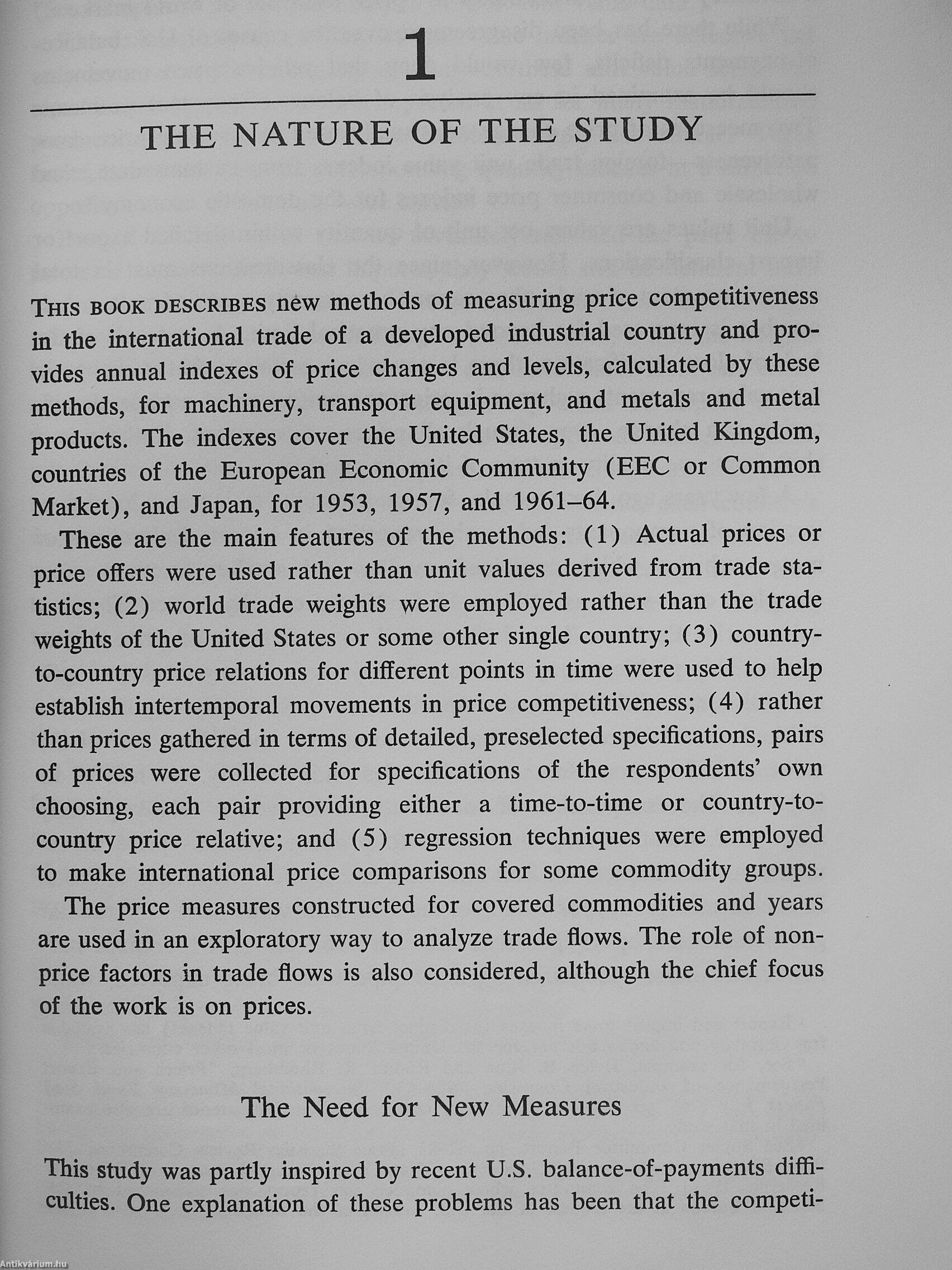
Fülszöveg
THE TECHNOLOGY FACTOR IN INTERNATIONAL TRADE Raymond Vernon, editor
In the last decade or two, economic theory has struggled to understand and define the technology factor as an element in growth and change. A discipline that for so long had found it sufficient to think in terms of a classification of factors consisting of land, labor, and capital has begun to see some utility in treating technology as a factor deserving separate analysis. The Universities—National Bureau conference upon which this volume is based can be thought of as a step in that process-a conscious effort to adapt and, if need be, to modify the body of international trade theory to the existence of the technological variable.
Universities—National Bureau Conference Series, No. 22
THE RESPONSIVENESS OF DEMAND POLICIES TO BALANCE OF PAYMENTS: POSTWAR PATTERNS Michael Michaely
Michaely's study provides some of the knowledge considered essential for evaluation of the past and present performance of the... Tovább
Fülszöveg
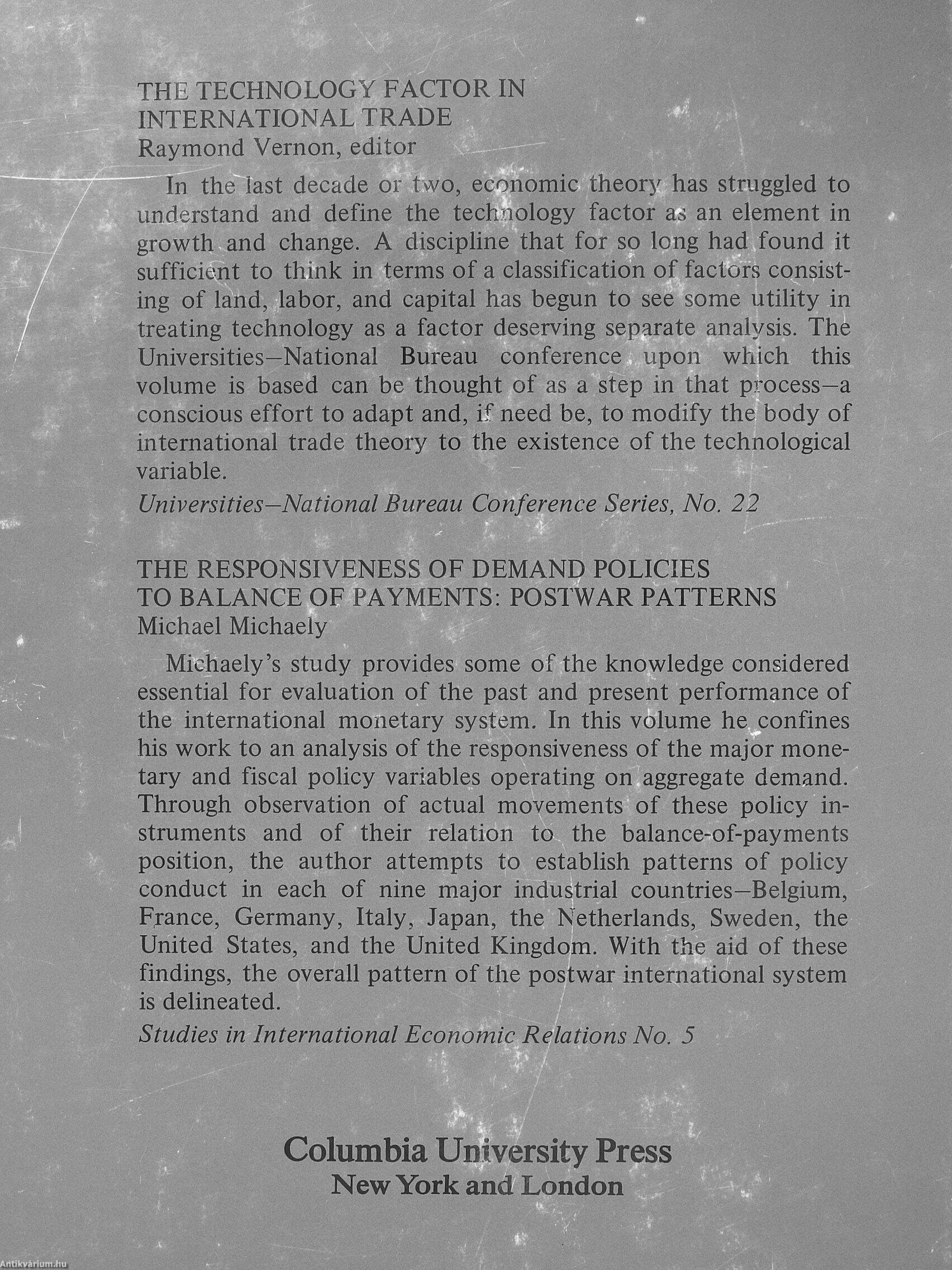
THE TECHNOLOGY FACTOR IN INTERNATIONAL TRADE Raymond Vernon, editor
In the last decade or two, economic theory has struggled to understand and define the technology factor as an element in growth and change. A discipline that for so long had found it sufficient to think in terms of a classification of factors consisting of land, labor, and capital has begun to see some utility in treating technology as a factor deserving separate analysis. The Universities—National Bureau conference upon which this volume is based can be thought of as a step in that process-a conscious effort to adapt and, if need be, to modify the body of international trade theory to the existence of the technological variable.
Universities—National Bureau Conference Series, No. 22
THE RESPONSIVENESS OF DEMAND POLICIES TO BALANCE OF PAYMENTS: POSTWAR PATTERNS Michael Michaely
Michaely's study provides some of the knowledge considered essential for evaluation of the past and present performance of the international monetary system. In this volume he confines his work to an analysis of the responsiveness of the major monetary and fiscal policy variables operating on aggregate demand. Through observation of actual movements of these poUcy instruments and of their relation to the balance-of-payments position, the author attempts to establish patterns of pohcy conduct in each of nine major industrial countries—Belgium, France, Germany, Italy, Japan, the Netherlands, Sweden, the United States, and the United Kingdom. With the aid of these findings, the overall pattern of the postwar international system is delineated.
Studies in International Economic Relations No. 5
Columbia University Press New York and London
MA .J^ .
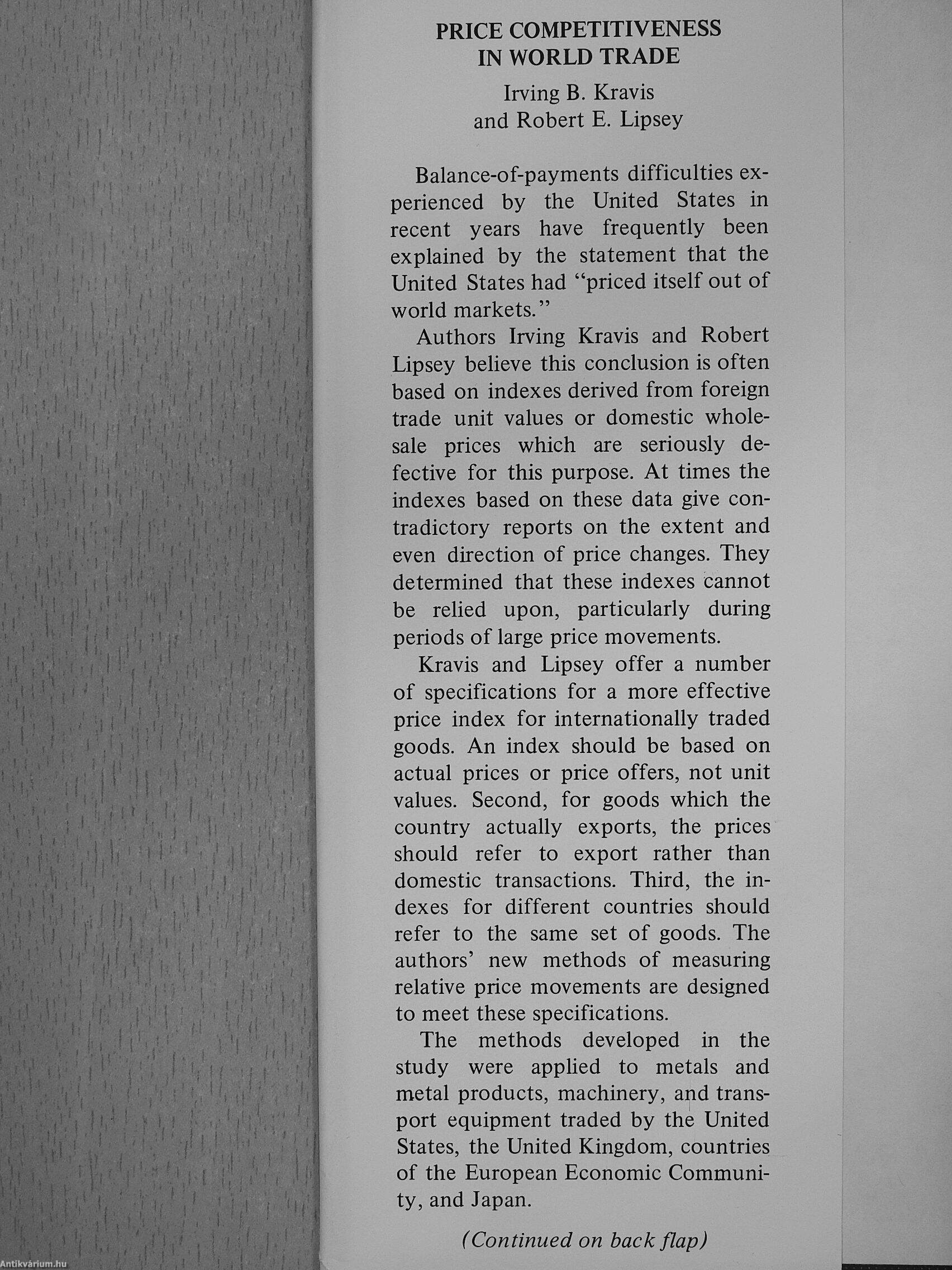
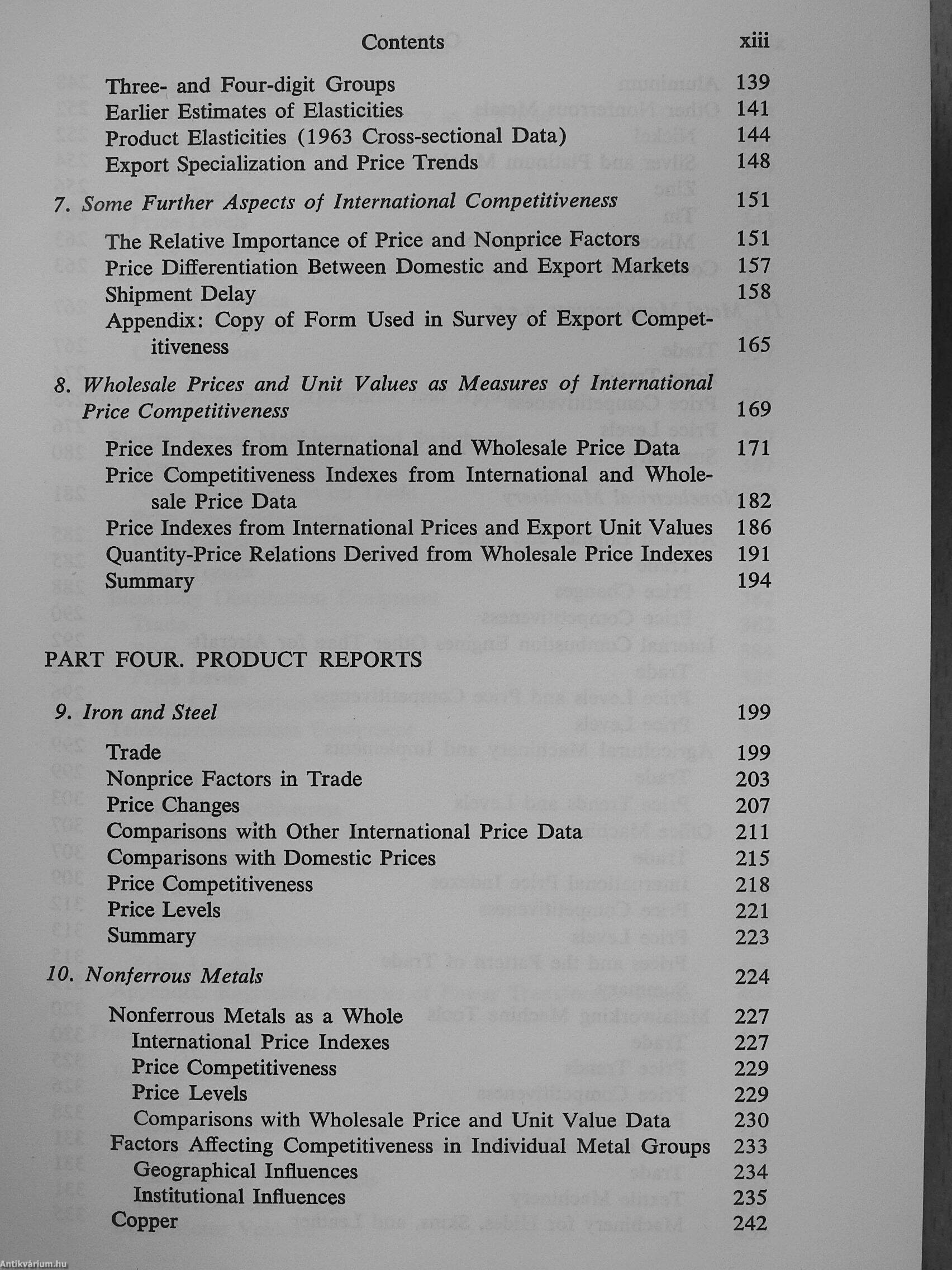
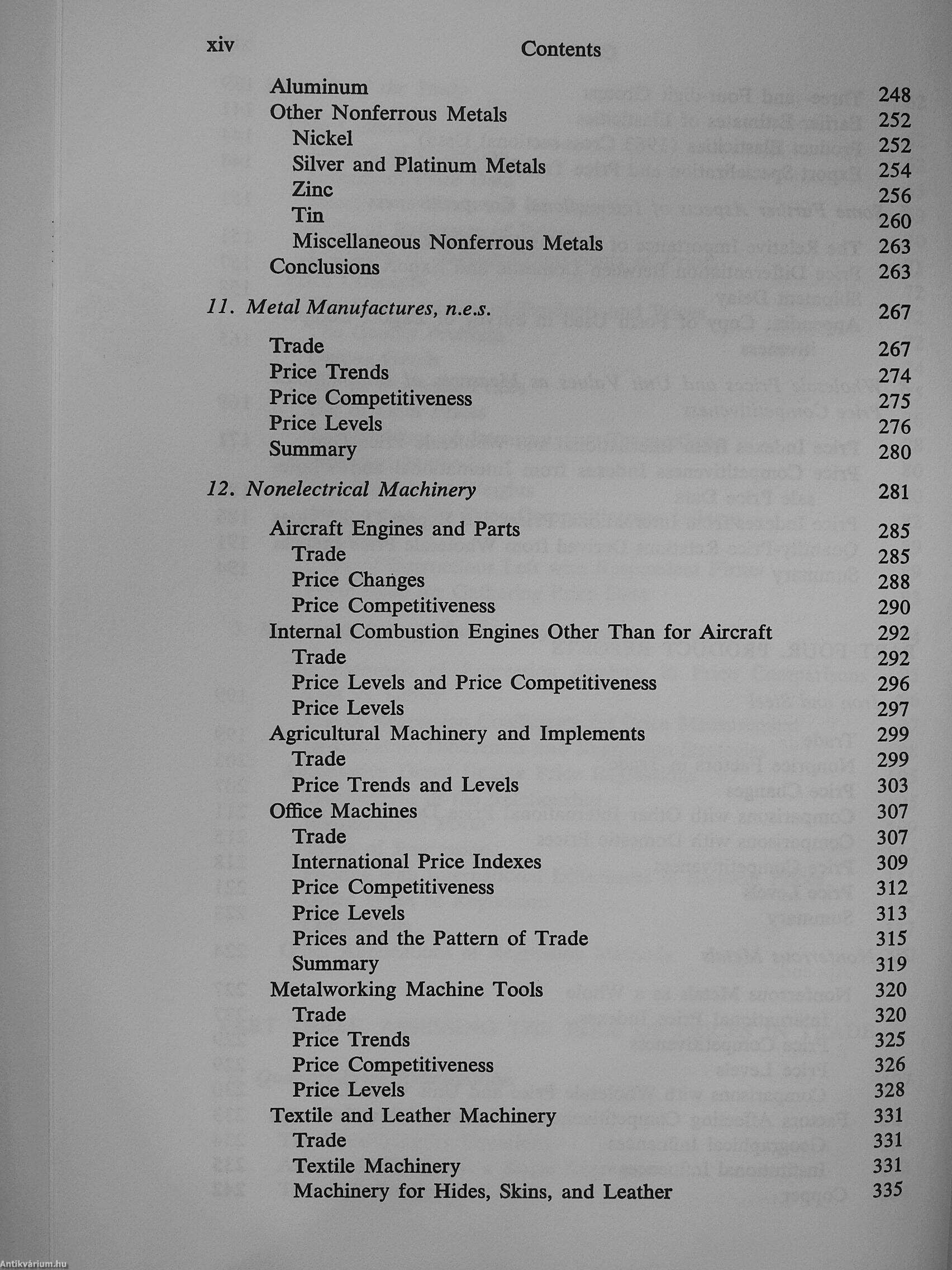
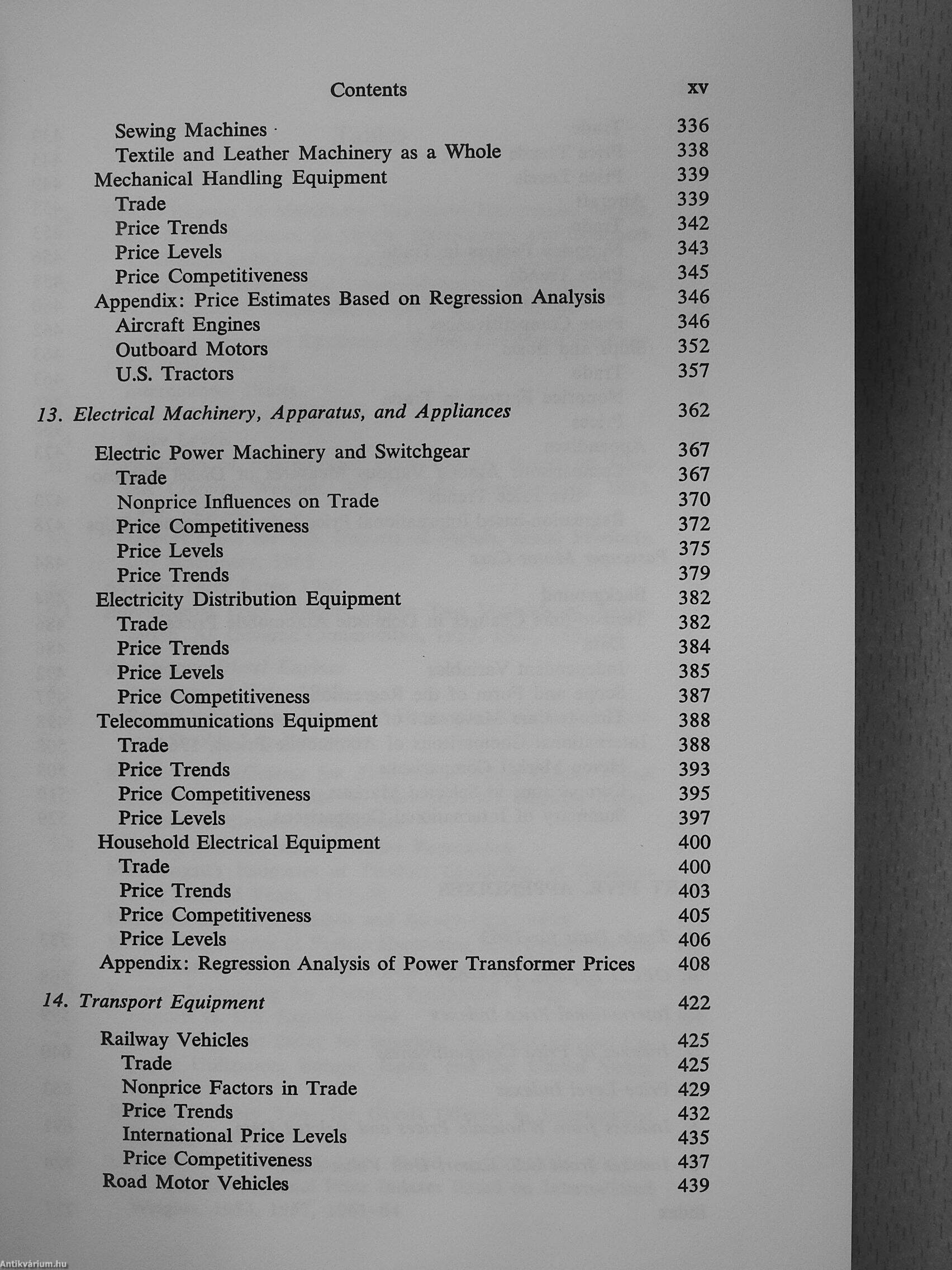
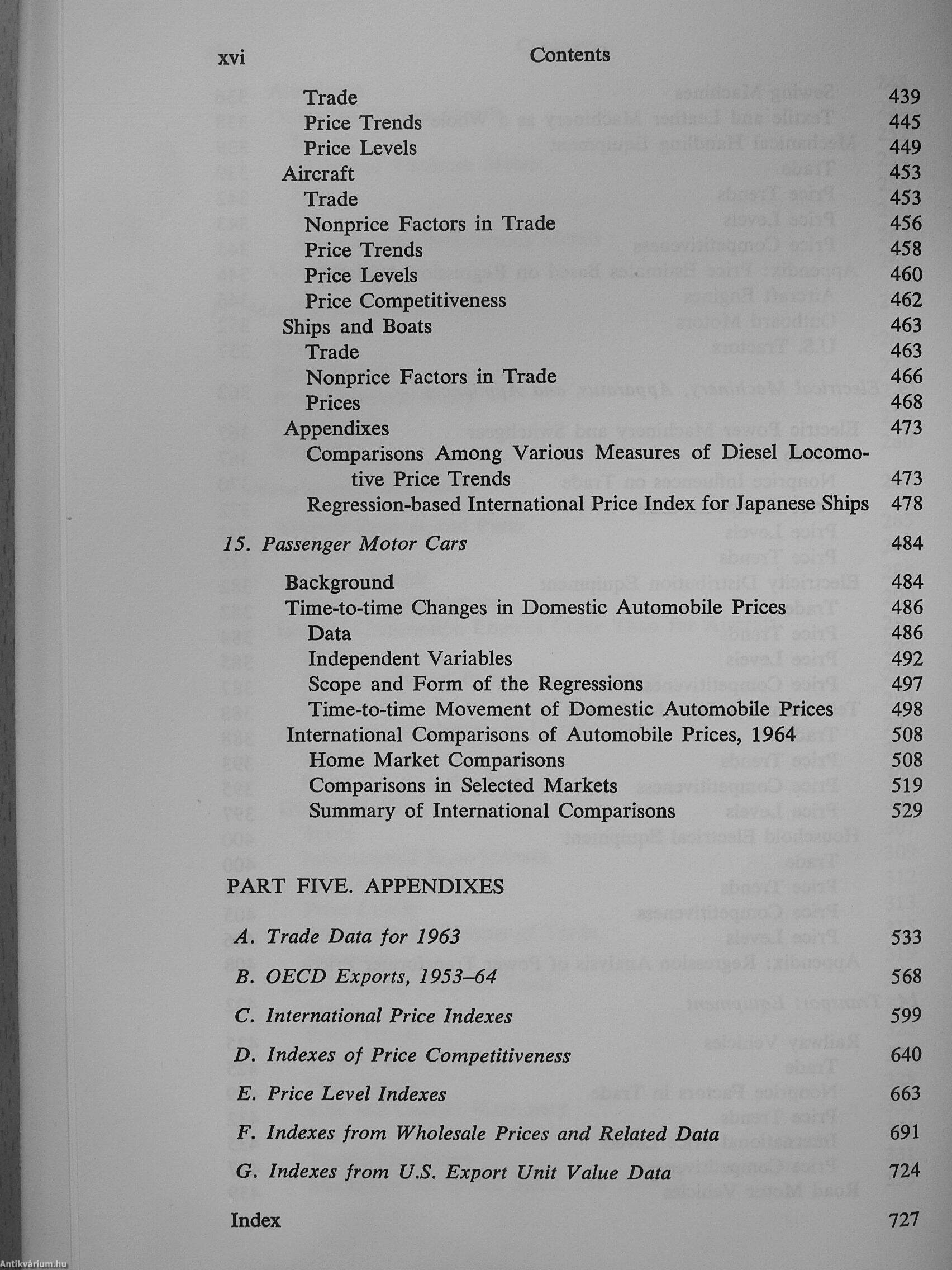
PRICE COMPETITIVENESS IN WORLD TRADE
Irving B. Kravis and Robert E. Lipsey
Balance-of-payments difficulties experienced by the United States in recent years have frequently been explained by the statement that the United States had "priced itself out of world markets."
Authors Irving Kravis and Robert Lipsey believe this conclusion is often based on indexes derived from foreign trade unit values or domestic wholesale prices which are seriously defective for this purpose. At times the indexes based on these data give contradictory reports on the extent and even direction of price changes. They determined that these indexes cannot be rehed upon, particularly during periods of large price movements.
Kravis and Lipsey offer a number of specifications for a more effective price index for internationally traded goods. An index should be based on actual prices or price offers, not unit values. Second, for goods which the country actually exports, the prices should refer to export rather than domestic transactions. Third, the indexes for different countries should refer to the same set of goods. The authors' new methods of measuring relative price movements are designed to meet these specifications.
The methods developed in the study were apphed to metals and metal products, machinery, and transport equipment traded by the United States, the United Kingdom, countries of the European Economic Community, and Japan.
{Continued on back flap)
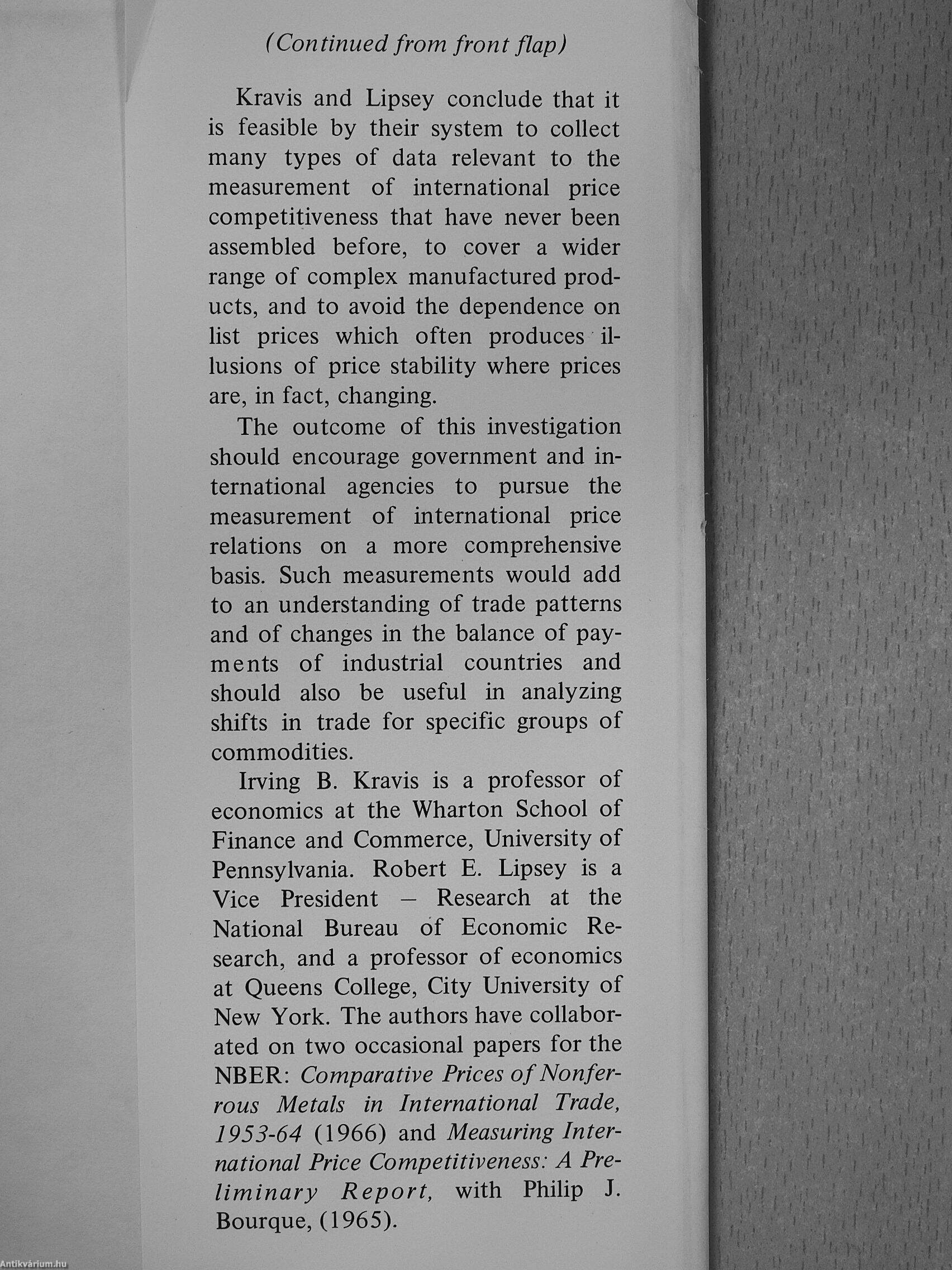
( Continued from front flap)
Kravis and Lipsey conclude that it is feasible by their system to collect many types of data relevant to the measurement of international price competitiveness that have never been assembled before, to cover a wider range of complex manufactured products, and to avoid the dependence on list prices which often produces illusions of price stability where prices are, in fact, changing.
The outcome of this investigation should encourage government and international agencies to pursue the measurement of international price relations on a more comprehensive basis. Such measurements would add to an understanding of trade patterns and of changes in the balance of payments of industrial countries and should also be useful in analyzing shifts in trade for specific groups of commodities.
Irving B. Kravis is a professor of economics at the Wharton School of Finance and Commerce, University of Pennsylvania. Robert E. Lipsey is a Vice President - Research at the National Bureau of Economic Research, and a professor of economics at Queens College, City University of New York. The authors have collaborated on two occasional papers for the NBER: Comparative Prices of Nonfer-rous Metals in International Trade, 1953-64 (1966) and Measuring International Price Competitiveness: A Preliminary Report, with Philip J. Bourque, (1965).
'." r! /iV'frr ¦ ' i „ ' I ('n
I'I'
IMS' "
Vissza
Témakörök
- Közgazdaságtan > Gazdaságpolitika
- Közgazdaságtan > Pénzügy > Egyéb
- Idegennyelv > Idegennyelvű könyvek > Angol > Vendéglátás, kereskedelem
- Idegennyelv > Idegennyelvű könyvek > Angol > Közgazdaságtan > Gazdaságpolitika
- Vendéglátás, kereskedelem > Külkereskedelem > Egyéb
- Idegennyelv > Idegennyelvű könyvek > Angol > Közgazdaságtan > Pénzügy > Egyéb
Megvásárolható példányok
Állapotfotók




A védőborító szakadozott, kopott. Az előlapon ex-libris címke található.
Állapot:
Jó
3.980 ,-Ft
20
pont kapható
Kosárba
 Folytatás Microsoft-tal