A kosaram
0
MÉG
5000 Ft
a(z) 5000Ft-os
szállítási
értékhatárig
Ginop popup ablak bezárása

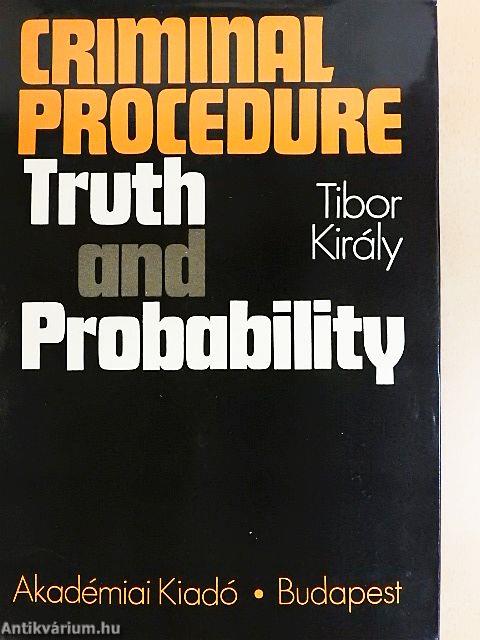
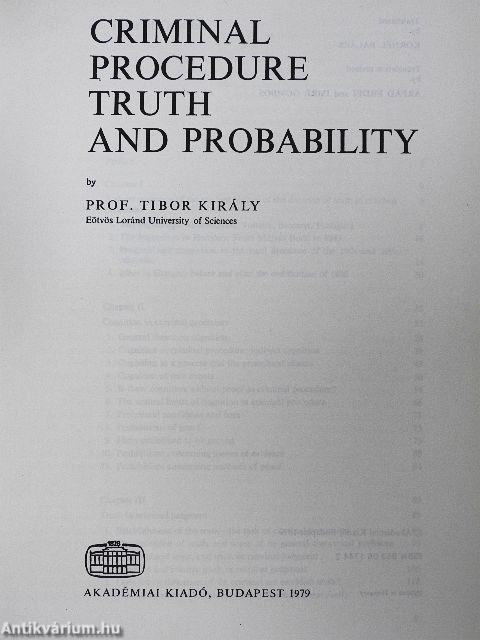
Criminal Procedure - Truth and Probability

Szerző
Fordító
Lektor
Budapest
Kiadó: Akadémiai Kiadó
Kiadás helye: Budapest
Kiadás éve:
Kötés típusa: Vászon
Oldalszám: 207 oldal
Sorozatcím:
Kötetszám:
Nyelv: Angol  
Méret: 24 cm x 17 cm
ISBN: 963-05-1744-2
Értesítőt kérek a kiadóról

A beállítást mentettük,
naponta értesítjük a beérkező friss
kiadványokról
A beállítást mentettük,
naponta értesítjük a beérkező friss
kiadványokról

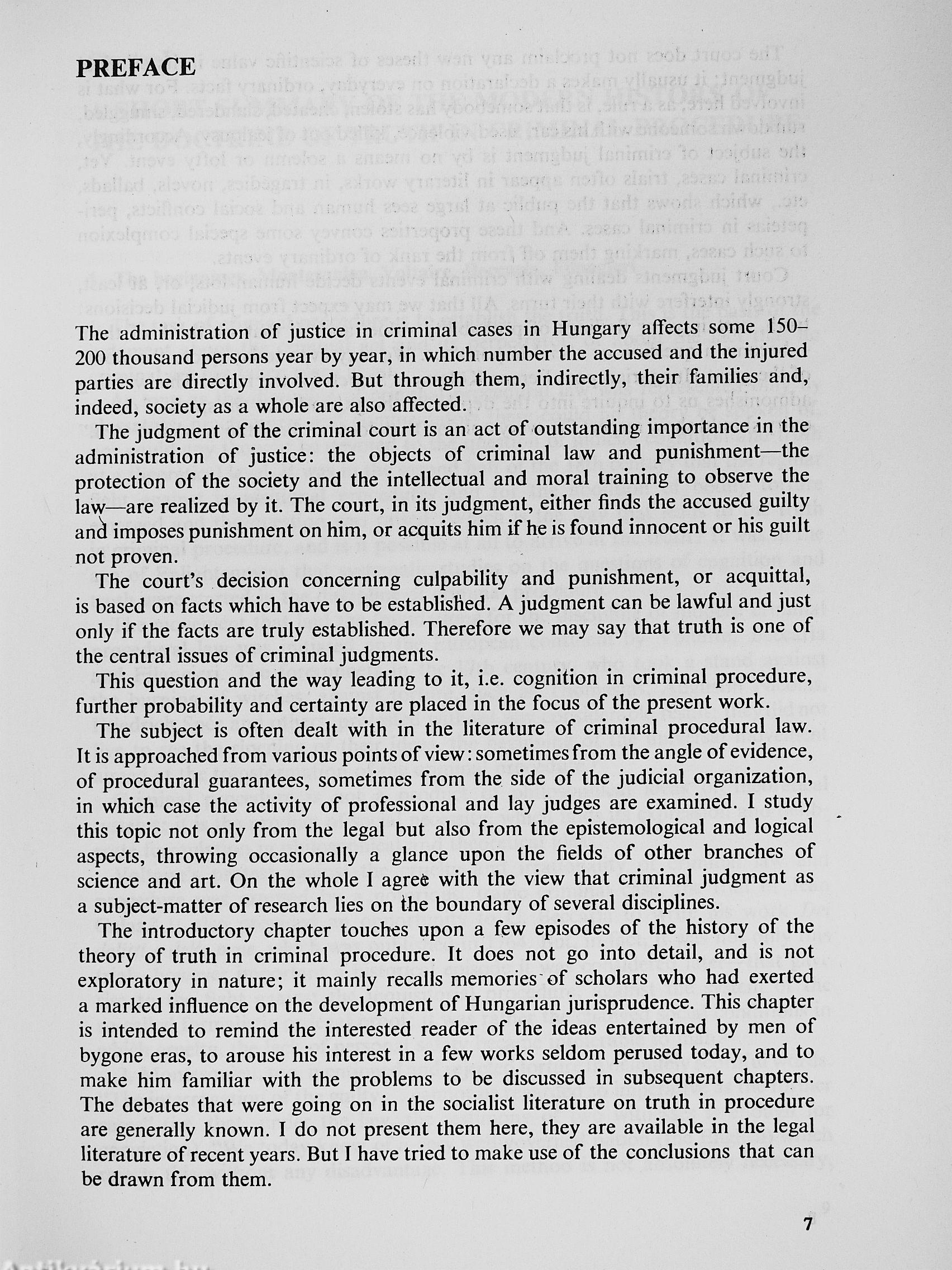
Előszó

Tovább

Előszó


Vissza

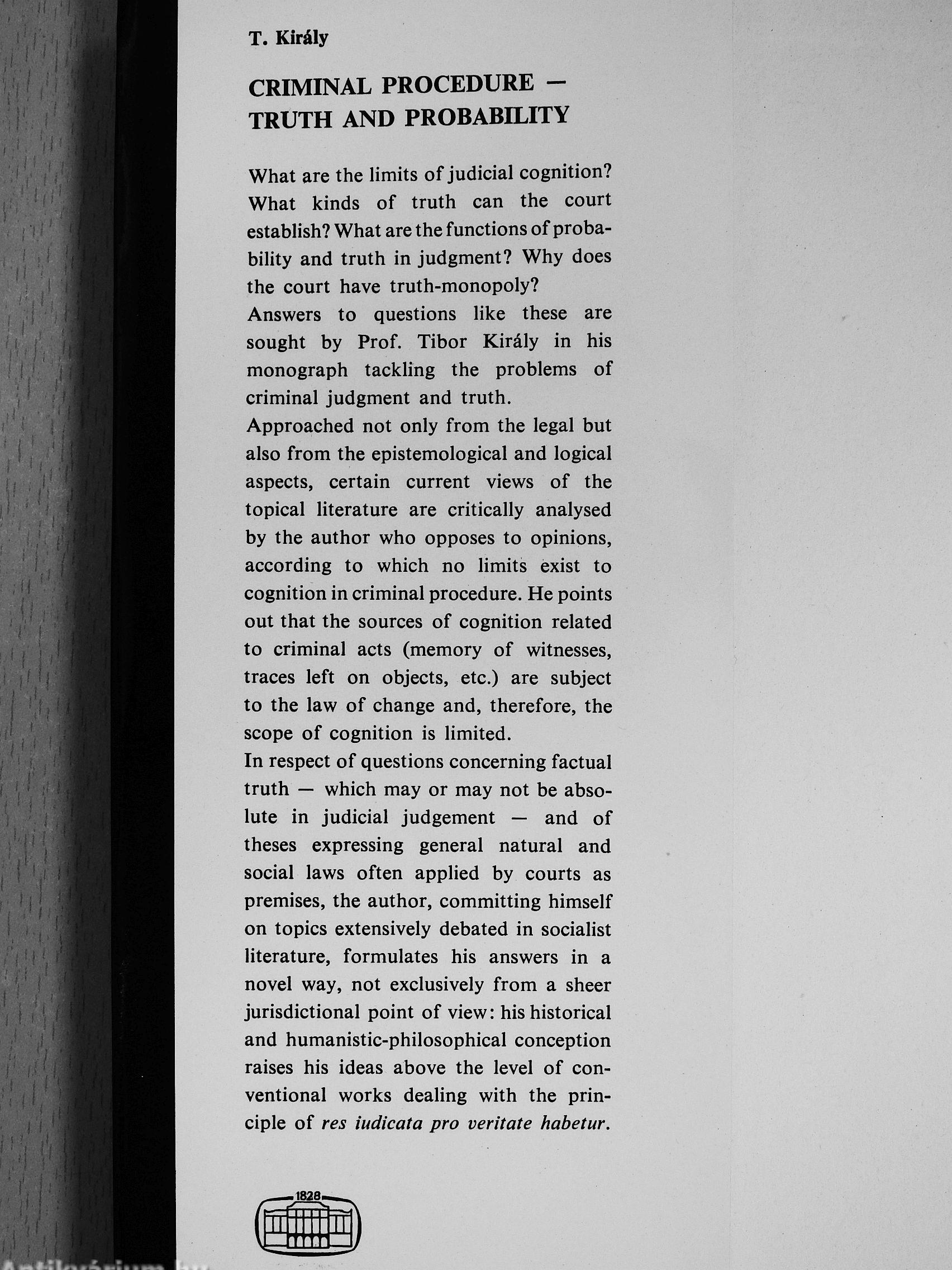
Fülszöveg


T. Király
CRIMINAL PROCEDURE -TRUTH AND PROBABILITY
What are the limits of judicial cognition? What kinds of truth can the court establish? What are the functions of probability and truth in judgment? Why does the court have truth-monopoly? Answers to questions like these are sought by Prof. Tibor Király in his monograph tackling the problems of criminal judgment and truth. Approached not only from the legal but also from the epistemological and logical aspects, certain current views of the topical literature are critically analysed by the author who opposes to opinions, according to which no limits exist to cognition in criminal procedure. He points out that the sources of cognition related to criminal acts (memory of witnesses, traces left on objects, etc.) are subject to the law of change and, therefore, the scope of cognition is limited. In respect of questions concerning factual truth — which may or may not be absolute in judicial judgement — and of theses expressing... Tovább

Fülszöveg


T. Király
CRIMINAL PROCEDURE -TRUTH AND PROBABILITY
What are the limits of judicial cognition? What kinds of truth can the court establish? What are the functions of probability and truth in judgment? Why does the court have truth-monopoly? Answers to questions like these are sought by Prof. Tibor Király in his monograph tackling the problems of criminal judgment and truth. Approached not only from the legal but also from the epistemological and logical aspects, certain current views of the topical literature are critically analysed by the author who opposes to opinions, according to which no limits exist to cognition in criminal procedure. He points out that the sources of cognition related to criminal acts (memory of witnesses, traces left on objects, etc.) are subject to the law of change and, therefore, the scope of cognition is limited. In respect of questions concerning factual truth — which may or may not be absolute in judicial judgement — and of theses expressing general natural and social laws often applied by courts as premises, the author, committing himself on topics extensively debated in socialist literature, formulates his answers in a novel way, not exclusively from a sheer jurisdictional point of view: his historical and humanistic-philosophical conception raises his ideas above the level of conventional works dealing with the principle of res iudicata pro veritate habetur.
(M) Vissza

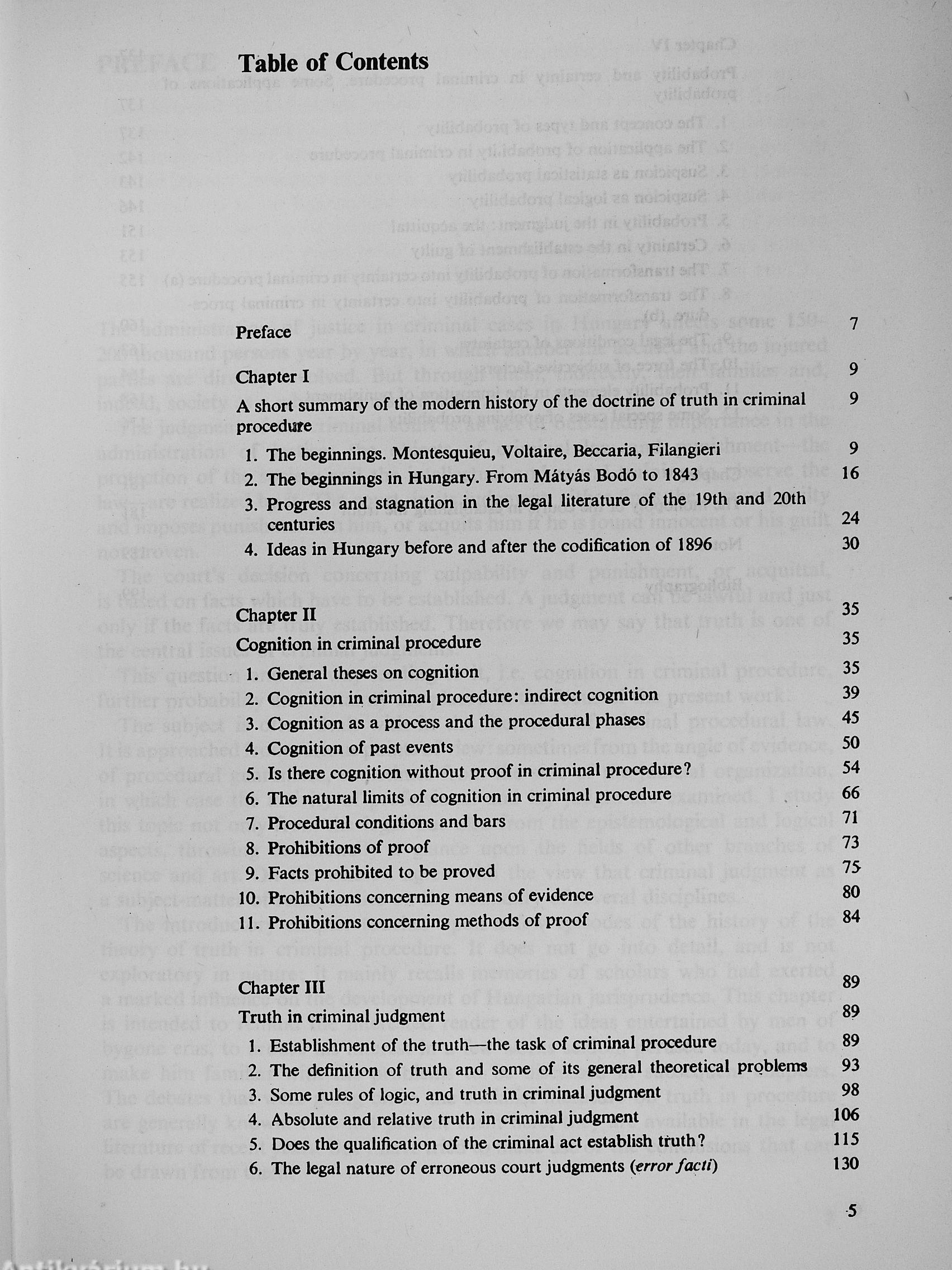
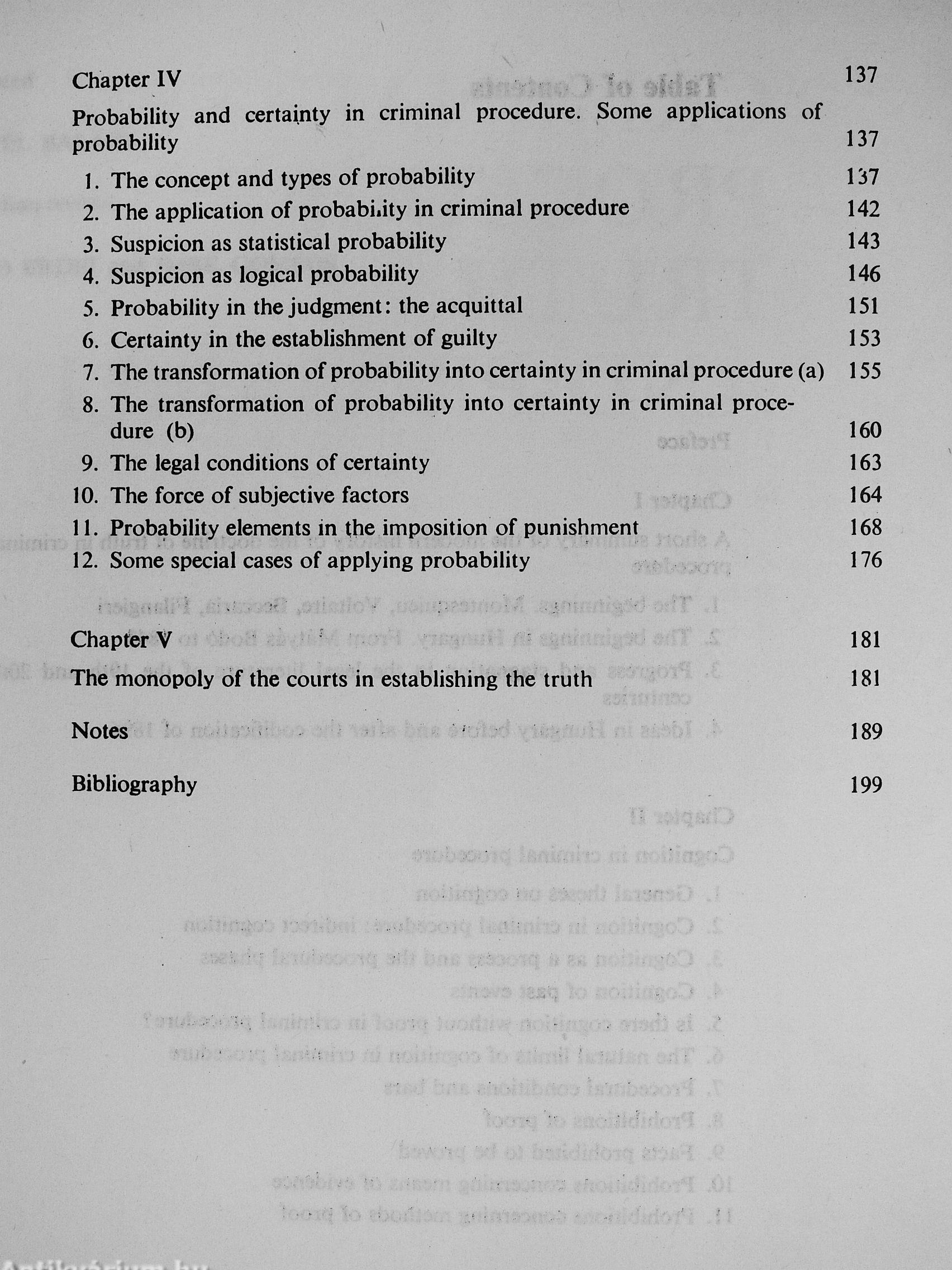
Tartalom


Vissza
Megvásárolható példányok

Nincs megvásárolható példány
A könyv összes megrendelhető példánya elfogyott. Ha kívánja, előjegyezheti a könyvet, és amint a könyv egy újabb példánya elérhető lesz, értesítjük.

Előjegyzem