Fülszöveg
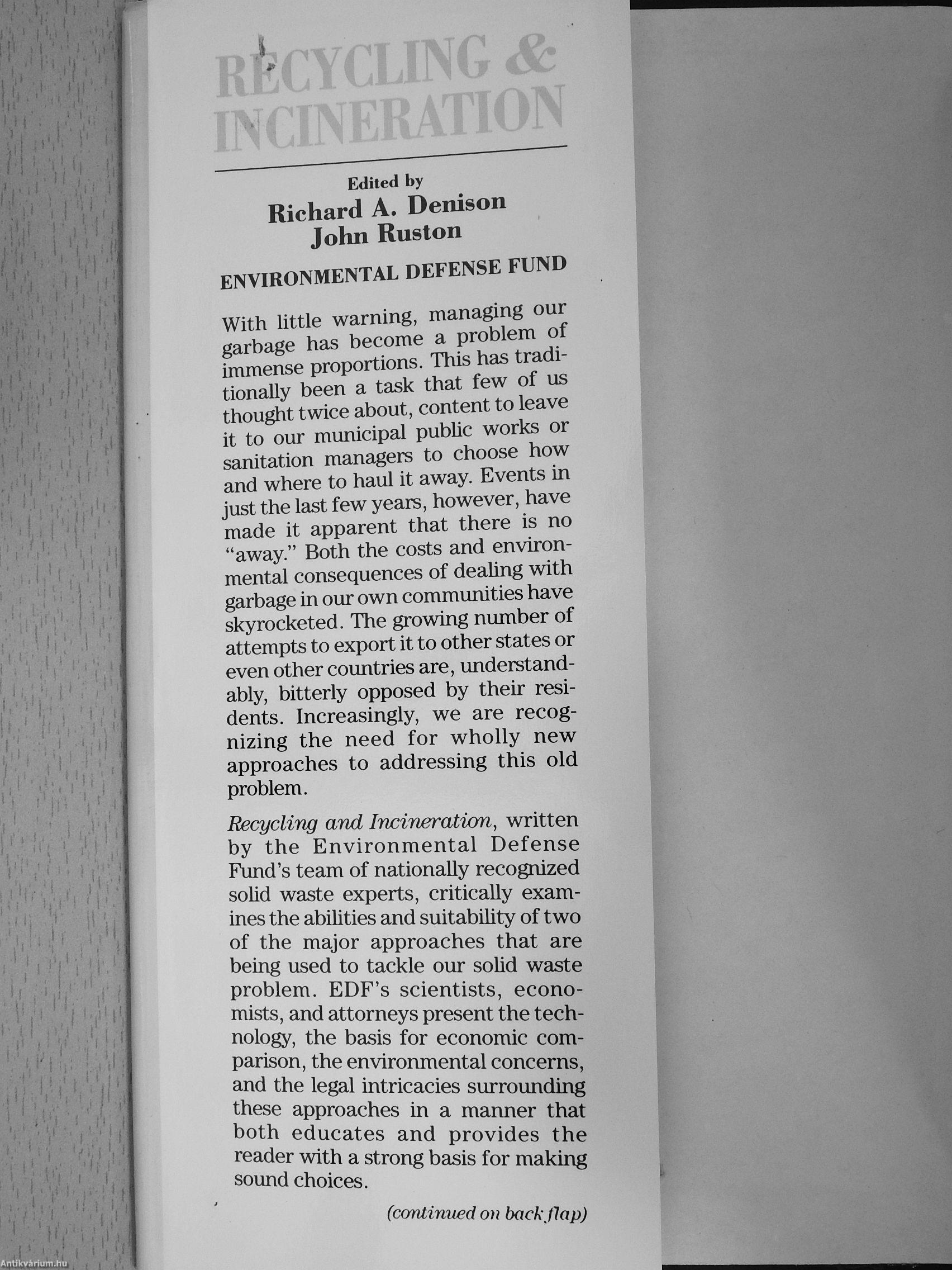
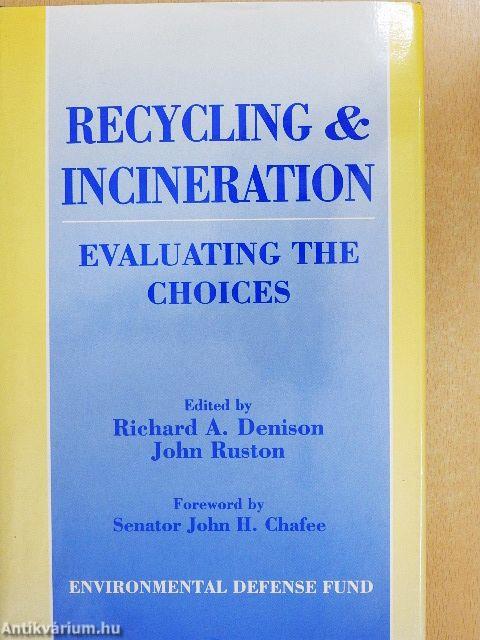
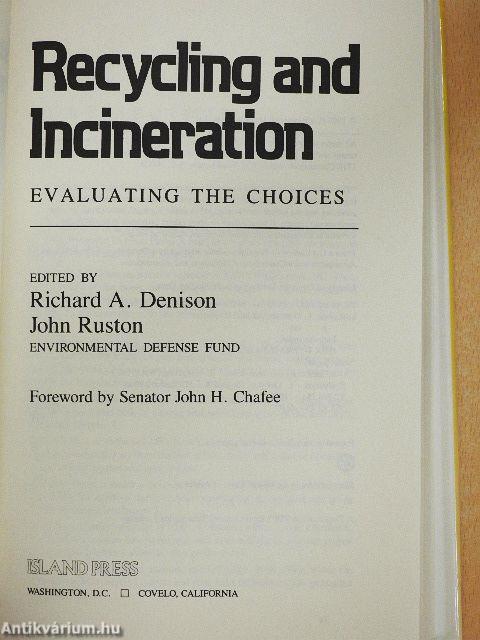
Edited by
Richard A. Denison John Ruston
ENVIRONMENTAL DEFENSE FUND
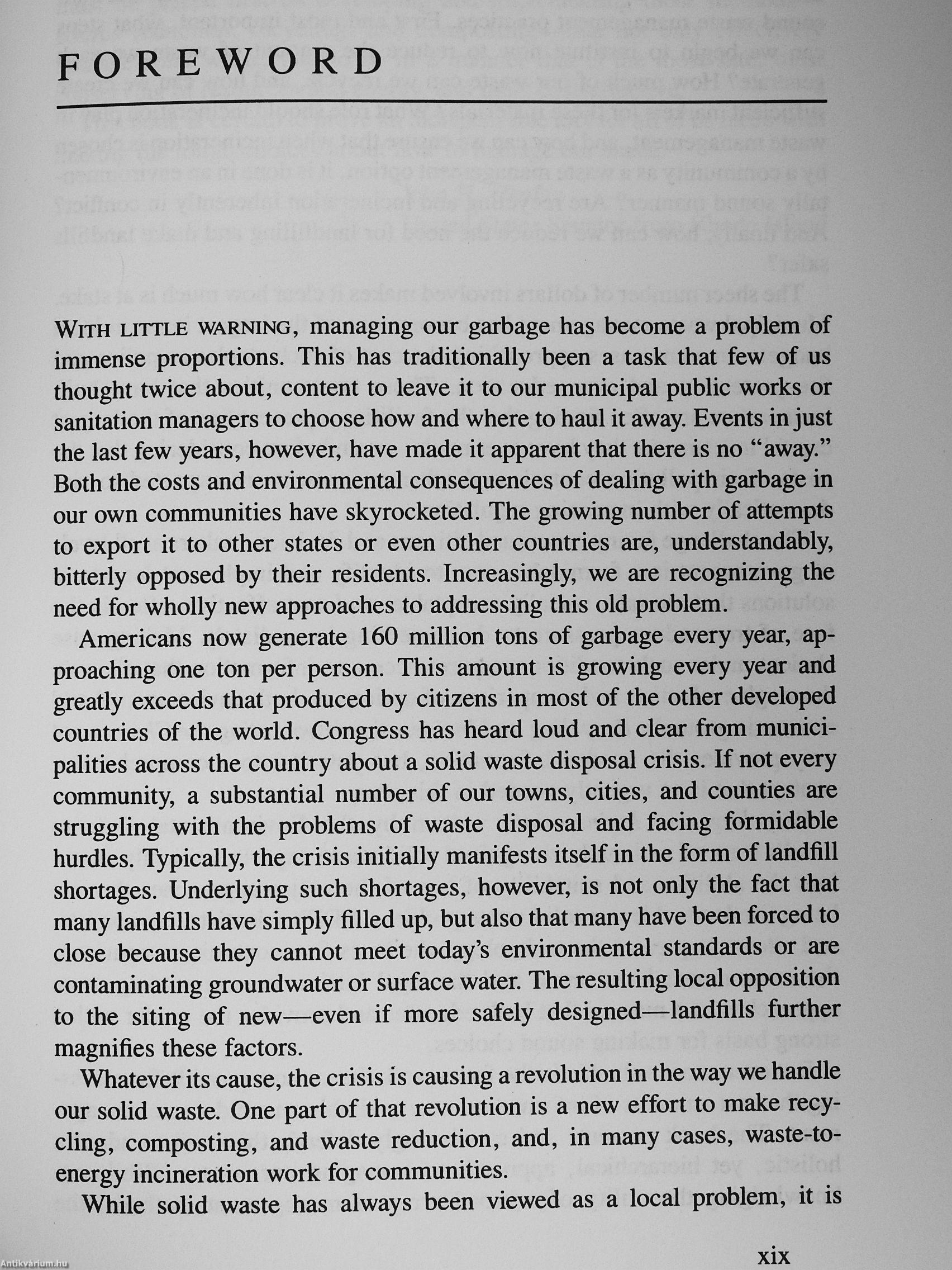
With httle warning, managing our garbage has become a problem of immense proportions. This has traditionally been a task that few of us thought twice about, content to leave it to our municipal public works or sanitation managers to choose how and where to haul it away. Events in just the last few years, however, have made it apparent that there is no "away." Both the costs and environmental consequences of dealing with garbage in our own communities have skyrocketed. The growing number of attempts to export it to other states or even other countries are, understandably, bitterly opposed by their residents. Increasingly, we are recognizing the need for wholly new approaches to addressing this old problem.
Recycling and Incineration, written by the Environmental Defense Fund's team of nationally recognized solid waste experts, critically examines the abilities and suitability of two of the major approaches that...
Tovább
Fülszöveg
Edited by
Richard A. Denison John Ruston
ENVIRONMENTAL DEFENSE FUND
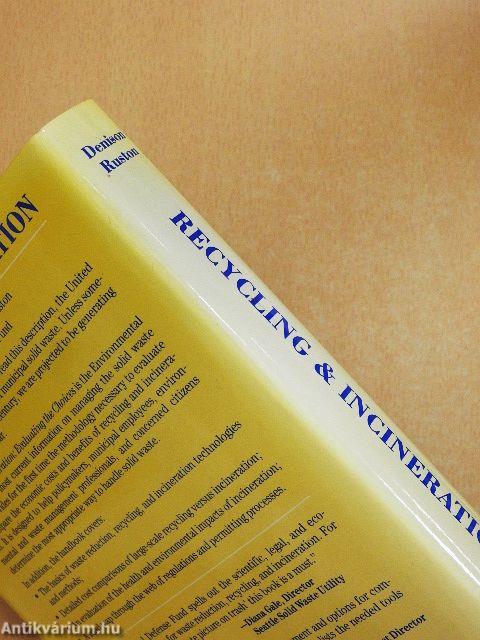
With httle warning, managing our garbage has become a problem of immense proportions. This has traditionally been a task that few of us thought twice about, content to leave it to our municipal public works or sanitation managers to choose how and where to haul it away. Events in just the last few years, however, have made it apparent that there is no "away." Both the costs and environmental consequences of dealing with garbage in our own communities have skyrocketed. The growing number of attempts to export it to other states or even other countries are, understandably, bitterly opposed by their residents. Increasingly, we are recognizing the need for wholly new approaches to addressing this old problem.
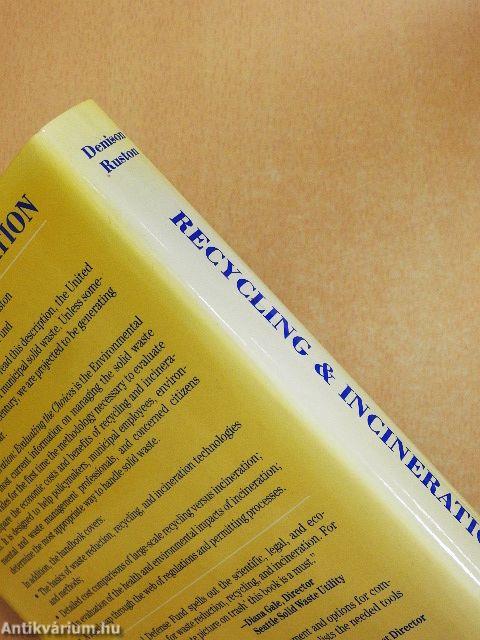
Recycling and Incineration, written by the Environmental Defense Fund's team of nationally recognized solid waste experts, critically examines the abilities and suitability of two of the major approaches that are being used to tackle our solid waste problem. EDF's scientists, economists, and attorneys present the technology, the basis for economic comparison, the environmental concerns, and the legal intricacies surrounding these approaches in a manner that both educates and provides the reader with a strong basis for making sound choices.
(continued on backjlap)
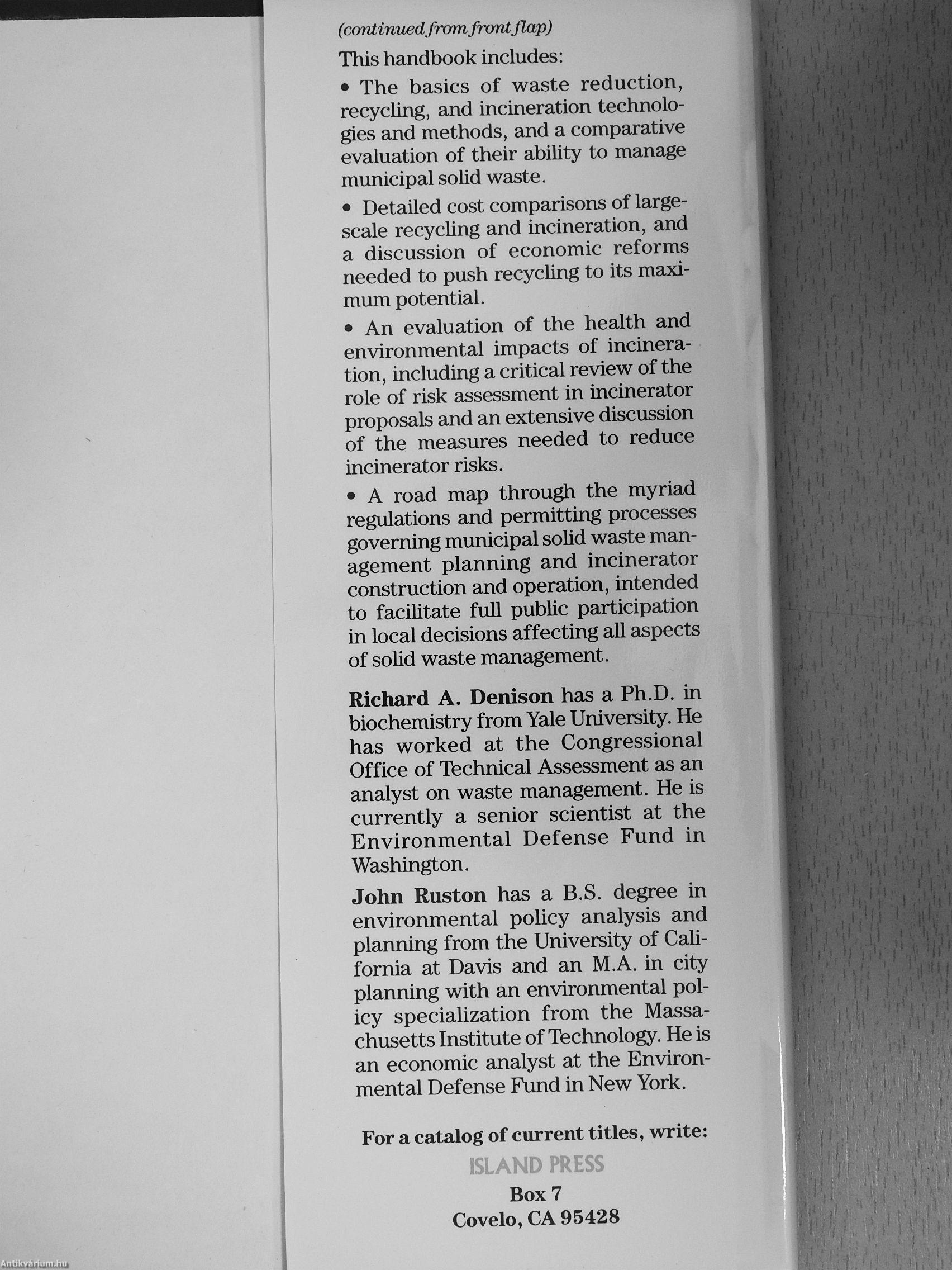
(continuedfromfront flap) This handbook includes:
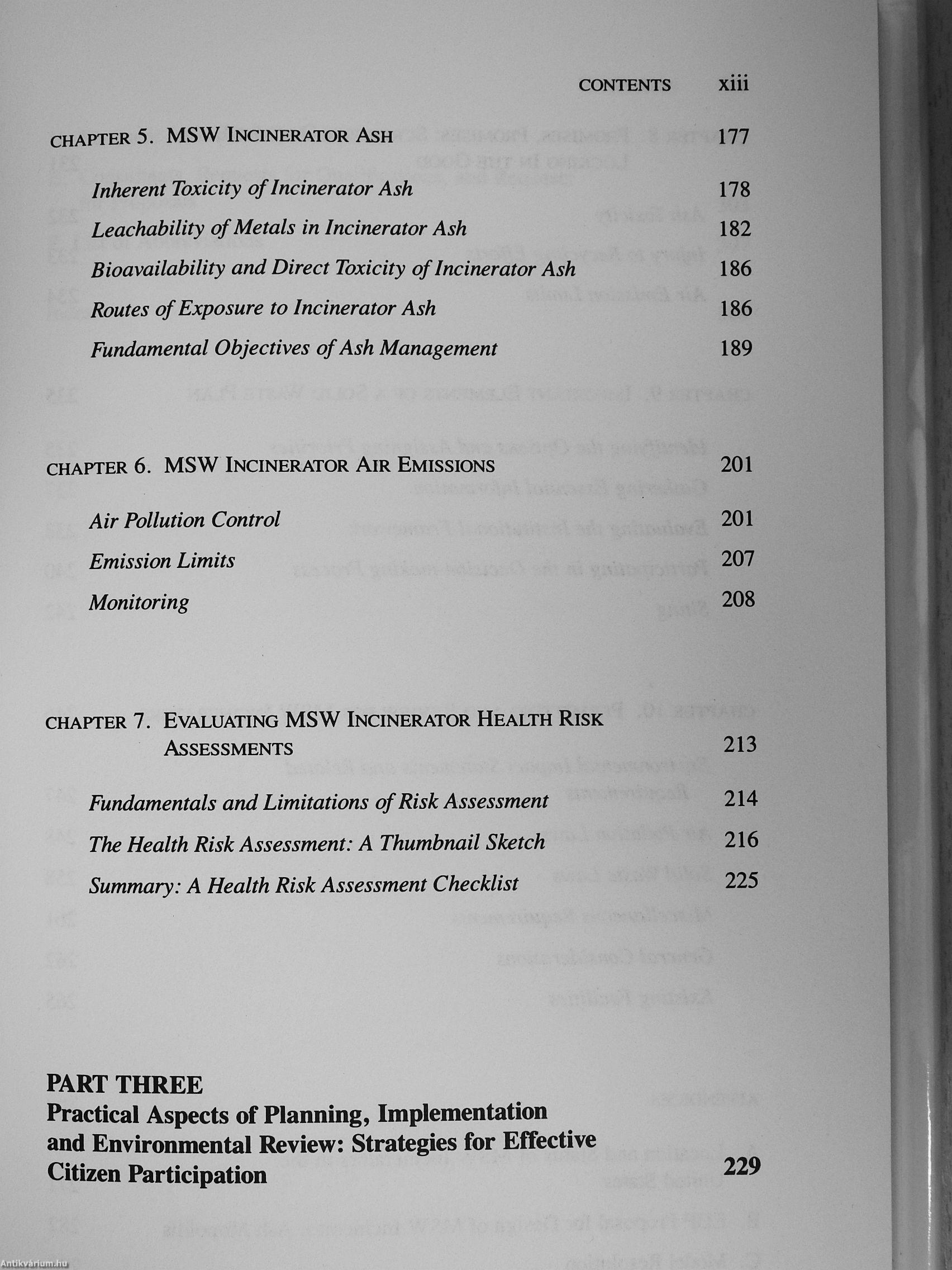
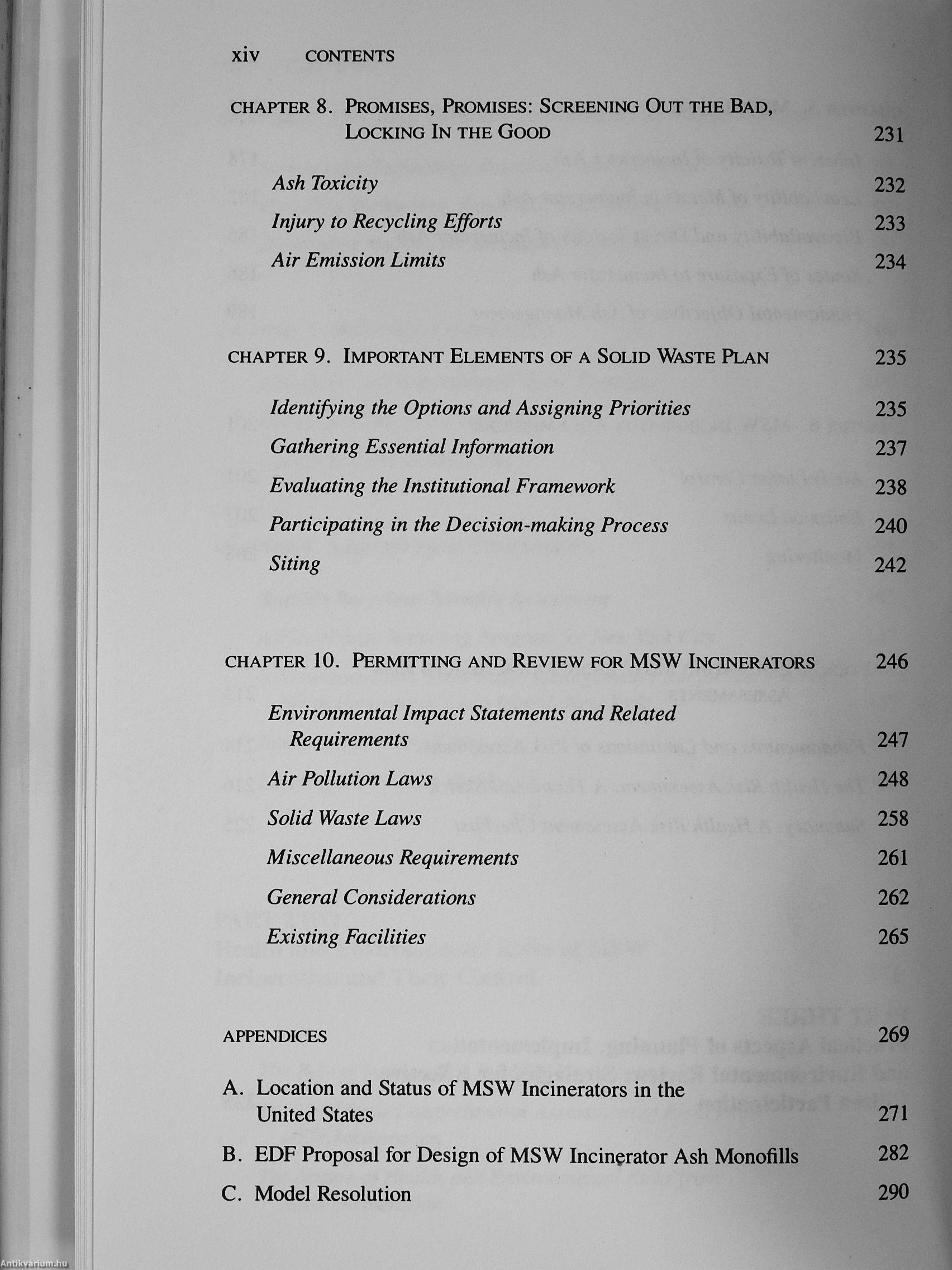
• The basics of waste reduction, recycling, and incineration technologies and methods, and a comparative evaluation of their ability to manage municipal solid waste.
• Detailed cost comparisons of large-scale recycling and incineration, and a discussion of economic reforms needed to push recycling to its maximum potential.
• An evaluation of the health and environmental impacts of incineration, including a critical review of the role of risk assessment in incinerator proposals and an extensive discussion of the measures needed to reduce incinerator risks.
• A road map through the myriad regulations and permitting processes governing municipal solid waste management planning and incinerator construction and operation, intended to facilitate full pubUc participation in local decisions affecting aU aspects of solid waste management.
Richard A. Denison has a Ph.D. in biochemistry from Yale University. He has worked at the Congressional Office of Technical Assessment as an analyst on waste management. He is currently a senior scientist at the Environmental Defense Fund in Washington.
John Ruston has a B.S. degree in environmental policy analysis and planning from the University of California at Davis and an M.A. in city planning with an environmental policy specialization from the Massachusetts Institute of Technology. He is an economic analyst at the Environmental Defense Fund in New York.
For a catalog of current titles, write:
ISLA.,. PRESS Box 7 Covelo, CA 95428
i I
I'
il
'I
.lliiLti:!)
Vissza 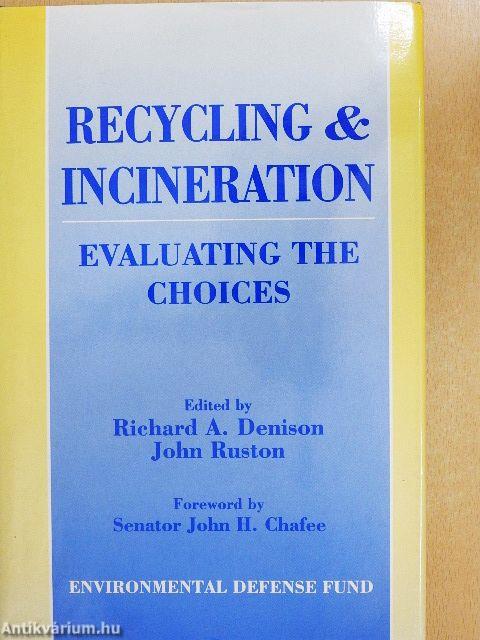



 Folytatás Microsoft-tal