Fülszöveg
RELIGIOUS STUDIES / CULTURAL STUDIES
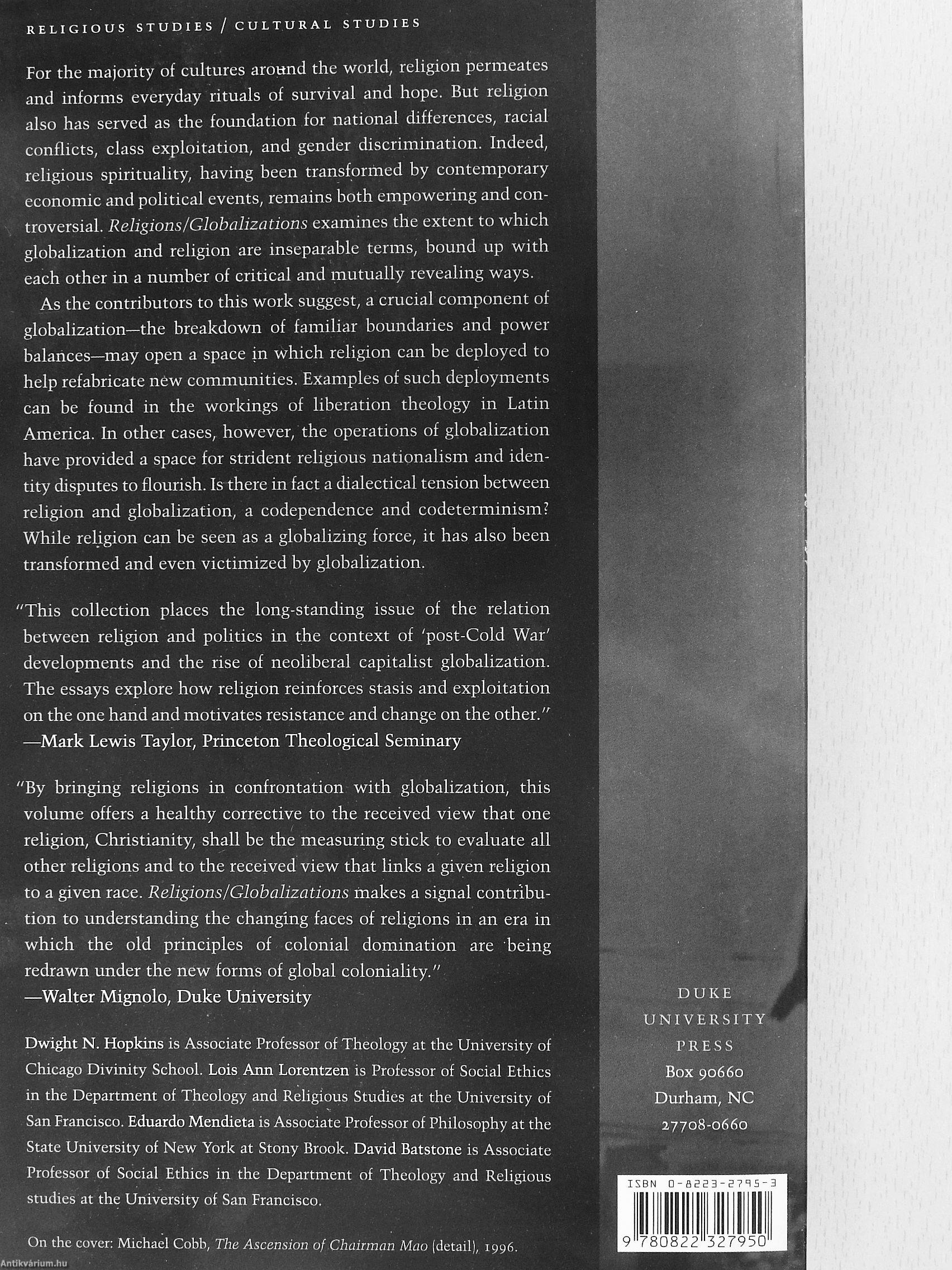
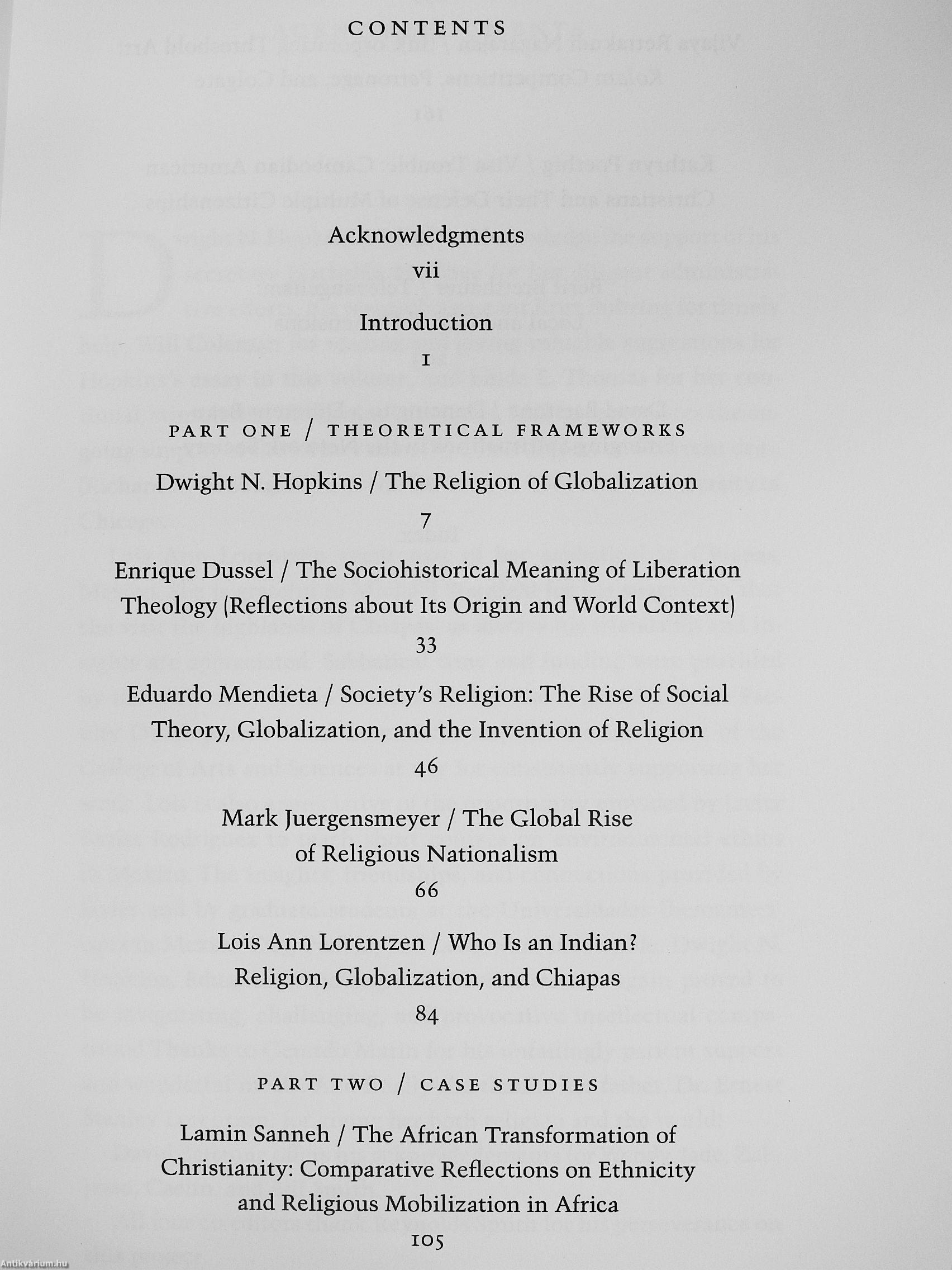
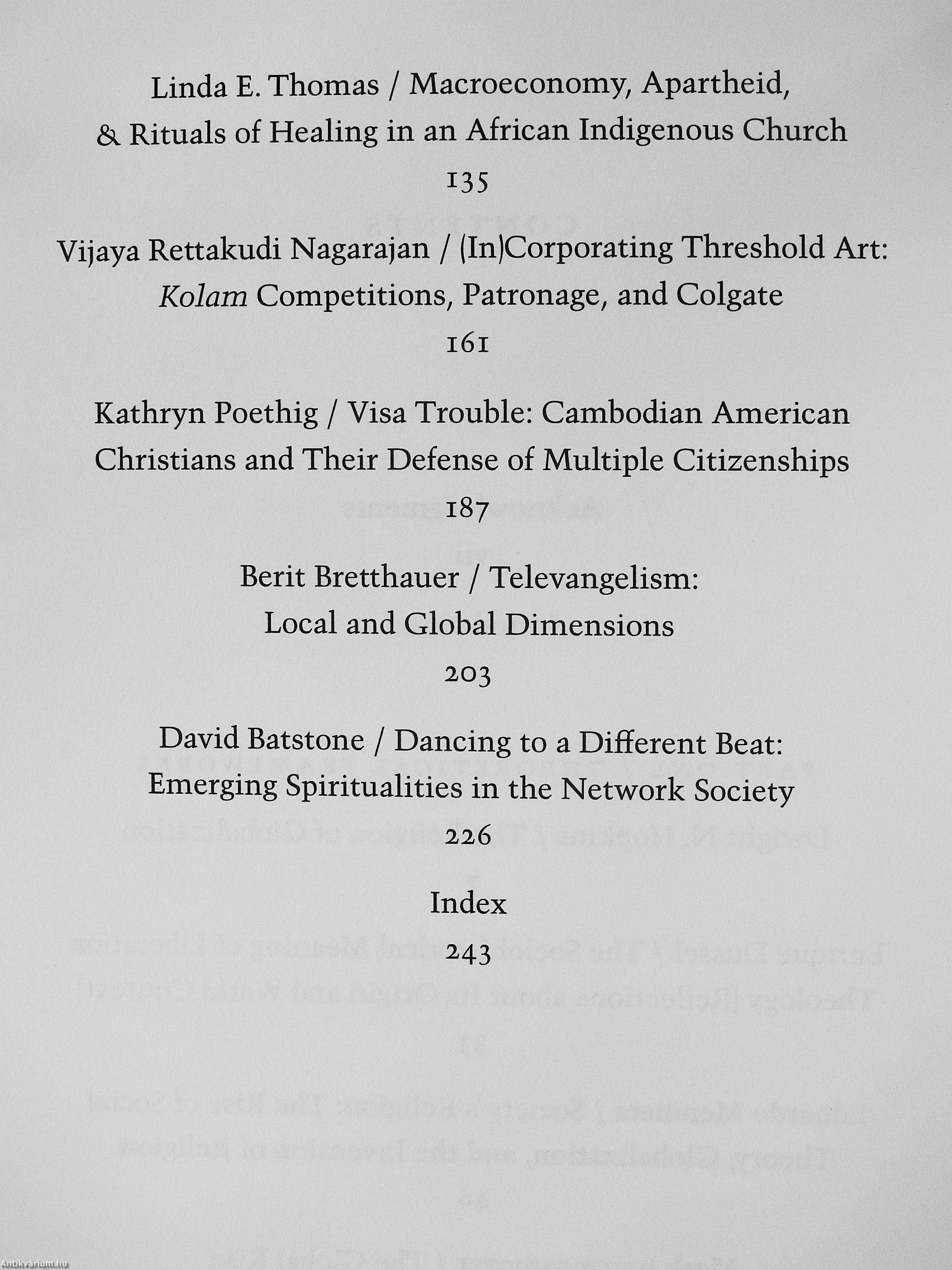
For the majority of cultures around the world, religion permeates and informs everyday rituals of survival and hope. But religion also has served as the foundation for national differences, racial conflicts, class exploitation, and gender discrimination. Indeed, religious spirituality, having been transformed by contemporary economic and political events, remains both einpowering and controversial. Religions/Globalizations examines the extent to which globalization and religion are inseparable terms, bound up with each other in a number of critical and mutually revealing ways.
As the contributors to this work suggest, a crucial component of globalization—the breakdown of familiar boundaries and power balances—may open a space in which religion can be deployed to help refabricate new communities. Examples of such deployments can be found in the workings of liberation theology in Latin America. In other cases, however, the operations of...
Tovább
Fülszöveg
RELIGIOUS STUDIES / CULTURAL STUDIES
For the majority of cultures around the world, religion permeates and informs everyday rituals of survival and hope. But religion also has served as the foundation for national differences, racial conflicts, class exploitation, and gender discrimination. Indeed, religious spirituality, having been transformed by contemporary economic and political events, remains both einpowering and controversial. Religions/Globalizations examines the extent to which globalization and religion are inseparable terms, bound up with each other in a number of critical and mutually revealing ways.
As the contributors to this work suggest, a crucial component of globalization—the breakdown of familiar boundaries and power balances—may open a space in which religion can be deployed to help refabricate new communities. Examples of such deployments can be found in the workings of liberation theology in Latin America. In other cases, however, the operations of globalization have provided a space for strident religious nationalism and identity disputes to flourish. Is there in fact a dialectical tension between religion and globalization, a codependence and codeterminism? While religion can be seen as a globalizing force, it has also been transformed and even victimized by globalization.
"This collection places the long-standing issue of the relation between religion and politics in the context of 'post-Cold War' developments and the rise of neoliberal capitalist globalization. The essays explore how religion reinforces stasis and exploitation on the one hand and motivates resistance and change on the other." —Mark Lewis Taylor, Princeton Theological Seminary
"By bringing religions in confrontation with globalization, this volume offers a healthy corrective to the received view that one religion, Christianity, shall be the measuring stick to evaluate all other religions and to the received view that Unks a given religion to a given race. Religions/Globalizations inakes a signal contribution to understanding the changing faces of religions in an era in which the old principles of colonial domination are being redrawn under the new forms of global coloniality." —Walter Mignolo, Duke University
Dwight N. Hopkins is Associate Professor of Theology at the University of Chicago Divinity School, Lois Ann Lorentzen is Professor of Social Ethics in the Department of Theology and Rehgious Studies at the University of San Francisco. Eduardo Mendieta is Associate Professor of Philosophy at the State University of New York at Stony Brook. David Batstone is Associate Professor of Social Ethics in the Department of Theology and Religious studies at the University of San Francisco.
UNIVERSITY PRESS Box 90660 Durham, NC 27708-0660
On the cover: Michael Cobb, The Ascension of Chairman Mao (detail), 1996.
9780822327950
Vissza 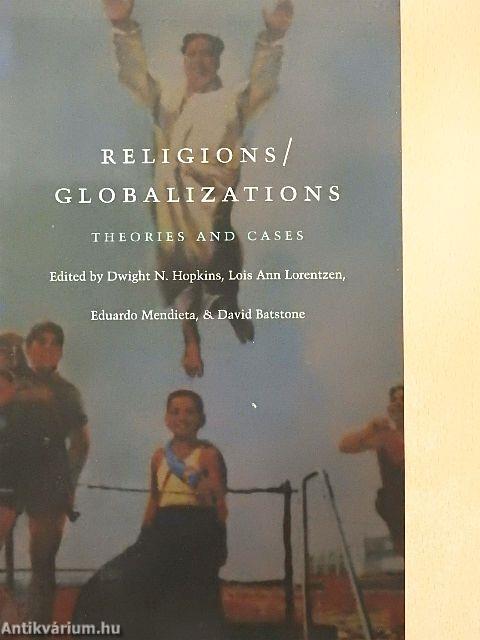







 Folytatás Microsoft-tal