
1.150.218
kiadvánnyal nyújtjuk Magyarország legnagyobb antikvár könyv-kínálatát

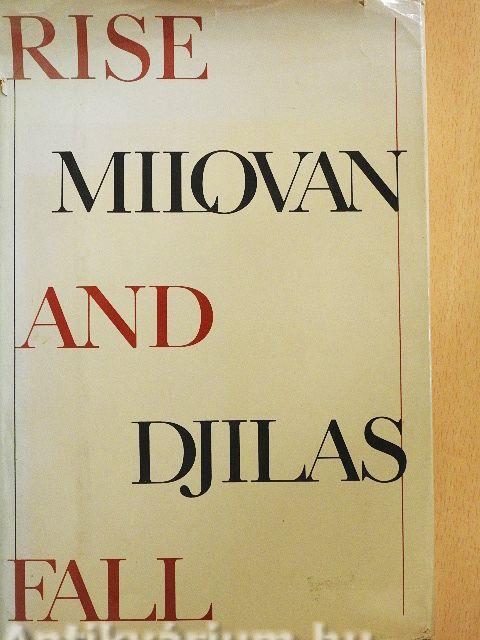
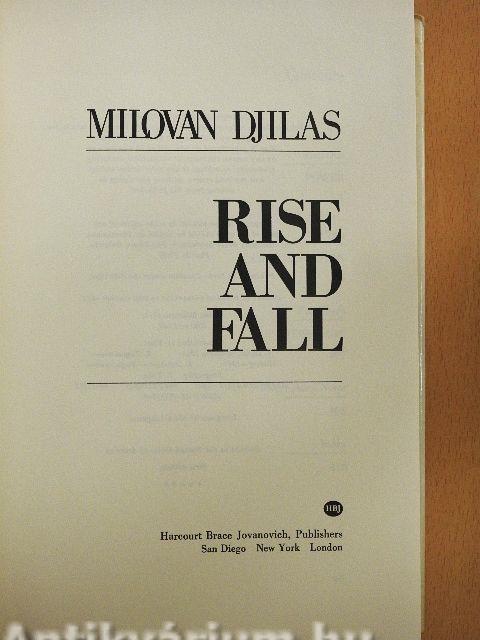
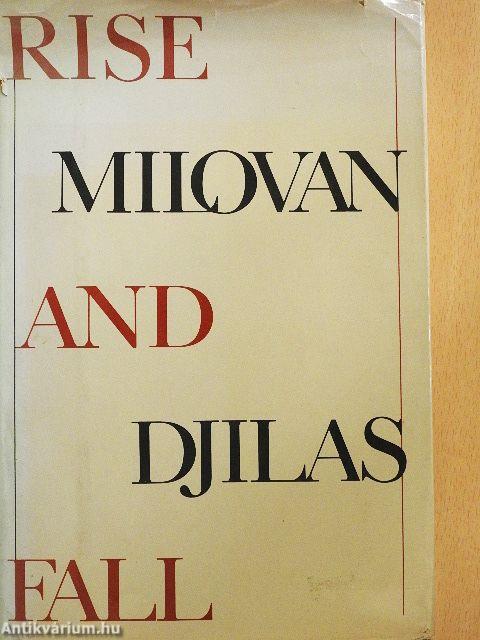
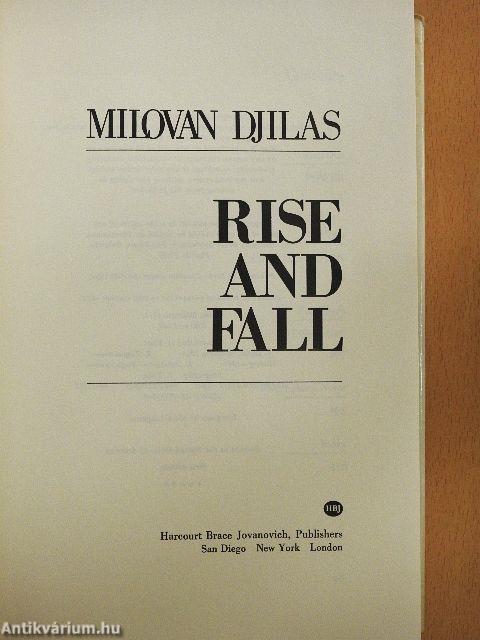
Rise and Fall
Orlando
| Kiadó: | Harcourt Brace Jovanovich, Publishers |
|---|---|
| Kiadás helye: | Orlando |
| Kiadás éve: | |
| Kötés típusa: | Félvászon |
| Oldalszám: | 424 oldal |
| Sorozatcím: | |
| Kötetszám: | |
| Nyelv: | Angol |
| Méret: | 24 cm x 16 cm |
| ISBN: | 0-15-177572-9 |
Értesítőt kérek a kiadóról
A beállítást mentettük,
naponta értesítjük a beérkező friss
kiadványokról
naponta értesítjük a beérkező friss
kiadványokról
A beállítást mentettük,
naponta értesítjük a beérkező friss
kiadványokról
naponta értesítjük a beérkező friss
kiadványokról
Előszó
Tovább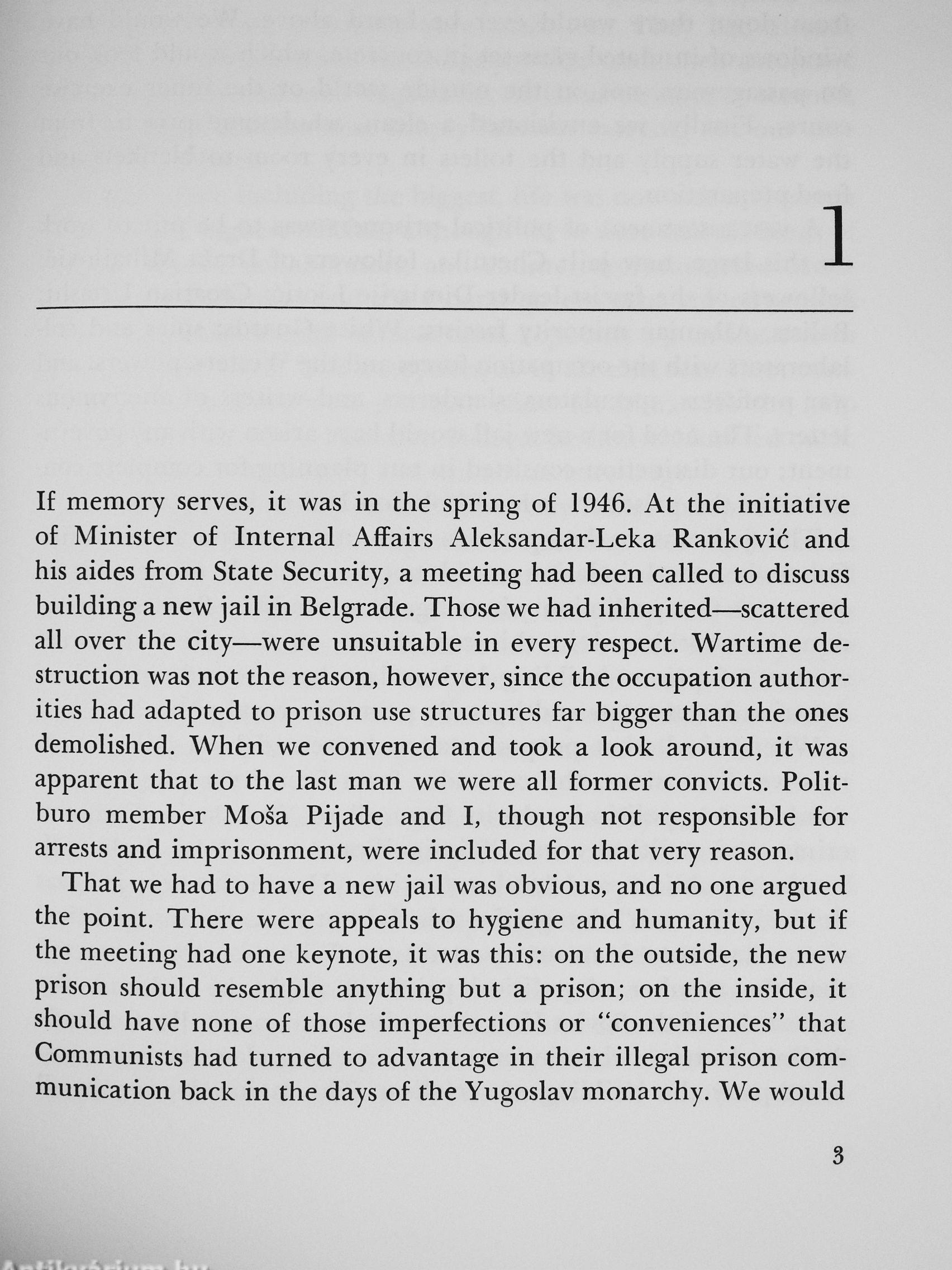
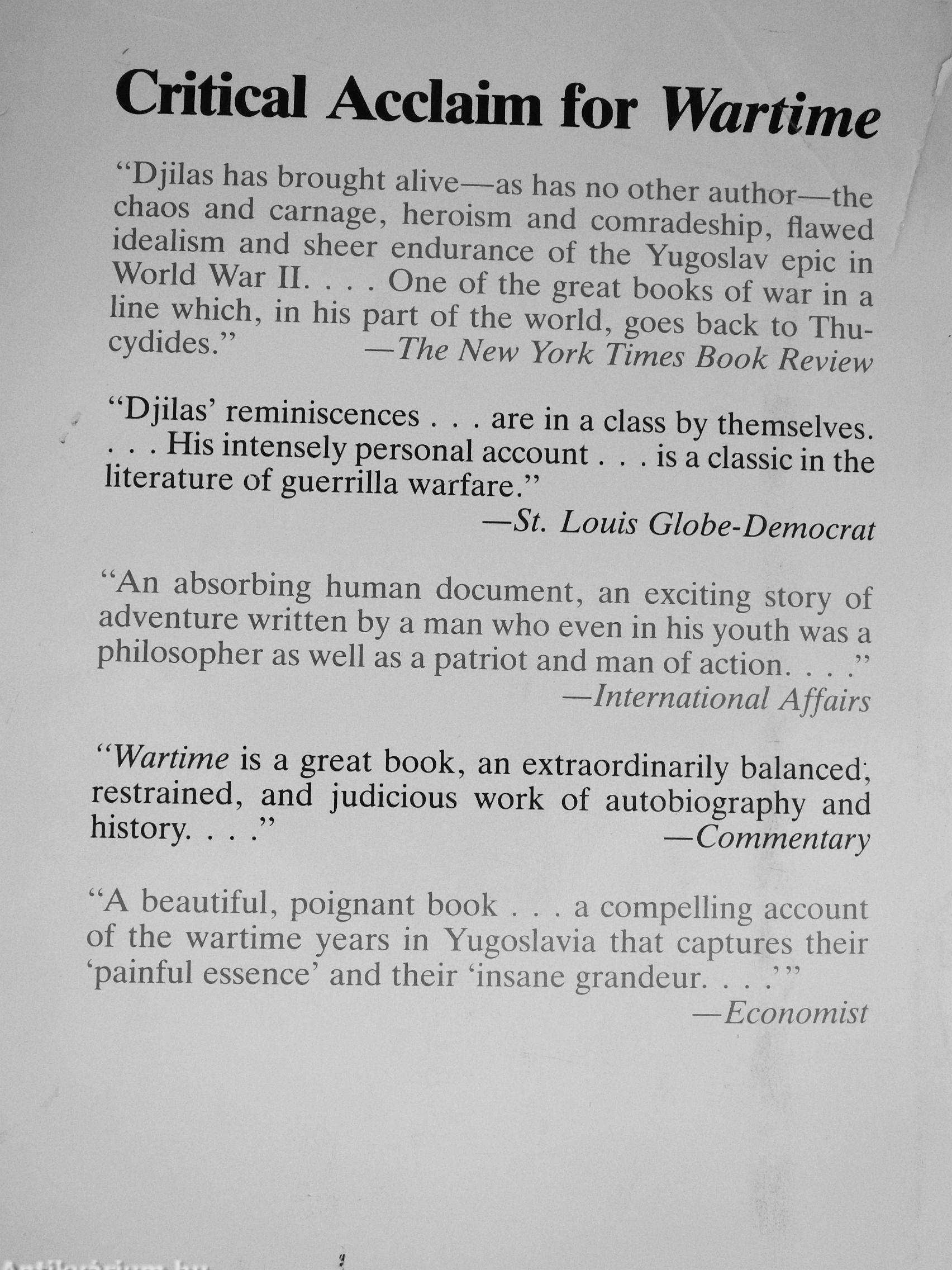
Fülszöveg
Critical Acclaim for Wartime
"Djilas has brought alive—as has no other author—the chaos and carnage, heroism and comradeship, flawed idealism and sheer endurance of the Yugoslav epic in World War II. . . . One of the great books of war in a line which, in his part of the world, goes back to Thu-cydides." —The New York Times Book Review
"Djilas' reminiscences are in a class by themselves. . . . His intensely personal account. . . is a classic in the literature of guerrilla warfare."
—St. Louis Globe-Democrat
"An absorbing human document, an exciting story of adventure written by a man who even in his youth was a philosopher as well as a patriot and man of action. . . ."
—International Affairs
"Wartime is a great book, an extraordinarily balanced, restrained, and judicious work of autobiography and history " —Commentary
"A beautiful, poignant book a compelling account of the wartime years in Yugoslavia that captures their 'painful essence' and their 'insane grandeur. . .... Tovább
Fülszöveg
Critical Acclaim for Wartime
"Djilas has brought alive—as has no other author—the chaos and carnage, heroism and comradeship, flawed idealism and sheer endurance of the Yugoslav epic in World War II. . . . One of the great books of war in a line which, in his part of the world, goes back to Thu-cydides." —The New York Times Book Review
"Djilas' reminiscences are in a class by themselves. . . . His intensely personal account. . . is a classic in the literature of guerrilla warfare."
—St. Louis Globe-Democrat
"An absorbing human document, an exciting story of adventure written by a man who even in his youth was a philosopher as well as a patriot and man of action. . . ."
—International Affairs
"Wartime is a great book, an extraordinarily balanced, restrained, and judicious work of autobiography and history " —Commentary
"A beautiful, poignant book a compelling account of the wartime years in Yugoslavia that captures their 'painful essence' and their 'insane grandeur. . . ."'
—Economist
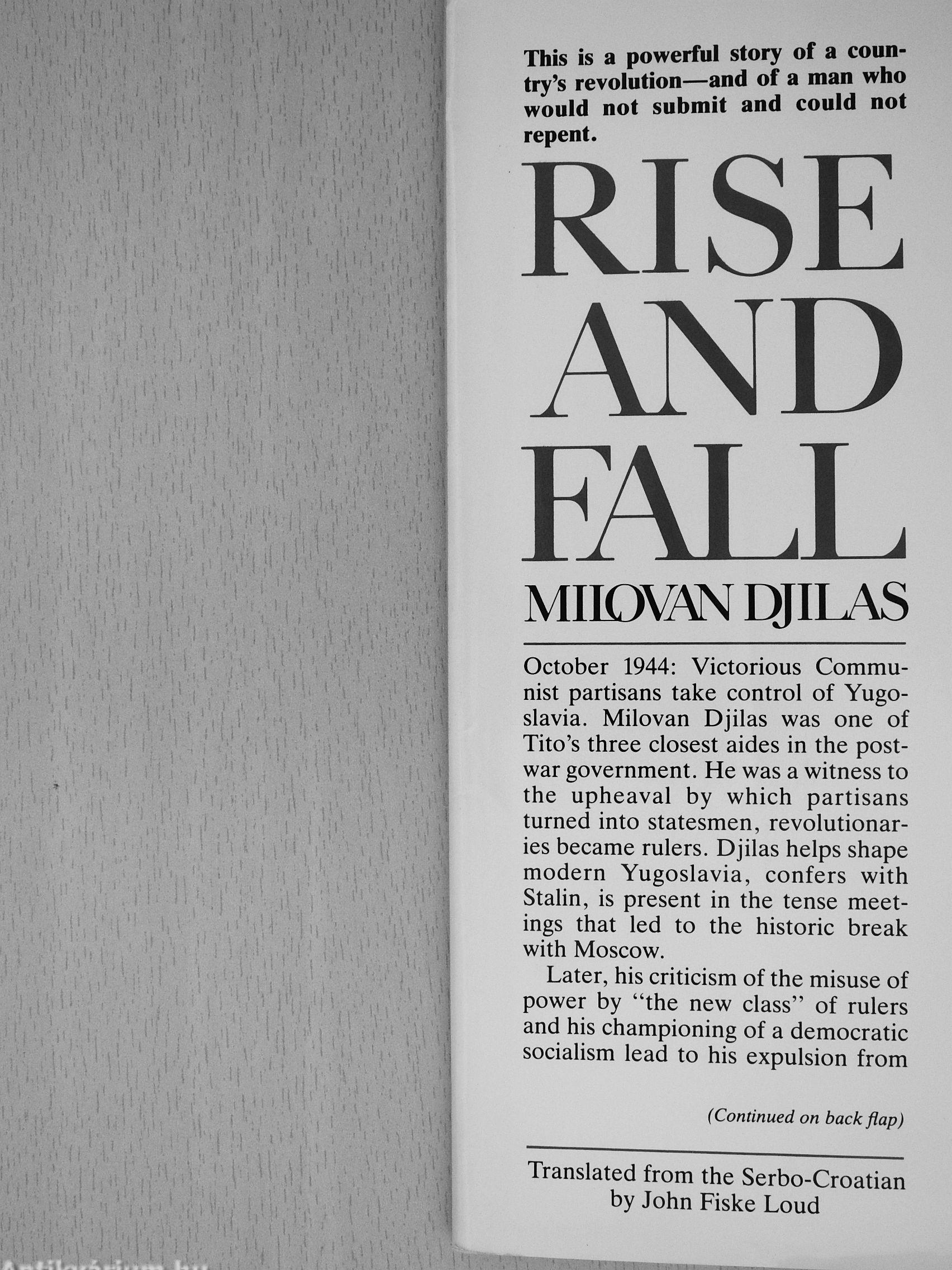
This is a powerful story of a country's revolution—and of a man who would not submit and could not repent.
RISE AND FALL
MllOVm DJILAS
October 1944: Victorious Communist partisans take control of Yugoslavia. Milovan Djilas was one of Tito's three closest aides in the postwar government. He was a witness to the upheaval by which partisans turned into statesmen, revolutionaries became rulers. Djilas helps shape modern Yugoslavia, confers with Stalin, is present in the tense meetings that led to the historic break with Moscow.
Later, his criticism of the misuse of power by "the new class" of rulers and his championing of a democratic socialism lead to his expulsion from
(Continued on back flap)
Translated from the Serbo-Croatian by John Fiske Loud
(Continued from front flap)
the Central Committee and, in 1956, to isolation, ostracism, and nine years of imprisonment. "An exile into damnation and loneliness," Djilas calls it.
Rise and Fall is an insider's account of a revolution gone awry, of the power of dictatorship, of control that seizes not only minds but also bodies. Through it all, Djilas tried to remain true to the revolution that was so cruelly untrue to him. Truth is what characterizes this painful, passionate, personal book.
Until his expulsion from the Communist party in 1954, Milovan Djilas was a Vice-President of Yugoslavia and one of Tito's three highest aides. Writing both in prison and out, he has produced several important and popular critical studies of communism, a literary biography, and volumes of short stories, novels, and autobiography. Djilas is the author of four volumes of personal memoirs, of which Rise and Fall is the fourth and last. He lives in Belgrade.
Author photo by Folke Hellberg and Dagens Nyheter Jacket design by Paul Gamarello
Harcourt Brace Jovanovich, Publishers
1250 Sixth Avenue, San Diego, CA 92101 111 Fifth Avenue, New York, NY 10003 Vissza

Témakörök
- Idegennyelv > Idegennyelvű könyvek > Angol > Szépirodalom > Regény, novella, elbeszélés
- Idegennyelv > Idegennyelvű könyvek > Angol > Történelem > Európa története > Egyéb
- Szépirodalom > Regény, novella, elbeszélés > Az író származása szerint > Európa
- Történelem > Idegennyelvű > Angol
- Történelem > Politika > Belpolitika > Egyéb
- Történelem > Legújabb kor > II. világháború > Hadtörténet
- Történelem > Legújabb kor > A hidegháború kora (1946-1991)
- Történelem > Politika > Pártok, szervezetek
- Történelem > Politika > Ideológiák > Kommunizmus > Egyéb
- Történelem > Hadtörténet > Hadügy, hadviselés
- Szépirodalom > Regény, novella, elbeszélés > Tartalom szerint > Életrajzi regények > Önéletrajzok, naplók, memoárok
- Történelem > Kontinensek szerint > Európa, európai országok története > Közép-Európa > Egyéb
Milovan Djilas
Milovan Djilas műveinek az Antikvarium.hu-n kapható vagy előjegyezhető listáját itt tekintheti meg: Milovan Djilas könyvek, művekMegvásárolható példányok
Nincs megvásárolható példány
A könyv összes megrendelhető példánya elfogyott. Ha kívánja, előjegyezheti a könyvet, és amint a könyv egy újabb példánya elérhető lesz, értesítjük.
 Folytatás Microsoft-tal