
1.148.427
kiadvánnyal nyújtjuk Magyarország legnagyobb antikvár könyv-kínálatát

Root Ecology and its Practical Application
A Contribution to the Investigation of the Whole Plant 2/Proceedings of the 3rd ISRR-symposium September 2nd-6th, 1991 Wien, Austria
Klagenfurt
| Kiadó: | Verein für Wurzelforschung |
|---|---|
| Kiadás helye: | Klagenfurt |
| Kiadás éve: | |
| Kötés típusa: | Fűzött kemény papírkötés |
| Oldalszám: | 840 oldal |
| Sorozatcím: | Proceedings of the Symposium of the International Society of Root Research |
| Kötetszám: | 3 |
| Nyelv: | Angol Német |
| Méret: | 28 cm x 21 cm |
| ISBN: | |
| Megjegyzés: | Fekete-fehér fotókkal, ábrákkal. |
Értesítőt kérek a kiadóról
Értesítőt kérek a sorozatról
A beállítást mentettük,
naponta értesítjük a beérkező friss
kiadványokról
naponta értesítjük a beérkező friss
kiadványokról
A beállítást mentettük,
naponta értesítjük a beérkező friss
kiadványokról
naponta értesítjük a beérkező friss
kiadványokról
Előszó
Tovább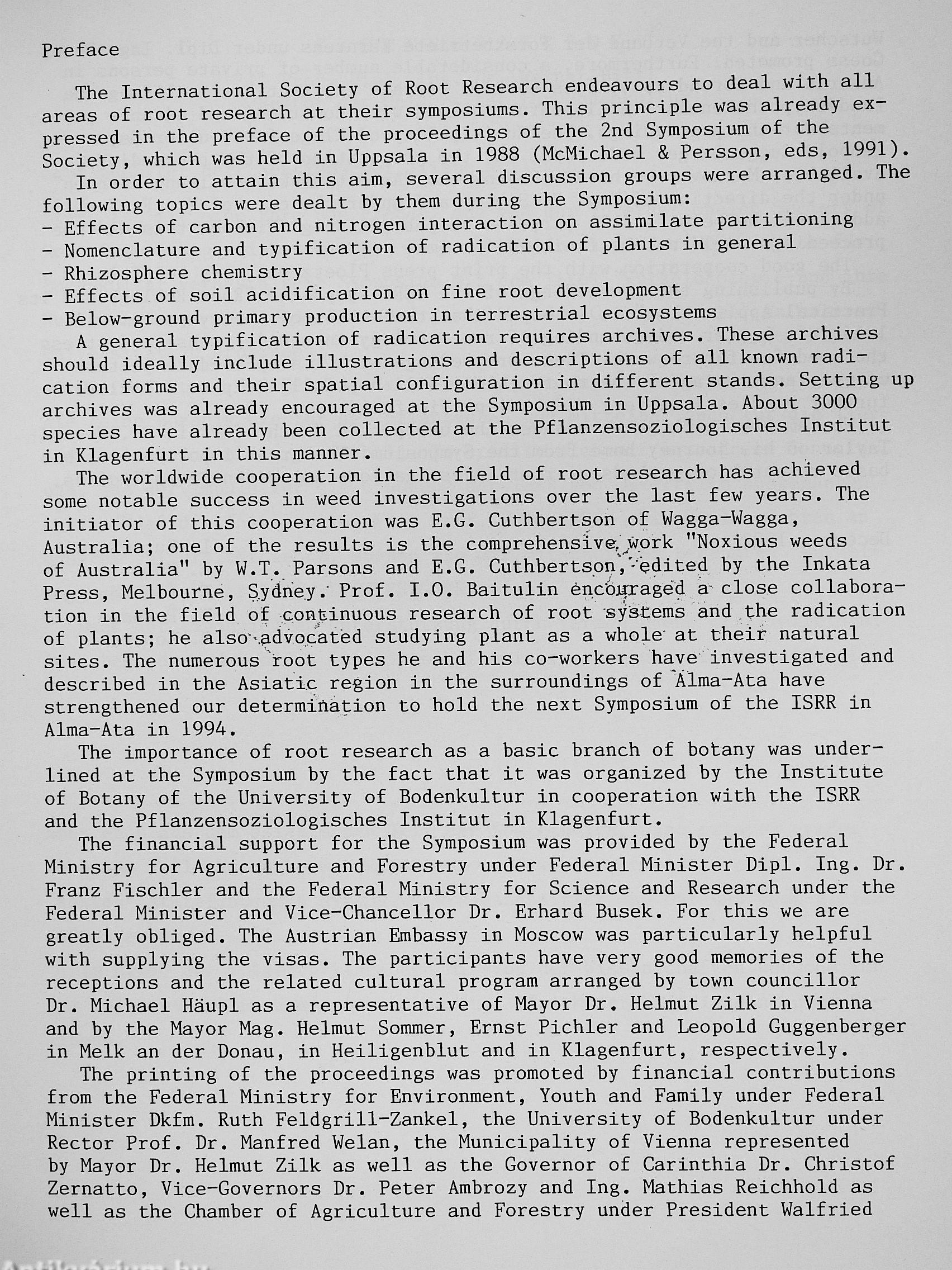
Fülszöveg
-Iii;
I ¦ I '
'.I
V,
ifill i l' ¦
Hie research on roots - on their developnent and function in general and as it pertains to specific plant taxa - is gaining increasing interest among botanists, especially plant ecologists. Plant ecologists want to know v4iy plants can grow only in certain locations and, in particular, whicl) envlronnEntal conditions the different plant" species need and how the species themselves influence aiviromiiental conditions. Both questions are of great importance for applied botany as well. Knowledge of the ground axis and of the roots is fundanental in answering these questions. First of all we need to know viiy roots were developed during evolution, Tlie time of their appearance according to . new growing conditions provide us with the best information. The first roots were developed when plants invaded land. The necessity for root developnient is demonstrated by the fact that it took place independently in different taxa; this is confirmed... Tovább
Fülszöveg
-Iii;
I ¦ I '
'.I
V,
ifill i l' ¦
Hie research on roots - on their developnent and function in general and as it pertains to specific plant taxa - is gaining increasing interest among botanists, especially plant ecologists. Plant ecologists want to know v4iy plants can grow only in certain locations and, in particular, whicl) envlronnEntal conditions the different plant" species need and how the species themselves influence aiviromiiental conditions. Both questions are of great importance for applied botany as well. Knowledge of the ground axis and of the roots is fundanental in answering these questions. First of all we need to know viiy roots were developed during evolution, Tlie time of their appearance according to . new growing conditions provide us with the best information. The first roots were developed when plants invaded land. The necessity for root developnient is demonstrated by the fact that it took place independently in different taxa; this is confirmed by a range of anatonical differences. Ch land the intensity of light is much higher than in water, \tere plants originated, This results in an overproduction of carbohydrates. This overproduction must be removed, otherwise the plants will die due to desslcation or other damage.
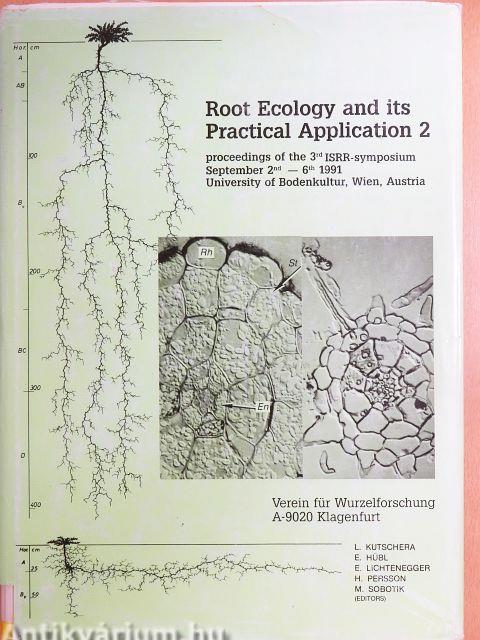
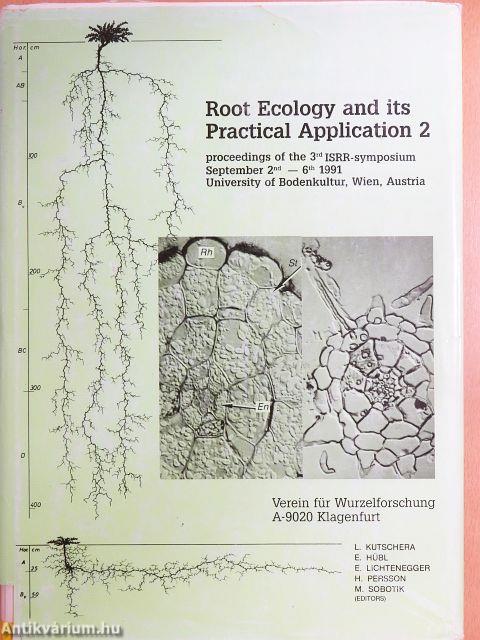
As a consequence, a completely new organ, as W. Hagemann, [feldelberg, stated, must be developed from the inside of the plant body in order, to ranove the carbohydrate overproduction. Due to its developnent from the inside of the plant, no cuticle can be formed. This property, together with its high carbohydrate content, makes the root an organ capable of exerting a most powerful suction force for water and minerals, which it takes frcm the outside. As can be seen on the front side of the dust jacket, Eleocharis palustris roots with a diameter of only 0,1 imi can consist up to 95-99 % storage tissue and only 1-5 % conducting tissues.
The differences between shoot and root Include a different development and anatonical structure, whereby jhysiological functions are responsible for the differences In the direction of the geotropic growth. The predoninant water uptake from the outside causes, based on physical factors, the positive ^tropic growth of the roots; this contrasts with the shoot, vtere neg3tive geotropic growth takes place due to its predcminant water uptake frcm the inside. Roots are capable of negative geotropic growth as well if the elongation zone obtains water frcm the inside; this occasionally takes place in the case of the swollen seeds. Due to their negative geotropic growth the roots transport the carbohydrate overproduction into deeper and generally cooler soil layers where it is protected ag3inst premature respiration. The greater the change in temperature and humidity, the deeper the
Front side
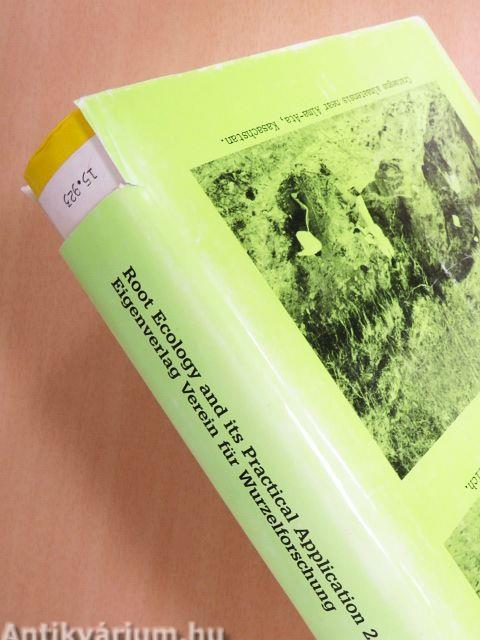
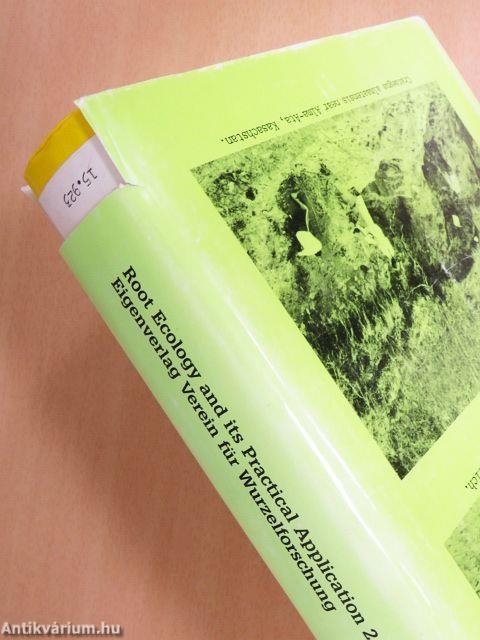
left and bottom Carlina acaulis, 470 m NN near Klagen-
furt and 2070 m near GroBglockner, respectively Middle left Eleocharis uniglumis, root diameter 0,10 mm, cells of cortex and rhizodermis filled with starch, the cells larger than those of the stele. The ratio of the rhizodermis and cortex volume to that of the stele is about 100:1. - right Brcmus inermis, root diameter 0,18 niii, hyphae of fungi penetrating the root by the root hair.
roots will grow, if tie growing conditions are suitable for the particular species. In cases when the soil layer is too cool or the change of temperature and humidity is less pronounced, the roots will grow more or less horizontally. Ihis is shown in Cärllna acaulis on the front side of the dust Jacket.
The root's primary task in the uptake of carbohydrate overproduction makes than the optimal organs for the developnEnt cf RhizokLum, which helps them to fix nitrogen from the air. The roots are therefore most important in increasing the fertility of the soil. Ihe symbiosis with fungi helps to decompose the overprodu-tion of organic natter and further serves to increase soil fertility. The hyphae penetrate the roots through the root hairs, i.e. on their thinnest section behind the slime-covered tip; this is illustrated in Bronus ineimis (see front side of the dust jacket).
The close relationship between carbohydrate production in the shoot and root growth explains the fact that virtually every damage to the shoot is reflected in the roots and In some cases is even more distinct here. Such cases were determined by studying the influence of air pollution.
Until very recently, root research was not regarded to be a separate field of botany. Root studies were only conducted secondarily in the framework of other research work in other fields. Thus the specific features and the importance of the root for plant growth were largely neglected. This contributed to the lack of knowledge cn the anatony and function of the root, especially the root cap, versus that of the shoot. A nHjor step in rectifying this situation was Hagemaim's approach, which redded the root as a ccmpletely new or^ with the new properties listed atxjve. Vfe are confident that root research will attain the status of a distinct research field. In this regard great progress has been made at root conferences; more than 10 have taken place since 1958. The program for the future is to deepen our knowledge about root growth in general and determine the specific radication of every species.
This goal will require the close cooperation of colleagues fron all over the world. The foundation of the International Society of Eoot Research (ISRR) in 1982 at the Federal Research Institute of Agriculture In the Alps, in Gumpenstein, A-8952 Irdning, vas a first step in this directicn; its first conference - in addition to the activities of other associations - have provided further injjetus.
The second ISRR conference in Uppsala In 1988 and the third in Wien in 1992 were additional steps forward. Vfe already had the opportunity to greet a great number of scientists fron the east at the ftinpen-stein conference in 1982. In Wien the number of scientists from east and west at the conference was nearly equal. For this we must express our thanks first of all to former Federal Minister Eipl. Ihg. Günter Haiden, Federal Minister Dipl. Ing. Dr. Franz Flschler of the Federal Ministry for Agriculture and Forestry, and Vice-chancellor and Federal Minister Dr. Erhard Busek of the Federal Ministry for Science and Research, who provided financial support.
f--
f.
!l i Vissza








Megvásárolható példányok
Állapotfotók
Könyvtári könyv volt.
Állapot:
Közepes
5.540 Ft
4.430 ,-Ft 20
22
pont kapható
Kosárba
 Folytatás Microsoft-tal