
1.150.341
kiadvánnyal nyújtjuk Magyarország legnagyobb antikvár könyv-kínálatát

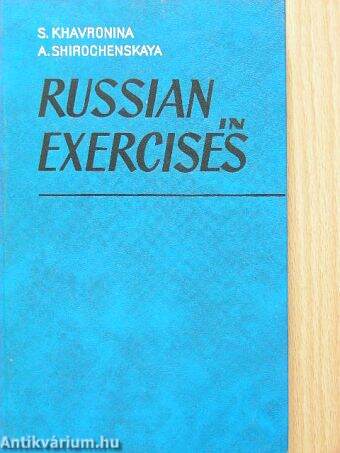
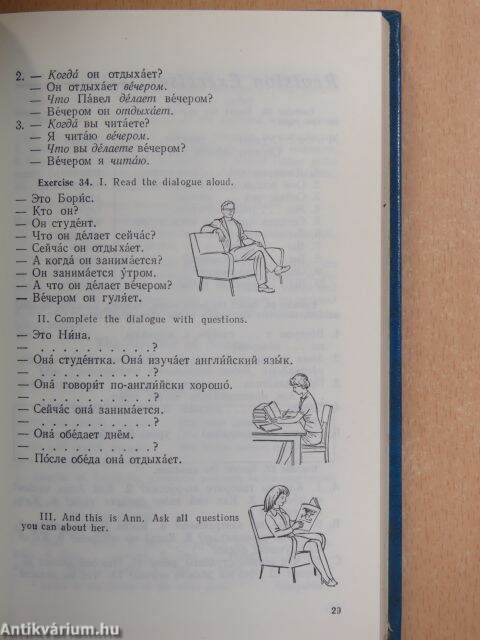
Russian in Exercises
Orosz gyakorlatok
Moszkva
| Kiadó: | Progress Publishers |
|---|---|
| Kiadás helye: | Moszkva |
| Kiadás éve: | |
| Kötés típusa: | Fűzött kemény papírkötés |
| Oldalszám: | 349 oldal |
| Sorozatcím: | |
| Kötetszám: | |
| Nyelv: | Angol Orosz |
| Méret: | 21 cm x 13 cm |
| ISBN: | |
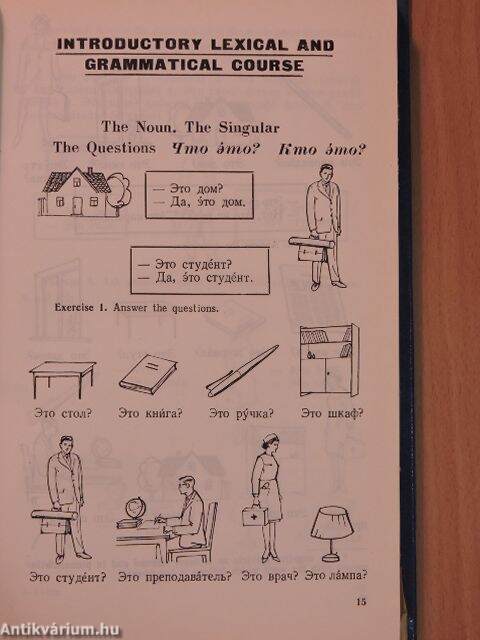
| Megjegyzés: | Fekete-fehér illusztrációkkal. |
Értesítőt kérek a kiadóról
A beállítást mentettük,
naponta értesítjük a beérkező friss
kiadványokról
naponta értesítjük a beérkező friss
kiadványokról
A beállítást mentettük,
naponta értesítjük a beérkező friss
kiadványokról
naponta értesítjük a beérkező friss
kiadványokról
Tartalom
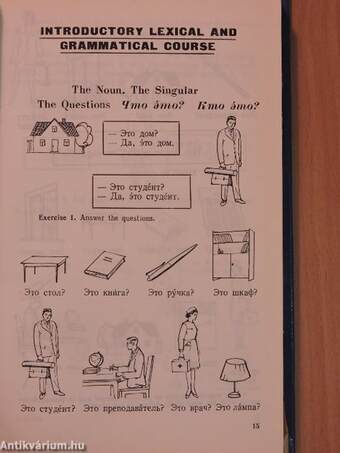
| Introductory Lexical and Grammatical Course | |
| The Noun. The Singular. The Questions Sto étá? Kto étá? | 15 |
| The Verb. The Present Tense | 19 |
| The Question Kak? | 22 |
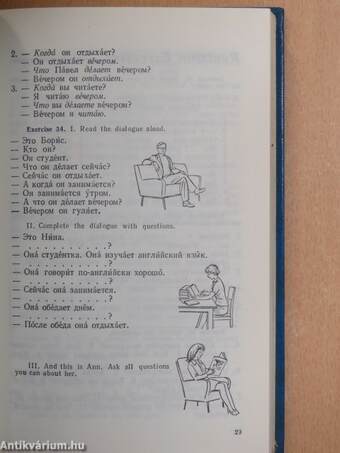
| The Question Kágdá? | 25 |
| The Question Sto gyélájet? | 27 |
| Revision Exercises | 30 |
| The Gender of Nouns | 31 |
| The Possessive Pronouns moj, tvoj, nás and vás | 31 |
| The Verb. The Past Tense | 33 |
| The Verb. The Future Tense | 37 |
| The Plural of Nouns | 39 |
| Possessive Pronouns. The Question Csej? | 42 |
| The Construction U minyá, u tyibjá jeszt... | 44 |
| The Demonstrative Pronouns étát, éta, éto, étyi. The Questions Kákój? Kákájá? Kákóje? Kákíje? | 47 |
| The Adjective | 49 |
| Adjectives with the Stem ending in a Hard Consonant | 49 |
| Adjectives with the Stem ending in a Soft Consonant | 50 |
| Adjectives with the Stem ending in g, k, h | 51 |
| Adjectives and Adverbs. The Questions Kájój? and Kák? | 54 |
| Use of the Verbs hátyéty, ljubíty, mocs and the Word bólzsen with the Infinitive | 55 |
| Basic Course | |
| Uses of the Cases | |
| The Prepositional Case | |
| The Prepositional used to Denote Place | 59 |
| Singular Nouns in the Prepositional | 59 |
| The Prepositional used to Denote the Object of Speech of Thought | 66 |
| Personal Pronouns in the Prepositional | 67 |
| Singular Adjectives in the Prepositional | 68 |
| Possessive Pronouns in the Prepositional | 72 |
| The Pronoun szvoj in the Prepositional | 73 |
| Plural Nouns and Adjecitves in the Prepositional | 75 |
| The Prepositional used to Denote TIme | 77 |
| The Prepositional used in Other Meanings | 79 |
| The Accusative Case | |
| The Accusative used to Denote the Object of an Action | 81 |
| Singular Nouns in the Accusative | 81 |
| Singular Adjectives and Pronouns in the Accusative | 84 |
| Personal Pronouns in the Accusative | 89 |
| Plural Nouns in the Accusative | 91 |
| Plural Adjectives and Pronouns in the Accusative | 93 |
| The Accusative of Direction | 94 |
| Use of the Accusative with the Verbs klaszty - polozsíty, sztávity - pásztávity and vésaty - pavészity | 101 |
| The Accusative used to Denote Time | 103 |
| The Dative Case | |
| The Dative used to Denote the Person toward Whom an Action is Directed | 106 |
| Singular Nouns in the Dative | 106 |
| Plural Nouns in the Dative | 109 |
| Personal Pronouns in the Dative | 111 |
| Adjectives and Possessive Pronouns in the Dative | 114 |
| The Dative used with the Verbs irávisztyá - pánrávisztyá | 117 |
| The Dative used to Denote Age | 119 |
| The Dative in Impersonal Sentences | 121 |
| Use of the Dative with Prepositions | 123 |
| The Genitive Case | |
| Singular Nouns in the Genitive | 129 |
| Use of the Genitive after the Negative Words nyem, nye bűlo, nye búgyet | 129 |
| Singular Adjectives and Pronouns in the Genitive | 131 |
| Use of the Genitive with the Numerals dva, tri and csetűre | 134 |
| Plural Nouns in the Genitive | 136 |
| Use of the Genitive with mnógá, málo, szkólká, nyészkólká, nyemnógá and the Numerals pjáty, seszty, szem, etc. | 136 |
| Plural Adjectives and Pronouns in the Genitive | 141 |
| The Genitive used to Denote Possession | 143 |
| The Adnominal Genitive | 145 |
| The Genitive used with the Comparative Degree | 147 |
| The Genitive used to Denote the Date | 148 |
| Use of the Genitive with Prepositions | 149 |
| The Instrumental Case | |
| Singular Nouns in the Instrumental | 158 |
| The Sociative Instrumental | 158 |
| Singular Adjectives and Pronouns in the Instrumental | 160 |
| Personal Pronouns in the Instrumental | 163 |
| Plural Nouns, Adjectives and Possessive Pronouns in the Instrumental | 164 |
| The Instrumental used as the Nominal Predicative | 166 |
| The Instrumental after the Verb zanyimátyszjá, intyereszovátszjá, etc. | 169 |
| The Instrumental used to Denote Place | 170 |
| The Instrumental in Passive Constructions | 171 |
| The Instrumental used in its Proper Meaning | 172 |
| The Instrumental used in Other Meanings | 172 |
| Revision Exercises in the Uses of the Cases | 174 |
| The Verb | |
| Verbs of Motion | |
| Unprefixed Verbs of Motion and the Verbs pájtyí and pajéháty | 178 |
| The Verb idtyí. The Present Tense | 178 |
| The Verb hágyity. The Past Tense | 179 |
| The Verb pájtyí. The Future Tense | 182 |
| The Verb jéháty. The Present Tense | 185 |
| The Verb jézgyity. The Past Tense | 186 |
| The Verb pájéháty. The Future Tense | 189 |
| The Verb idtyí - hátyity | 191 |
| The Verb jéháty - jézgyity | 193 |
| Prefixed Verbs of Motion | 198 |
| The Prefix pa- | 198 |
| The Prefixes pri- and u- | 200 |
| The Prefixes v- (va-) and vü- | 206 |
| The Prefixes pad- (pado-) and at- (ato-) | 207 |
| The Prefix da- | 208 |
| The Prefixes pro- and pere- | 208 |
| Revision Exercises | 209 |
| Verbs with the Particle -szja | 219 |
| The Verbs ucsíty and ucsítyszja | 214 |
| Verbs with the Passive Meaning | 215 |
| Verbs with the Middle-Reflexive Meaning | 217 |
| Verbs with the Meaning of Reciprocal Action | 223 |
| Verbs with the Proper Reflexive Meaning | 225 |
| Revision Exercises | 225 |
| The Aspects of the Verb | 228 |
| Use of Imperative Verbs to Denote Repeated Actions | 234 |
| Use of Perfective Verbs to Denote Momentary Actions | 234 |
| The Imperfective Aspect after the Verbs nacsináty, prádálzsáty, and káncsáty | 237 |
| Use of Imperfective and Perfective Verbs in the Future Tense | 238 |
| Use of Aspect Pairs of Certain Verbs | 241 |
| Use of the Verbs vígyety - uvígyety, znaty - uznaty and szlűsaty - uszlűsaty | 243 |
| Use of Perfective Verbs with the Prefixes pa- and za- | 244 |
| Revision of Exercises | 245 |
| The Complex Sentences | |
| Clauses introduced by the Conjunctive Words kto, sto, kakój, kak, gtye, kudá, átkudá, pácsemú, zacsém and szkólká | 254 |
| Clauses introduced by the Conjunctions patamú sto and páétamu | 255 |
| Clauses introduced by the Conjunction jészli | 257 |
| Clauses introduced by the Conjunction stóbü | 259 |
| Clauses introduced by the Conjunction hatyá | 261 |
| The Pronouns tot, to used as Correlated Words | 262 |
| Clauses introduced by the Conjunctive Word kátórüj | 264 |
| Direct and Indirect Speech | |
| I. The Direct Speech is a Statement | 271 |
| II. The Direct Speech is a Question containing and Interrogative Word | 272 |
| III. The Direct Speech is a Question containing No Interrogative Word | 272 |
| IV. The Direct Speech is an Order or Request | 273 |
| Revision Exercises | 274 |
| Sentences containing Participle and Verbal Adverb Constructions | 276 |
| Participles | 276 |
| Present and Past Participle Active | 276 |
| Complete Form Participles Passive | 284 |
| Short Form Participles Passive | 291 |
| Complete and Short Form Participles Passive | 293 |
| Verbal Adverbs | 295 |
| Imperfective Verbal Adverbs | 295 |
| Perfective Verbal Adverbs | 297 |
| Key to Exercises | 304 |
Témakörök
- Idegennyelv > Idegennyelvű könyvek > Többnyelvű könyvek
- Pedagógia > Tantárgypedagógia > Idegen nyelv > Egyéb
- Nyelvészet > Idegen nyelvek > Tanulása
- Nyelvészet > Idegen nyelvek > Nyelvtana
- Idegennyelv > Nyelvtanulás > Nyelvtanítás > Nyelvkönyv
- Idegennyelv > Nyelvtanulás > Nyelvtanítás > Oktatási nyelv > Idegennyelvű
- Idegennyelv > Nyelvtanulás > Nyelvek > Egyéb, többnyelvű
- Idegennyelv > Nyelvtanulás > Nyelvek > Orosz > Gyakorlatok
- Idegennyelv > Nyelvtanulás > Nyelvek > Orosz > Tanfolyamok > Alapfok
- Idegennyelv > Nyelvtanulás > Nyelvek > Orosz > Többnyelvű
Megvásárolható példányok
Nincs megvásárolható példány
A könyv összes megrendelhető példánya elfogyott. Ha kívánja, előjegyezheti a könyvet, és amint a könyv egy újabb példánya elérhető lesz, értesítjük.
 Folytatás Microsoft-tal