
1.150.218
kiadvánnyal nyújtjuk Magyarország legnagyobb antikvár könyv-kínálatát

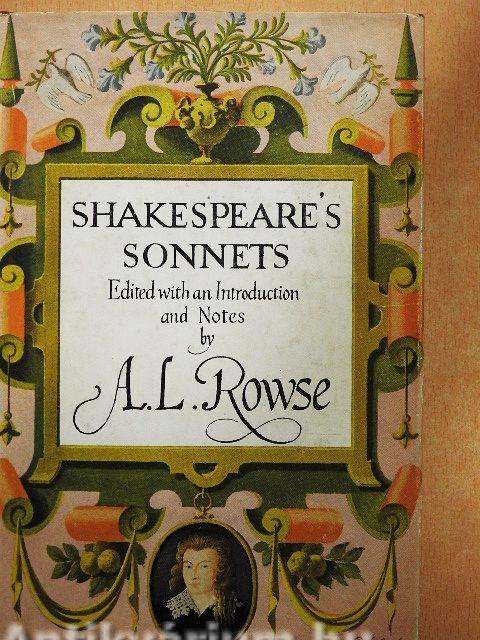
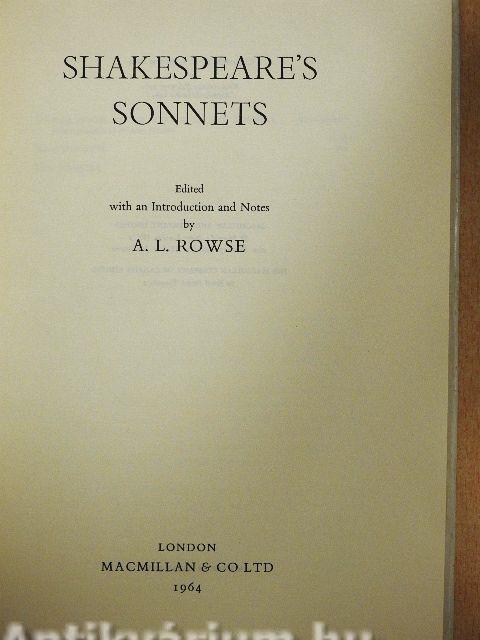
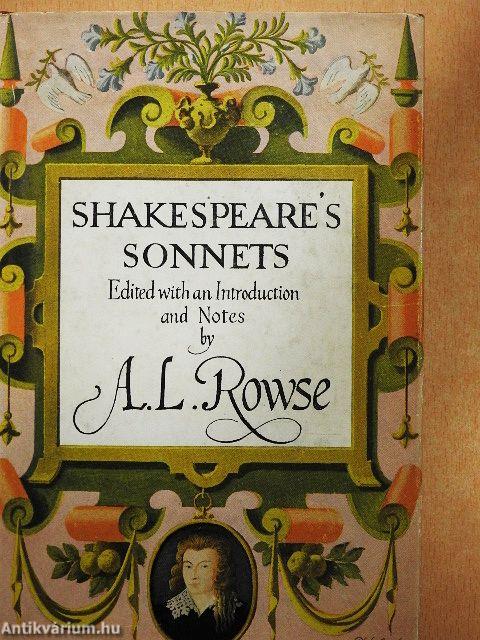
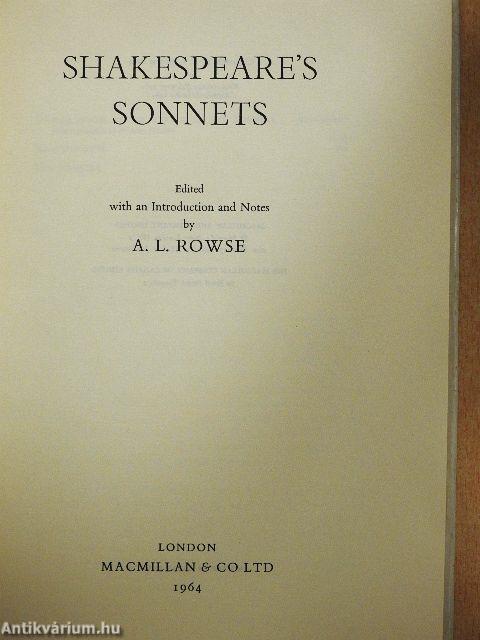
Shakespeare's Sonnets
London
| Kiadó: | Macmillan & Co Ltd |
|---|---|
| Kiadás helye: | London |
| Kiadás éve: | |
| Kötés típusa: | Vászon |
| Oldalszám: | 319 oldal |
| Sorozatcím: | |
| Kötetszám: | |
| Nyelv: | Angol |
| Méret: | 22 cm x 15 cm |
| ISBN: | |
Értesítőt kérek a kiadóról
A beállítást mentettük,
naponta értesítjük a beérkező friss
kiadványokról
naponta értesítjük a beérkező friss
kiadványokról
A beállítást mentettük,
naponta értesítjük a beérkező friss
kiadványokról
naponta értesítjük a beérkező friss
kiadványokról
Előszó
Tovább
Fülszöveg
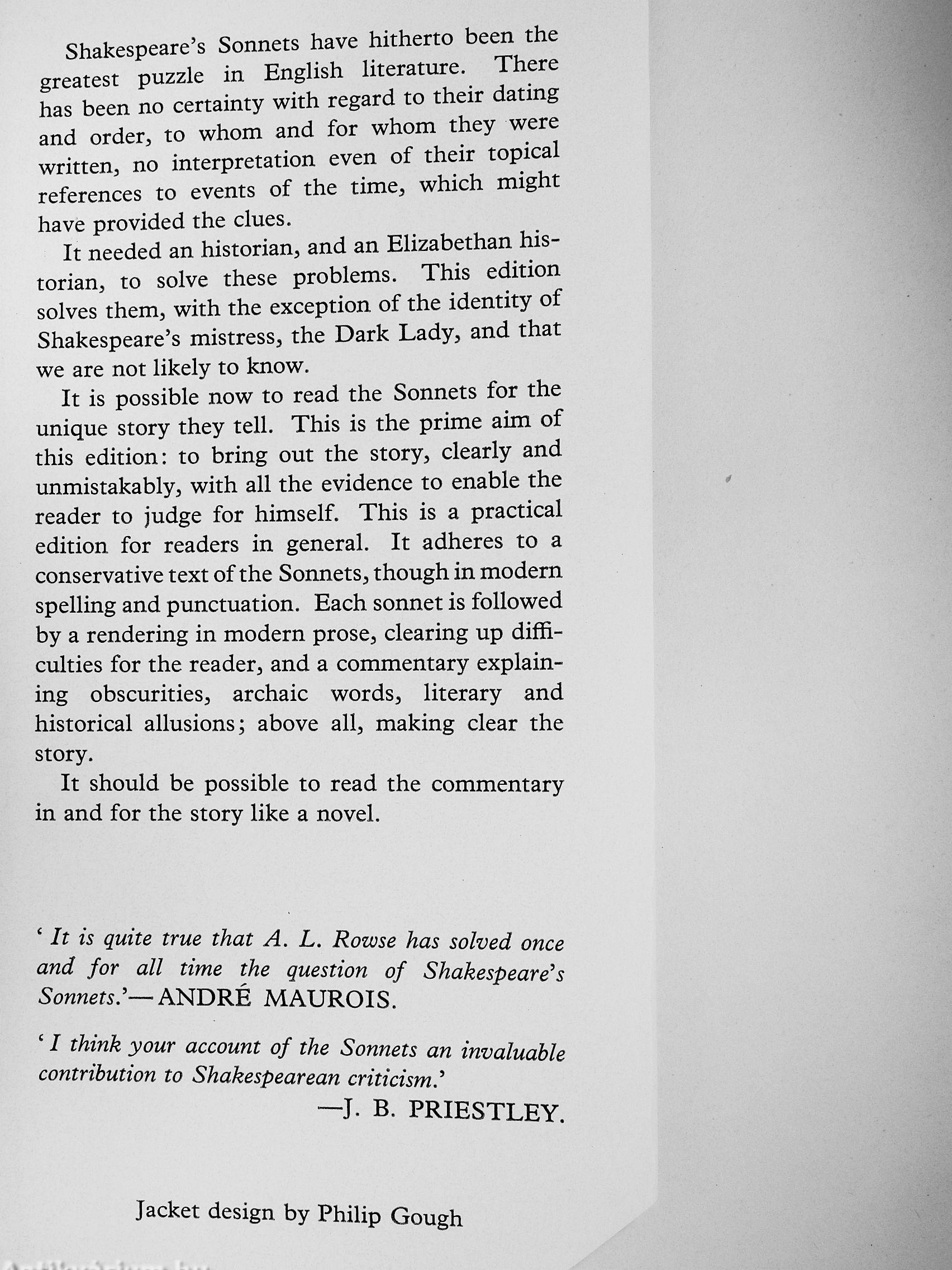
Shakespeare's Sonnets have hitherto been the greatest puzzle in English literature. There has been no certainty with regard to their dating and order, to whom and for whom they were written, no interpretation even of their topical references to events of the time, which might have provided the clues.
It needed an historian, and an Elizabethan historian, to solve these problems. This edition solves them, with the exception of the identity of Shakespeare's mistress, the Dark Lady, and that we are not likely to know.
It is possible now to read the Sonnets for the unique story they tell. This is the prime aim of this edition: to bring out the story, clearly and unmistakably, with all the evidence to enable the reader to judge for himself. This is a practical edition for readers in general. It adheres to a conservative text of the Sonnets, though in modern spelling and punctuation. Each sonnet is follov^fed by a rendering in modern prose, clearing up difficulties for the reader, and... Tovább
Fülszöveg
Shakespeare's Sonnets have hitherto been the greatest puzzle in English literature. There has been no certainty with regard to their dating and order, to whom and for whom they were written, no interpretation even of their topical references to events of the time, which might have provided the clues.
It needed an historian, and an Elizabethan historian, to solve these problems. This edition solves them, with the exception of the identity of Shakespeare's mistress, the Dark Lady, and that we are not likely to know.
It is possible now to read the Sonnets for the unique story they tell. This is the prime aim of this edition: to bring out the story, clearly and unmistakably, with all the evidence to enable the reader to judge for himself. This is a practical edition for readers in general. It adheres to a conservative text of the Sonnets, though in modern spelling and punctuation. Each sonnet is follov^fed by a rendering in modern prose, clearing up difficulties for the reader, and a commentary explaining obscurities, archaic words, literary and historical allusions; above all, making clear the story.
It should be possible to read the commentary in and for the story like a novel.
' It is quite true that A. L. Rowse has solved once and for all time the question of Shakespeare's 5o72Meis.'—ANDRÉ MAUROIS.
' / think your account of the Sonnets an invaluable contribution to Shakespearean criticism.'
—J. B. PRIESTLEY.
Jacket design by Philip Gough
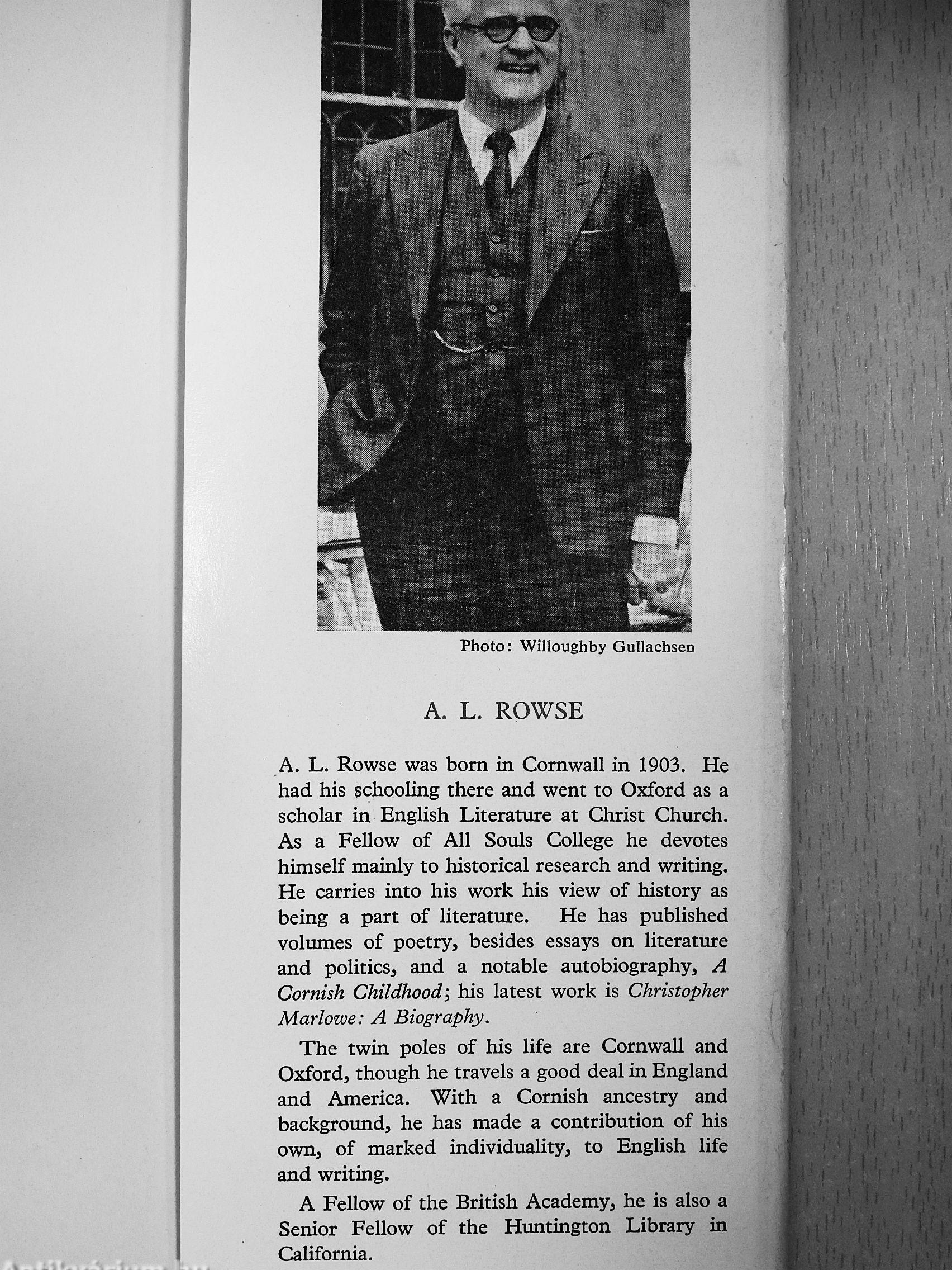
Photo: Willoughby Gullachsen
A. L. ROWSE
A. L. Rowse was born in Cornwall in 1903. He had his schooling there and went to Oxford as a scholar in English Literature at Christ Church. As a Fellow of All Souls College he devotes himself mainly to historical research and writing. He carries into his work his view of history as being a part of literature. He has published volumes of poetry, besides essays on literature and politics, and a notable autobiography, A Cornish Childhood-, his latest work is Christopher Marlowe: A Biography.
The twin poles of his life are Cornwall and Oxford, though he travels a good deal in England and America. With a Cornish ancestry and backgrovuidj he has made a contribution of his own, of marked individuality, to English life and writing.
A Fellow of the British Academy, he is also a Senior Fellow of the Huntington Library in California.
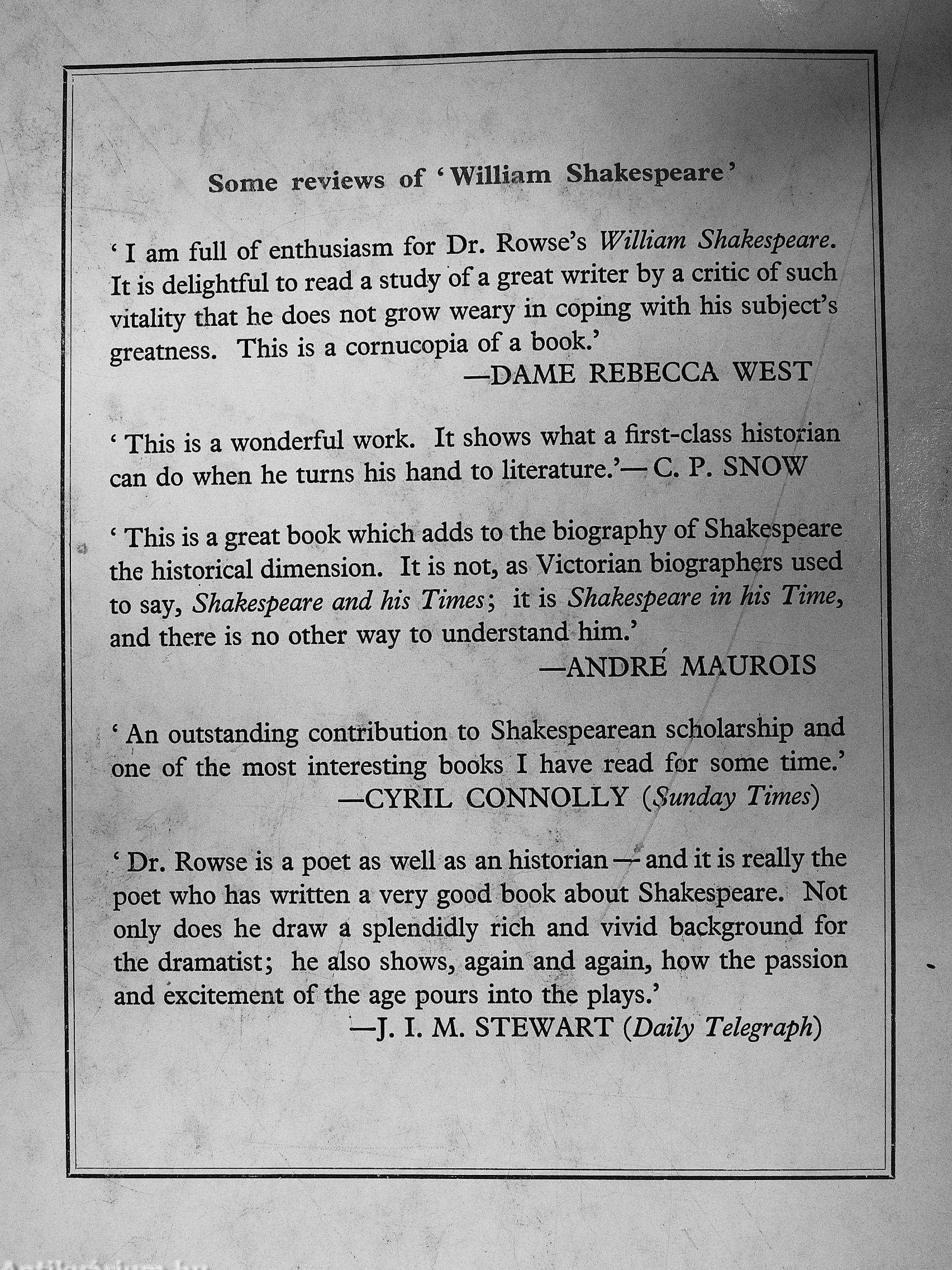
Some reviews of ' William Shakespeare'
' I am full of enthusiasm for Dr. Rowse's William Shakespeare. It is delightful to read a study of a great writer by a critic of such vitality that he does not grow weary in coping with his subject's greatness. This is a cornucopia of a book.'
—DAME REBECCA WEST
' This is a wonderful work. It shows what a first-class historian can do when he turns his hand to literature.'— C. P. SNOW
' This is a great book which adds to the biography of Shakespeare the historical dimension. It is not, as Victorian biographers used to say, Shakespeare and his Times', it is Shakespeare in his Time, and there is no other way to understand him.'
—ANDRE MAUROIS
' An outstanding contribution to Shakespearean scholarship and one of the most interesting books I have read for some time.'
—CYRIL CONNOLLY {Sunday Times)
' Dr. Rowse is a poet as well as an historian and it is really the poet who has written a very good book about Shakespeare. Not only does he draw a splendidly rich and vivid background for the dramatist; he also shows, again and again, how the passion and excitement of the age pours into the plays.'
—J. I. M. STEWART {Daily Telegraph)
Vissza
Témakörök
Shakespeare
Shakespeare műveinek az Antikvarium.hu-n kapható vagy előjegyezhető listáját itt tekintheti meg: Shakespeare könyvek, művekMegvásárolható példányok
Nincs megvásárolható példány
A könyv összes megrendelhető példánya elfogyott. Ha kívánja, előjegyezheti a könyvet, és amint a könyv egy újabb példánya elérhető lesz, értesítjük.
 Folytatás Microsoft-tal