
1.147.271
kiadvánnyal nyújtjuk Magyarország legnagyobb antikvár könyv-kínálatát

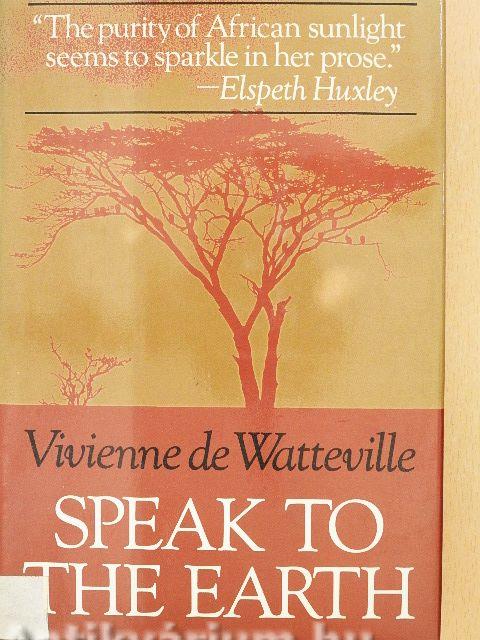
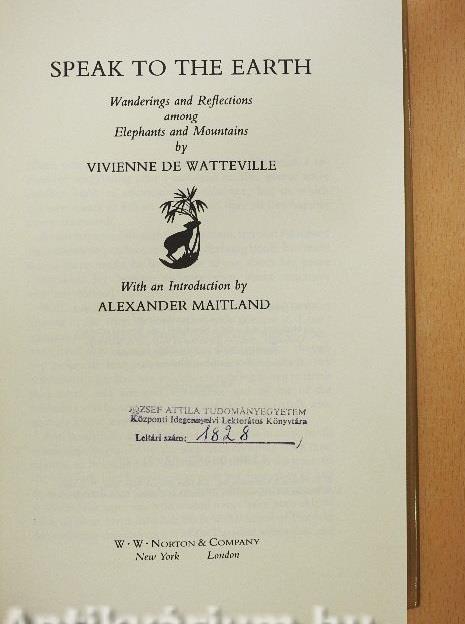
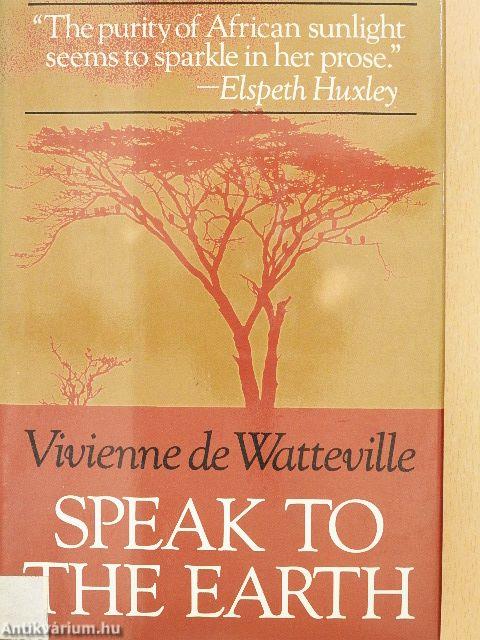
Speak to the Earth
Wanderings and Reflections among Elephants and Mountains
New York-London
| Kiadó: | W. W. Norton & Company Inc. |
|---|---|
| Kiadás helye: | New York-London |
| Kiadás éve: | |
| Kötés típusa: | Félvászon |
| Oldalszám: | 333 oldal |
| Sorozatcím: | |
| Kötetszám: | |
| Nyelv: | Angol |
| Méret: | 22 cm x 15 cm |
| ISBN: | 0-393-02471-7 |
Értesítőt kérek a kiadóról
A beállítást mentettük,
naponta értesítjük a beérkező friss
kiadványokról
naponta értesítjük a beérkező friss
kiadványokról
A beállítást mentettük,
naponta értesítjük a beérkező friss
kiadványokról
naponta értesítjük a beérkező friss
kiadványokról
Előszó
Tovább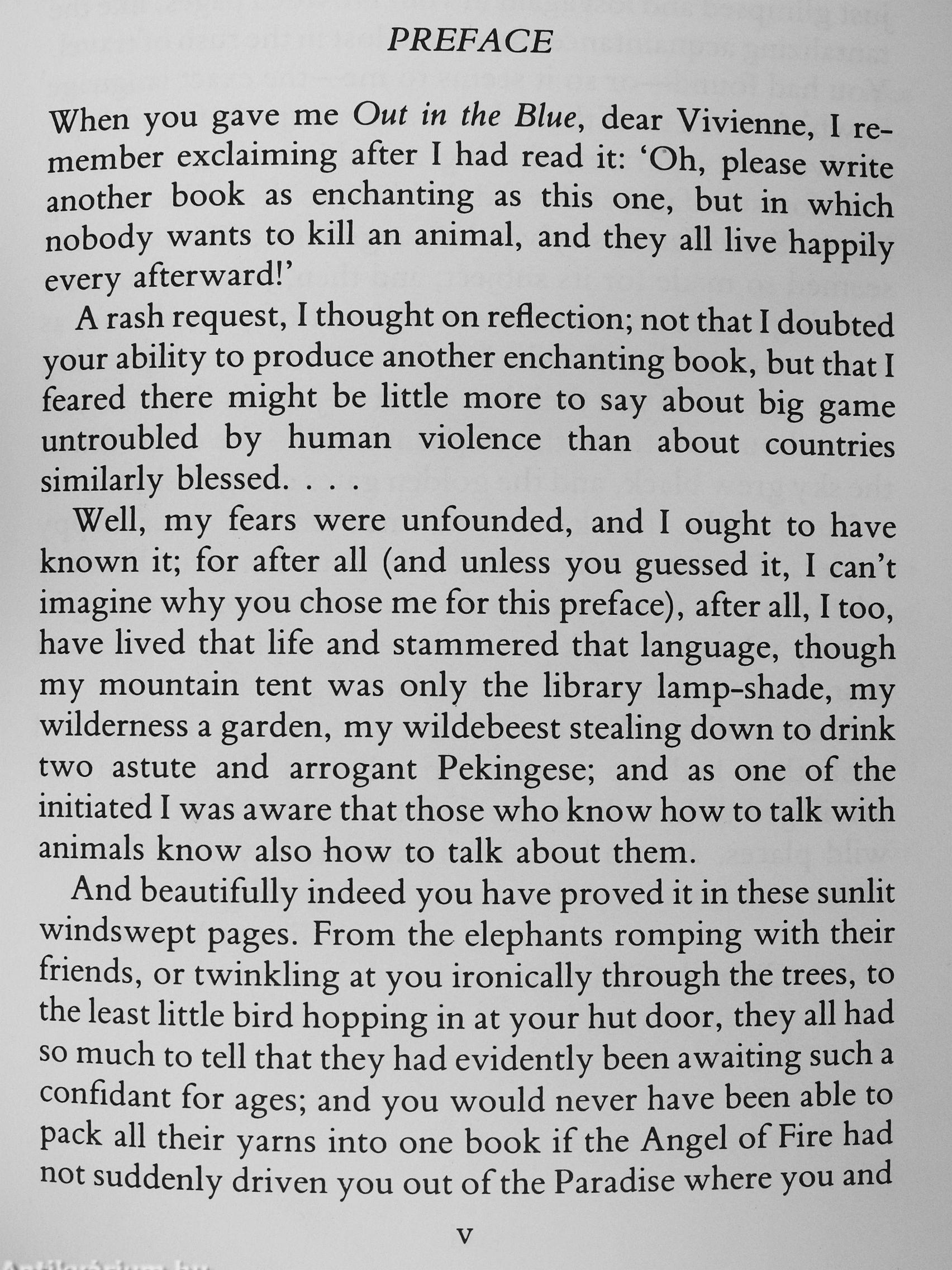
Fülszöveg
Speak to the Earth Vivienne de Watteville
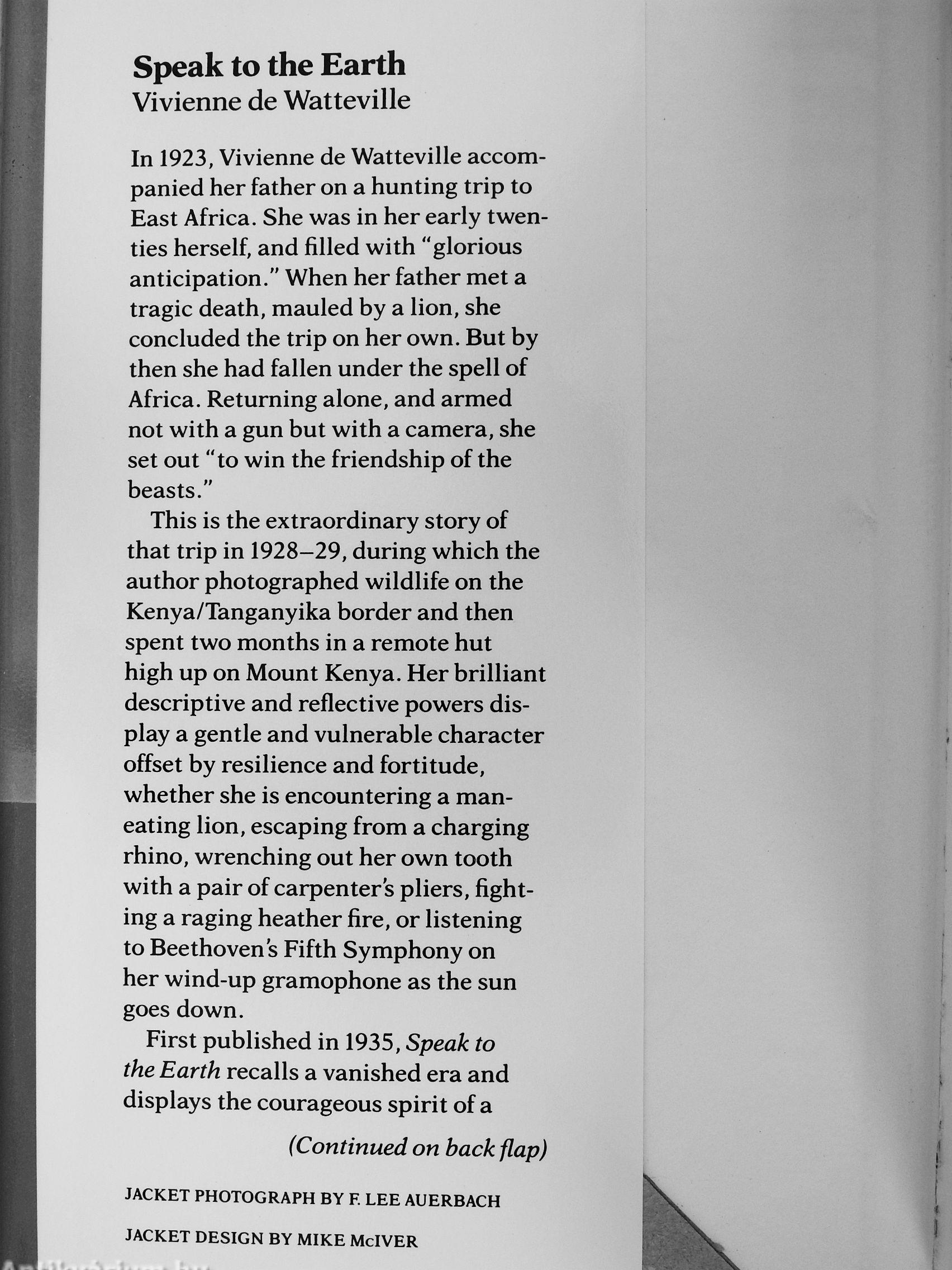
In 1923, Vivienne de Watteville accompanied her father on a hunting trip to East Africa. She was in her early twenties herself, and filled with "glorious anticipation." When her father met a tragic death, mauled by a lion, she concluded the trip on her own. But by then she had fallen under the spell of Africa. Returning alone, and armed not with a gun but with a camera, she set out "to win the friendship of the beasts."
This is the extraordinary story of that trip in 1928-29, during which the author photographed wildlife on the Kenya/Tanganyika border and then spent two months in a remote hut high up on Mount Kenya. Her brilliant descriptive and reflective powers display a gentle and vulnerable character offset by resilience and fortitude, whether she is encountering a man-eating lion, escaping from a charging rhino, wrenching out her own tooth with a pair of carpenter's pliers, fighting a raging heather fire, or listening to Beethoven's... Tovább
Fülszöveg
Speak to the Earth Vivienne de Watteville
In 1923, Vivienne de Watteville accompanied her father on a hunting trip to East Africa. She was in her early twenties herself, and filled with "glorious anticipation." When her father met a tragic death, mauled by a lion, she concluded the trip on her own. But by then she had fallen under the spell of Africa. Returning alone, and armed not with a gun but with a camera, she set out "to win the friendship of the beasts."
This is the extraordinary story of that trip in 1928-29, during which the author photographed wildlife on the Kenya/Tanganyika border and then spent two months in a remote hut high up on Mount Kenya. Her brilliant descriptive and reflective powers display a gentle and vulnerable character offset by resilience and fortitude, whether she is encountering a man-eating lion, escaping from a charging rhino, wrenching out her own tooth with a pair of carpenter's pliers, fighting a raging heather fire, or listening to Beethoven's Fifth Symphony on her wind-up gramophone as the sun goes down.
First published in 1935, Speak to the Earth recalls a vanished era and displays the courageous spirit of a
(Continued on back flap)
JACKET PHOTOGRAPH BY F. LEE AUERBACH JACKET DESIGN BY MIKE McIVER
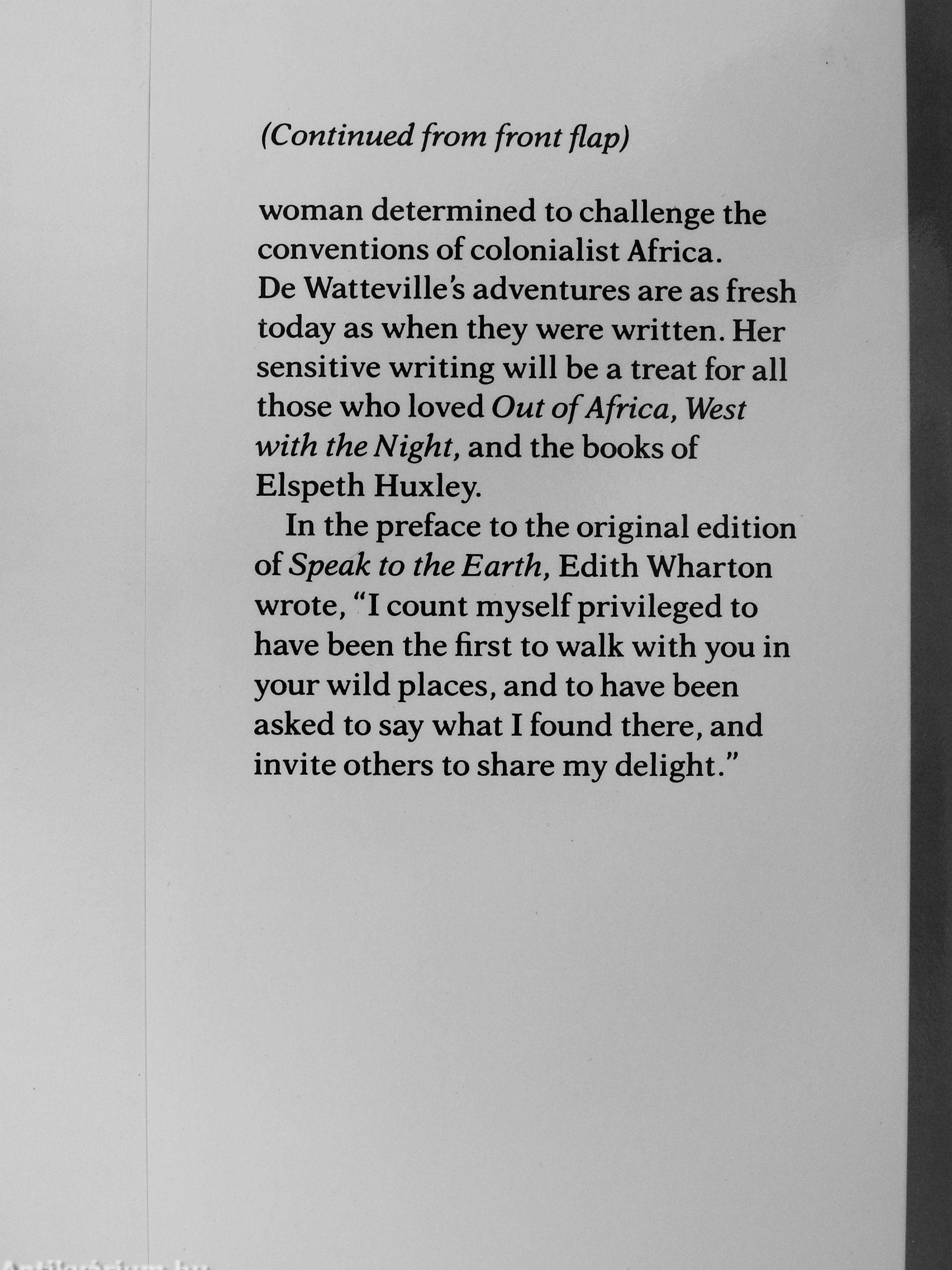
(Continued from front flap)
woman determined to challenge the conventions of colonialist Africa. De Watteville's adventures are as fresh today as when they were written. Her sensitive writing will be a treat for all those who loved Out of Africa, West with the Night, and the books of Elspeth Huxley.
In the preface to the original edition of Speak to the Earth, Edith Wharton wrote, "I count myself privileged to have been the first to walk with you in your wild places, and to have been asked to say what I found there, and invite others to share my delight."
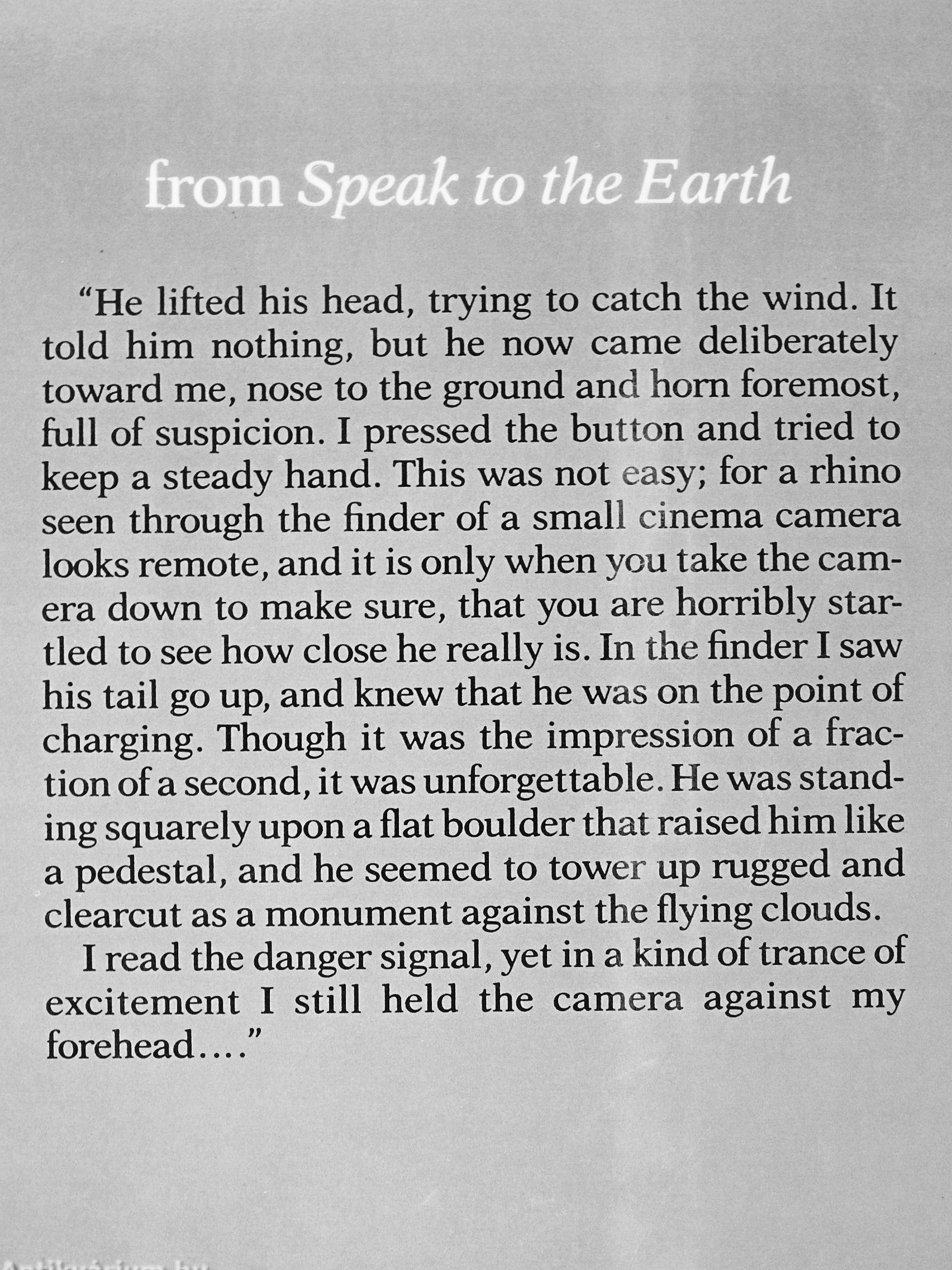
"He lifted his head, trying to catch the wind. It told him nothing, but he now came deliberately toward me, nose to the ground and horn foremost, full of suspicion. I pressed the button and tried to keep a steady hand. This was not easy; for a rhino seen through the finder of a small cinema camera looks remote, and it is only when you take the camera down to make sure, that you are horribly startled to see how close he really is. In the finder I saw his tail go up, and knew that he was on the point of charging. Though it was the impression of a fraction of a second, it was unforgettable. He was standing squarely upon a flat boulder that raised him like a pedestal, and he seemed to tower up rugged and clearcut as a monument against the flying clouds.
I read the danger signal, yet in a kind of trance of excitement I still held the camera against my forehead " Vissza
Témakörök
- Idegennyelv > Idegennyelvű könyvek > Angol > Szépirodalom > Regény, novella, elbeszélés
- Idegennyelv > Idegennyelvű könyvek > Angol > Útleírás
- Útleírás > Idegennyelvű útleírás > Angol
- Szépirodalom > Regény, novella, elbeszélés > Az író származása szerint > Európa > Nagy-Britannia
- Szépirodalom > Regény, novella, elbeszélés > Tartalom szerint > Földrajzi besorolások > Afrika
- Útleírás > Kontinensek > Afrika > Egyéb
- Szépirodalom > Regény, novella, elbeszélés > Tartalom szerint > Életrajzi regények > Önéletrajzok, naplók, memoárok
- Szépirodalom > Regény, novella, elbeszélés > Tartalom szerint > Útikalandok, útirajzok
Vivienne de Watteville
Vivienne de Watteville műveinek az Antikvarium.hu-n kapható vagy előjegyezhető listáját itt tekintheti meg: Vivienne de Watteville könyvek, művekMegvásárolható példányok
Állapotfotók
Könyvtári könyv volt.
Állapot:
Közepes
3.360 Ft
2.680 ,-Ft 20
13
pont kapható
Kosárba
 Folytatás Microsoft-tal