
1.154.856
kiadvánnyal nyújtjuk Magyarország legnagyobb antikvár könyv-kínálatát

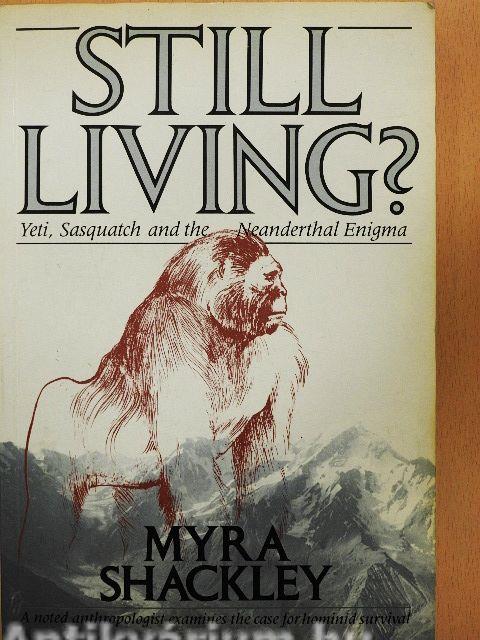
Still Living?
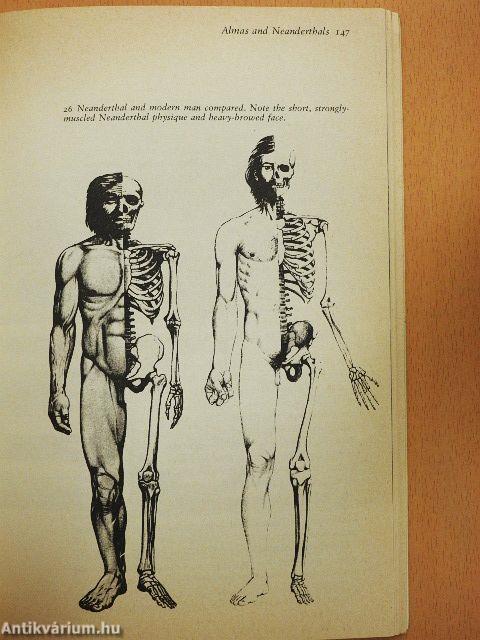
Yeti, Sasquatch and the Neanderthal Enigma
New York
| Kiadó: | Thames and Hudson Inc. |
|---|---|
| Kiadás helye: | New York |
| Kiadás éve: | |
| Kötés típusa: | Varrott papírkötés |
| Oldalszám: | 192 oldal |
| Sorozatcím: | |
| Kötetszám: | |
| Nyelv: | Angol |
| Méret: | 24 cm x 16 cm |
| ISBN: | 0-500-27406-1 |
| Megjegyzés: | Fekete-fehér fotókkal, illusztrációkkal. |
Értesítőt kérek a kiadóról
A beállítást mentettük,
naponta értesítjük a beérkező friss
kiadványokról
naponta értesítjük a beérkező friss
kiadványokról
A beállítást mentettük,
naponta értesítjük a beérkező friss
kiadványokról
naponta értesítjük a beérkező friss
kiadványokról
Előszó
Tovább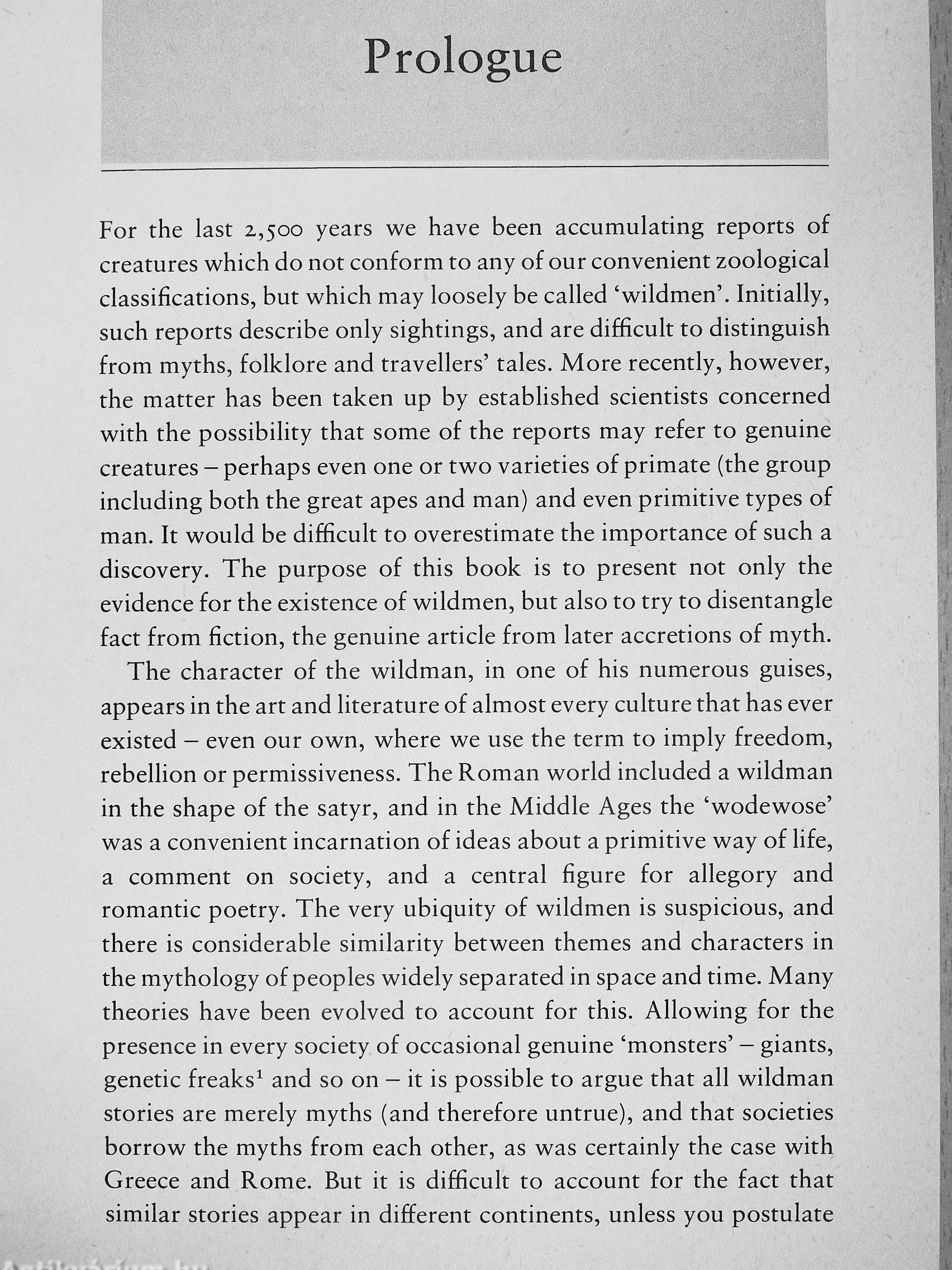
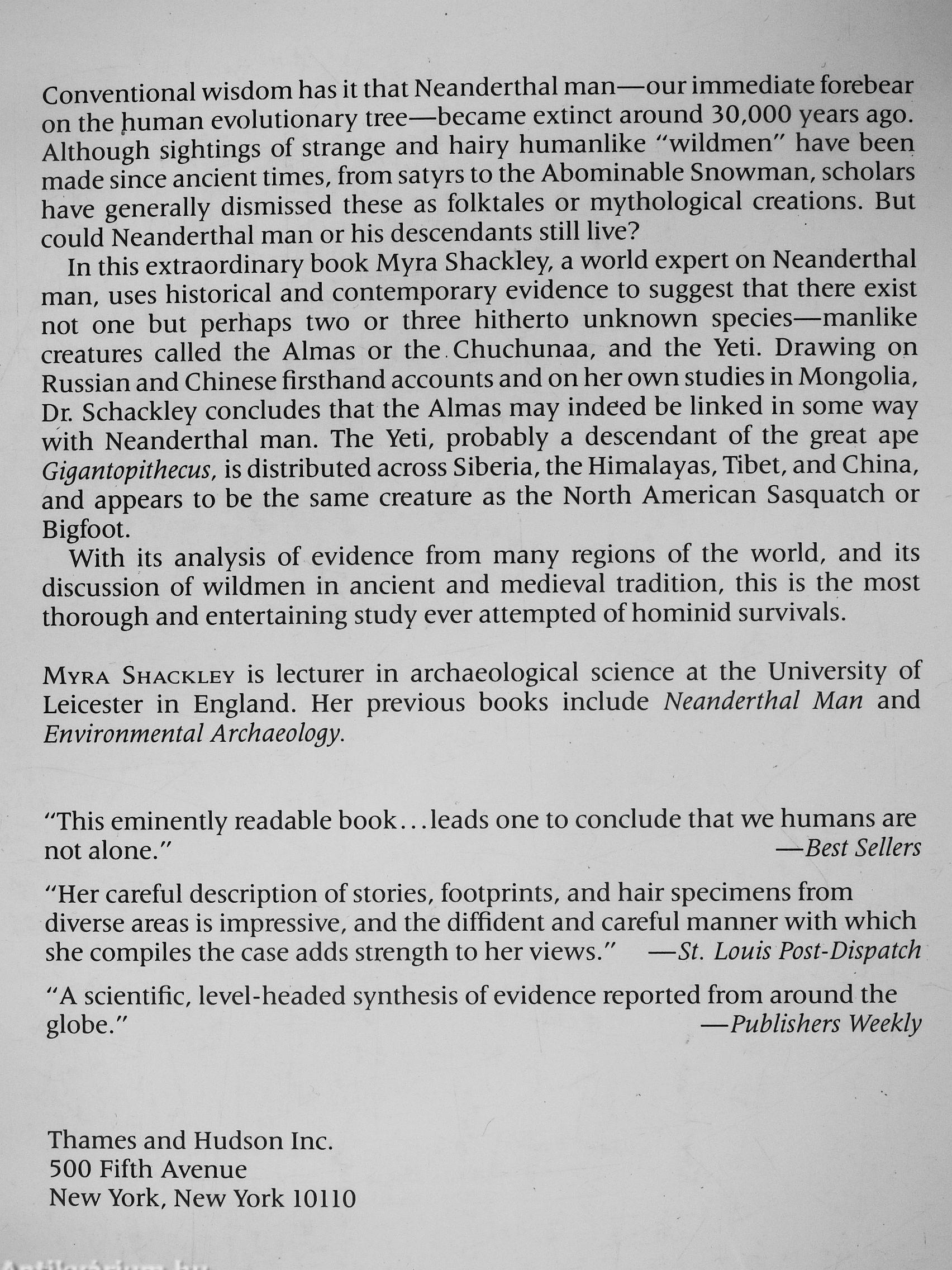
Fülszöveg
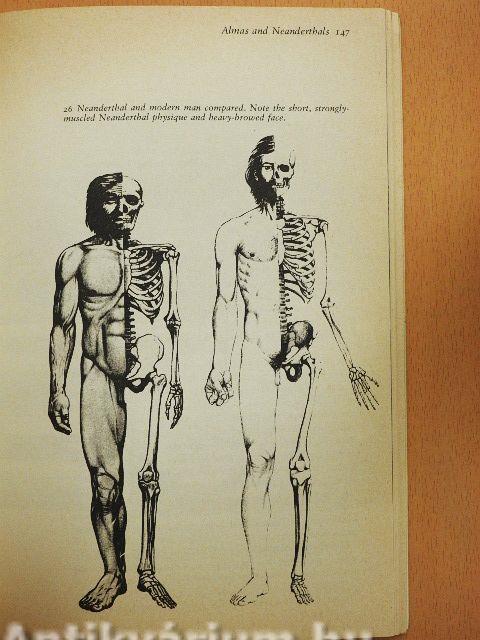
Conventional wisdom has it that Neanderthal man—our immediate forebear on the human evolutionary tree—became extinct around 30,000 years ago. Although sightings of strange and hairy humanlike "wildmen" have been made since ancient times, from satyrs to the Abominable Snowman, scholars have generally dismissed these as folktales or mythological creations. But could Neanderthal man or his descendants still live?
In this extraordinary book Myra Shackley, a world expert on Neanderthal man, uses historical and contemporary evidence to suggest that there exist not one but perhaps two or three hitherto unknown species—manlike creatures called the Almas or the Chuchunaa, and the Yeti. Drawing on Russian and Chinese firsthand accounts and on her own studies in Mongolia, Dr. Schackley concludes that the Almas may indeed be linked in some way with Neanderthal man. The Yeti, probably a descendant of the great ape Gigantopithecus, is distributed across Siberia, the Himalayas, Tibet, and... Tovább
Fülszöveg
Conventional wisdom has it that Neanderthal man—our immediate forebear on the human evolutionary tree—became extinct around 30,000 years ago. Although sightings of strange and hairy humanlike "wildmen" have been made since ancient times, from satyrs to the Abominable Snowman, scholars have generally dismissed these as folktales or mythological creations. But could Neanderthal man or his descendants still live?
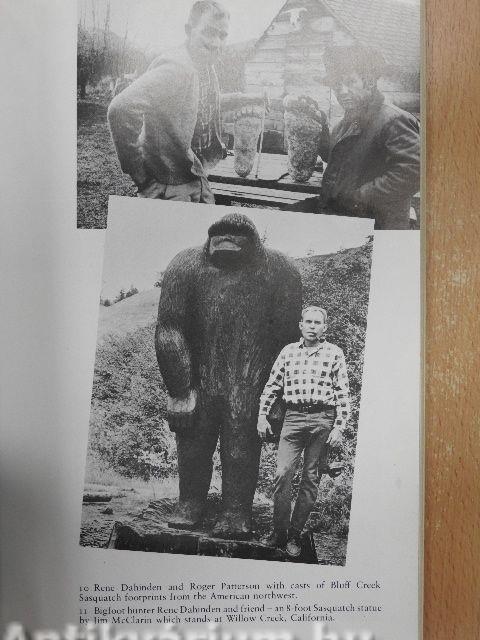
In this extraordinary book Myra Shackley, a world expert on Neanderthal man, uses historical and contemporary evidence to suggest that there exist not one but perhaps two or three hitherto unknown species—manlike creatures called the Almas or the Chuchunaa, and the Yeti. Drawing on Russian and Chinese firsthand accounts and on her own studies in Mongolia, Dr. Schackley concludes that the Almas may indeed be linked in some way with Neanderthal man. The Yeti, probably a descendant of the great ape Gigantopithecus, is distributed across Siberia, the Himalayas, Tibet, and China, and appears to be the same creature as the North American Sasquatch or Bigfoot.
y^ith its analysis of evidence from many regions of the world, and its discussion of wildmen in ancient and medieval tradition, this is the most thorough and entertaining study ever attempted of hominid survivals.
Myra Shackley is lecturer in archaeological science at the University of Leicester in England. Her previous books include Neanderthal Man and Environmental Archaeology.
"This eminently readable book .leads one to conclude that we humans are not alone." —Best Sellers
"Her careful description of stories, footprints, and hair specimens from diverse areas is impressive, and the diffident and careful manner with which she compiles the case adds strength to her views." —St. Louis Post-Dispatch
"A scientific, level-headed synthesis of evidence reported from around the globe." —Publishers Weekly
Thames and Hudson Inc.
500 Fifth Avenue
New York, New York lOIIO Vissza
Témakörök
- Idegennyelv > Idegennyelvű könyvek > Angol > Természettudományok > Biológia
- Idegennyelv > Idegennyelvű könyvek > Angol > Természettudományok > Egyéb
- Idegennyelv > Idegennyelvű könyvek > Angol > Művelődéstörténet
- Idegennyelv > Idegennyelvű könyvek > Angol > Néprajz
- Művelődéstörténet > Kultúra > Kultúrantropológia
- Néprajz > Folklór (szellemi néprajz) > Természetfölötti lények, jelenségek
- Néprajz > Folklór (szellemi néprajz) > Népköltészet > Monda, legenda
- Természettudomány > Általános természettudomány > Érdekességek
- Természettudomány > Biológia > Fajfejlődés > Idegennyelvű
- Természettudomány > Biológia > Fajfejlődés > Egyéb
- Természettudomány > Általános természettudomány > Idegennyelvű > Angol
- Idegennyelv > Idegennyelvű könyvek > Angol > Paratudományok > Egyéb
- Paratudományok
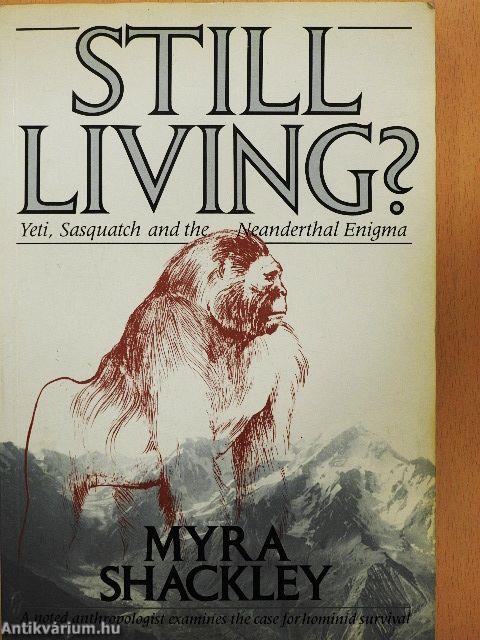


Myra Shackley
Myra Shackley műveinek az Antikvarium.hu-n kapható vagy előjegyezhető listáját itt tekintheti meg: Myra Shackley könyvek, művekMegvásárolható példányok
Állapotfotók
Állapot:
Jó
9.800 ,-Ft
49
pont kapható
Kosárba
 Folytatás Microsoft-tal