
1.149.830
kiadvánnyal nyújtjuk Magyarország legnagyobb antikvár könyv-kínálatát

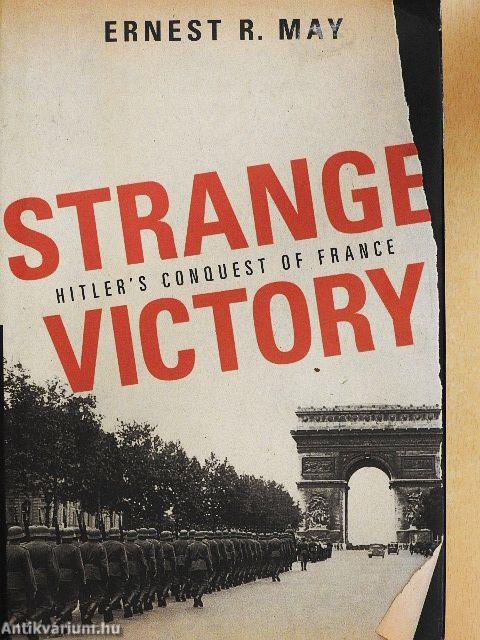
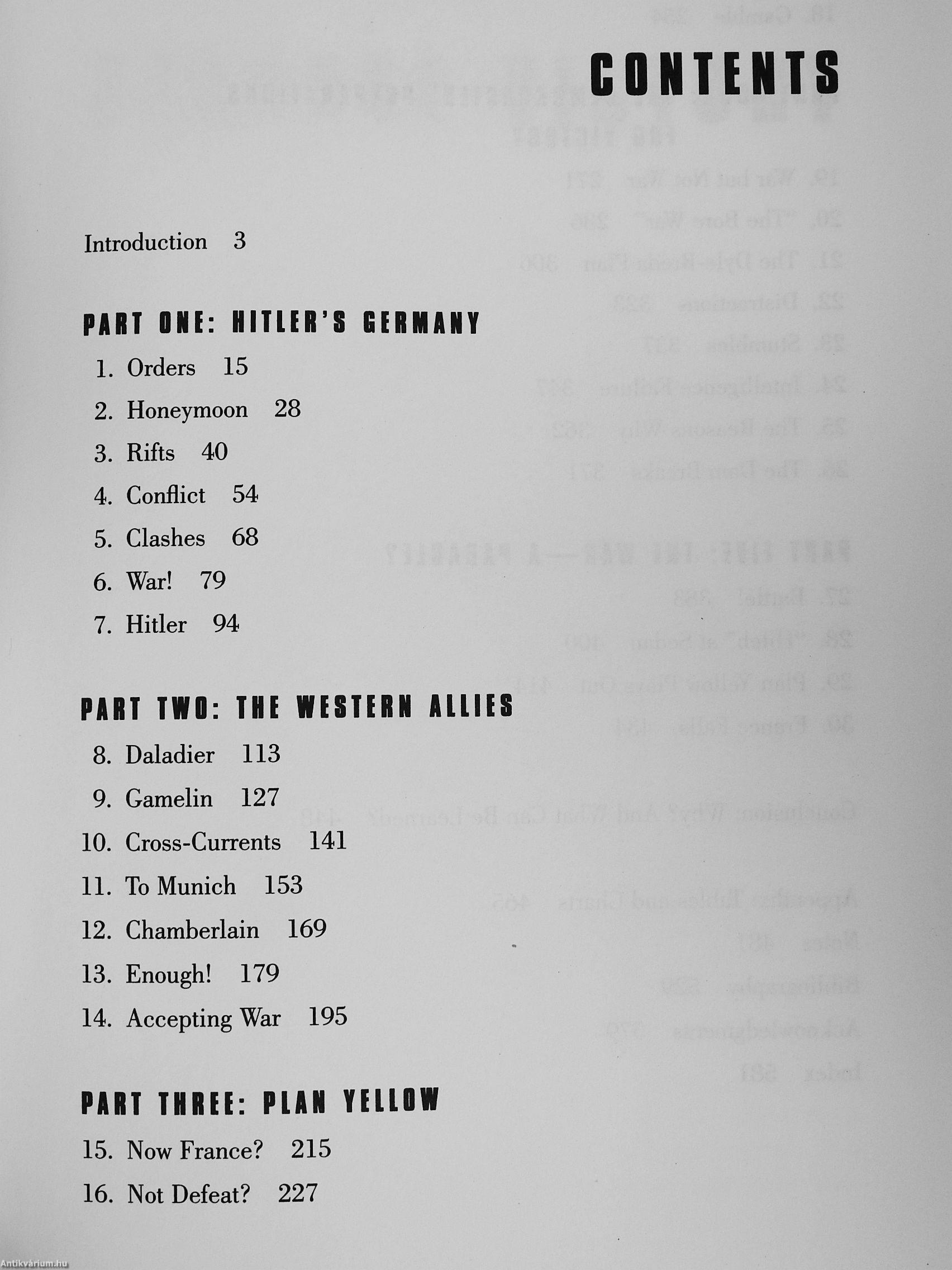
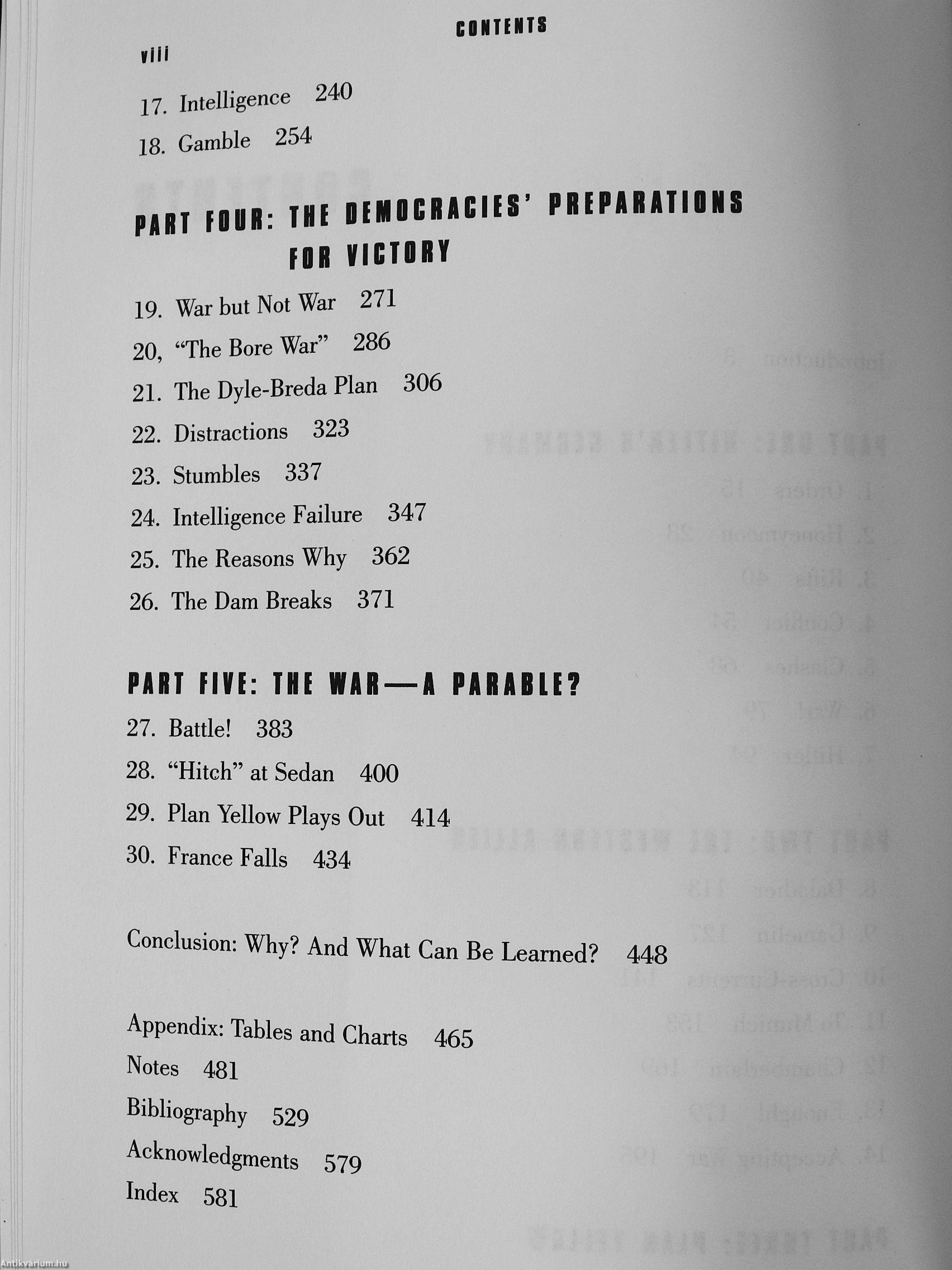
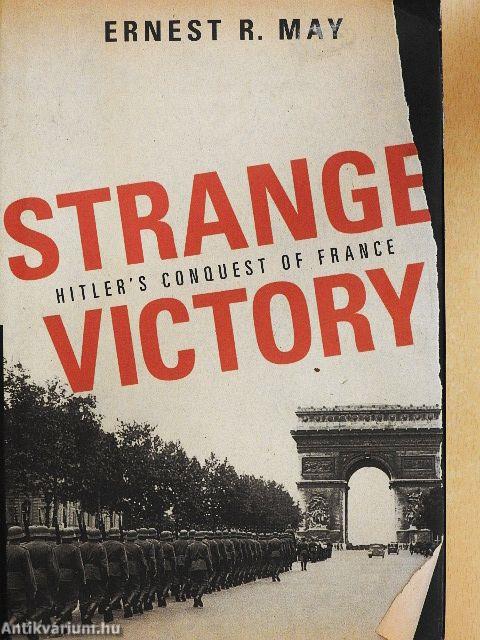
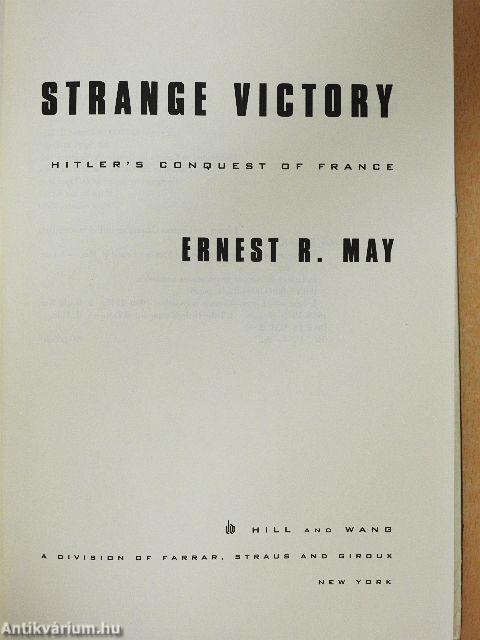
Strange Victory
Hitler's Conquest of France
New York
| Kiadó: | Hill and Wang |
|---|---|
| Kiadás helye: | New York |
| Kiadás éve: | |
| Kötés típusa: | Félvászon |
| Oldalszám: | 594 oldal |
| Sorozatcím: | |
| Kötetszám: | |
| Nyelv: | Angol |
| Méret: | 24 cm x 16 cm |
| ISBN: | 0-8009-8906-8 |
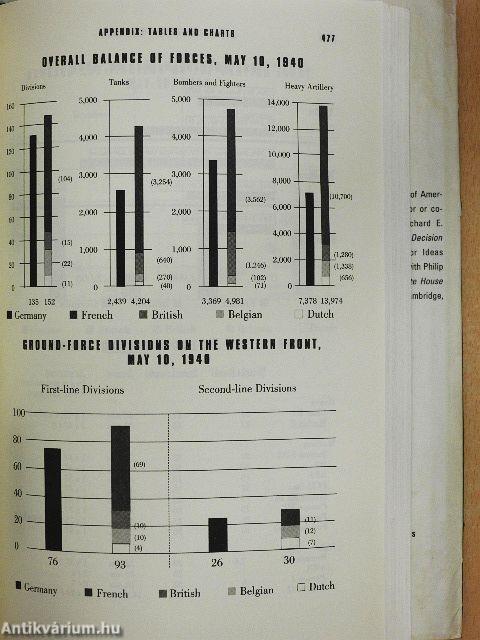
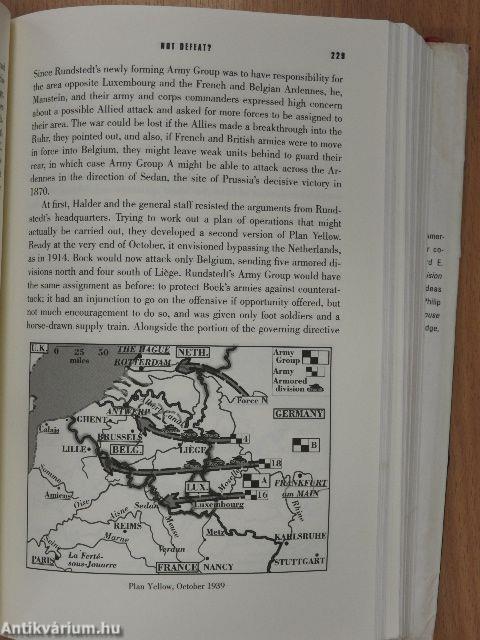
| Megjegyzés: | Fekete-fehér térképekkel, ábrákkal. |
Értesítőt kérek a kiadóról
A beállítást mentettük,
naponta értesítjük a beérkező friss
kiadványokról
naponta értesítjük a beérkező friss
kiadványokról
A beállítást mentettük,
naponta értesítjük a beérkező friss
kiadványokról
naponta értesítjük a beérkező friss
kiadványokról
Előszó
Tovább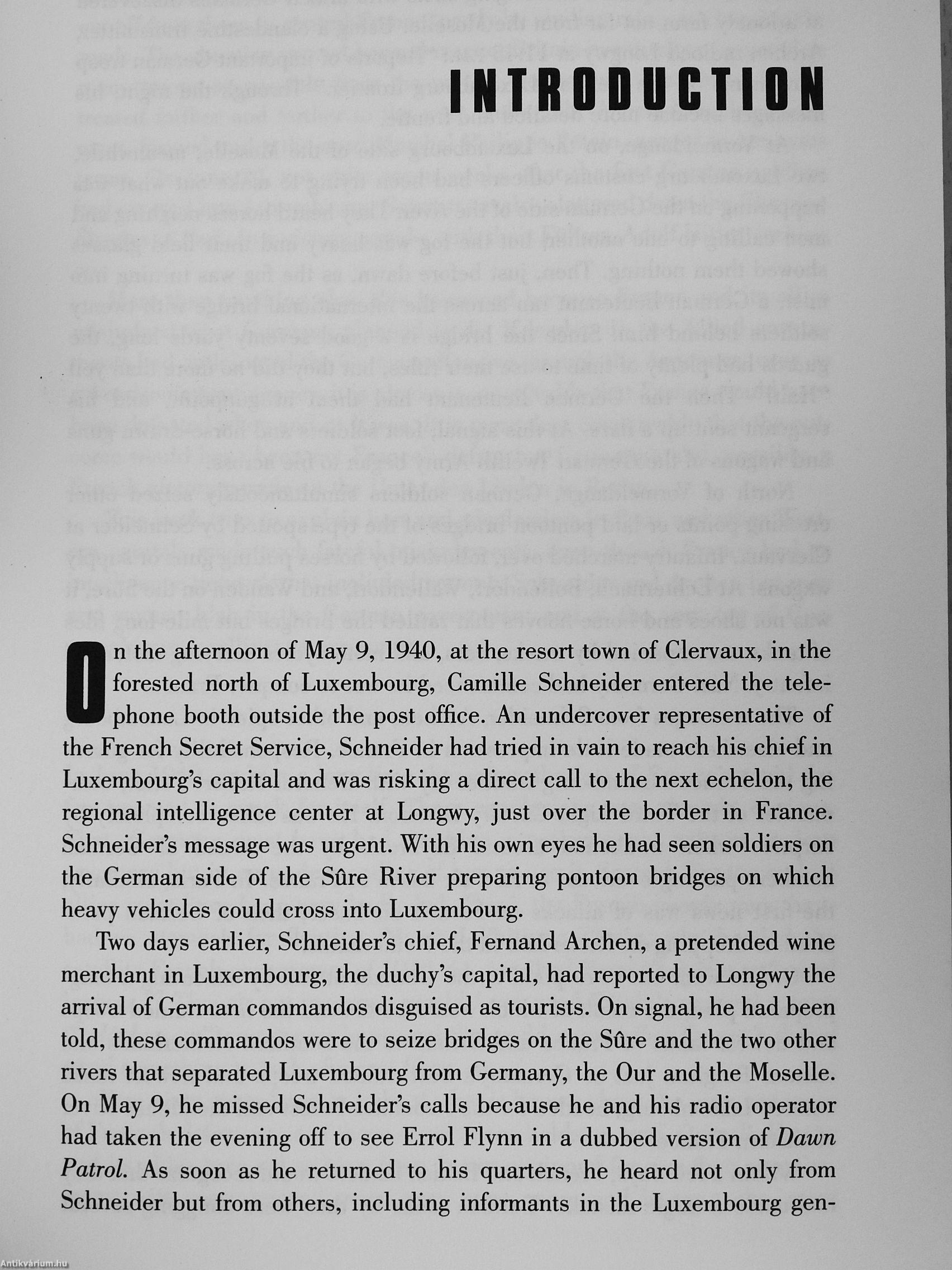
Fülszöveg
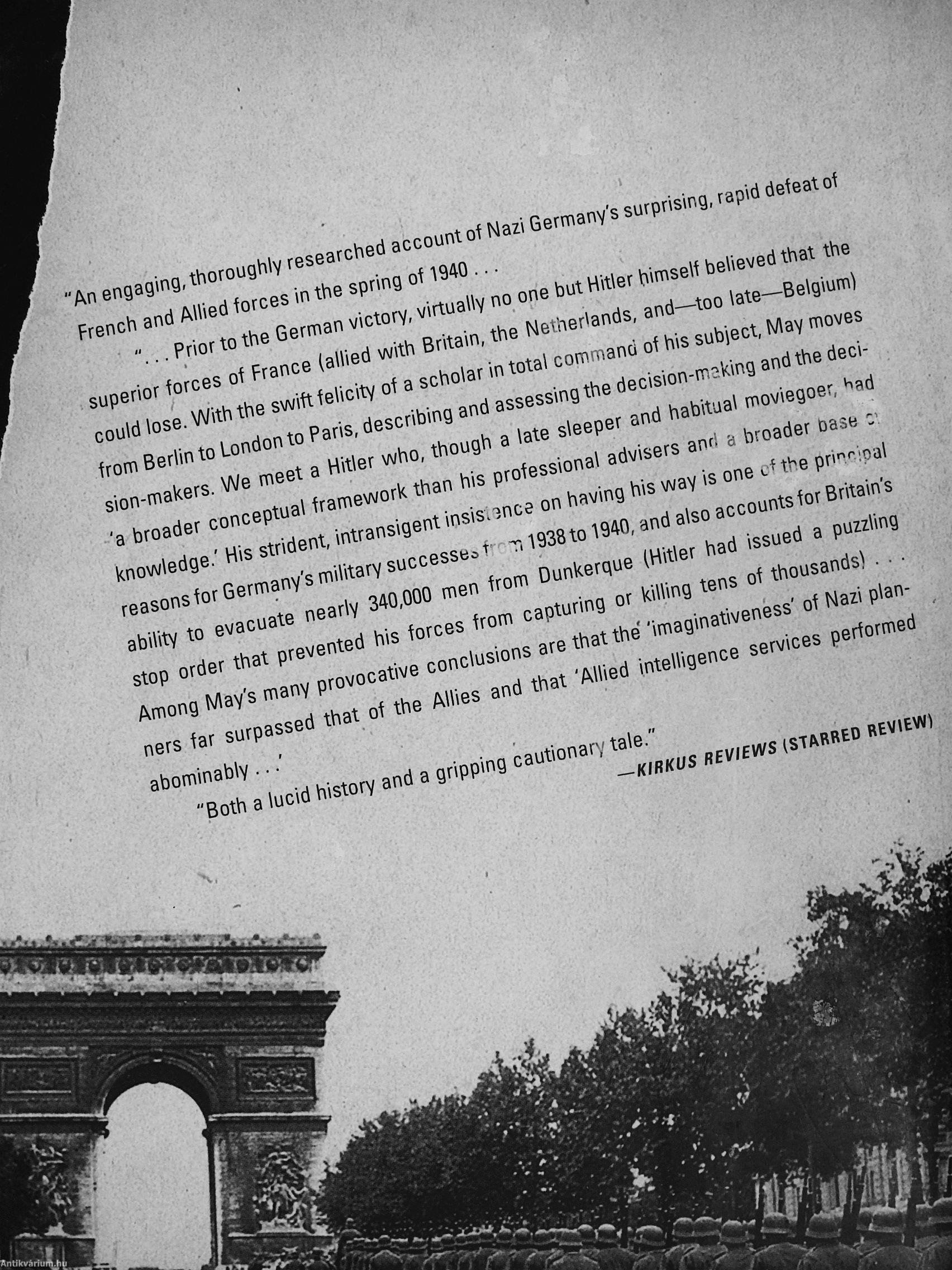
"An engaging, thoroughly researched account of Nazi Germany's surprising, rapid defeat of m French and Allied forces in the spring of 1940
i " Prior to the German victory, virtually no one but Hitler himself believed that the
f superior forces of France (allied with Britain, the Netherlands, and—too late—Belgium)
I could lose. With the swift felicity of a scholar in total command of his subject. May moves
from Berlin to London to Paris, describing and assessing the decision-m?king and the decision-makers. We meet a Hitler who, though a late sleeper and habitual moviegoer, ^ad 'a broader conceptual framework than his professional advisers anri a broader oase knowledge.' His strident, intransigent insis.3nce on having his way is one t^e pri^z-ioal reasons for Germany's military successect Ti 1938 to 1940, and also accounts for Britain's ability to evacuate nearly 340,000 men from Dunkerque (Hitler had issued a puzzling stop order that prevented his forces from capturing or... Tovább
Fülszöveg
"An engaging, thoroughly researched account of Nazi Germany's surprising, rapid defeat of m French and Allied forces in the spring of 1940
i " Prior to the German victory, virtually no one but Hitler himself believed that the
f superior forces of France (allied with Britain, the Netherlands, and—too late—Belgium)
I could lose. With the swift felicity of a scholar in total command of his subject. May moves
from Berlin to London to Paris, describing and assessing the decision-m?king and the decision-makers. We meet a Hitler who, though a late sleeper and habitual moviegoer, ^ad 'a broader conceptual framework than his professional advisers anri a broader oase knowledge.' His strident, intransigent insis.3nce on having his way is one t^e pri^z-ioal reasons for Germany's military successect Ti 1938 to 1940, and also accounts for Britain's ability to evacuate nearly 340,000 men from Dunkerque (Hitler had issued a puzzling stop order that prevented his forces from capturing or killing tens of thousands) . . . Among May's many provocative conclusions are that the 'imaginativeness' of Nazi planners far surpassed that of the Allies and that 'Allied intelligence services performed abominably '
"Both a lucid history and a gripping cautionary tale."
—KIRKUS REVIEWS (STARRED REVIEW)
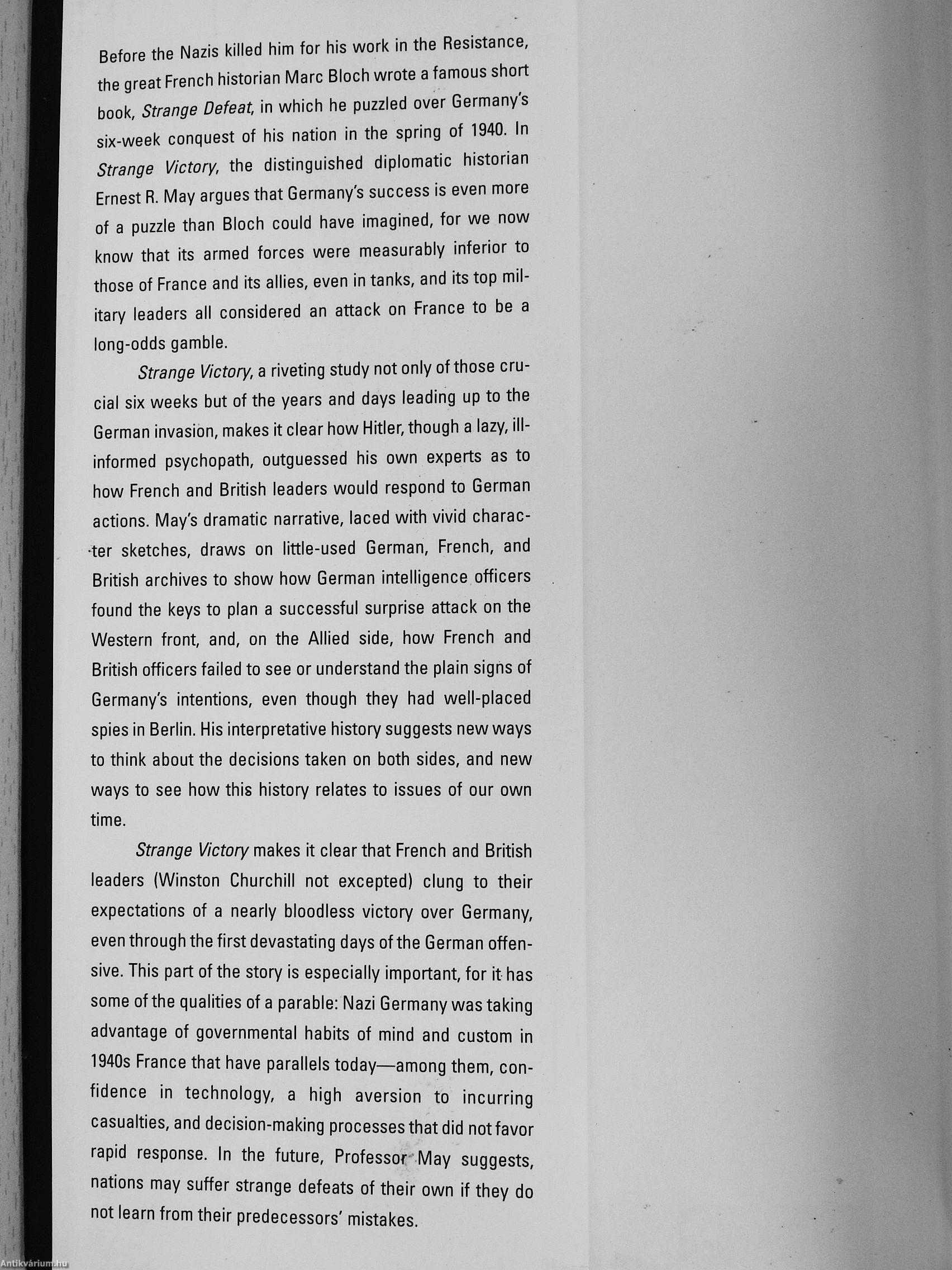
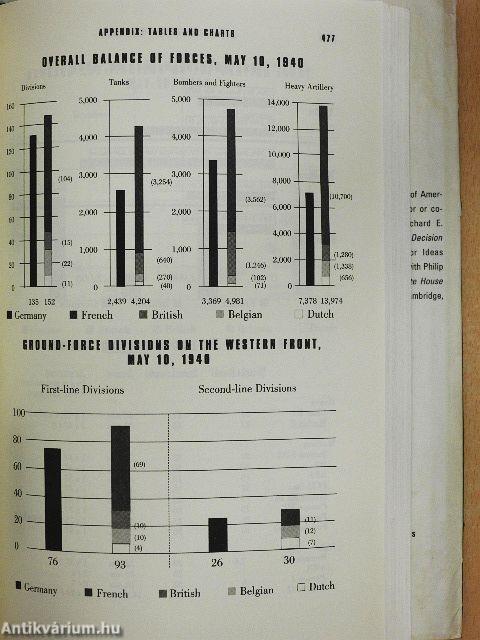
Before the Nazis killed him for his work in the Resistance, the great French historian Marc Bloch wrote a famous short book, Strange Defeat, in which he puzzled over Germany's six-week conquest of his nation in the spring of 1940. In Strange Victory, the distinguished diplomatic historian Ernest R. May argues that Germany's success is even more of a puzzle than Bloch could have imagined, for we now know that its armed forces were measurably inferior to those of France and its allies, even in tanks, and its top military leaders all considered an attack on France to be a long-odds gamble.
Strange Victory, a riveting study not only of those crucial six weeks but of the years and days leading up to the German invasion, makes it clear how Hitler, though a lazy, ill-informed psychopath, outguessed his own experts as to how French and British leaders would respond to German actions. May's dramatic narrative, laced with vivid charac-¦ter sketches, draws on little-used German, French, and British archives to show how German intelligence officers found the keys to plan a successful surprise attack on the Western front, and, on the Allied side, how French and British officers failed to see or understand the plain signs of Germany's intentions, even though they had well-placed spies in Berlin. His interpretative history suggests new ways to think about the decisions taken on both sides, and new ways to see how this history relates to issues of our own time.
Strange Victory makes it clear that French and British leaders (Winston Churchill not excepted) clung to their expectations of a nearly bloodless victory over Germany, even through the first devastating days of the German offensive. This part of the story is especially important, for it has some of the qualities of a parable: Nazi Germany was taking advantage of governmental habits of mind and custom in 1940s France that have parallels today—among them, confidence in technology, a high aversion to incurring casualties, and decision-making processes that did not favor rapid response. In the future, Professor May suggests, nations may suffer strange defeats of their own if they do not learn from their predecessors' mistakes.
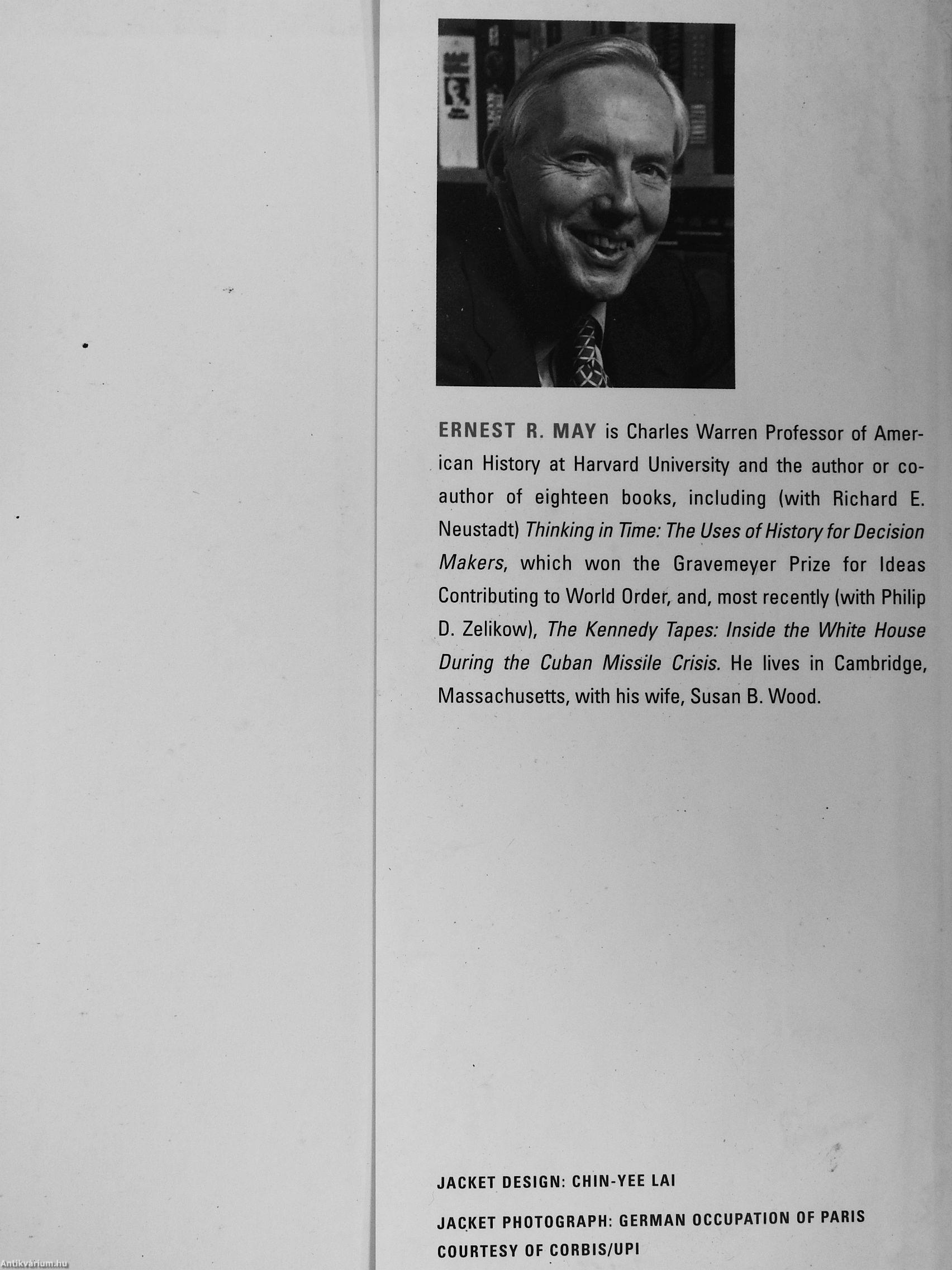
ERNEST R. MAY is Charles Warren Professor of American History at Harvard University and the author or coauthor of eighteen books, including (with Richard E. Neustadt) Thinking in lime: The Uses of History for Decision Makers, which won the Gravemeyer Prize for Ideas Contributing to World Order, and, most recently (with Philip D. Zelikow), The Kennedy Tapes: Inside the White House During the Cuban Missile Crisis. He lives in Cambridge, Massachusetts, with his wife, Susan B. Wood.
JACKET DESIGN: CHIN-YEE LAI
JACKET PHOTOGRAPH: GERMAN OCCUPATION OF PARIS COURTESY OF CORBIS/UPI Vissza
Témakörök
- Idegennyelv > Idegennyelvű könyvek > Angol > Történelem > Európa története > Egyéb
- Történelem > Idegennyelvű > Angol
- Történelem > Politika > Külpolitika > Egyéb
- Történelem > Kontinensek szerint > Európa, európai országok története > Nyugat-Európa > Anglia
- Történelem > Kontinensek szerint > Európa, európai országok története > Nyugat-Európa > Franciaország
- Történelem > Legújabb kor > II. világháború > Hadtörténet
- Történelem > Monográfiák > Világtörténelem
- Történelem > Hadtörténet > Hadügy, hadviselés
Ernest R. May
Ernest R. May műveinek az Antikvarium.hu-n kapható vagy előjegyezhető listáját itt tekintheti meg: Ernest R. May könyvek, művekMegvásárolható példányok
Nincs megvásárolható példány
A könyv összes megrendelhető példánya elfogyott. Ha kívánja, előjegyezheti a könyvet, és amint a könyv egy újabb példánya elérhető lesz, értesítjük.
 Folytatás Microsoft-tal