
1.145.557
kiadvánnyal nyújtjuk Magyarország legnagyobb antikvár könyv-kínálatát

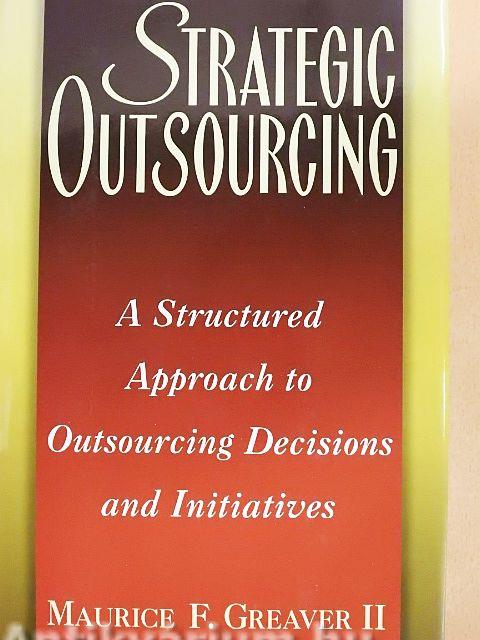
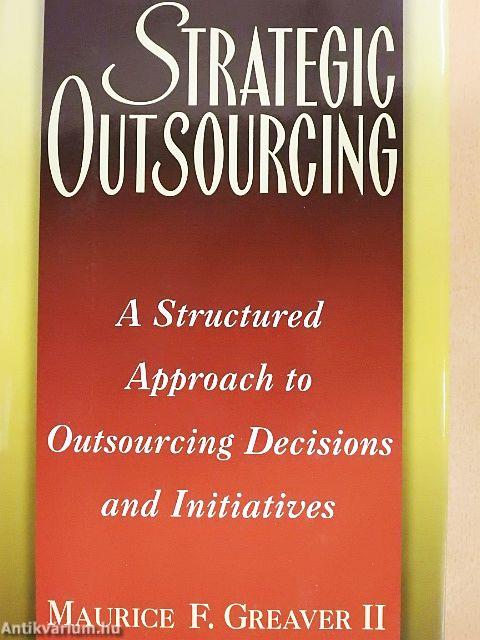
Strategic Outsourcing
A Structured Approach to Outsourcing Decisions and Initiatives
New York
| Kiadó: | Amacom-American Management Association |
|---|---|
| Kiadás helye: | New York |
| Kiadás éve: | |
| Kötés típusa: | Félvászon |
| Oldalszám: | 314 oldal |
| Sorozatcím: | |
| Kötetszám: | |
| Nyelv: | Angol |
| Méret: | 23 cm x 16 cm |
| ISBN: | 0-8144-0434-0 |
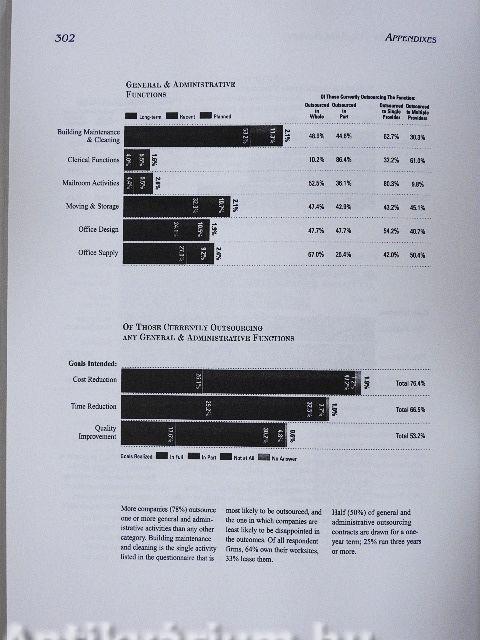
| Megjegyzés: | Fekete-fehér ábrákkal. |
Értesítőt kérek a kiadóról
A beállítást mentettük,
naponta értesítjük a beérkező friss
kiadványokról
naponta értesítjük a beérkező friss
kiadványokról
A beállítást mentettük,
naponta értesítjük a beérkező friss
kiadványokról
naponta értesítjük a beérkező friss
kiadványokról
Előszó
Tovább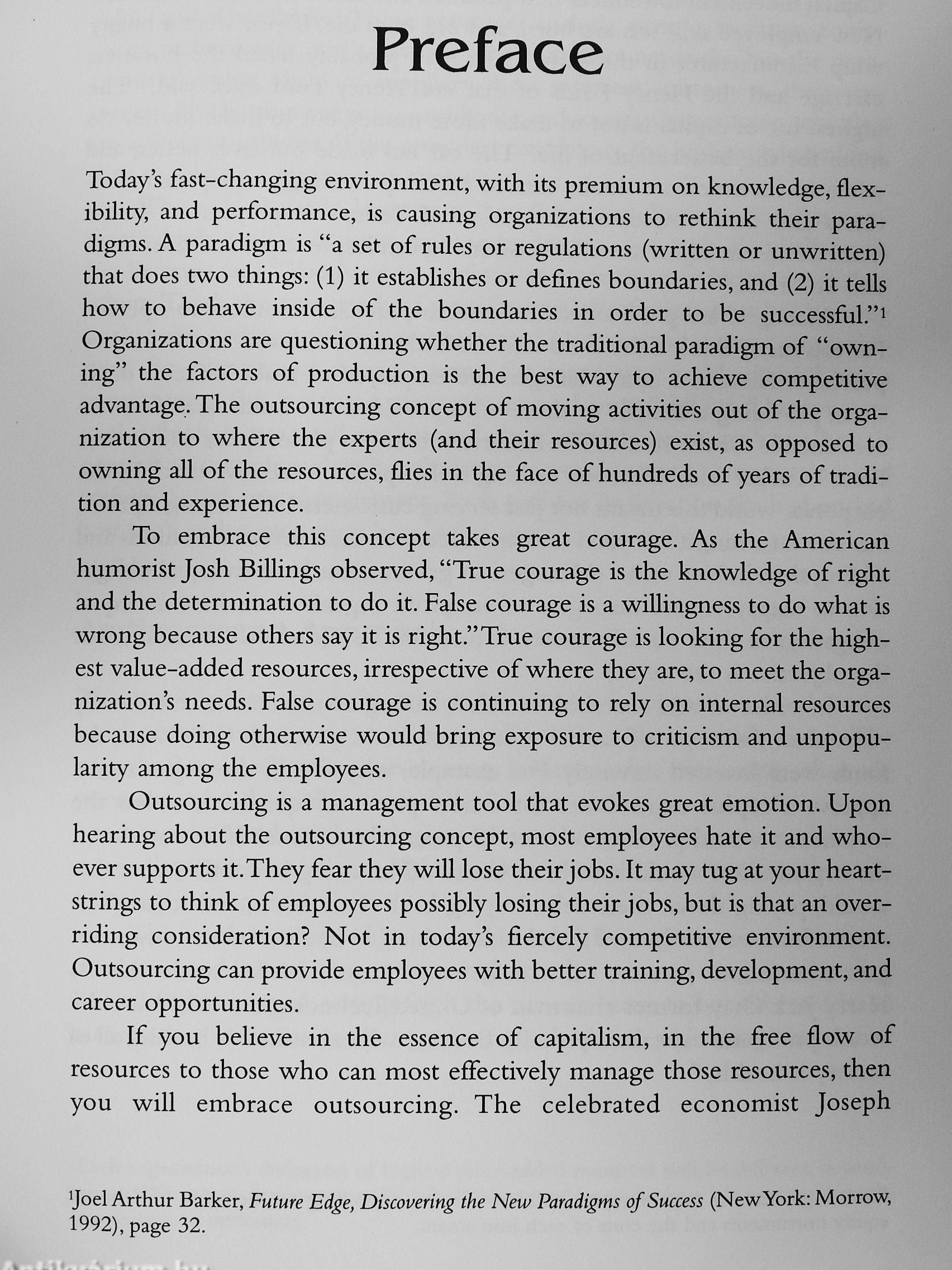
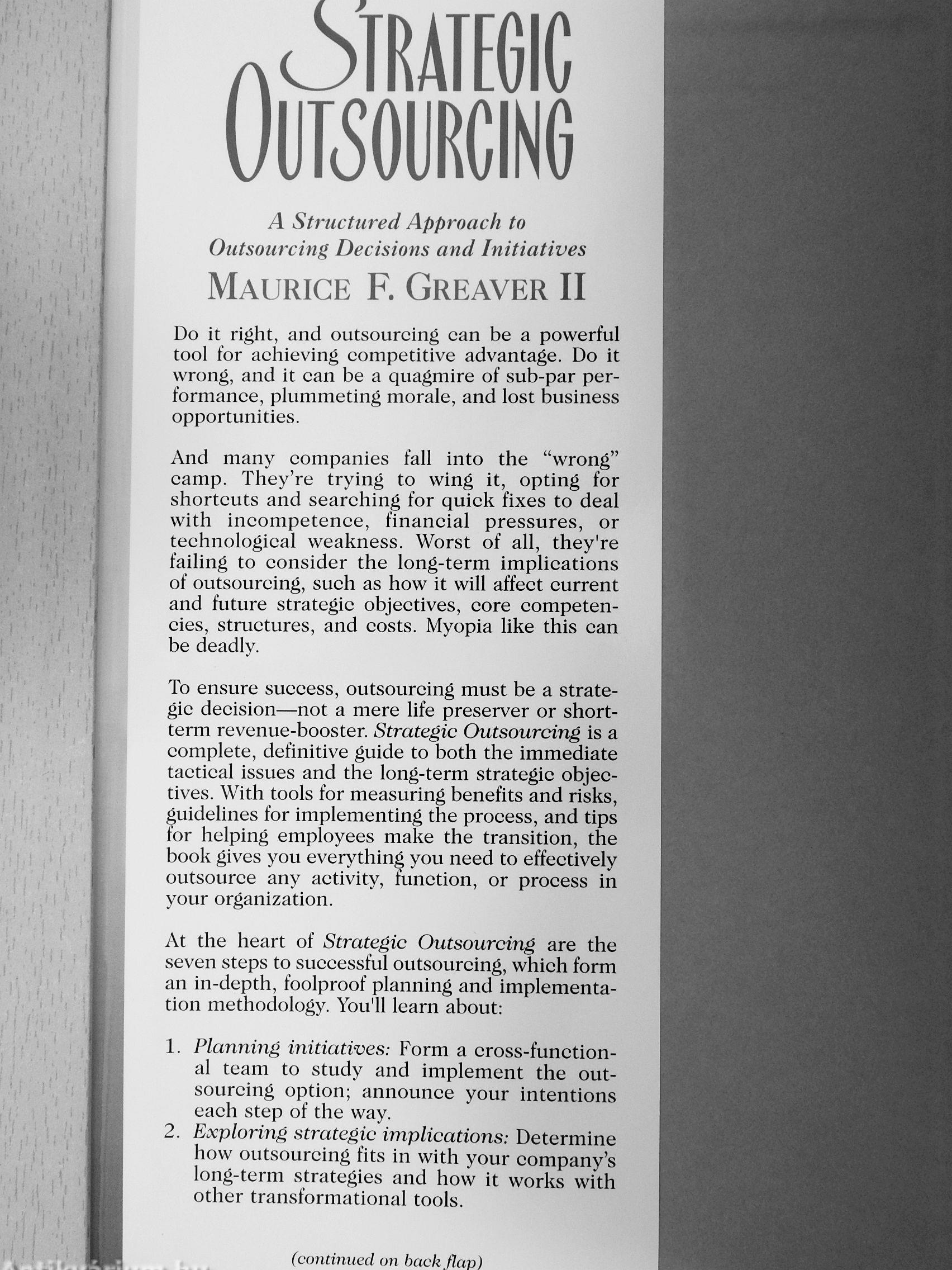
Fülszöveg
OoKoyRCiNe
A Structured Approach to Outsourcing Decisions and Initiatives
Maurice R Greaver II
Do it rigiit, and outsourcing can be a powerful tool for acliieving competitive advantage. Do it wrong, and it can be a quagmire of sub-par performance, plummeting morale, and lost business opportunities.
And many companies fall into the "wrong" camp. They're trying to wing it, opting for shortcuts and searching for quick fixes to deal with incompetence, financial pressures, or technological weakness. Worst of all, they're failing to consider the long-term implications of outsourcing, such as how it will affect current and future strategic objectives, core competencies, structures, and costs. Myopia like this can be deadly.
To ensure success, outsourcing must be a strategic decision—not a mere life preserver or short-term revenue-booster. Strategic Outsourcing is a complete, definitive guide to both the immediate tactical issues and the long-term strategic objectives. With tools for... Tovább
Fülszöveg
OoKoyRCiNe
A Structured Approach to Outsourcing Decisions and Initiatives
Maurice R Greaver II
Do it rigiit, and outsourcing can be a powerful tool for acliieving competitive advantage. Do it wrong, and it can be a quagmire of sub-par performance, plummeting morale, and lost business opportunities.
And many companies fall into the "wrong" camp. They're trying to wing it, opting for shortcuts and searching for quick fixes to deal with incompetence, financial pressures, or technological weakness. Worst of all, they're failing to consider the long-term implications of outsourcing, such as how it will affect current and future strategic objectives, core competencies, structures, and costs. Myopia like this can be deadly.
To ensure success, outsourcing must be a strategic decision—not a mere life preserver or short-term revenue-booster. Strategic Outsourcing is a complete, definitive guide to both the immediate tactical issues and the long-term strategic objectives. With tools for measuring benefits and risks, guidelines for implementing the process, and tips for helping employees make the transition, the book gives you everything you need to effectively outsource any activity, function, or process in your organization.
At the heart of Strategic Outsourcing are the seven steps to successful outsourcing, which form an in-depth, foolproof planning and implementation methodology. You'll learn about:
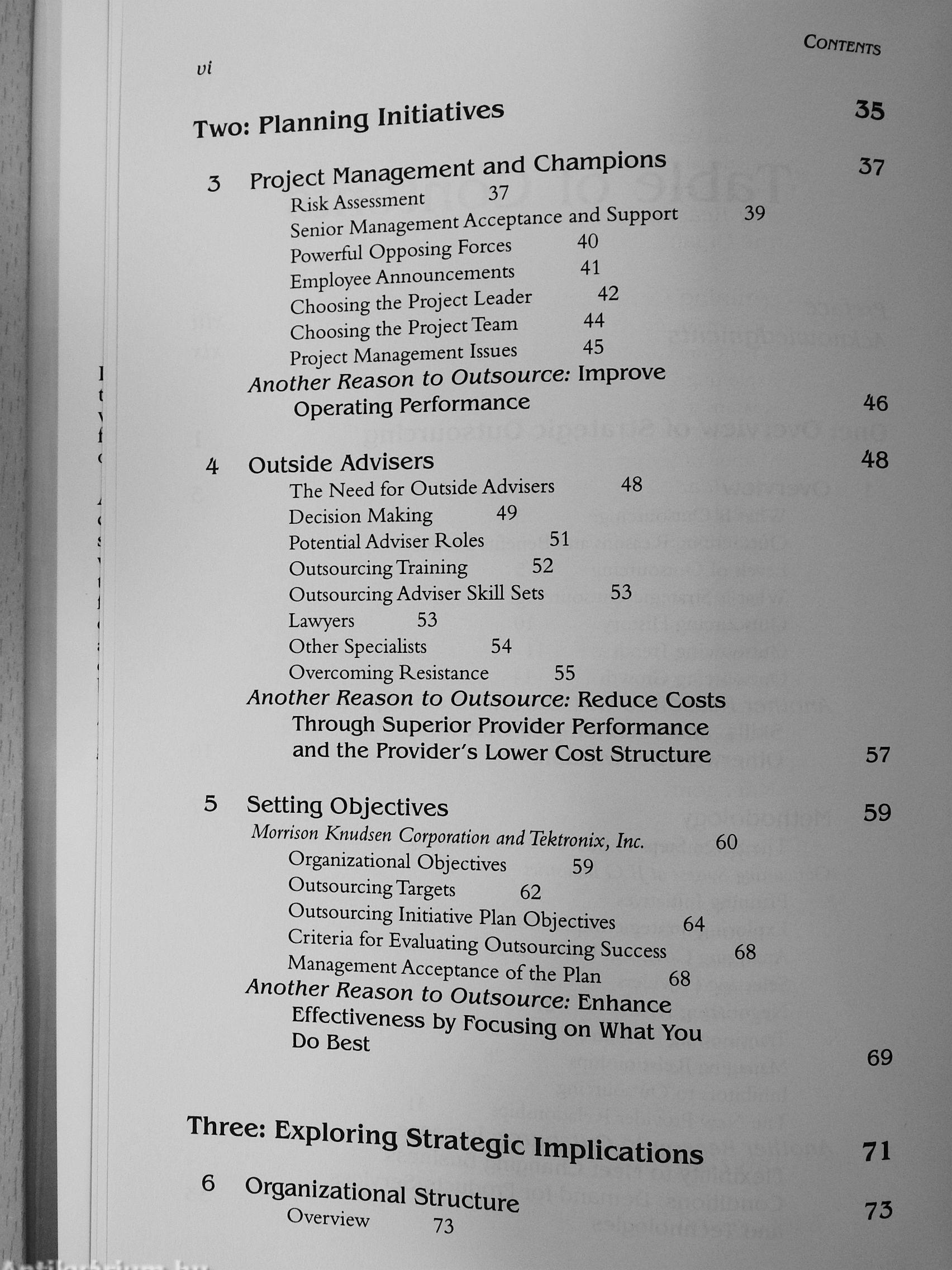
1. IHanning initiatives: Form a cross-functional team to study and implement the outsourcing option; announce your intentions each step of the way.
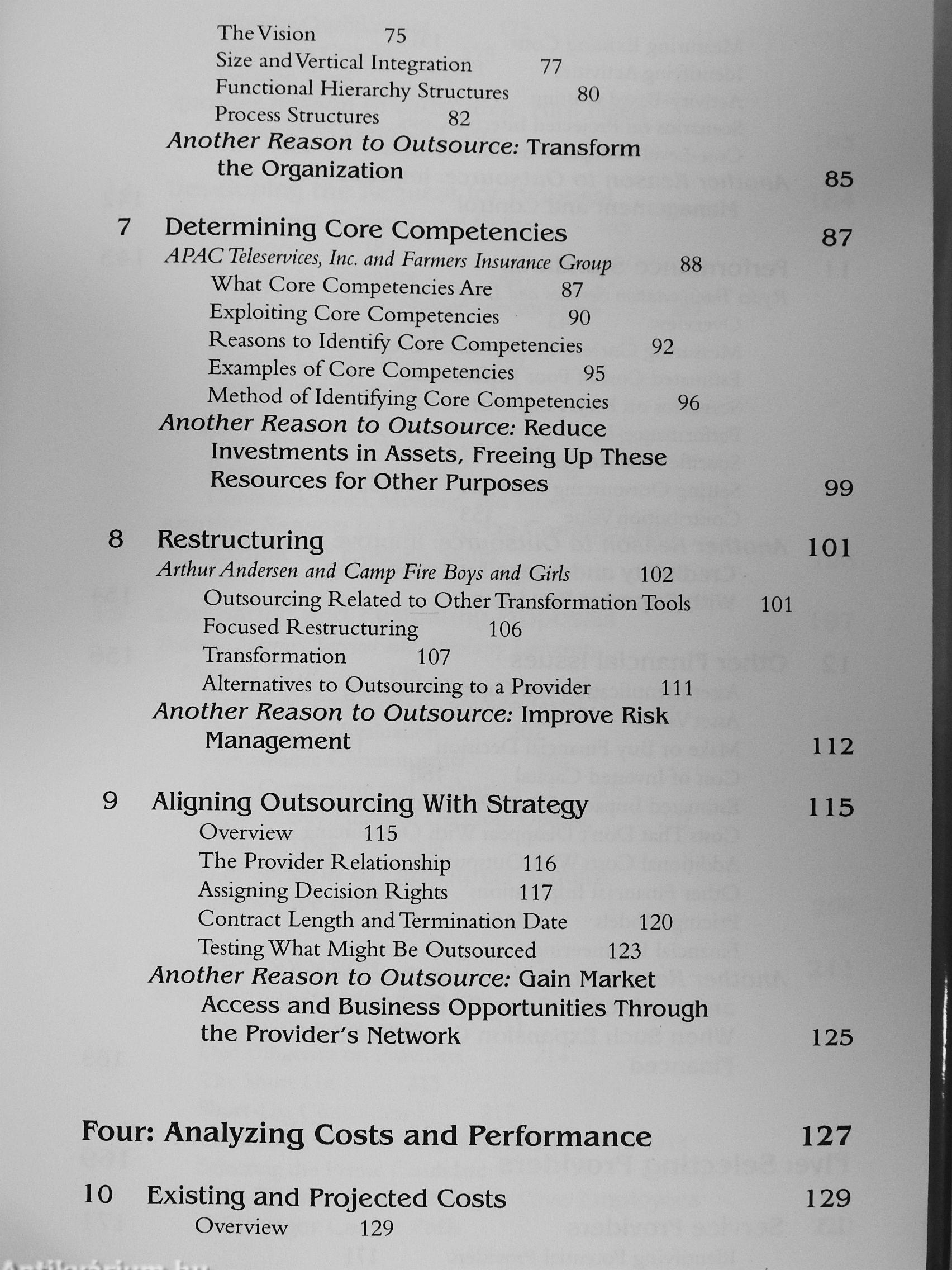
2. Exploring strategic implications: Determine how outsourcing fits in with your company's long-term strategies and how it works with other transformational tools.
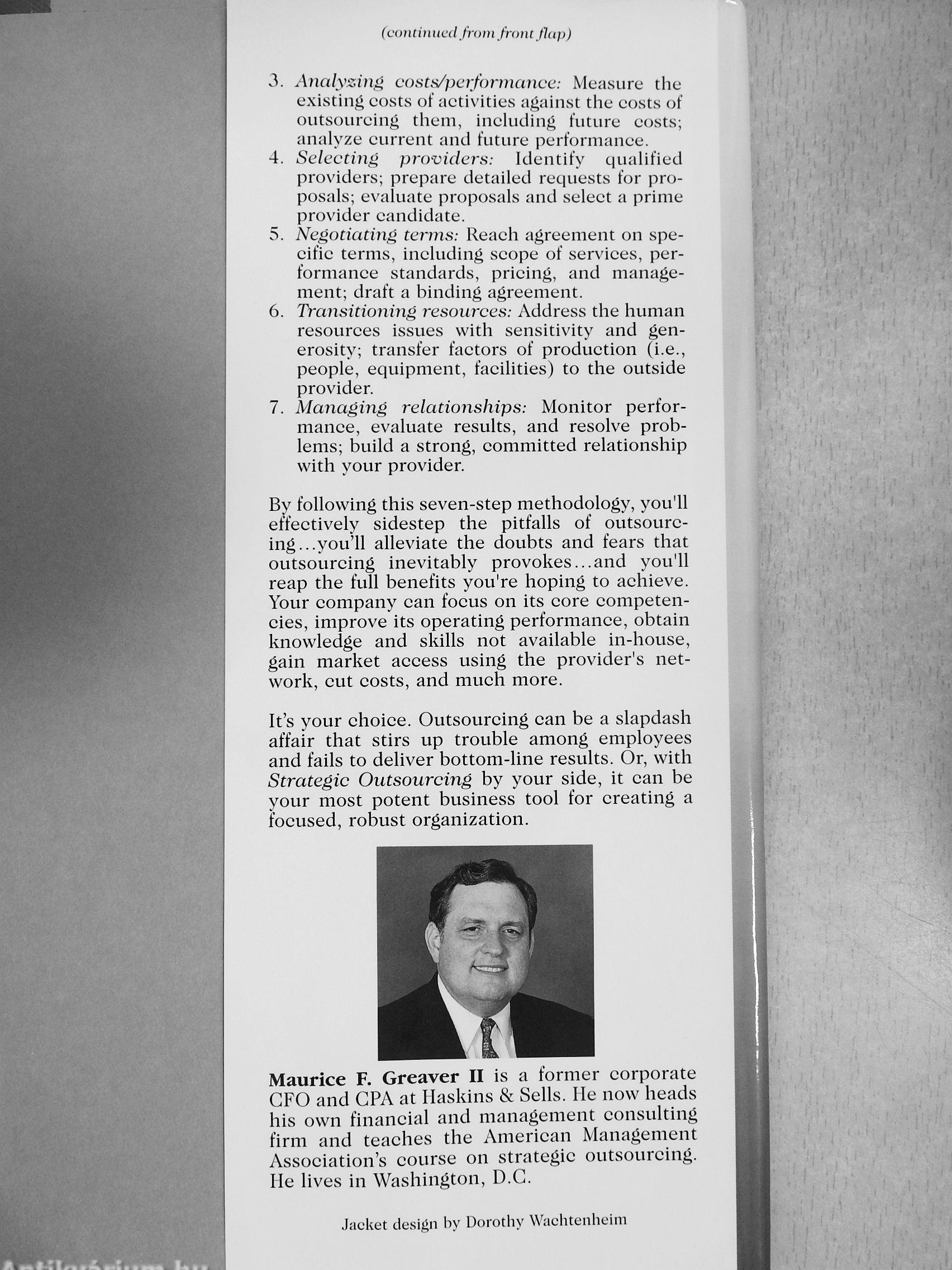
(fontimial on hacli tlup)
(continued/roni fhmtJhii))
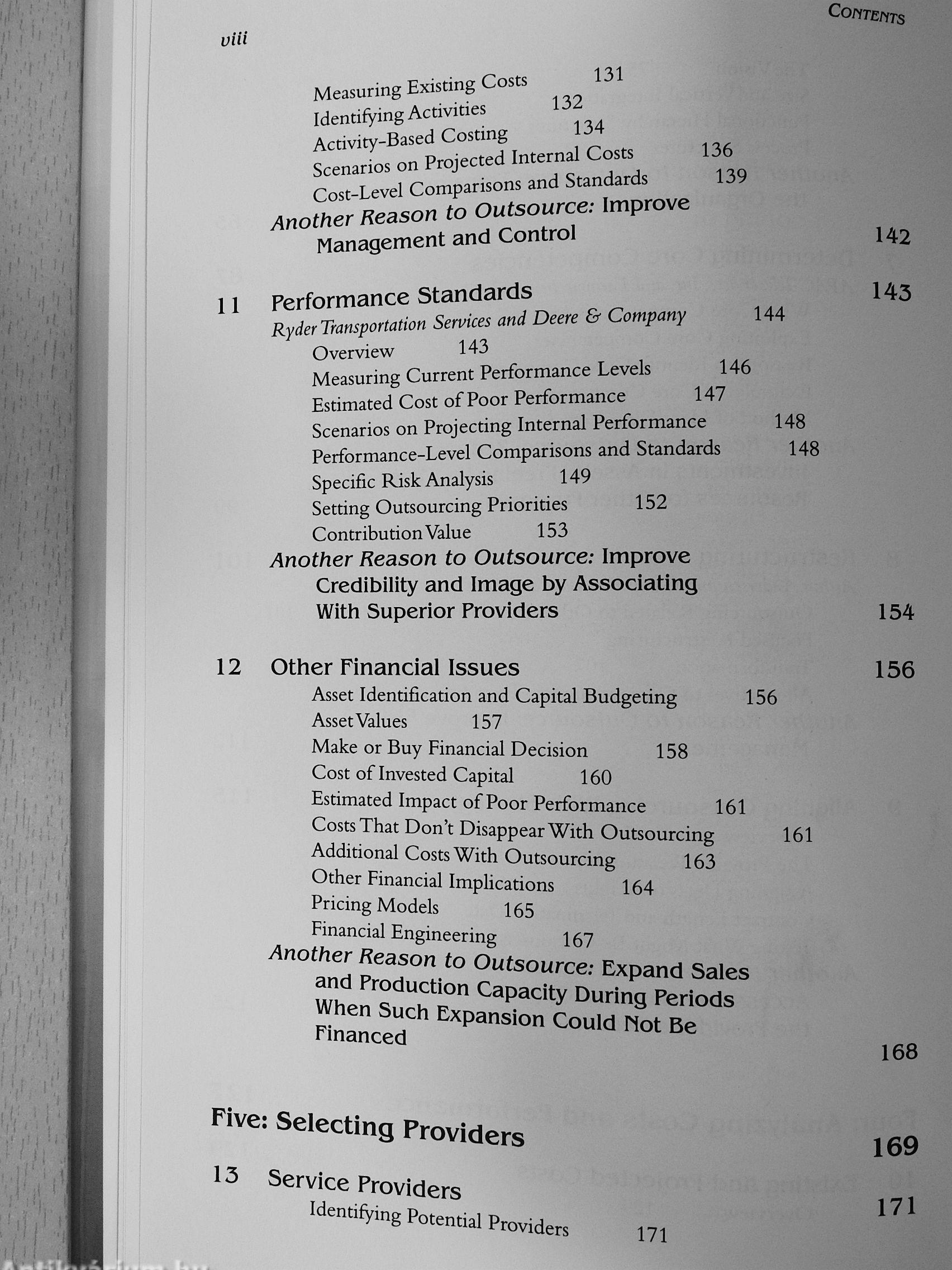
3. Ancdysiufi coscs/pcrfonncmce: Measure tlie existing costs of activities against the eosts oi outsourcing them, inchidin^ future costs; analyze current and future performance.
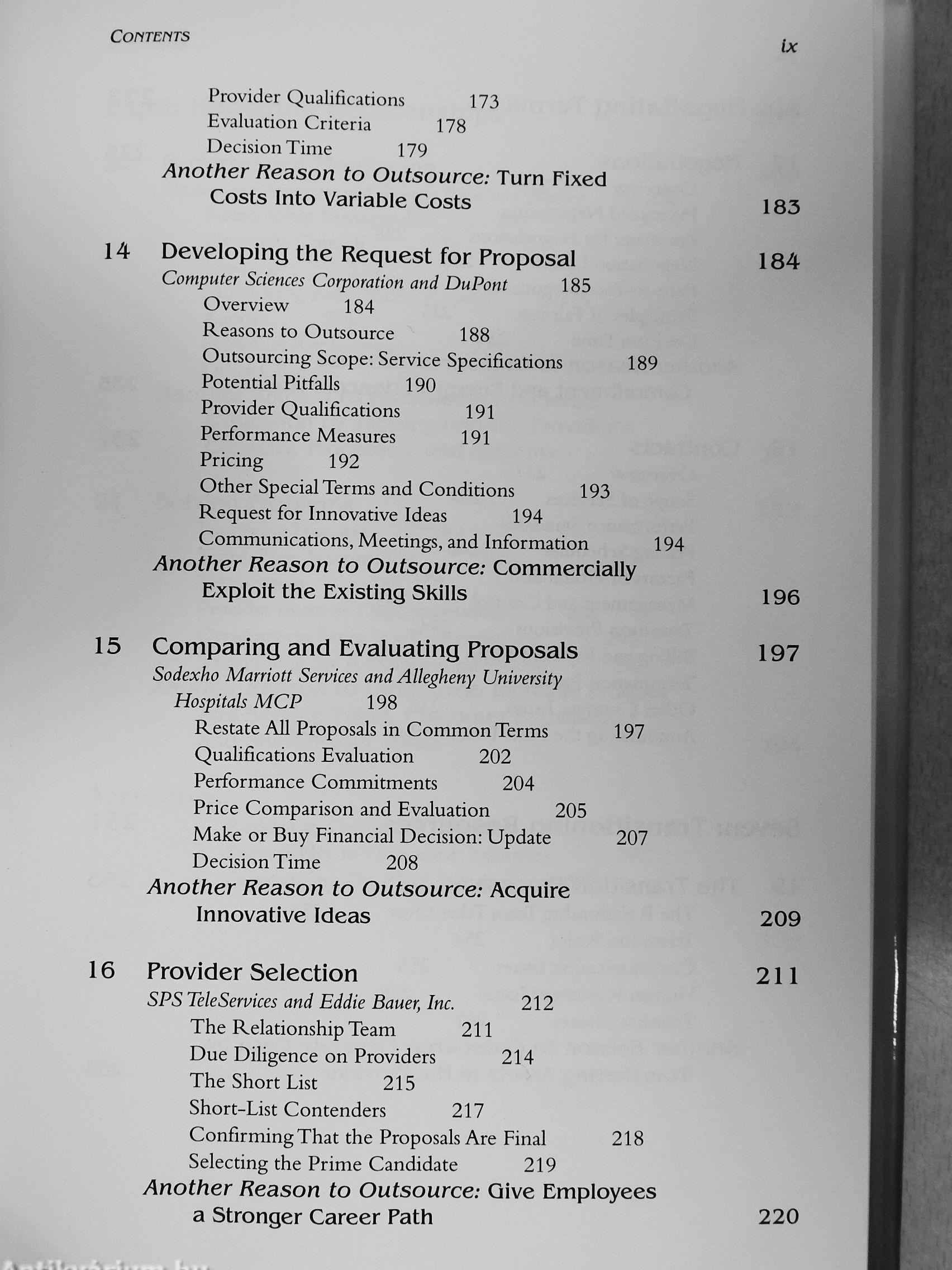
4. Selecting providers: Identify qualified providers; prepare detailed requests for proposals; evaluate proposals and select a prime provider candidate.
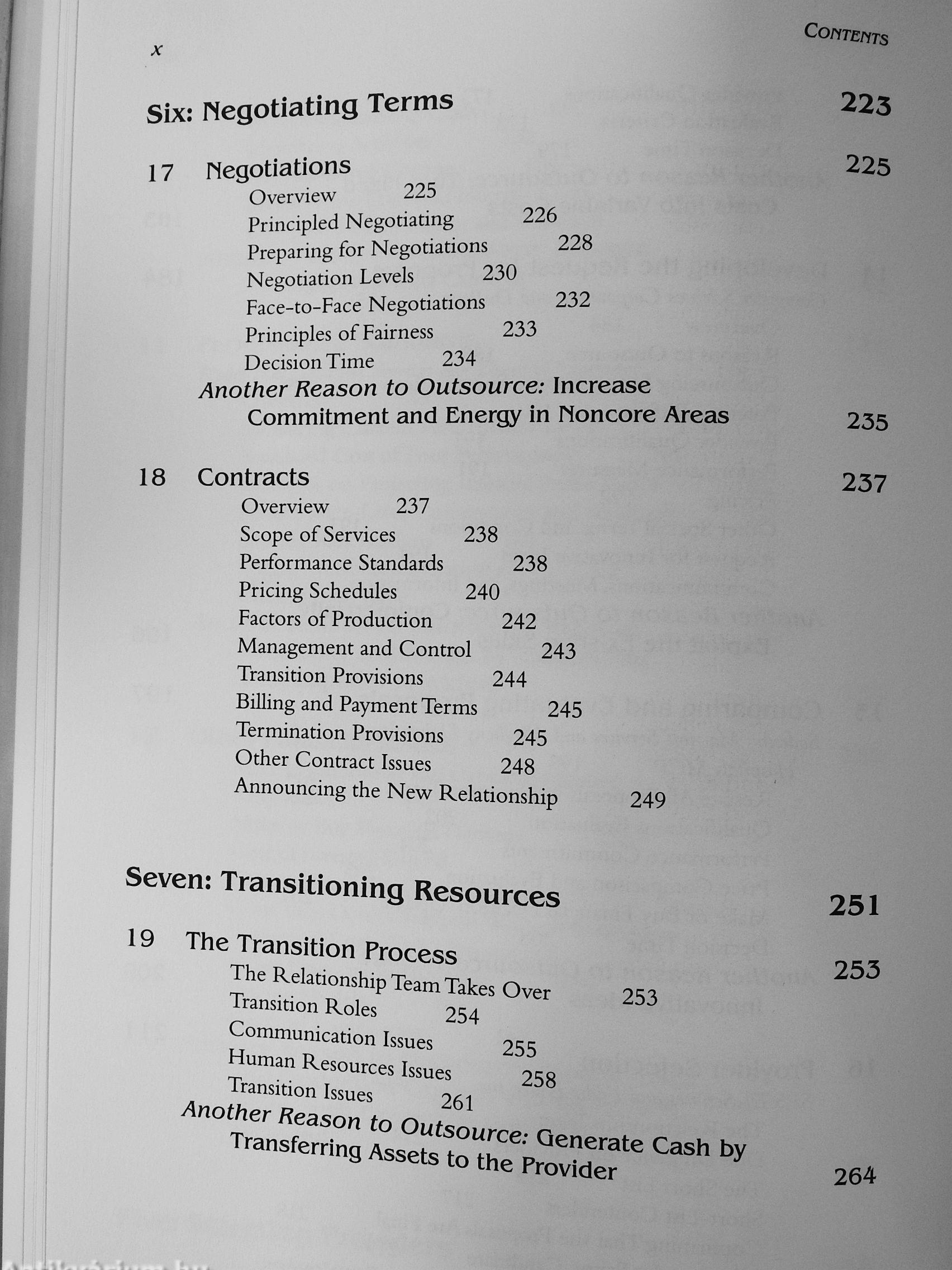
5. Negotiating terms: Reach agreement on specific terms, including scope of services, performance standards, pricing, and management; draft a binding agreement.
6. Transitioning resources: Address the human resources issues with sensitivity and generosity; transfer factors of production (i.e., people, equipment, facilities) to the outside provider.
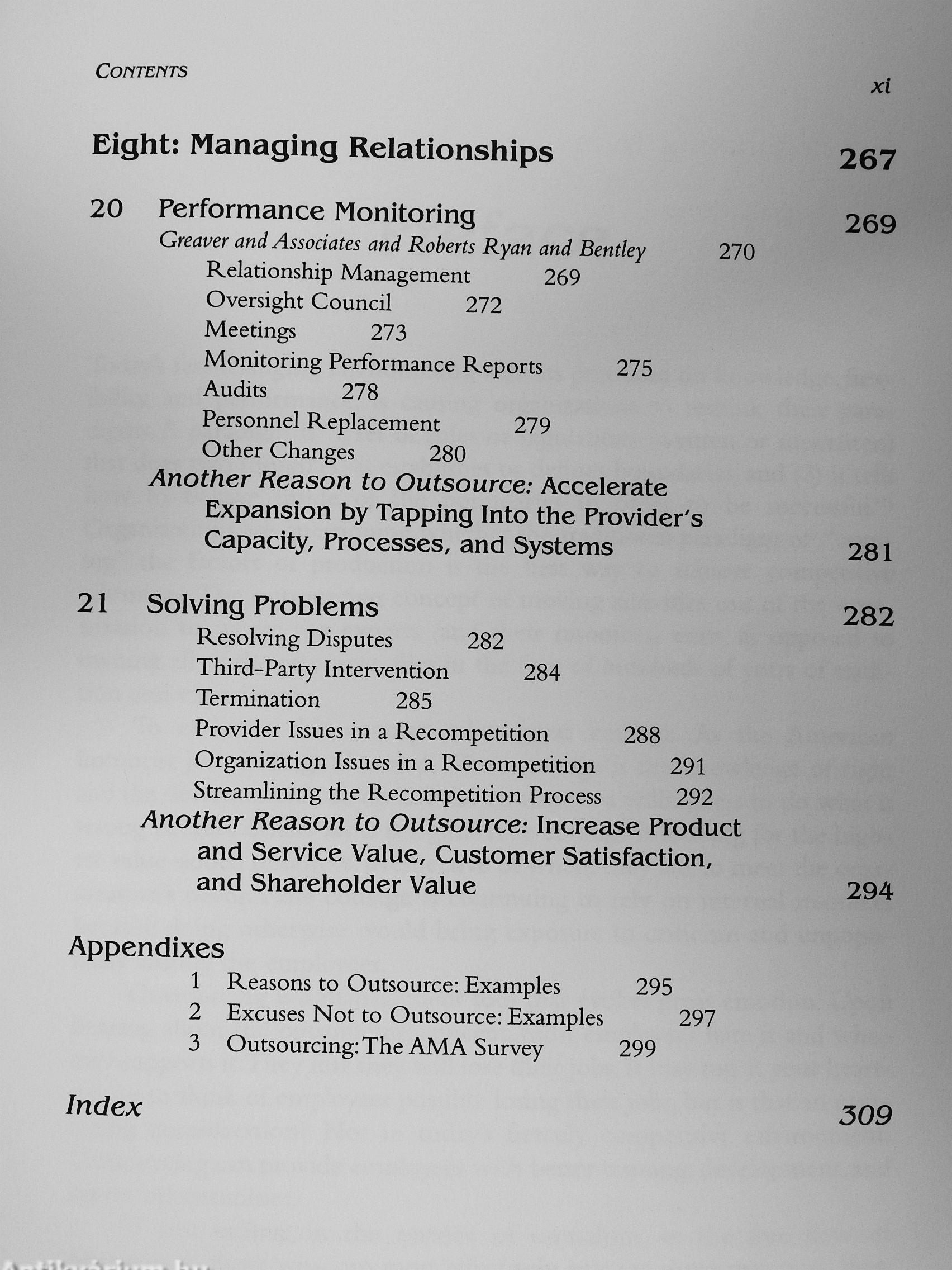
7. Managing relationships: Monitor performance, evaluate results, and resolve problems; build a strong, committed relationship with your provider.
By following this seven-step methodology, you'll effectively sidestep the pitfalls of outsourcing you'll alleviate the doubts and fears that outsourcing inevitably provokes and you'll reap the full benefits you're hoping to achieve. Your company can focus on its core competencies, improve its operating performance, obtain knowledge and skills not available in-house, gain market access using the provider's network, cut costs, and much more.
It's your choice. Outsourcing can be a slapdash affair that stirs up trouble among employees and fails to deliver bottom-line results. Or, with Strategic Outsourcing by your side, it can be your most potent business tool for creating a focused, robust organization.
Maurice F. Greaver II is a former corporate GFO and CPA at Ilaskins & Sells. He now heads his own financial and management consulting firm and teaches the American Management Association's course on strategic outsourcing. He lives in Washington, D.G.
Jacket design by Dorothy Waclitenlieiiii
vi , \\ ¦'
I--
h
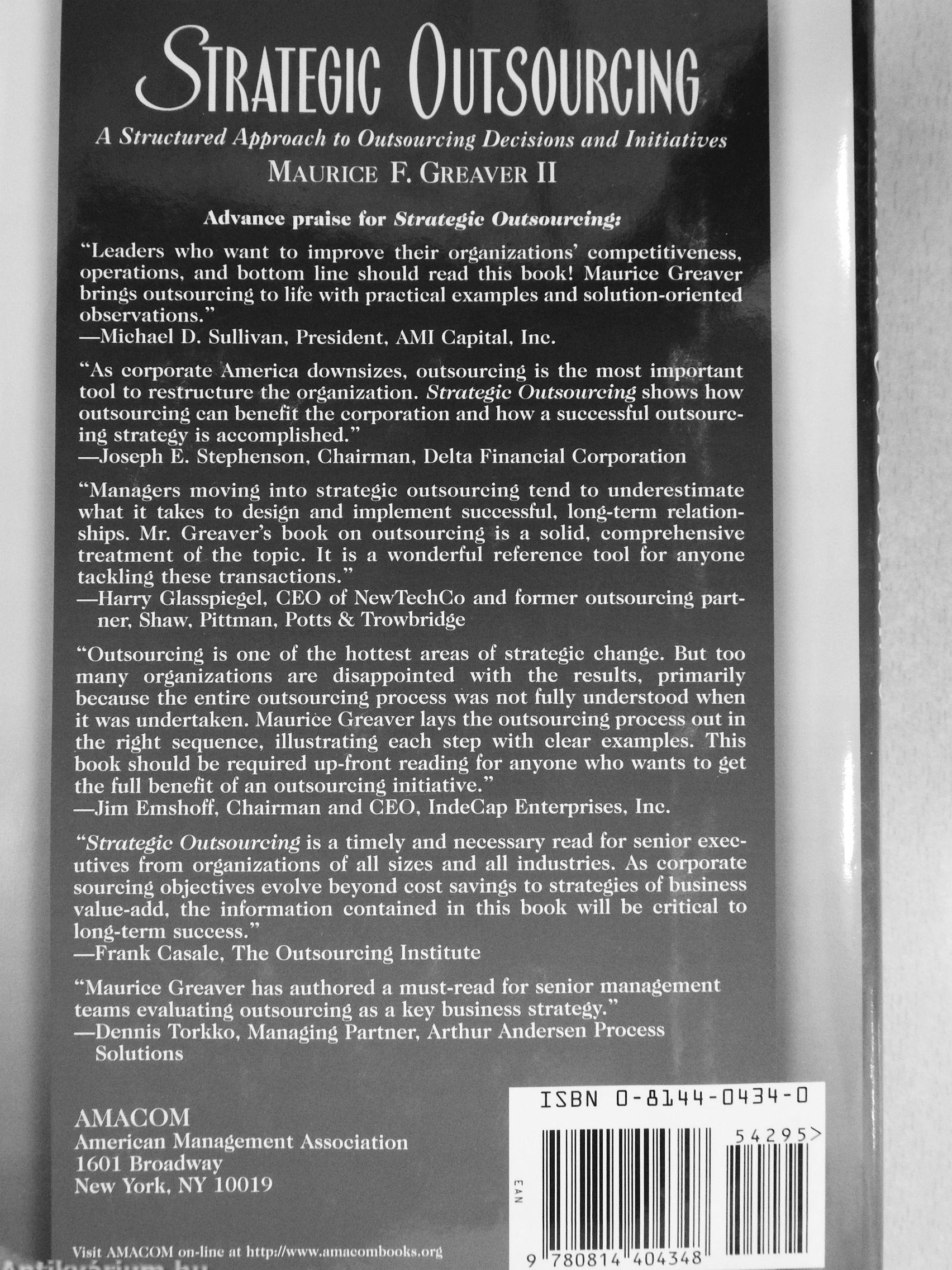
S\mm OyiioyitciNG
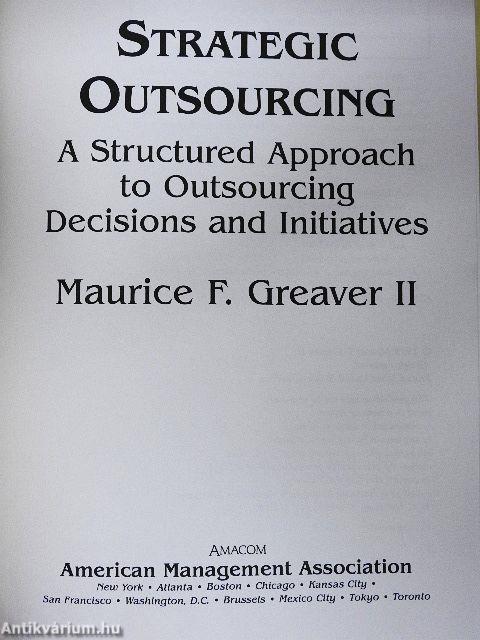
A Structured Approach to Outsourcing Decisions and Initiatives
Maurice F. Greaver II
Advance praise for Strategic Outsoureingt
"I^eaders who want to improve their organizations' competitiveness, operations, and bottom line should read this book! Maurice Greaver brings outsourcing to life with practical examples and solution-oriented observations."
—Michael D. Sullivan, President, AMI Capital, Inc.
"As corporate America downsizes, outsourcing is the most important tool to restructure the organization. Strategic Outsourcing shows how outsourcing can benefit the corporation and how a successful outsourcing strategy is accomplished."
—Joseph E. Stephenson, Chairman, Delta Financial Corporation
"Managers moving into strategic outsourcing tend to underestimate what it takes to design and implement successful, long-term relationships. Mr. Greaver's book on outsourcing is a solid, comprehensive treatment of the topic. It is a wonderful reference tool for anyone tackling these transactions."
—Harry Glasspiegel, CEO of NewTechCo and former outsourcing partner, Shaw, Pittman, Potts & Trowbridge
"Outsourcing is one of the hottest areas of strategic change. But too many organizations are disappointed with the results, primarily because the entire outsourcing process was not fully understood when it was undertaken. Maurice Greaver lays the outsourcing process out in the right sequence, illustrating each step with clear examples. This book should be required up-front reading for anyone who wants to get the full benefit of an outsourcing initiative." —^Jim Emshoff, Chairman and CEO, IndeCap Enterprises, Inc.
"Strategic Outsourcing is a timely and necessary read for senior executives from organizations of all sizes and all industries. As corporate sourcing objectives evolve beyond cost savings to strategies of business value-add, the information contained in this book will be critical to long-term success."
—Frank Casale, The Outsourcing Institute
"Maurice Greaver has authored a must-read for senior management teams evaluating outsourcing as a key business strategy." —Dennis Torkko, Managing Partner, Arthur Andersen Process , Solutions
AMACOM
American Management Association 1601 Broadway New York, NY 10019
ViDit AMACOM un-llnu lit httpi//www.iiniiiu<>nilii>iikH.r>ri!
V /OUOIH
978081440434854295 Vissza
Témakörök
- Közgazdaságtan > Menedzserképzés, marketing
- Idegennyelv > Idegennyelvű könyvek > Angol > Közgazdaságtan > Menedzserképzés, marketing
- Pszichológia > Alkalmazott lélektan > Pszichotechnika > Kommunikáció, konfliktuskezelés
- Pszichológia > Idegennyelvű > Angol
- Közgazdaságtan > Lexikonok, kézikönyvek, szótárak
- Idegennyelv > Idegennyelvű könyvek > Angol > Közgazdaságtan > Lexikonok, kézikönyvek, szótárak
- Idegennyelv > Idegennyelvű könyvek > Angol > Pszichológia
Maurice F. Greaver II
Maurice F. Greaver II műveinek az Antikvarium.hu-n kapható vagy előjegyezhető listáját itt tekintheti meg: Maurice F. Greaver II könyvek, művekMegvásárolható példányok
Állapotfotók
Állapot:
Jó
4.340 ,-Ft
22
pont kapható
Kosárba
 Folytatás Microsoft-tal