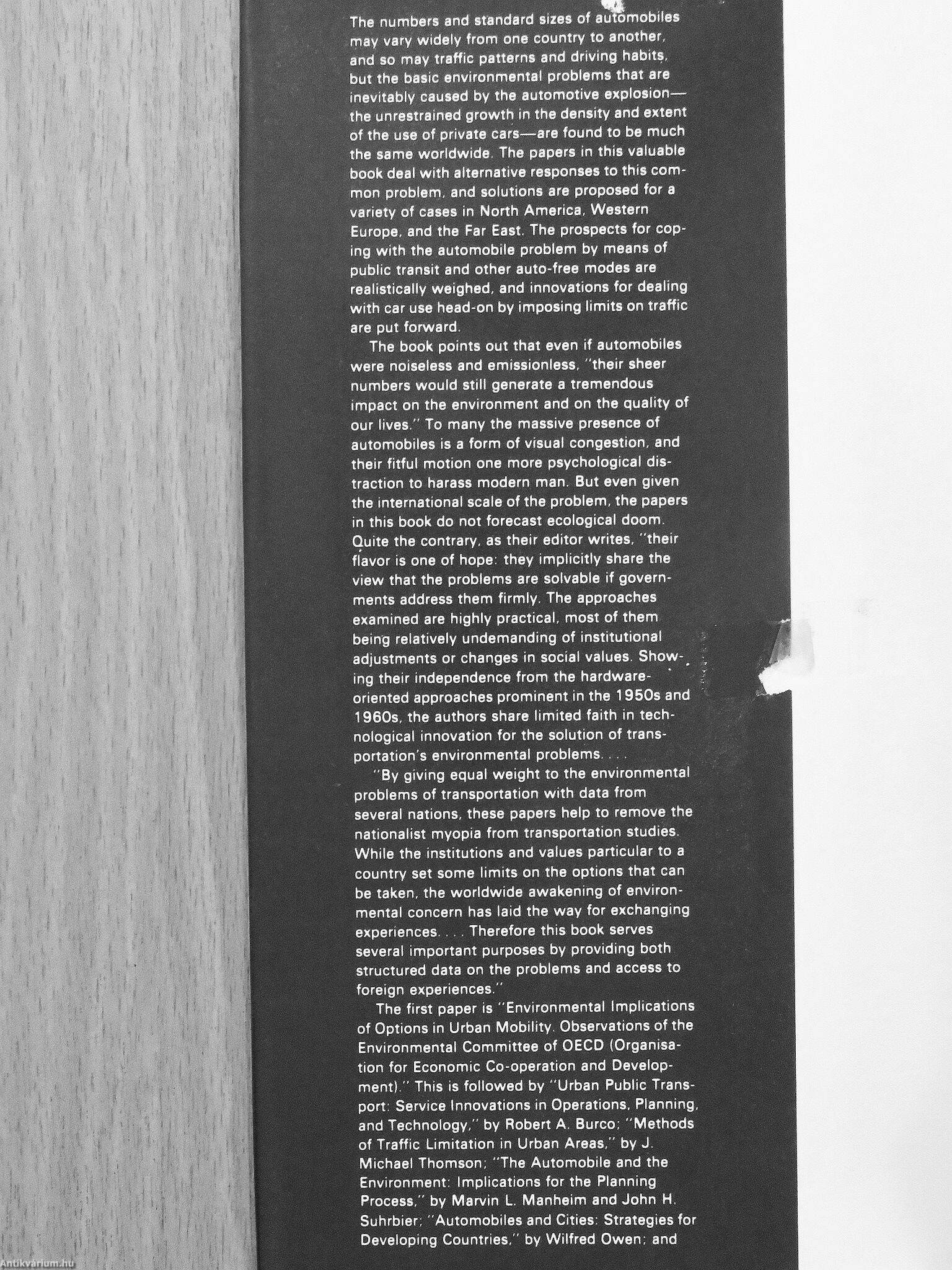
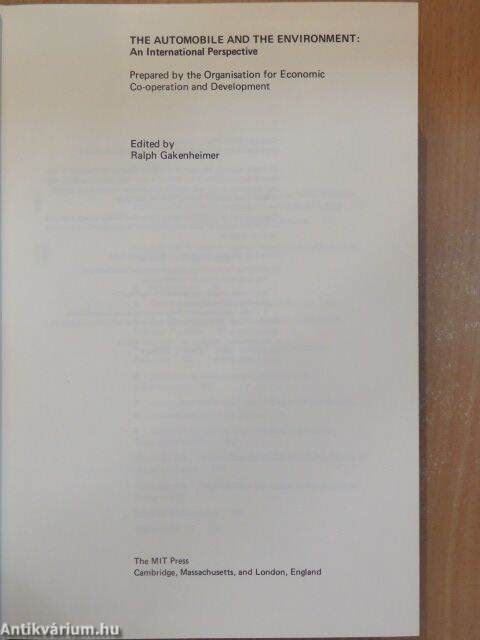
• i í The numbers and standard sizes of aT^mobíles may vary widely from one country to another, and so may traffic patterns and dríving habits, but the basic environmental problems that are inevitably caused by the automotive explosíon- the unrestrained growth in the density and extent of the use of priváté cars-are found to be much the same worldwide. The papers in thís valuable book deal with alternative responses to thís common problem, and solutions are proposed for a variety of cases in North America, Western Europe, and the Far East. The prospects for coping with the automobilé problem by means of public transit and other auto-free modes are realistically weighed, and innovations for dealing with car use head-on by imposing limits on traffic are put forward. The book points out that even if automobiles were noiseless and emissionless, "their sheer numbers would stílt generate a tremendous...
Tovább
Fülszöveg
I 1; (f ;»i í :
t . fe ' 1 1 I ¦ f ;! , i ! : < V«)
! ; , , I ' II :
;í|
• i í The numbers and standard sizes of aT^mobíles may vary widely from one country to another, and so may traffic patterns and dríving habits, but the basic environmental problems that are inevitably caused by the automotive explosíon- the unrestrained growth in the density and extent of the use of priváté cars-are found to be much the same worldwide. The papers in thís valuable book deal with alternative responses to thís common problem, and solutions are proposed for a variety of cases in North America, Western Europe, and the Far East. The prospects for coping with the automobilé problem by means of public transit and other auto-free modes are realistically weighed, and innovations for dealing with car use head-on by imposing limits on traffic are put forward. The book points out that even if automobiles were noiseless and emissionless, "their sheer numbers would stílt generate a tremendous impact on the environment and on the quality of our lives." To many the massive presence of automobiles is a form of vísual congestion, and their fitful motion one more psychological distraction to harass modern man. But even given the international scale of the problem, the papers in this book do not forecast ecological doom. Quite the contrary, as their editor writes, "their flavor is one of hope: they implicitly share the view that the problems are solvable if governments address them firmly. The approaches examined are highly practical, most of them being relatively undemanding of institutional adjustments or changes in social values. Showing their independence from the hardwareoriented approaches prominent in the 1950s and 1960s, the authors share limited faith in technological innovation for the solution of transportation's environmental problems. . . . "By giving equal weight to the environmental problems of transportation with data from several nations, these papers help to remove the nationalist myopia from transportation studies. While the institutions and values particular to a country set somé limits on the options that can be taken, the worldwide awakening of environmental concern has laid the way for exchanging experiences. . . . Therefore this book serves several important purposes by providing both structured data on the problems and access to foreign experiences." The first paper is "Environmental Implications of Options in Úrban Mobility. Observations of the Environmental Committee of OECD (Organisation for Economic Co-operation and Development)." This is followed by "Úrban Public Transport: Service Innovations in Operations, Planning, and Technology," by Róbert A. Burco; "Methods of Traffic Limitation in Úrban Areas," by J. Michael Thomson; "The Automobile and the Environment: Implications for the Planning Process," by Marvin L. Manheim and John H. Suhrbier; "Automobiles and Cities: Strategies for Developing Countries," by Wilfred Owen; and
Vissza
Google, Facebook, Apple, Microsoft fiókkal való belépés/regisztráció eseténautomatikusan elfogadja az Általános Szerződési Feltételeket.
Elfelejtett jelszó
Kérjük, adja meg azonosítóját, és a hozzá tartozó email címet, hogy jelszavát elküldhessük Önnek!
A *-gal jelölt mezők kitöltése kötelező!
Azonosító név/E-mail cím* Azonosító és e-mail cím megegyező
E-mail cím*
(2009 március óta a regisztrált ügyfelek azonosító neve megegyezik az email címmel)
Ha az azonosítóját sem tudja megadni, kérjük, hívja az ügyfélszolgálati vonalat:
+36-62-452-833
1
2
3
Regisztráció
Regisztráció
Regisztrációja sikeresen megtörtént.
Megadott e-mail címére megerősítő e-mailt küldtünk. Ahhoz, hogy a regisztrációja véglegesedjen, és le tudja adni rendeléseit, kérjük, kattintson a levélben található linkre. A megerősítő link a kiküldéstől számított 48 óráig érvényes, ezután a regisztrációs adatok törlésre kerülnek.
Kérjük, jelölje meg az érdeklődési körébe tartozó témaköröket!
Regisztráció
Az ön által megjelölt témakörök:
Temakor_1
Beállíthatja, hogy emailben értesítőt kapjon az újonnan beérkezett példányokról a bejelölt témaköröknek megfelelően.
Beállított értesítőit belépés után bármikor módosíthatja az Értesítő menüpont alatt:
létrehozhat új témaköri értesítőt
inaktiválhatja értesítőjét, ha éppen nem kíván a megadott témában értesítőt kapni
törölheti véglegesen az adott értesítőjét
szerkesztheti jelenlegi értesítőjét, ha még részletesebben szeretné megadni mi érdekli.
Az Ön választása alapján naponta vagy 3 naponta kap tőlünk emailt a beállított értesítőjéről.