Fülszöveg
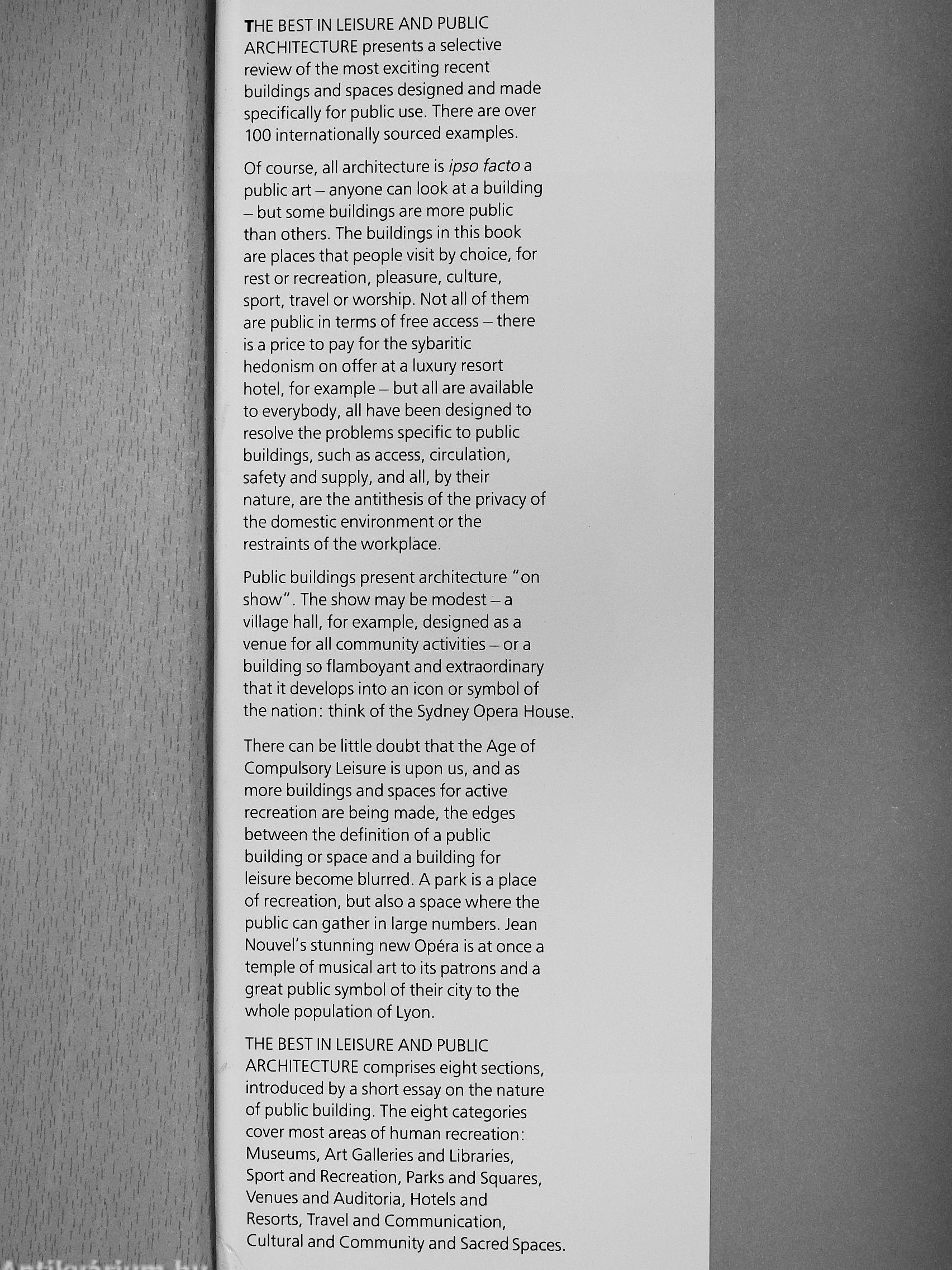
THE BEST IN LEISURE AND PUBLIC ARCHITECTURE presents a selective review of the most exciting recent buildings and spaces designed and made specifically for public use. There are over 100 internationally sourced examples.
Of course, all architecture is ipso facto a public art - anyone can look at a building - but some buildings are more public than others. The buildings in this book are places that people visit by choice, for rest or recreation, pleasure, culture, sport, travel or worship. Not all of them are public in terms of free access - there is a price to pay for the sybaritic hedonism on offer at a luxury resort hotel, for example - but all are available to everybody, all have been designed to resolve the problems specific to public buildings, such as access, circulation, safety and supply, and all, by their nature, are the antithesis of the privacy of the domestic environment or the restraints of the workplace.
Public buildings present architecture "on show". The show...
Tovább
Fülszöveg
THE BEST IN LEISURE AND PUBLIC ARCHITECTURE presents a selective review of the most exciting recent buildings and spaces designed and made specifically for public use. There are over 100 internationally sourced examples.
Of course, all architecture is ipso facto a public art - anyone can look at a building - but some buildings are more public than others. The buildings in this book are places that people visit by choice, for rest or recreation, pleasure, culture, sport, travel or worship. Not all of them are public in terms of free access - there is a price to pay for the sybaritic hedonism on offer at a luxury resort hotel, for example - but all are available to everybody, all have been designed to resolve the problems specific to public buildings, such as access, circulation, safety and supply, and all, by their nature, are the antithesis of the privacy of the domestic environment or the restraints of the workplace.
Public buildings present architecture "on show". The show may be modest - a village hall, for example, designed as a venue for all community activities - or a building so flamboyant and extraordinary that it develops into an icon or symbol of the nation : think of the Sydney Opera House.
There can be little doubt that the Age of Compulsory Leisure is upon us, and as more buildings and spaces for active recreation are being made, the edges between the definition of a public building or space and a building for leisure become blurred. A park is a place of recreation, but also a space where the public can gather in large numbers. Jean Nouvel's stunning new Opéra is at once a temple of musical art to its patrons and a great public symbol of their city to the whole population of Lyon.
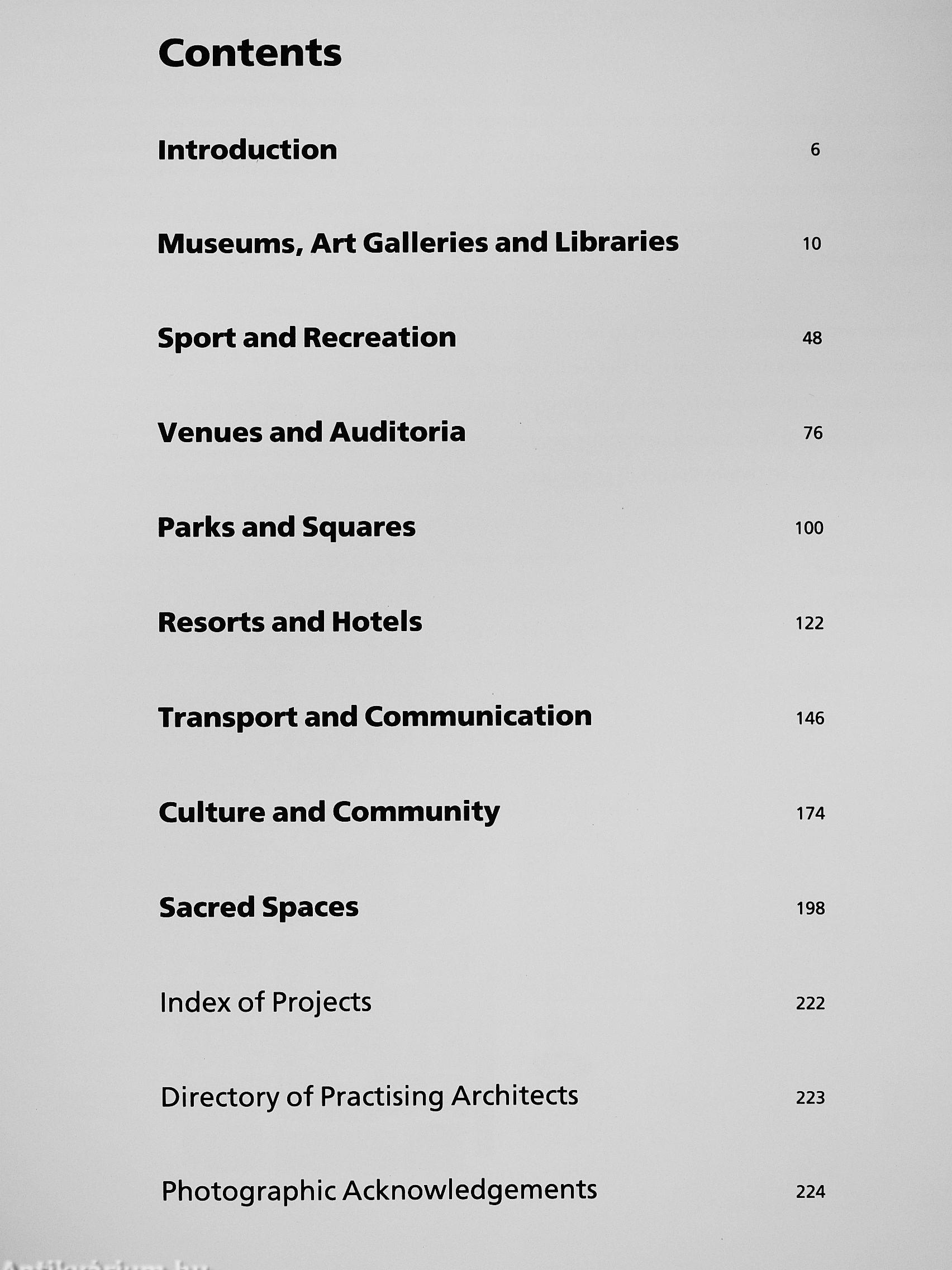
THE BEST IN LEISURE AND PUBLIC ARCHITECTURE comprises eight sections, introduced by a short essay on the nature of public building. The eight categories cover most areas of human recreation: Museums, Art Galleries and Libraries, Sport and Recreation, Parks and Squares, Venues and Auditoria, Hotels and Resorts, Travel and Communication, Cultural and Community and Sacred Spaces.
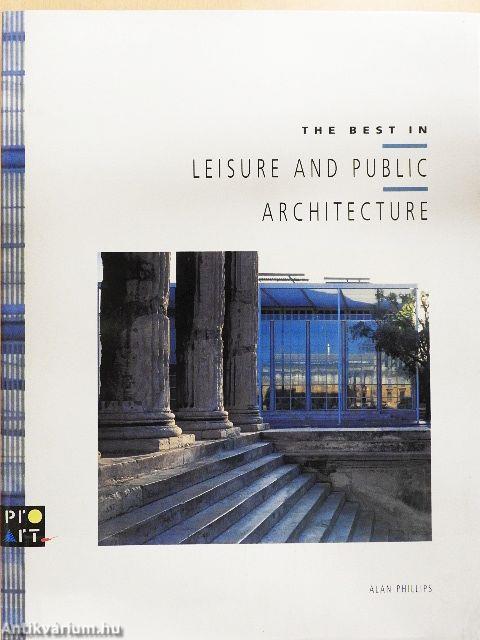
THE BEST IN LEISURE AND PUBLIC ARCHITECTURE
Introduction "All architecture proposes an effect on
ttie human mind, not merely a service to the human frame. "
John Ruskin
Architecture is a public art. Whether individual buildings in the landscape, small collections of dwellings arranged as a township or the massive concentrations of structures that establish a city, architecture comprises the built environment. As such, it is possibly the only art that has to be looked at.
It is because architecture is considered to be public property that local government agencies in some parts of the world take it upon themselves to limit the degree by which architecture can offend, by establishing planning laws to ensure that the aesthetics of architecture are publicly scrutinized before the act of construction.
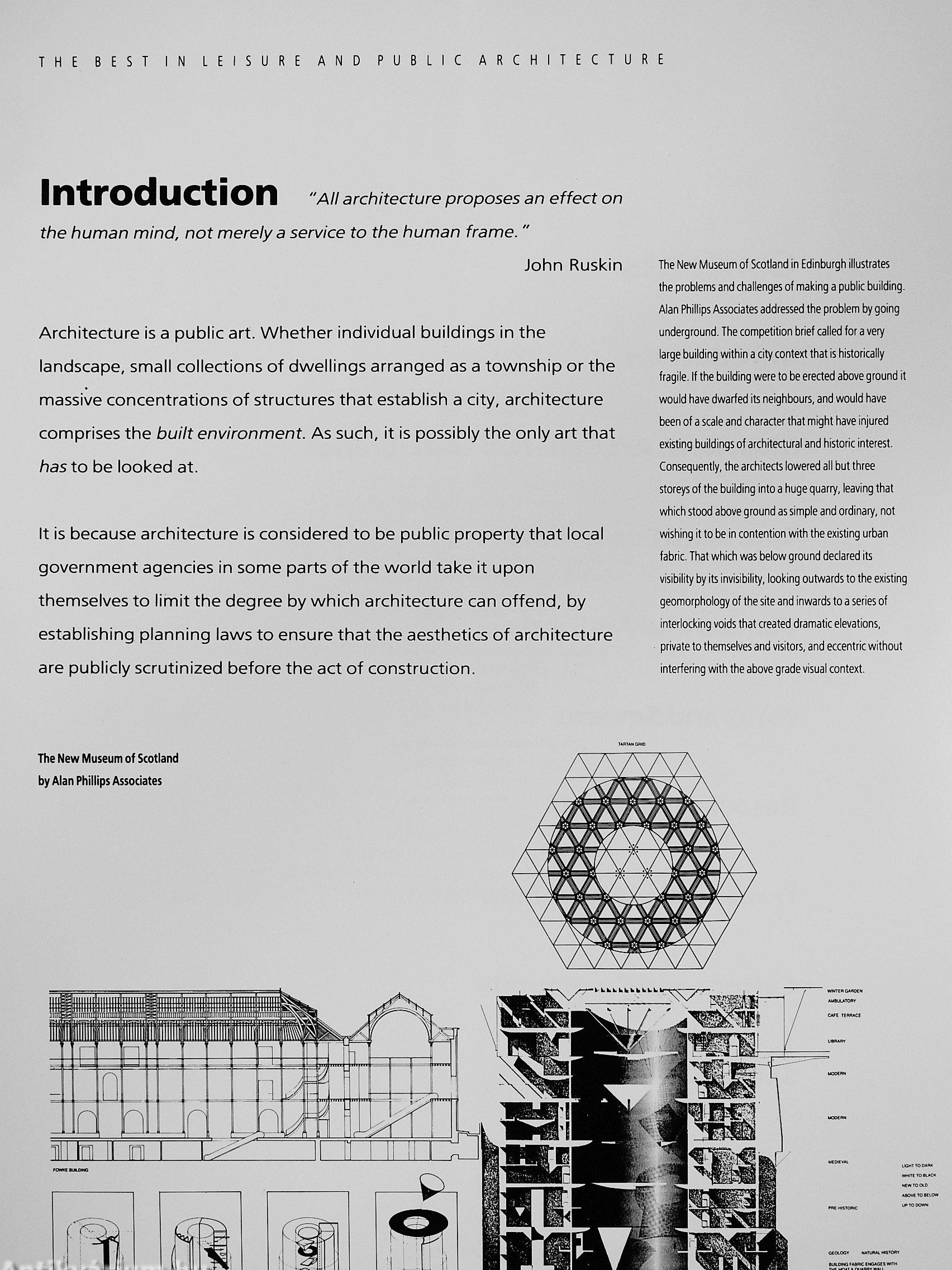
The New Museum of Scotland in Edinburgh illustrates the problems and challenges of making a public building. Alan Phillips Associates addressed the problem by going underground. The competition brief called for a very large building within a city context that is historically fragile. If the buiiding were to be erected above ground it would have dwarfed its neighbours, and would have been of a scale and character that might have injured existing buildings of architectural and historic interest. Consequently, the architects lowered all but three storeys of the building into a huge quarry, leaving that which stood above ground as simple and ordinary, not wishing it to be in contention with the existing urban fabric. That which was below ground declared its visibility by its invisibility, looking outwards to the existing geomorphology of the site and inwards to a series of interlocking voids that created dramatic elevations, private to themselves and visitors, and eccentric without interfering with the above grade visual context.
The New Museum of Scotland by Alan Phillips Associates
Vissza 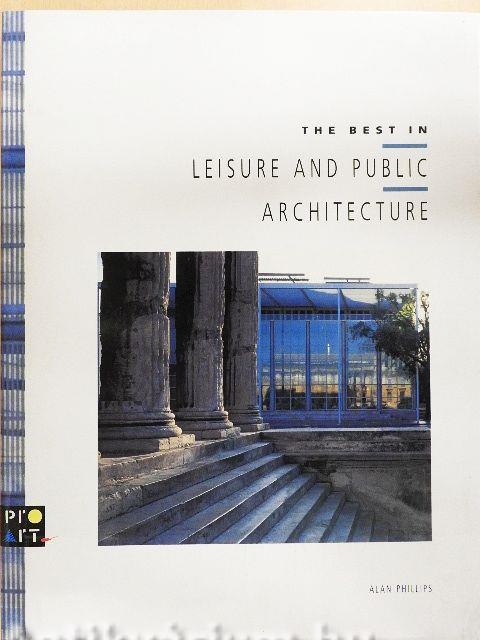




 Folytatás Microsoft-tal