
1.137.111
kiadvánnyal nyújtjuk Magyarország legnagyobb antikvár könyv-kínálatát

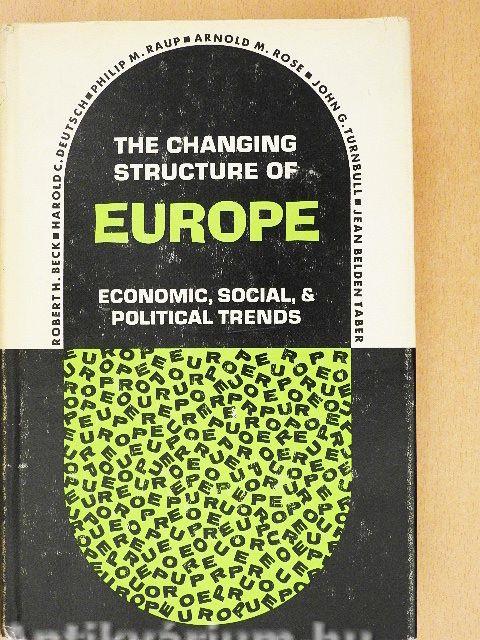
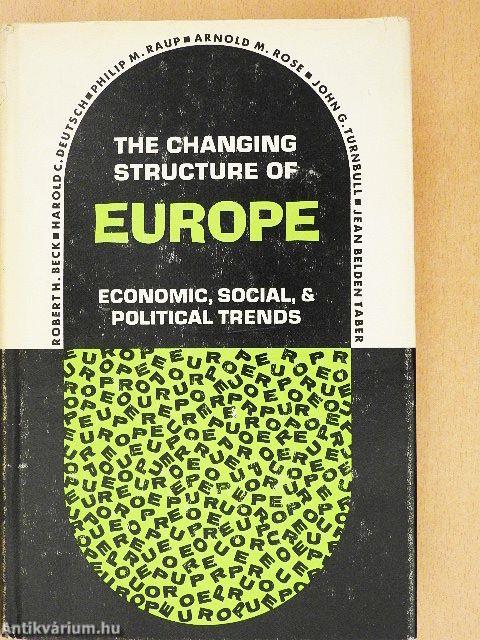
The Changing Structure of Europe
Economic, Social, and Political Trends
Minneapolis
| Kiadó: | University of Minnesota Press |
|---|---|
| Kiadás helye: | Minneapolis |
| Kiadás éve: | |
| Kötés típusa: | Vászon |
| Oldalszám: | 286 oldal |
| Sorozatcím: | |
| Kötetszám: | |
| Nyelv: | Angol |
| Méret: | 24 cm x 16 cm |
| ISBN: | 0-8166-0566-1 |
| Megjegyzés: | További kapcsolódó személyek a könyvben. |
Értesítőt kérek a kiadóról
A beállítást mentettük,
naponta értesítjük a beérkező friss
kiadványokról
naponta értesítjük a beérkező friss
kiadványokról
A beállítást mentettük,
naponta értesítjük a beérkező friss
kiadványokról
naponta értesítjük a beérkező friss
kiadványokról
Előszó
Tovább
Fülszöveg
THE CHANGING STRUCTURE OF
ECONOMIC, SOCIAL, AND POLITICAL TRENDS
by ROBERT H. BECK, HAROLD C. DEUTSCH, PHILIP M. RAUP, ARNOLD M. ROSE, and JOHN G. TURNBULL, assisted by JEAN BELDEN TABER
A group of University of Minnesota scholars representing various disciplines presents the result of a careful study of Europe in the mid-sixties and a look into the seventies. They examine the major economic, educational, political, and social issues both from an interdisciplinary standpoint and from the viewpoints of their respective specialties. The study is based on extensive travel and research.
The boolc focuses on the question of integration among the nations of Europe — its extent, the major factors in its success or failure, and the prospects for future developments which will favor or discourage such integration. Major attention is given to the operations of cross-national political, military, and economic organizations, including the European Coal and Steel Com-
see back flap
from... Tovább
Fülszöveg
THE CHANGING STRUCTURE OF
ECONOMIC, SOCIAL, AND POLITICAL TRENDS
by ROBERT H. BECK, HAROLD C. DEUTSCH, PHILIP M. RAUP, ARNOLD M. ROSE, and JOHN G. TURNBULL, assisted by JEAN BELDEN TABER
A group of University of Minnesota scholars representing various disciplines presents the result of a careful study of Europe in the mid-sixties and a look into the seventies. They examine the major economic, educational, political, and social issues both from an interdisciplinary standpoint and from the viewpoints of their respective specialties. The study is based on extensive travel and research.
The boolc focuses on the question of integration among the nations of Europe — its extent, the major factors in its success or failure, and the prospects for future developments which will favor or discourage such integration. Major attention is given to the operations of cross-national political, military, and economic organizations, including the European Coal and Steel Com-
see back flap
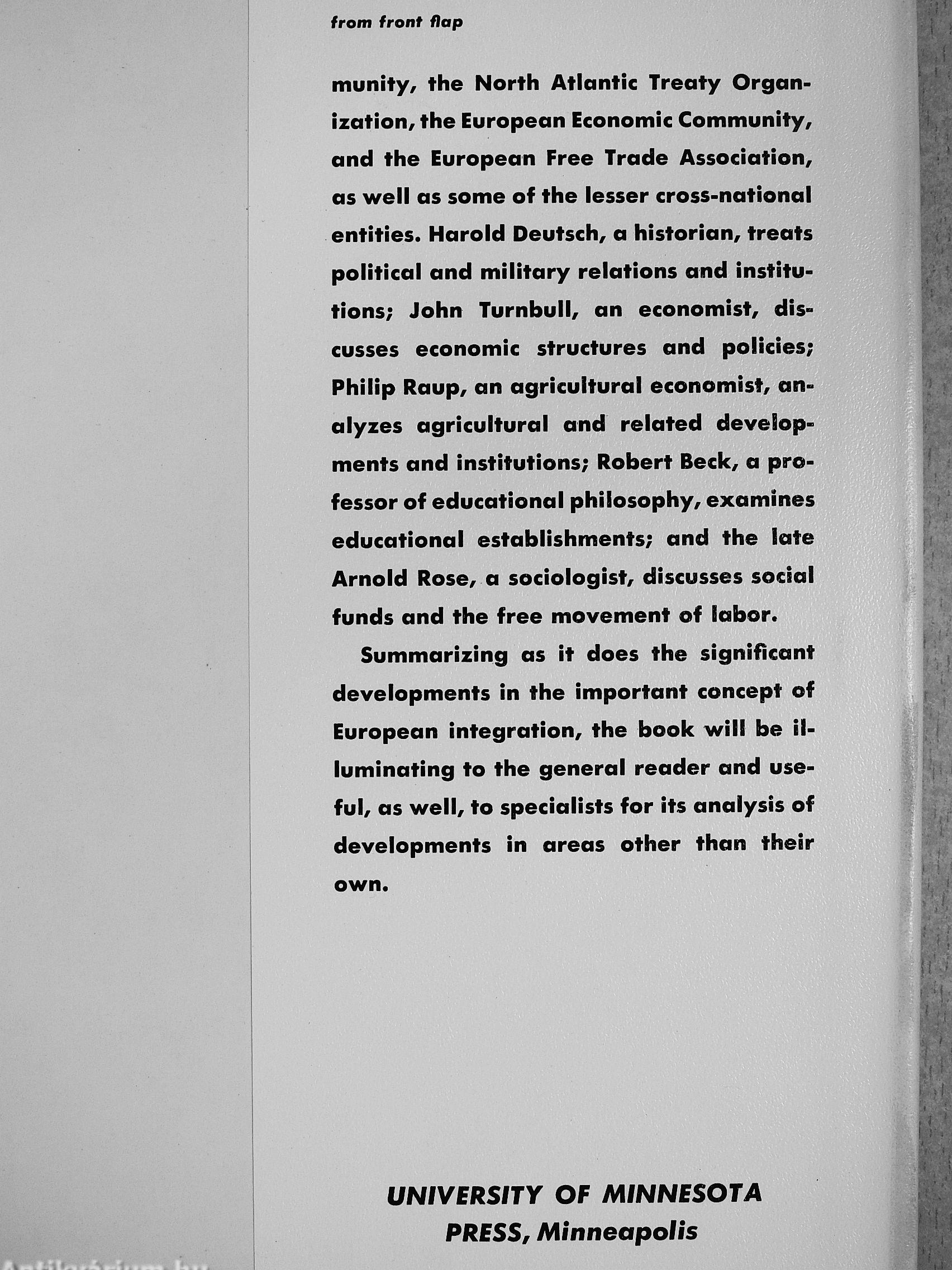
from front flap
munity, the North Atlantic Treaty Organization, the European Economic Community, and the European Free Trade Association, as well as some of the lesser cross-national entities. Harold Deutsch, a historian, treats political and military relations and institutions; John Turnbull, an economist, discusses economic structures and policies; Philip Roup, an agricultural economist, analyzes agricultural and related developments and institutions; Robert Beck, a professor of educational philosophy, examines educational establishments; and the late Arnold Rose, a sociologist, discusses social funds and the free movement of labor.
Summarizing as it does the significant developments in the important concept of European integration, the book will be illuminating to the general reader and useful, as well, to specialists for its analysis of developments in areas other than their own.
UNIVERSITY OF MINNESOTA PRESS, Minneapolis Vissza
Témakörök
- Történelem > Társadalomelmélet
- Közgazdaságtan > Gazdaságpolitika
- Idegennyelv > Idegennyelvű könyvek > Angol > Közgazdaságtan > Gazdaságpolitika
- Idegennyelv > Idegennyelvű könyvek > Angol > Történelem > Európa története > Egyéb
- Közgazdaságtan > Közgazdasági elméletek > Európai Unió
- Idegennyelv > Idegennyelvű könyvek > Angol > Közgazdaságtan > Közgazdasági elméletek > Európai Unió
- Történelem > Idegennyelvű > Angol
- Történelem > Kontinensek szerint > Európa, európai országok története > Egyéb
- Történelem > Legújabb kor > A hidegháború kora (1946-1991)
- Történelem > Politika > Politikai rendszerek
Megvásárolható példányok
Nincs megvásárolható példány
A könyv összes megrendelhető példánya elfogyott. Ha kívánja, előjegyezheti a könyvet, és amint a könyv egy újabb példánya elérhető lesz, értesítjük.
 Folytatás Microsoft-tal