
1.113.959
kiadvánnyal nyújtjuk Magyarország legnagyobb antikvár könyv-kínálatát

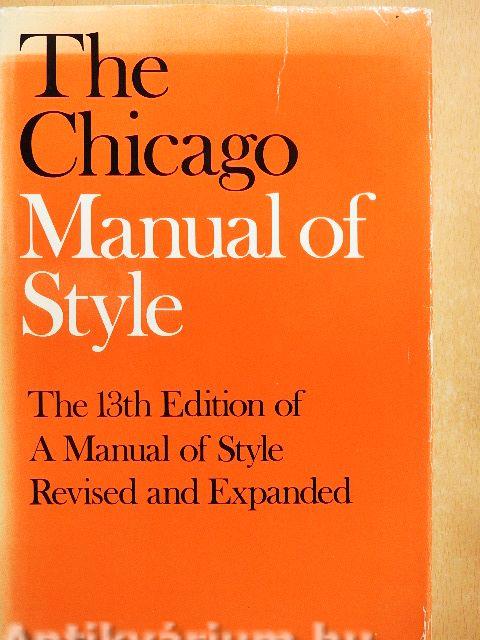
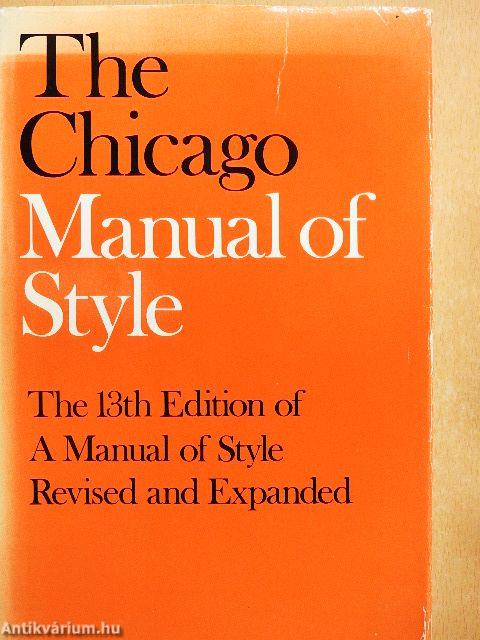
The Chicago Manual of Style
For Authors, Editors, and Copywriters
Chicago-London
| Kiadó: | The University of Chicago Press |
|---|---|
| Kiadás helye: | Chicago-London |
| Kiadás éve: | |
| Kötés típusa: | Vászon |
| Oldalszám: | 738 oldal |
| Sorozatcím: | |
| Kötetszám: | |
| Nyelv: | Angol |
| Méret: | 23 cm x 16 cm |
| ISBN: | 0-226-10390-0 |
| Megjegyzés: | 13. kiadás. Fekete-fehér illusztrációkkal. |
Értesítőt kérek a kiadóról
A beállítást mentettük,
naponta értesítjük a beérkező friss
kiadványokról
naponta értesítjük a beérkező friss
kiadványokról
A beállítást mentettük,
naponta értesítjük a beérkező friss
kiadványokról
naponta értesítjük a beérkező friss
kiadványokról
Előszó
Tovább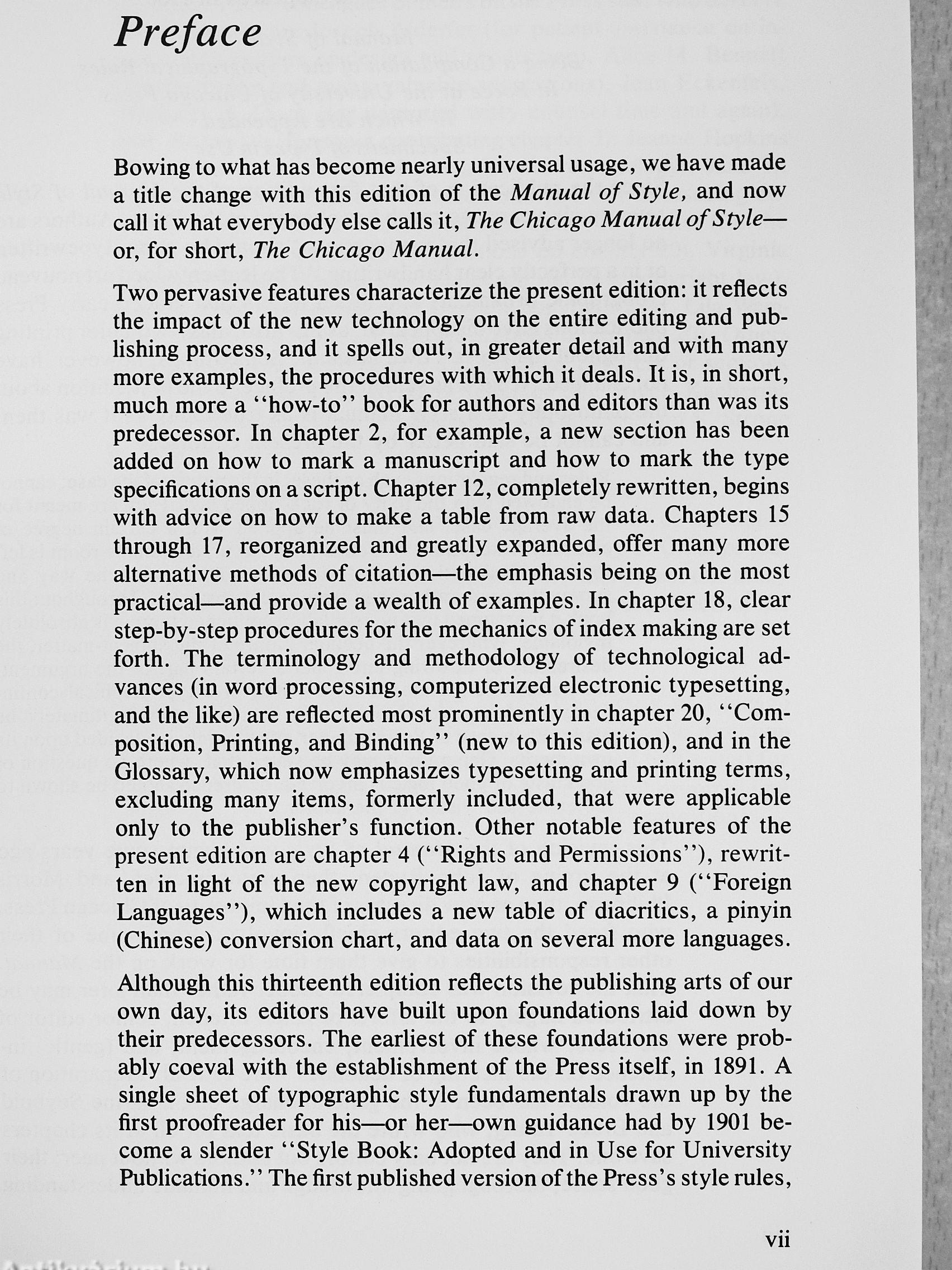
Fülszöveg
The Chicago Manual of Style
Thirteenth Edition, Revised and Expanded Prepared by the Editorial Staff of the University of Chicago Press
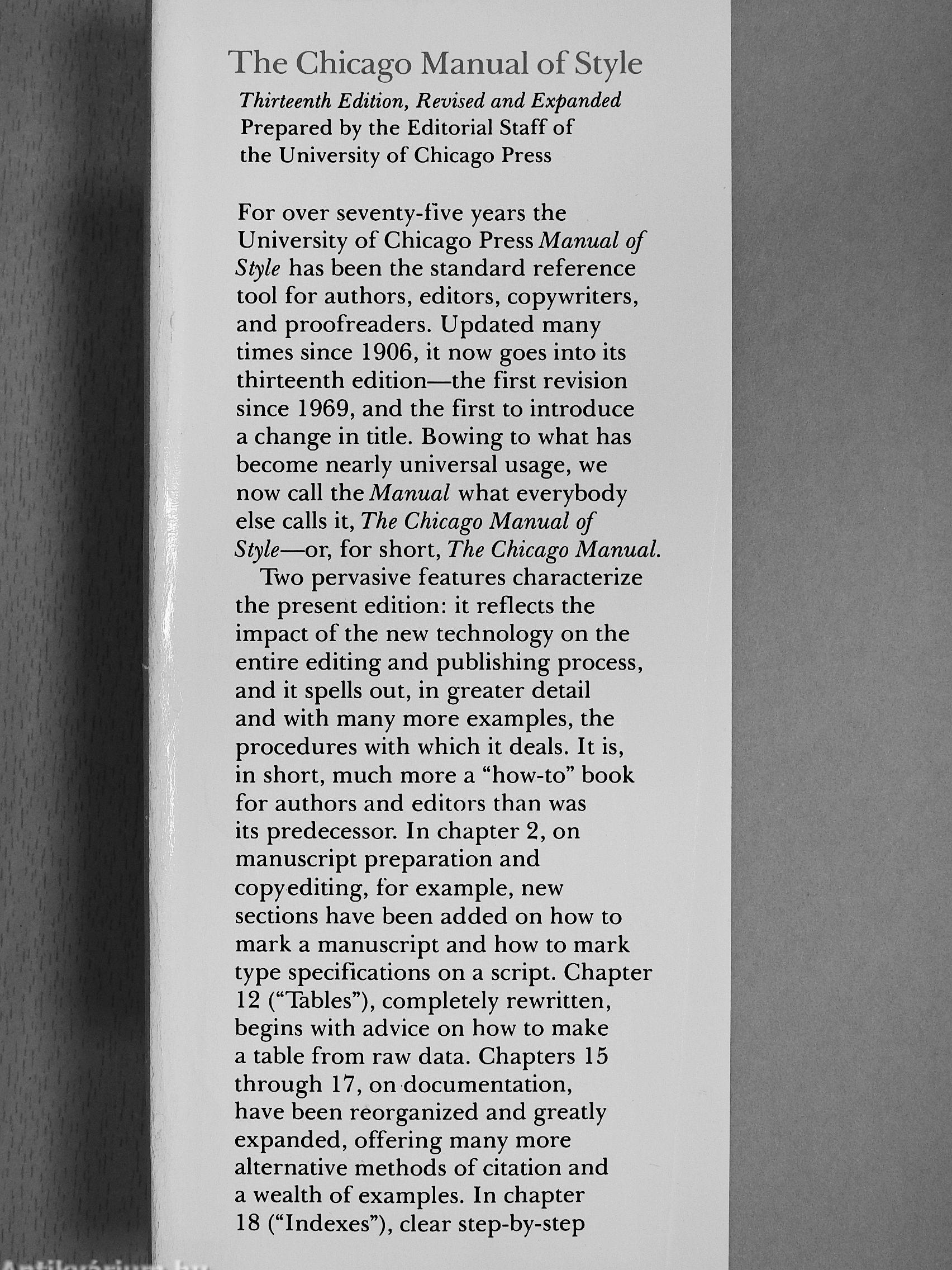
For over seventy-five years the University of Chicago Press Manual of Style has been the standard reference tool for authors, editors, copywriters, and proofreaders. Updated many times since 1906, it now goes into its thirteenth edition—the first revision since 1969, and the first to introduce a change in dtle. Bowing to what has become nearly universal usage, we now call the Manual what everybody else calls it, The Chicago Manual of Style—or, for short, The Chicago Manual.
Two pervasive features characterize the present edition: it reflects the impact of the new technology on the entire editing and publishing process, and it spells out, in greater detail and with many more examples, the procedures with which it deals. It is, in short, much more a "how-to" book for authors and editors than was its predecessor. In chapter 2, on manuscript... Tovább
Fülszöveg
The Chicago Manual of Style
Thirteenth Edition, Revised and Expanded Prepared by the Editorial Staff of the University of Chicago Press
For over seventy-five years the University of Chicago Press Manual of Style has been the standard reference tool for authors, editors, copywriters, and proofreaders. Updated many times since 1906, it now goes into its thirteenth edition—the first revision since 1969, and the first to introduce a change in dtle. Bowing to what has become nearly universal usage, we now call the Manual what everybody else calls it, The Chicago Manual of Style—or, for short, The Chicago Manual.
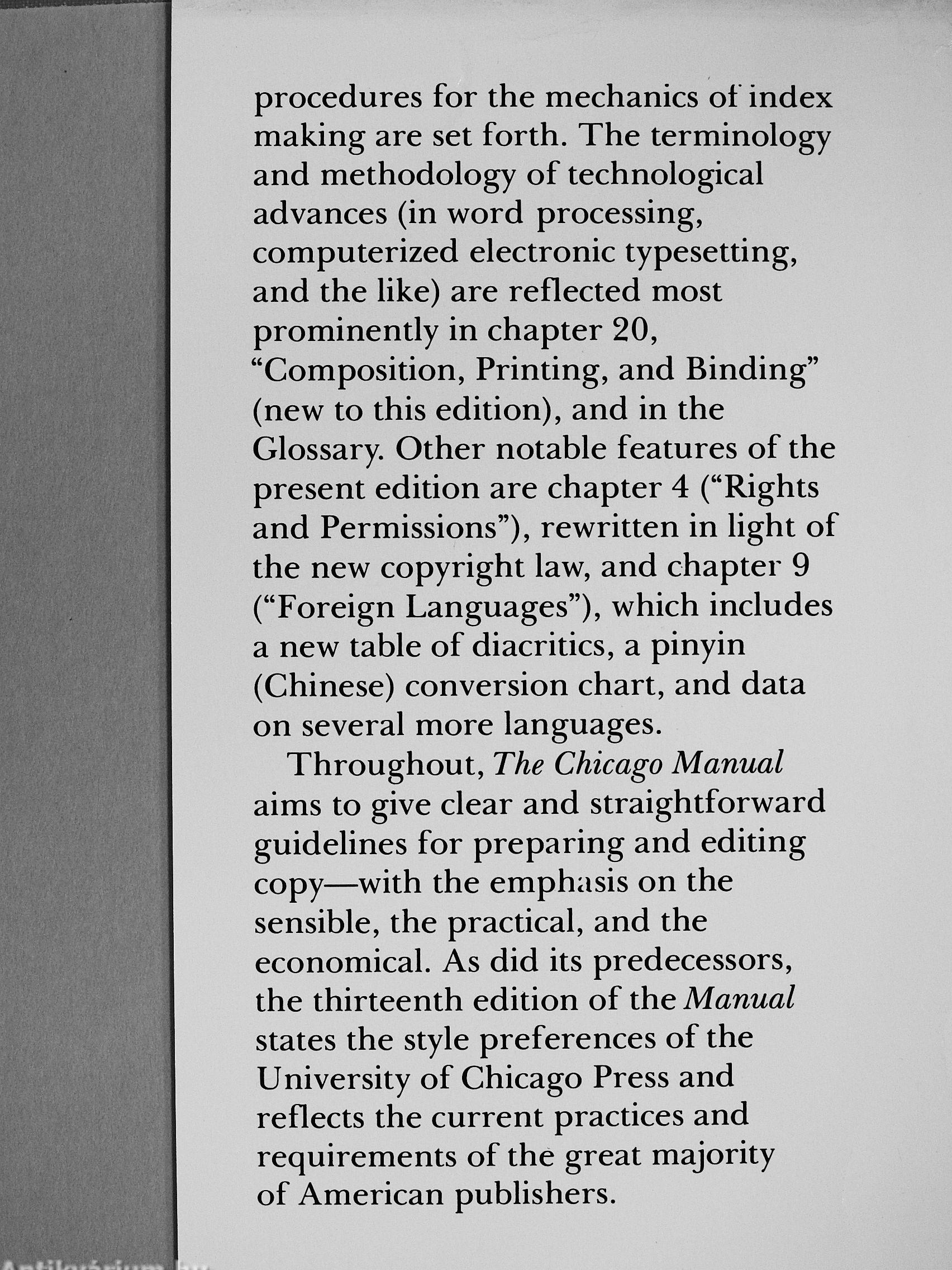
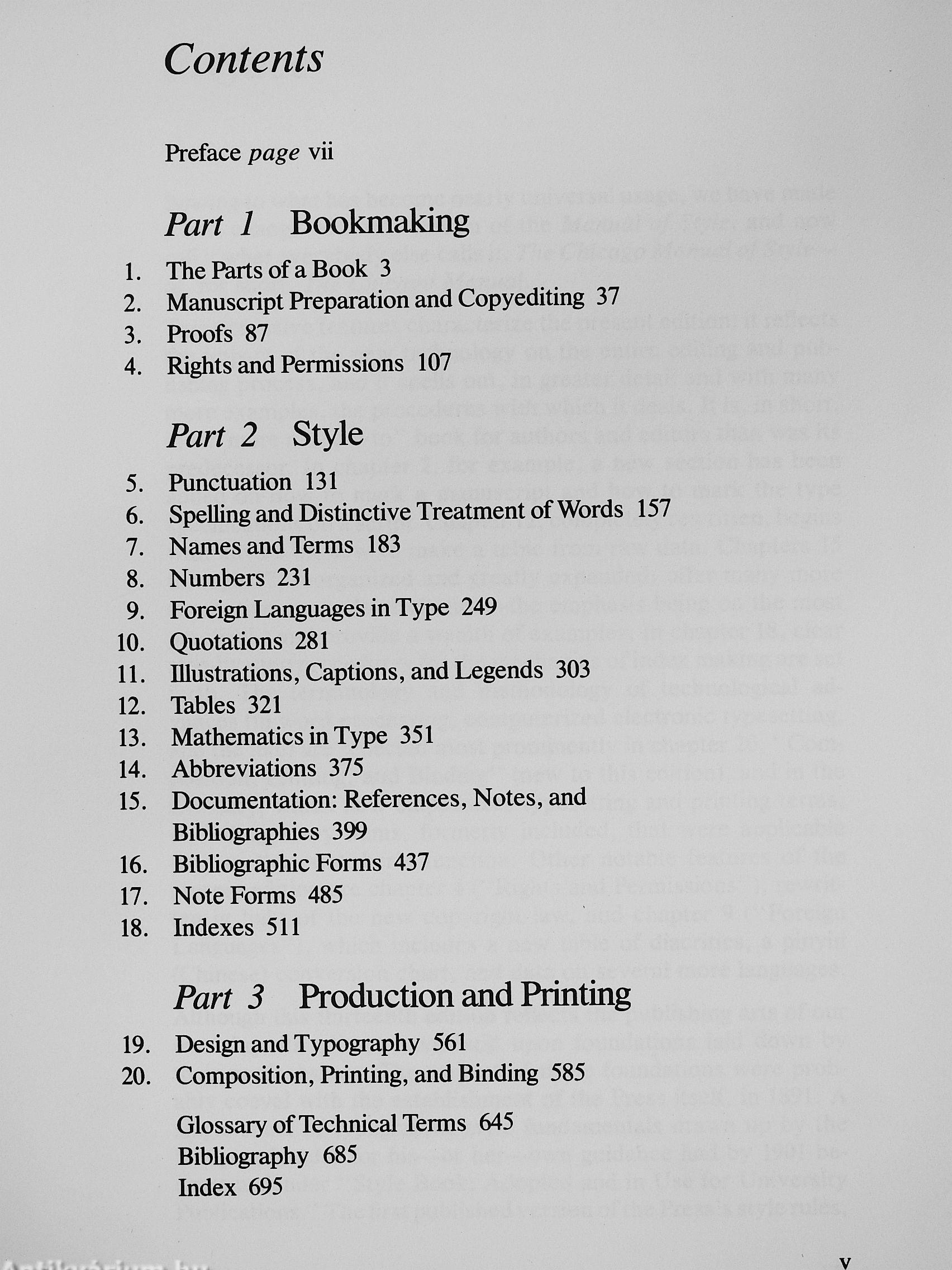
Two pervasive features characterize the present edition: it reflects the impact of the new technology on the entire editing and publishing process, and it spells out, in greater detail and with many more examples, the procedures with which it deals. It is, in short, much more a "how-to" book for authors and editors than was its predecessor. In chapter 2, on manuscript preparation and copyediting, for example, new sections have been added on how to mark a manuscript and how to mark type specifications on a script. Chapter 12 ("Tables"), completely rewritten, begins with advice on how to make a table from raw data. Chapters 15 through 17, on documentation, have been reorganized and greatly expanded, offering many more alternative methods of citadon and a wealth of examples. In chapter 18 ("Indexes"), clear step-by-step
iis
tairf
¦^SK;
"¦ .'Vr
¦yi ;
IS
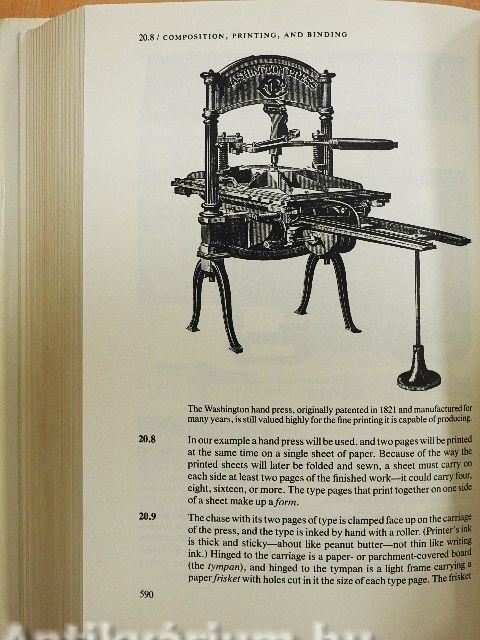
procedures for the mechanics ot index making are set forth. The terminology and methodology of technological advances (in word processing, computerized electronic typesetting, and the like) are reflected most prominently in chapter 20, "Composition, Printing, and Binding" (new to this edition), and in the Glossary. Other notable features of the present edition are chapter 4 ("Rights and Permissions"), rewritten in light of the new copyright law, and chapter 9 ("Foreign Languages"), which includes a new table of diacritics, a pinyin (Chinese) conversion chart, and data on several more languages.
Throughout, The Chicago Manual aims to give clear and straightforward guidelines for preparing and editing copy—with the emphasis on the sensible, the practical, and the economical. As did its predecessors, the thirteenth edition of the Manual states the style preferences of the University of Chicago Press and reflects the current practices and requirements of the great majority of American publishers. Vissza
Témakörök
- Idegennyelv > Idegennyelvű könyvek > Angol > Műszaki
- Idegennyelv > Idegennyelvű könyvek > Angol > Művészetek > Iparművészet
- Idegennyelv > Idegennyelvű könyvek > Angol > Művelődéstörténet
- Művelődéstörténet > Könyvészet > Könyvnyomtatás
- Műszaki > Ipar > Könnyűipar > Nyomdaipar
- Művészetek > Iparművészet > Formatervezés > Egyéb
- Művészetek > Iparművészet > Idegen nyelv > Angol
- Műszaki > Idegennyelv > Angol
- Műszaki

Megvásárolható példányok
Nincs megvásárolható példány
A könyv összes megrendelhető példánya elfogyott. Ha kívánja, előjegyezheti a könyvet, és amint a könyv egy újabb példánya elérhető lesz, értesítjük.
 Folytatás Microsoft-tal