
1.153.930
kiadvánnyal nyújtjuk Magyarország legnagyobb antikvár könyv-kínálatát

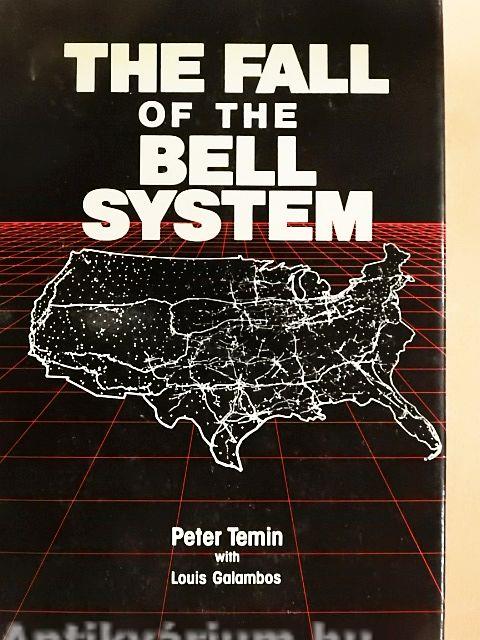
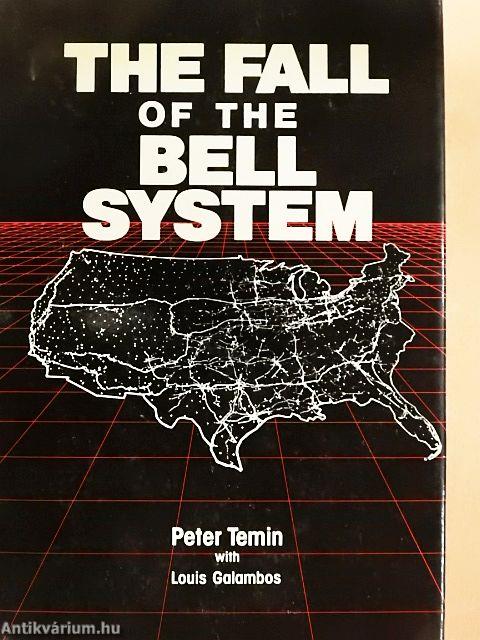
The Fall of the Bell System
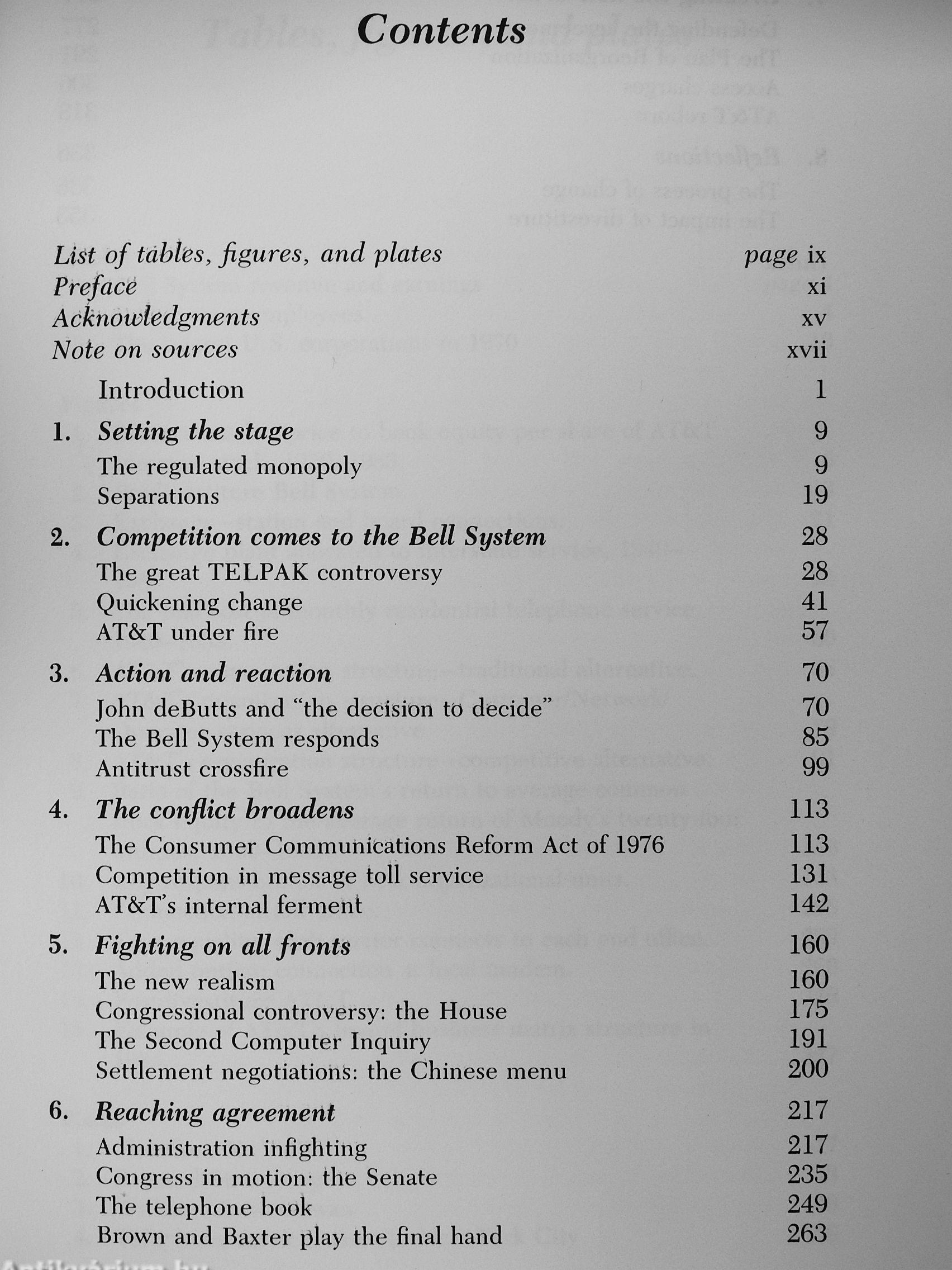
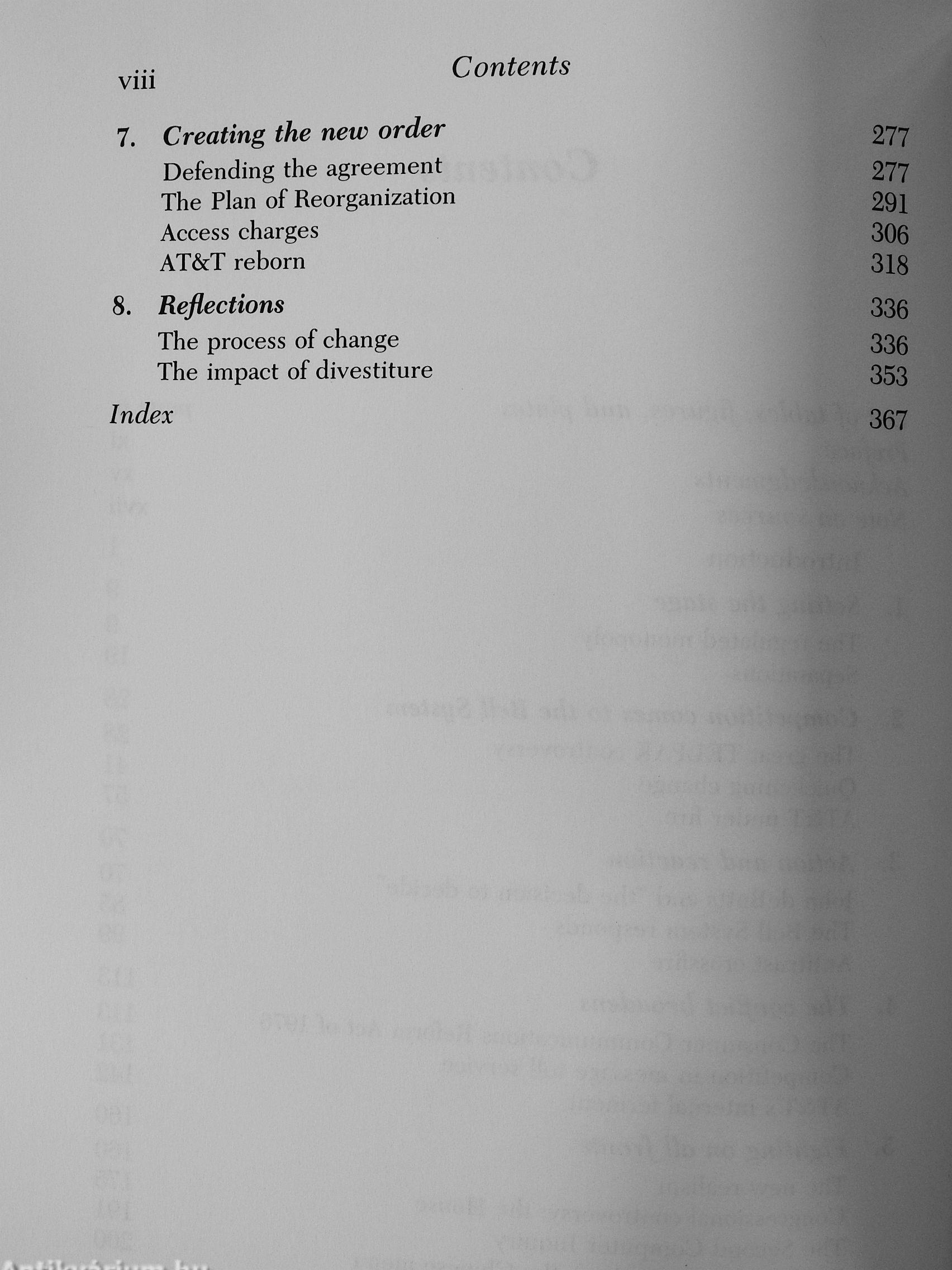
A Study in Prices and Politics
Cambridge
| Kiadó: | Cambridge University Press |
|---|---|
| Kiadás helye: | Cambridge |
| Kiadás éve: | |
| Kötés típusa: | Vászon |
| Oldalszám: | 378 oldal |
| Sorozatcím: | |
| Kötetszám: | |
| Nyelv: | Angol |
| Méret: | 24 cm x 16 cm |
| ISBN: | 0-521-34557-X |
| Megjegyzés: | Fekete-fehér fotókkal. |
Értesítőt kérek a kiadóról
A beállítást mentettük,
naponta értesítjük a beérkező friss
kiadványokról
naponta értesítjük a beérkező friss
kiadványokról
A beállítást mentettük,
naponta értesítjük a beérkező friss
kiadványokról
naponta értesítjük a beérkező friss
kiadványokról
Előszó
Tovább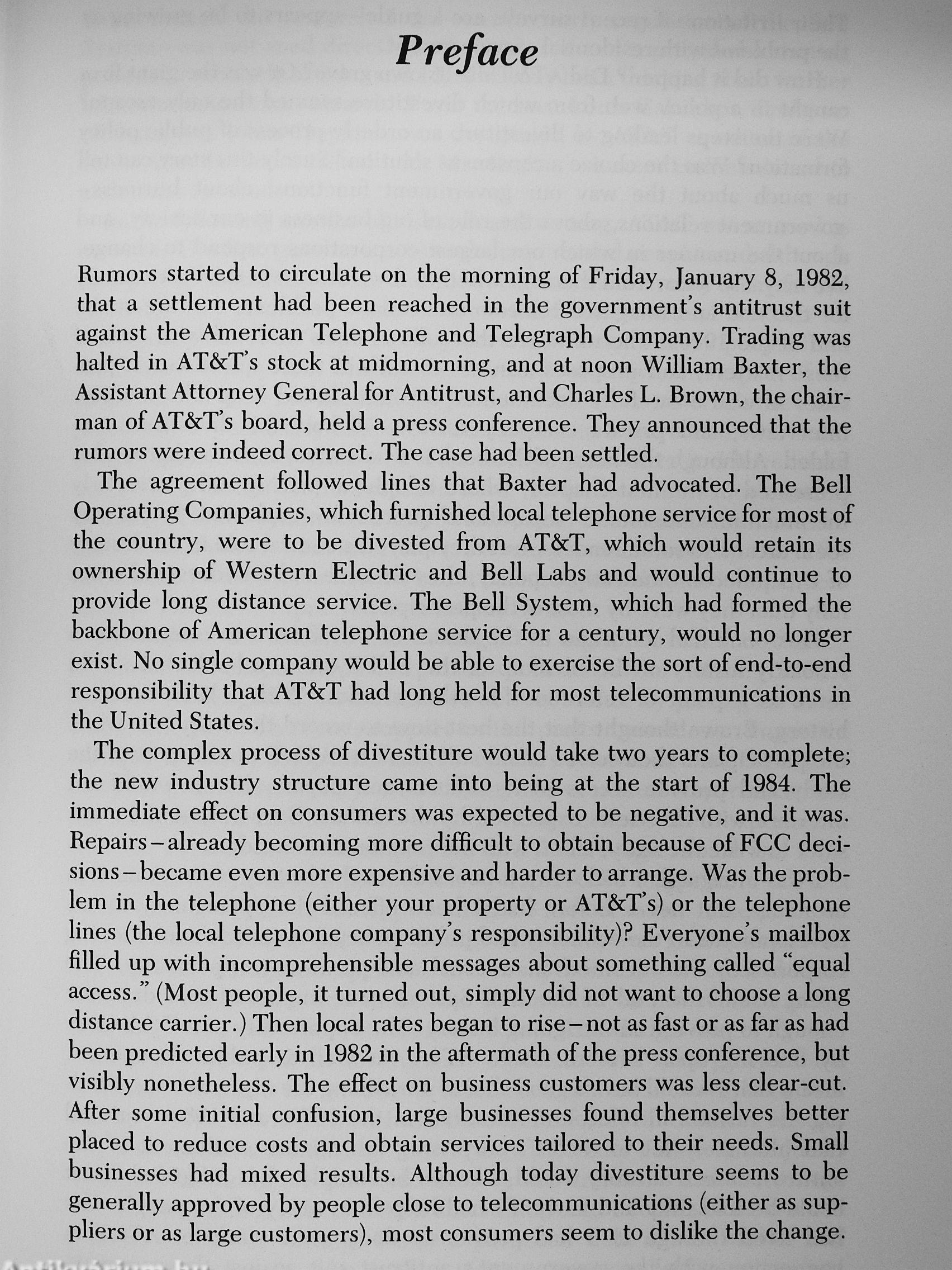
Fülszöveg
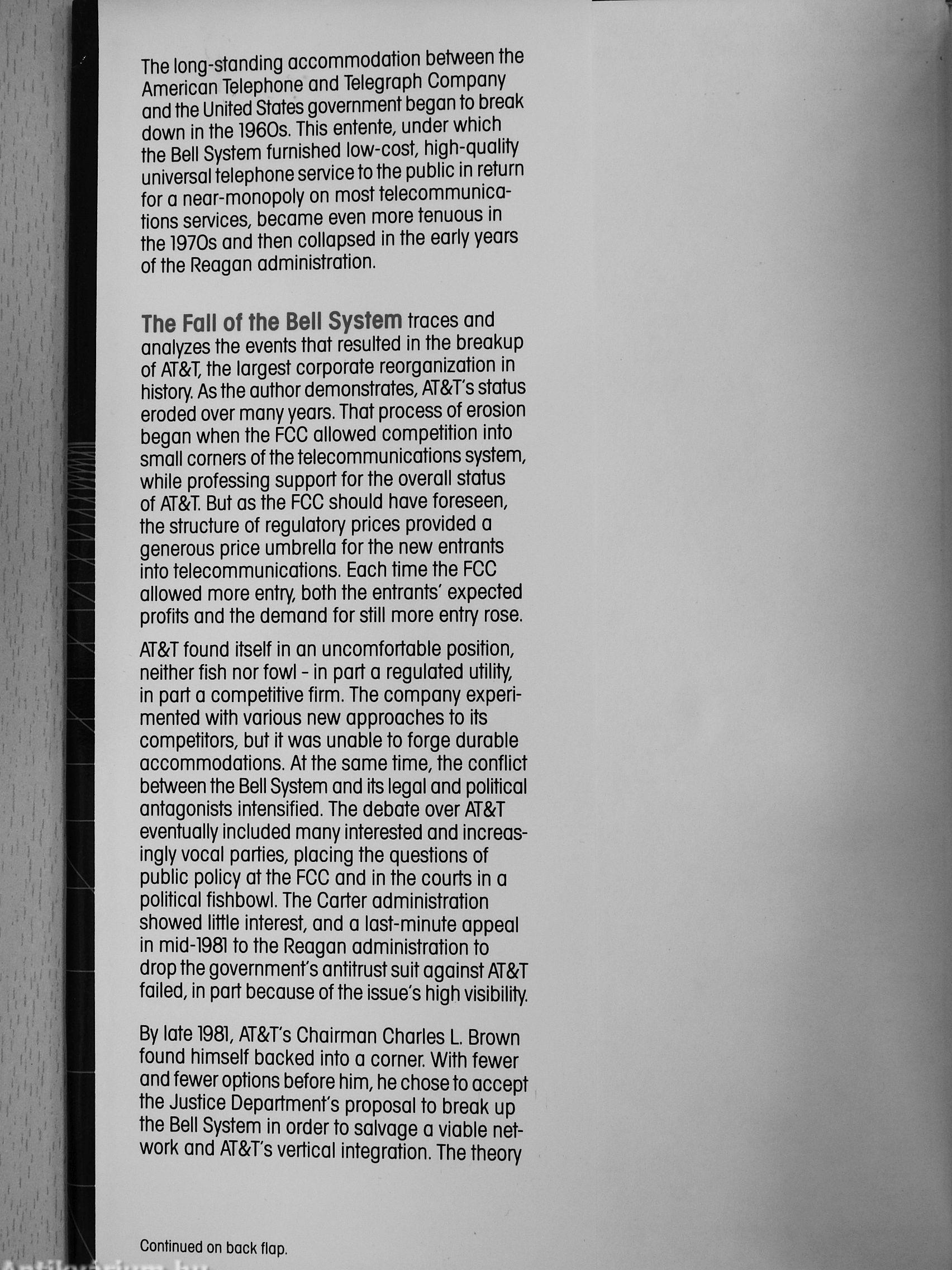
The long-standing accommodation between the American Telephone and Telegraph Company and the United States government began to break down in the 1960s. This entente, under which the Bell System furnished low-cost, high-quality universal telephone service to the public in return for a near-monopoly on most telecommunications services, became even more tenuous in the 1970s and then collapsed in the early years of the Reagan administration.
The Fall of the Bell System traces and analyzes the events that resulted in the breakup of AT&T, the largest corporate reorganization in history. As the author demonstrates, AT&T's status eroded over many years. That process of erosion begon when the FCC allowed competition into small comers of the telecommunications system, while professing support for the overall status of AT&T But as the FCC should have foreseen, the structure of regulatory prices provided a generous price umbrella for the new entrants into telecommunications. Each time the... Tovább
Fülszöveg
The long-standing accommodation between the American Telephone and Telegraph Company and the United States government began to break down in the 1960s. This entente, under which the Bell System furnished low-cost, high-quality universal telephone service to the public in return for a near-monopoly on most telecommunications services, became even more tenuous in the 1970s and then collapsed in the early years of the Reagan administration.
The Fall of the Bell System traces and analyzes the events that resulted in the breakup of AT&T, the largest corporate reorganization in history. As the author demonstrates, AT&T's status eroded over many years. That process of erosion begon when the FCC allowed competition into small comers of the telecommunications system, while professing support for the overall status of AT&T But as the FCC should have foreseen, the structure of regulatory prices provided a generous price umbrella for the new entrants into telecommunications. Each time the FCC allowed more entry, both the entrants' expected profits and the demand for still more entry rose.
AT&T found itself in an uncomfortable position, neither fish nor fowl - in port a regulated utility, in port a competitive firm. The company experimented with various new approaches to its competitors, but it was unable to forge durable accommodations. At the some time, the conflict between the Bell System and its legal and political antagonists intensified. The debate over AT&T eventually included many interested and increasingly vocal parties, placing the questions of public policy at the FCC and in the courts in a political fishbowl. The Carter administration showed little interest, and a lost-minute appeal in mid-1981 to the Reagan administration to drop the government's antitrust suit against AT&T failed, in part because of the issue's high visibility.
By late 1981, AT&T's Chairman Charles L. Brown found himself backed into a corner With fewer and fewer options before him, he chose to accept the Justice Department's proposal to break up the Bell System in order to salvage a viable network and AT&T's vertical integration, The theory
Continued on back flap.
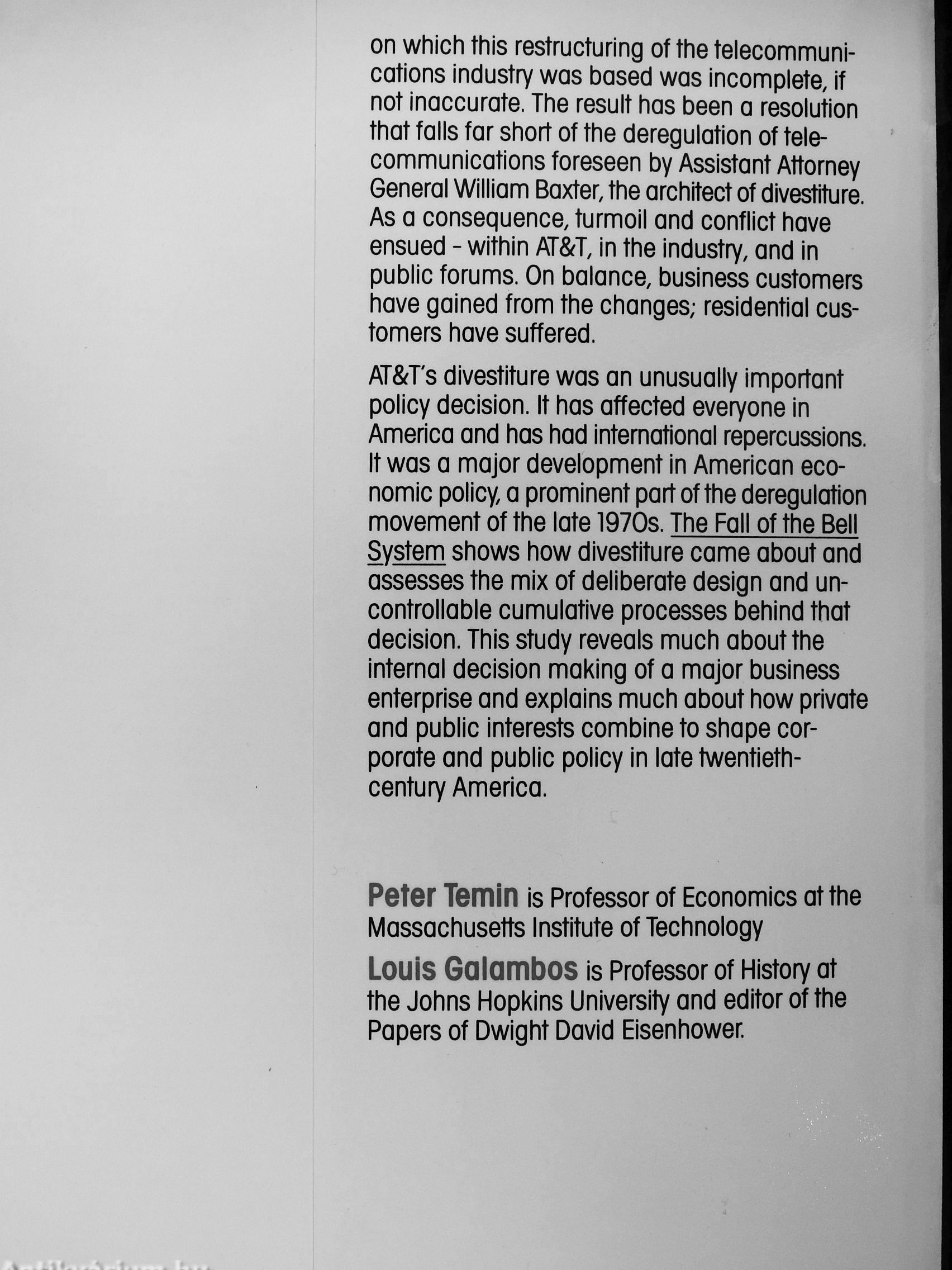
on which this restructuring of the telecommunications industry was based was incomplete, if not inaccurate. The result has been a resolution that fails far short of the deregulation of telecommunications foreseen by Assistant Attorney General William Baxter, the architect of divestiture. As 0 consequence, turmoil and conflict have ensued - within AT&T, in the industry, and in public forums. On balance, business customers have gained from the changes; residential customers have suffered.
ATT's divestiture was on unusually important policy decision. It has affected everyone In America and has had international repercussions, It was a major development in American economic policy, a prominent part of the deregulation movement of the late 1970s. The Fall of the Bell System shows how divestiture came about and assesses the mix of deliberate design and uncontrollable cumulative processes behind that decision. This study reveals much about the internal decision making of a major business enterprise and explains much about how private and public interests combine to shape corporate and public policy in late twentieth-century America.
Peter Temin is Professor of Economics at the Massachusetts Institute of Technology
Louis Galambos is Professor of History at the Johns Hopkins University and editor of the Papers of Dwight David Eisenhower Vissza
Témakörök
- Közgazdaságtan > Gazdaságpolitika
- Közgazdaságtan > Közgazdasági elméletek > Tőkés országok gazdasága
- Közgazdaságtan > Vállalkozások > Vállalatok
- Idegennyelv > Idegennyelvű könyvek > Angol > Műszaki
- Idegennyelv > Idegennyelvű könyvek > Angol > Közgazdaságtan > Gazdaságpolitika
- Idegennyelv > Idegennyelvű könyvek > Angol > Közgazdaságtan > Közgazdasági elméletek > Tőkés országok gazdasága
- Idegennyelv > Idegennyelvű könyvek > Angol > Közgazdaságtan > Vállalkozások > Vállalatok
- Műszaki > Ipar > Ipartörténet
- Műszaki > Ipar > Iparpolitika
- Műszaki > Posta
- Műszaki
Megvásárolható példányok
Állapotfotók
A címlapon tulajdonosi bejegyzés látható.
Jó állapotú példány.
Állapot:
Jó
16.000 ,-Ft
80
pont kapható
Kosárba
 Folytatás Microsoft-tal