Fülszöveg
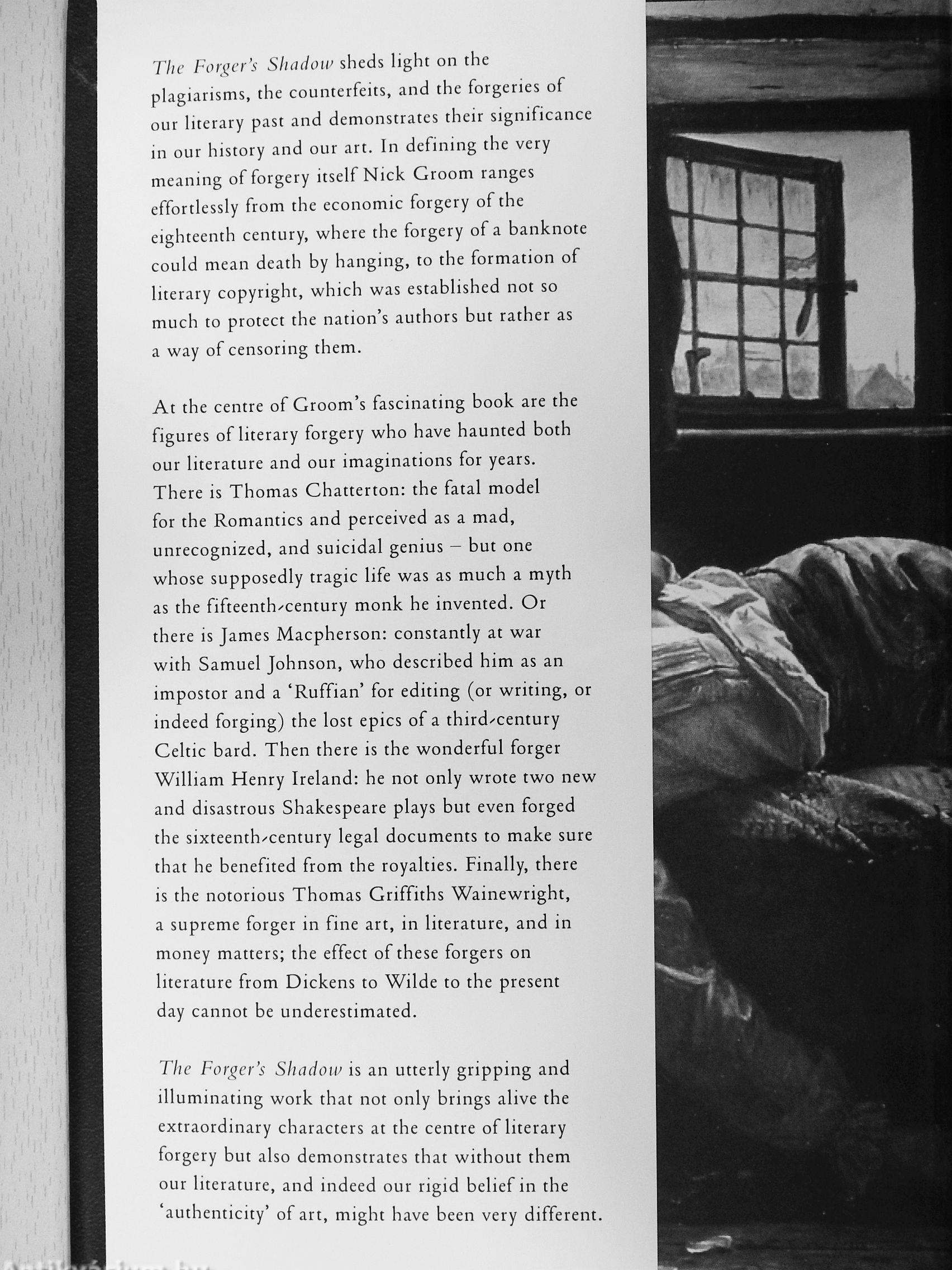
The Forj^cr's Shadoip sheds light on the plagiarisms, the counterfeits, and the forgeries of our literary past and demonstrates their significance in our history and our art. In defining the very mean ing of forgery itself Nick Groom ranges effortlessly from the economic forgery of the eighteenth century, where the forgery of a banknote could mean death by hanging, to the formation of literary copyright, which was established not so much to protect the nation's authors but rather as a way of censoring them.
At the centre of Groom's fascinating book are the figures of literary forgery who have haunted both our literature and our imaginations for years. There is Thomas Chatterton; the fatal model for the Romantics and perceived as a mad, unrecognized, and suicidal genius - but one whose supposedly tragic life was as much a myth as the fifteenth'century monk he invented. Or there is James Macpherson: constantly at war with Samuel Johnson, who described him as an impostor and a...
Tovább
Fülszöveg
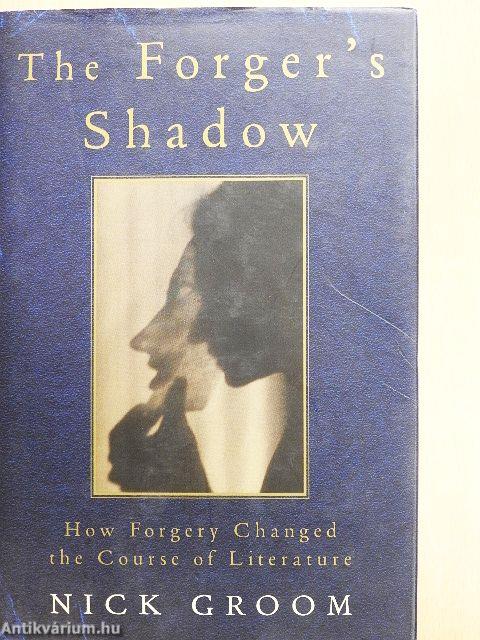
The Forj^cr's Shadoip sheds light on the plagiarisms, the counterfeits, and the forgeries of our literary past and demonstrates their significance in our history and our art. In defining the very mean ing of forgery itself Nick Groom ranges effortlessly from the economic forgery of the eighteenth century, where the forgery of a banknote could mean death by hanging, to the formation of literary copyright, which was established not so much to protect the nation's authors but rather as a way of censoring them.
At the centre of Groom's fascinating book are the figures of literary forgery who have haunted both our literature and our imaginations for years. There is Thomas Chatterton; the fatal model for the Romantics and perceived as a mad, unrecognized, and suicidal genius - but one whose supposedly tragic life was as much a myth as the fifteenth'century monk he invented. Or there is James Macpherson: constantly at war with Samuel Johnson, who described him as an impostor and a 'Ruffian' for editing (or writing, or indeed forging) the lost epics of a third^century Celtic bard. Then there is the wonderful forger William Henry Ireland: he not only wrote two new and disastrous Shakespeare plays but even forged the sixteenth/century legal documents to make sure that he benefited from the royalties. Finally, there is the notorious Thomas Griffiths Wainewright, a supreme forger in fine art, in literature, and in money matters; the effect of these forgers on literature from Dickens to Wilde to the present day cannot be underestimated.
The I-ori^er's Shadow is an utterly gripping and illuminating work that not only brings alive the extraordinary characters at the centre of literary forgery but also demonstrates that without them our literature, and indeed our rigid belief in the 'authenticity' of art, might have been very different.
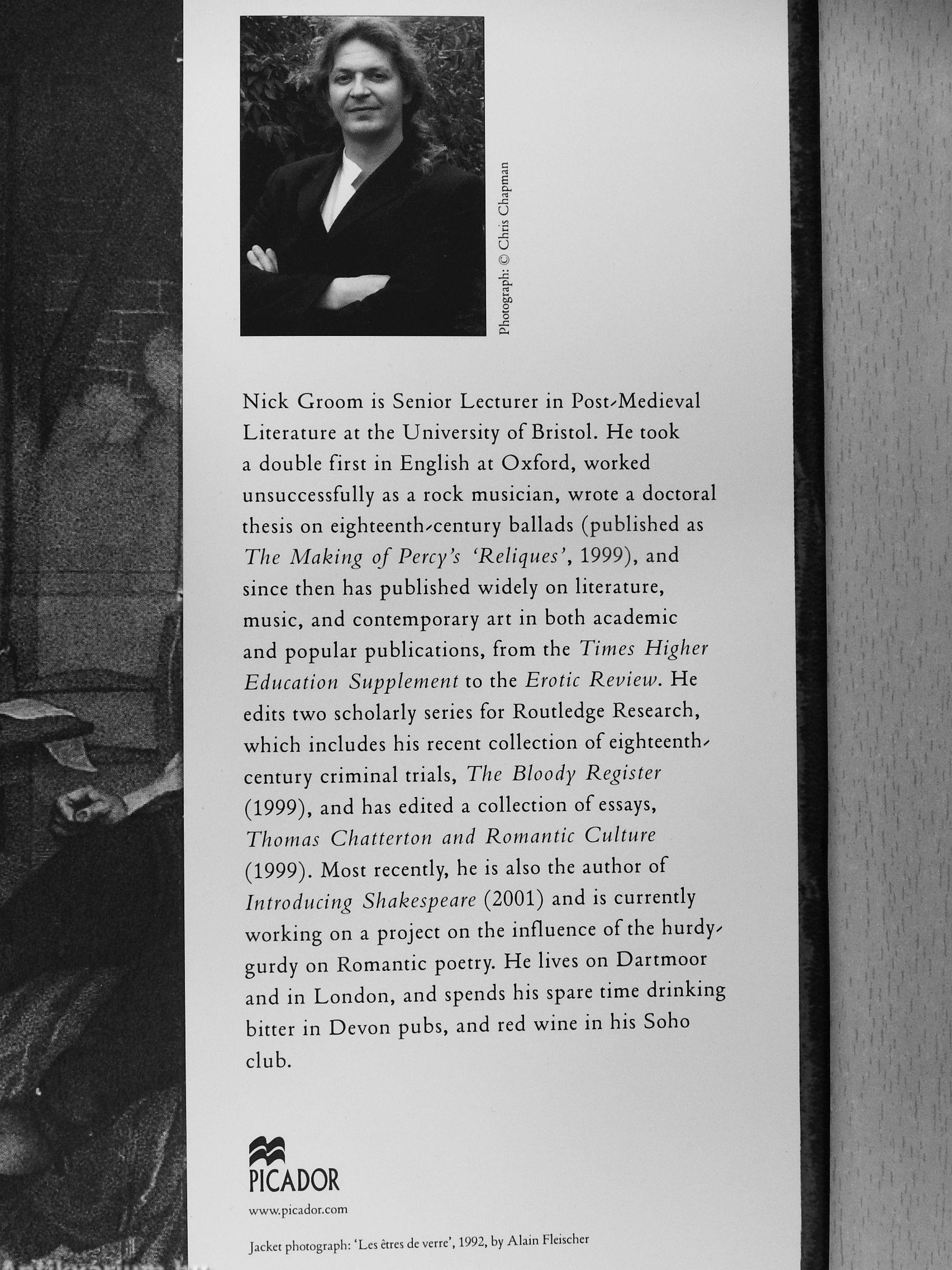
Nick Groom is Senior Lecturer in Post^Medieval Literature at the University of Bristol. He took a double first in English at Oxford, worked unsuccessfully as a rock musician, wrote a doctoral thesis on eighteenth^century ballads (published as The Making of Percy's 'Reliques', 1999), and since then has published widely on literature, music, and contemporary art in both academic and popular publications, from the Times Higher Education Supplement to the Erotic Review. He edits two scholarly series for Routledge Research, which includes his recent collection of eighteenth/ century criminal trials. The Bloody Register (1999), and has edited a collection of essays, Thomas Chatterton and Romantic Culture (1999). Most recently, he is also the author of Introducing Shakespeare (2001) and is currently working on a project on the influence of the hurdy/ gurdy on Romantic poetry. He lives on Dartmoor and in London, and spends his spare time drinking bitter in Devon pubs, and red wine in his Soho club.
PICADOR
www.picador.com
Jacket photograph: 'Les ctrcs de verre', 1992, by Alain Fleischer
Vissza 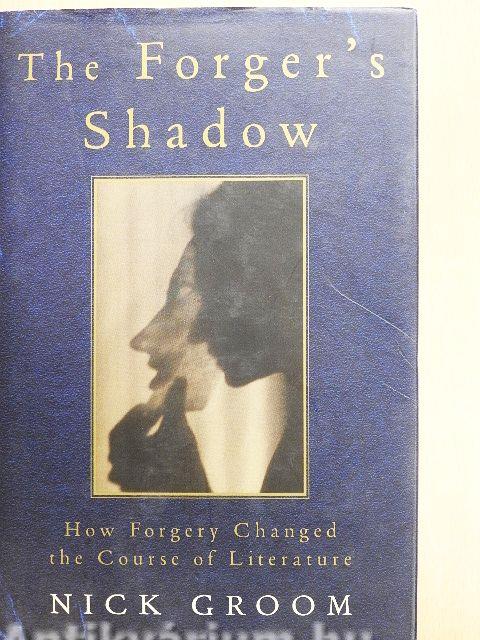



 Folytatás Microsoft-tal