
1.135.055
kiadvánnyal nyújtjuk Magyarország legnagyobb antikvár könyv-kínálatát

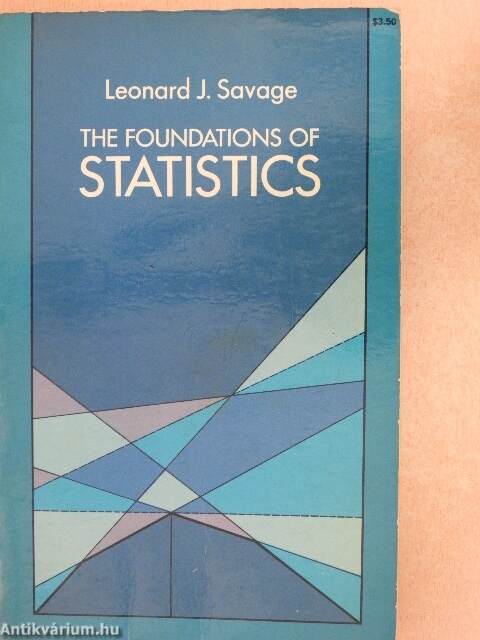
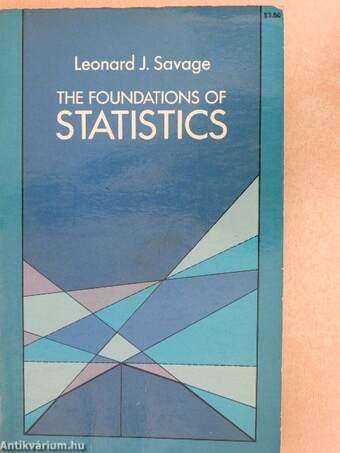
The Foundations of Statistics
New York
| Kiadó: | Dover Publications, Inc. |
|---|---|
| Kiadás helye: | New York |
| Kiadás éve: | |
| Kötés típusa: | Varrott papírkötés |
| Oldalszám: | 310 oldal |
| Sorozatcím: | |
| Kötetszám: | |
| Nyelv: | Angol |
| Méret: | 21 cm x 14 cm |
| ISBN: | 0-486-62349-1 |
| Megjegyzés: | 2. kiadás. Fekete-fehér ábrákkal illusztrálva. |
Értesítőt kérek a kiadóról
A beállítást mentettük,
naponta értesítjük a beérkező friss
kiadványokról
naponta értesítjük a beérkező friss
kiadványokról
A beállítást mentettük,
naponta értesítjük a beérkező friss
kiadványokról
naponta értesítjük a beérkező friss
kiadványokról
Előszó
Tovább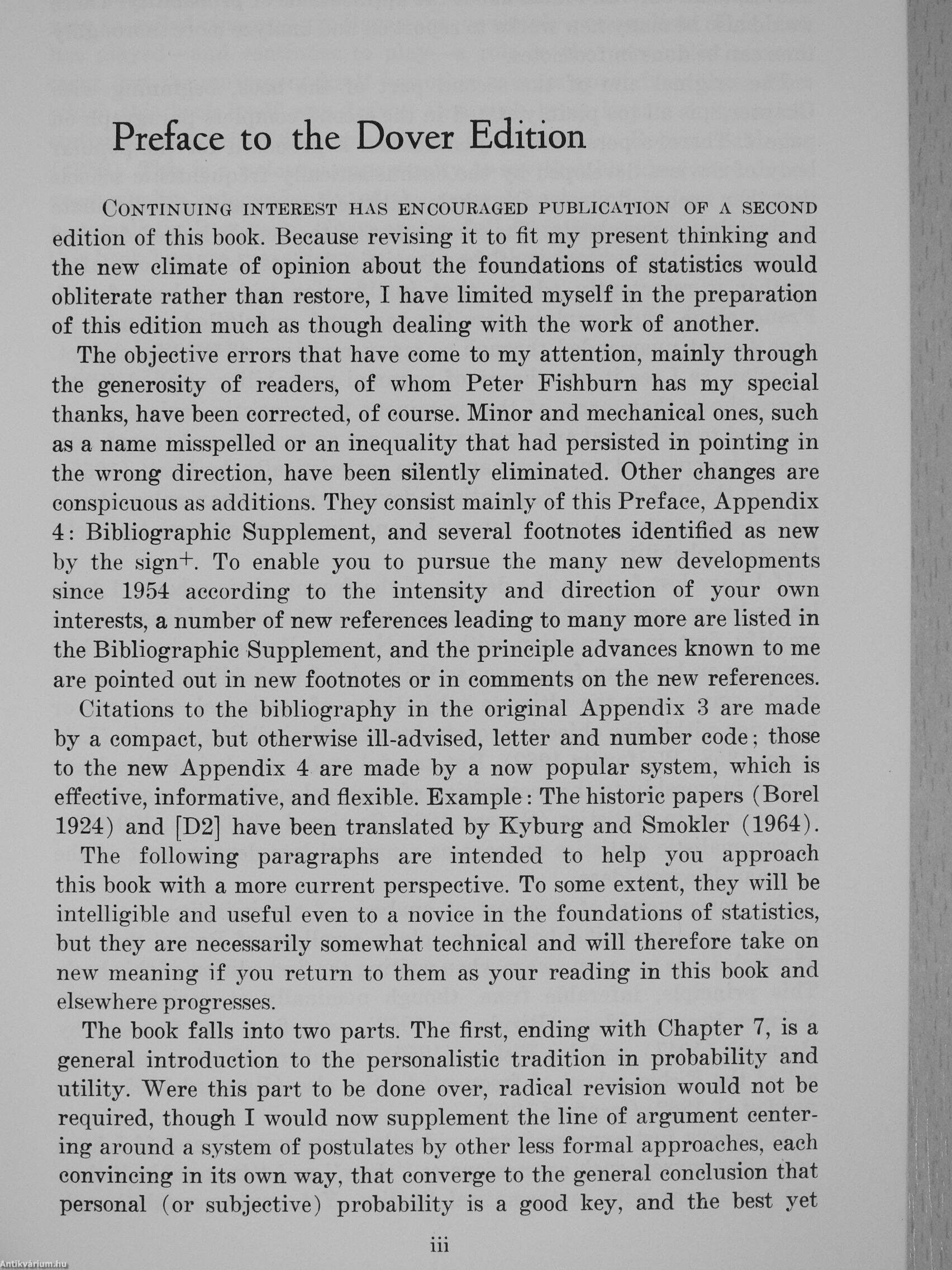
Fülszöveg
THE FOUNDATIONS OF STATISTICS
Léonard J. Savage
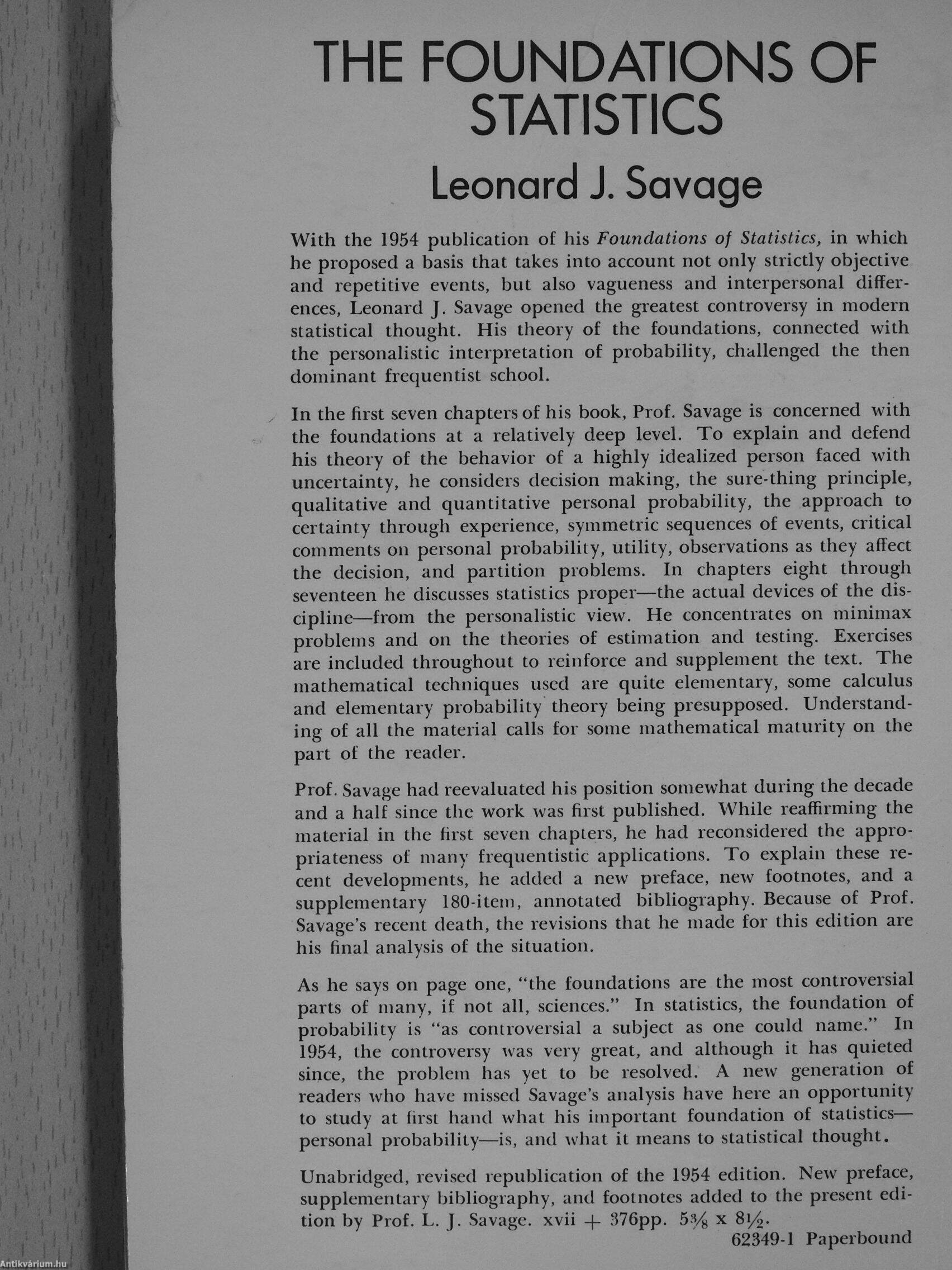
With the 1954 publication of his Foundations of Statistics, in which he proposed a basis that takes into account not only strictly objective and repetitive events, but also vagueness and interpersonal différences, Léonard J. Savage opened the greatest controversy in modern statistical thought. His theory of the foundations, connected with the personalistic interprétation of probability, challenged the then dominant frequentist school.
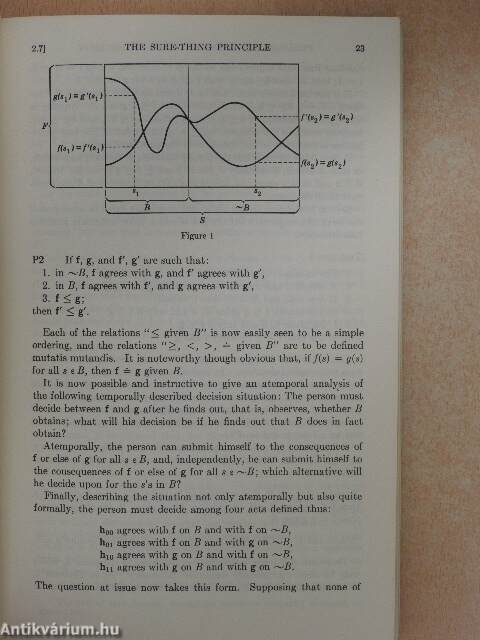
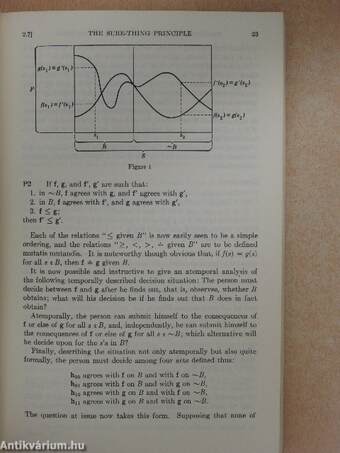
In the first seven chapters of his book. Prof. Savage is concerned with the foundations at a relatively deep level. To explain and defend his theory of the behavior of a highly idealized person faced with uncertainty, he considers décision making, the sure-thing principle, qualitative and quantitative personal probability, the approach to certainty through experience, symmetrie sequences of events, critical comments on personal probability, utility, observations as they affect the décision, and... Tovább
Fülszöveg
THE FOUNDATIONS OF STATISTICS
Léonard J. Savage
With the 1954 publication of his Foundations of Statistics, in which he proposed a basis that takes into account not only strictly objective and repetitive events, but also vagueness and interpersonal différences, Léonard J. Savage opened the greatest controversy in modern statistical thought. His theory of the foundations, connected with the personalistic interprétation of probability, challenged the then dominant frequentist school.
In the first seven chapters of his book. Prof. Savage is concerned with the foundations at a relatively deep level. To explain and defend his theory of the behavior of a highly idealized person faced with uncertainty, he considers décision making, the sure-thing principle, qualitative and quantitative personal probability, the approach to certainty through experience, symmetrie sequences of events, critical comments on personal probability, utility, observations as they affect the décision, and partition problems. In chapters eight through seventeen he discusses statistics proper—the actual devices of the discipline—from the personalistic view. He concentrâtes on minimax problems and on the theories of estimation and testing. Exercises are included throughout to reinforce and supplement the text. The mathematical techniques used are quite elementary, some calculus and elementary probability theory being presupposed. Understand-ing of all the material calls for some mathematical maturity on the part of the reader.
Prof. Savage had reevaluated his position somewhat during the decade and a half since the work was first published. While reaffirming the material in the first seven chapters, he had reconsidered the appro-priateness of niany frequentistic applications. To explain these recent developments, he added a new preface, new footnotes, and a supplementary 180-item, annotated bibliography. Because of Prof. Savage's recent death, the revisions that he made for this édition are his final analysis of the situation.
As he says on page one, "the foundations are the most controversial parts of niany, if not all, sciences." In statistics, the foundation of probability is "as controversial a subject as one could name." In 1954, the controversy was very great, and although it has quieted since, the problem has yet to be resolved. A new génération of readers who have misscd Savage's analysis have here an opportunity to study at first hand what his important foundation of statistics— personal probability—is, and what it means to statistical thought.
Unabridged, revised republication of the 1954 édition. New preface, supplementary bibliography, and footnotes added to the present édition by Prof. L. J. Savage, xvii -j- 376pp. 5x 8i/2.
62349-1 Paperbound Vissza
Témakörök
- Idegennyelv > Idegennyelvű könyvek > Angol > Egyéb
- Idegennyelv > Idegennyelvű könyvek > Angol > Természettudományok > Matematika
- Természettudomány > Matematika > Idegennyelvű
- Természettudomány > Matematika > Statisztika
- Természettudomány > Matematika > Tankönyvek > Felsőfokú
- Tankönyvek, jegyzetek, szöveggyűjtemények > Természettudományok > Matematika
- Tankönyvek, jegyzetek, szöveggyűjtemények > Természettudományok > Matematika > Felsőfokú
Leonard J. Savage
Leonard J. Savage műveinek az Antikvarium.hu-n kapható vagy előjegyezhető listáját itt tekintheti meg: Leonard J. Savage könyvek, művekMegvásárolható példányok
Nincs megvásárolható példány
A könyv összes megrendelhető példánya elfogyott. Ha kívánja, előjegyezheti a könyvet, és amint a könyv egy újabb példánya elérhető lesz, értesítjük.
 Folytatás Microsoft-tal