
1.146.431
kiadvánnyal nyújtjuk Magyarország legnagyobb antikvár könyv-kínálatát

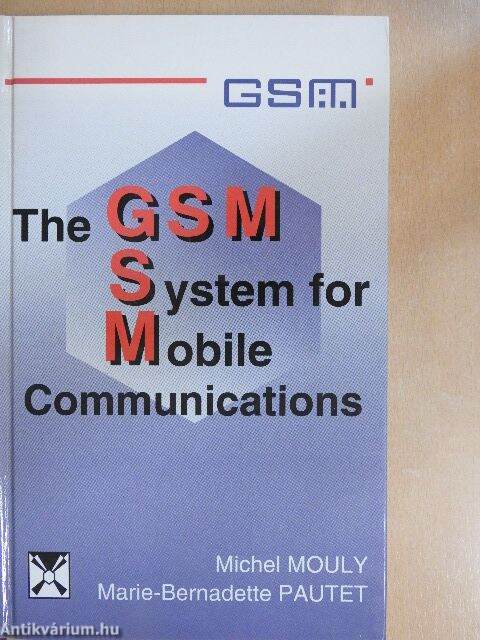
The GSM System for Mobile Communication
| Kiadó: | Szerzői magánkiadás |
|---|---|
| Kiadás helye: | |
| Kiadás éve: | |
| Kötés típusa: | Fűzött kemény papírkötés |
| Oldalszám: | 701 oldal |
| Sorozatcím: | |
| Kötetszám: | |
| Nyelv: | Angol |
| Méret: | 25 cm x 15 cm |
| ISBN: | 2-9507190-0-7 |
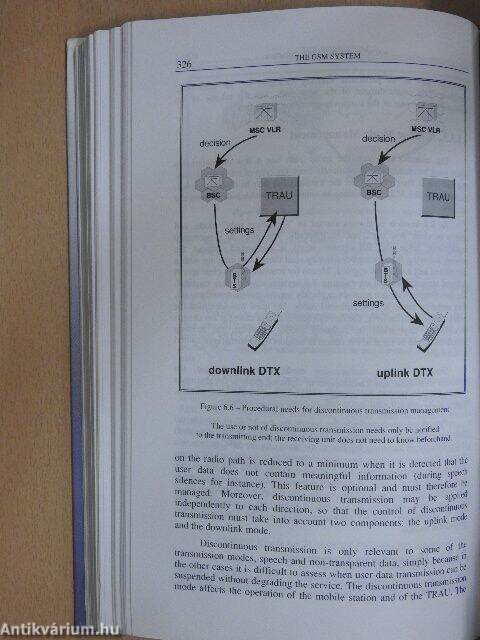
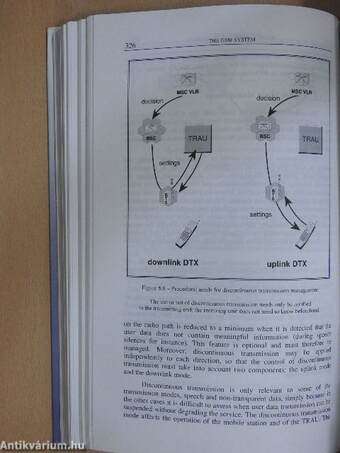
| Megjegyzés: | Fekete-fehér ilusztrációkkal. |
Értesítőt kérek a kiadóról
A beállítást mentettük,
naponta értesítjük a beérkező friss
kiadványokról
naponta értesítjük a beérkező friss
kiadványokról
A beállítást mentettük,
naponta értesítjük a beérkező friss
kiadványokról
naponta értesítjük a beérkező friss
kiadványokról
Fülszöveg
illThe authors:
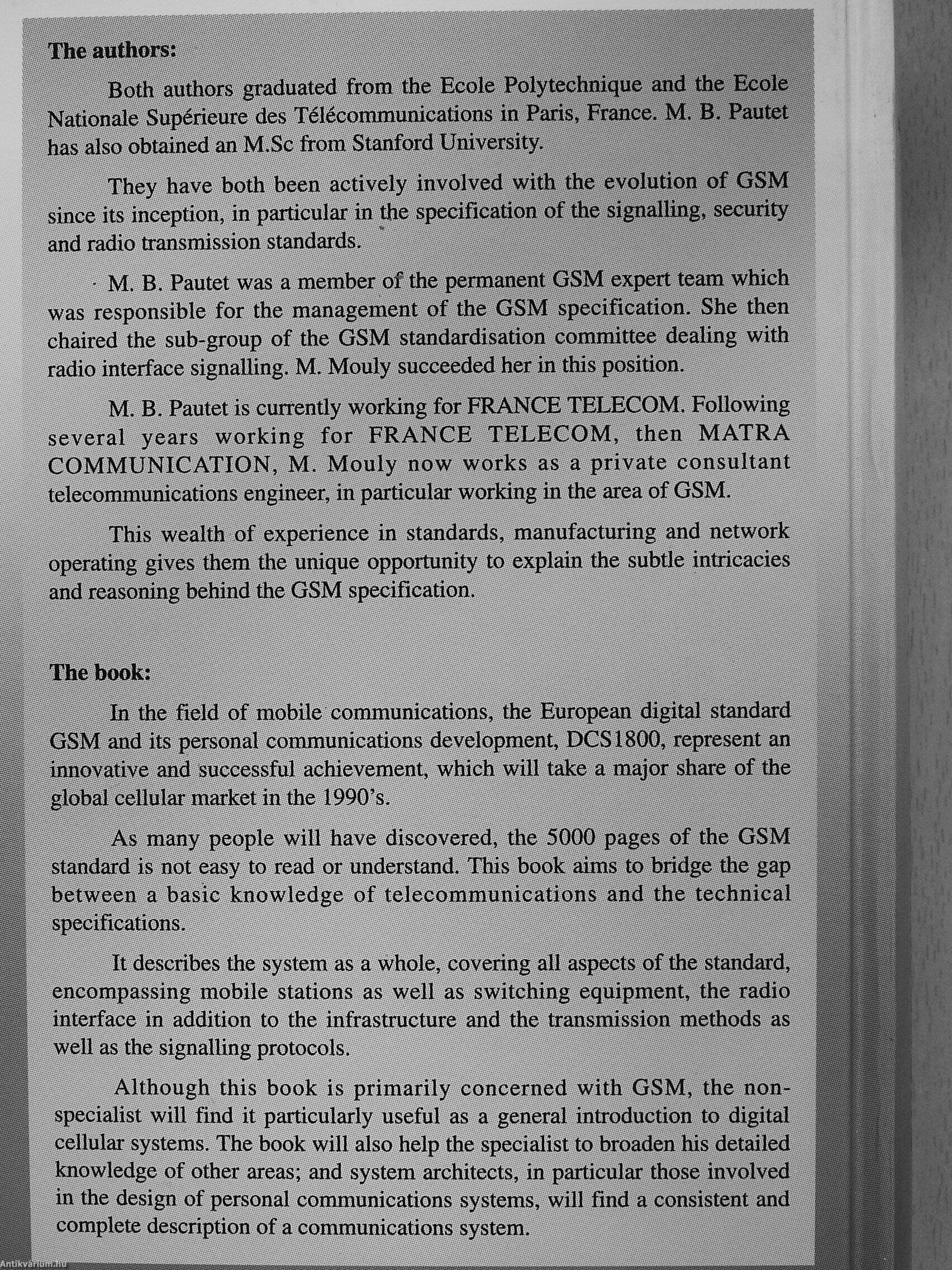
Both authors graduated from the Ecole Polytechnique and the Ecole Nationale Supérieure des Télécommunications in Paris, France. M. B. Pautet has also obtained an M.Sc from Stanford University.
They have both been actively involved with the evolution of GSM since its inception, in particular in the specification of the signalling, security and radio transmission standards.
• M. B. Pautet was a member of the permanent GSM expert team which was responsible for the management of the GSM specification. She then chaired the sub-group of the GSM standardisation committee dealing with radio interface signalling. M. Mouly succeeded her in this position.
M. B. Pautet is currently working for FRANCE TELECOM. Following several years working for FRANCE TELECOM, then MATRA COMMUNICATION, M. Mouly now works as a private consultant telecommunications engineer, in particular working in the area of GSM.
This wealth of experience in standards, manufacturing and network operating... Tovább
Fülszöveg
illThe authors:
Both authors graduated from the Ecole Polytechnique and the Ecole Nationale Supérieure des Télécommunications in Paris, France. M. B. Pautet has also obtained an M.Sc from Stanford University.
They have both been actively involved with the evolution of GSM since its inception, in particular in the specification of the signalling, security and radio transmission standards.
• M. B. Pautet was a member of the permanent GSM expert team which was responsible for the management of the GSM specification. She then chaired the sub-group of the GSM standardisation committee dealing with radio interface signalling. M. Mouly succeeded her in this position.
M. B. Pautet is currently working for FRANCE TELECOM. Following several years working for FRANCE TELECOM, then MATRA COMMUNICATION, M. Mouly now works as a private consultant telecommunications engineer, in particular working in the area of GSM.
This wealth of experience in standards, manufacturing and network operating gives them the unique opportunity to explain the subtle intricacies and reasoning behind the GSM specification.
The book:
In the field of mobile communications, the European digital standard GSM and its personal communications development, DCS 1800, represent an innovative and successful achievement, which will take a major share of the global cellular market in the 1990's.
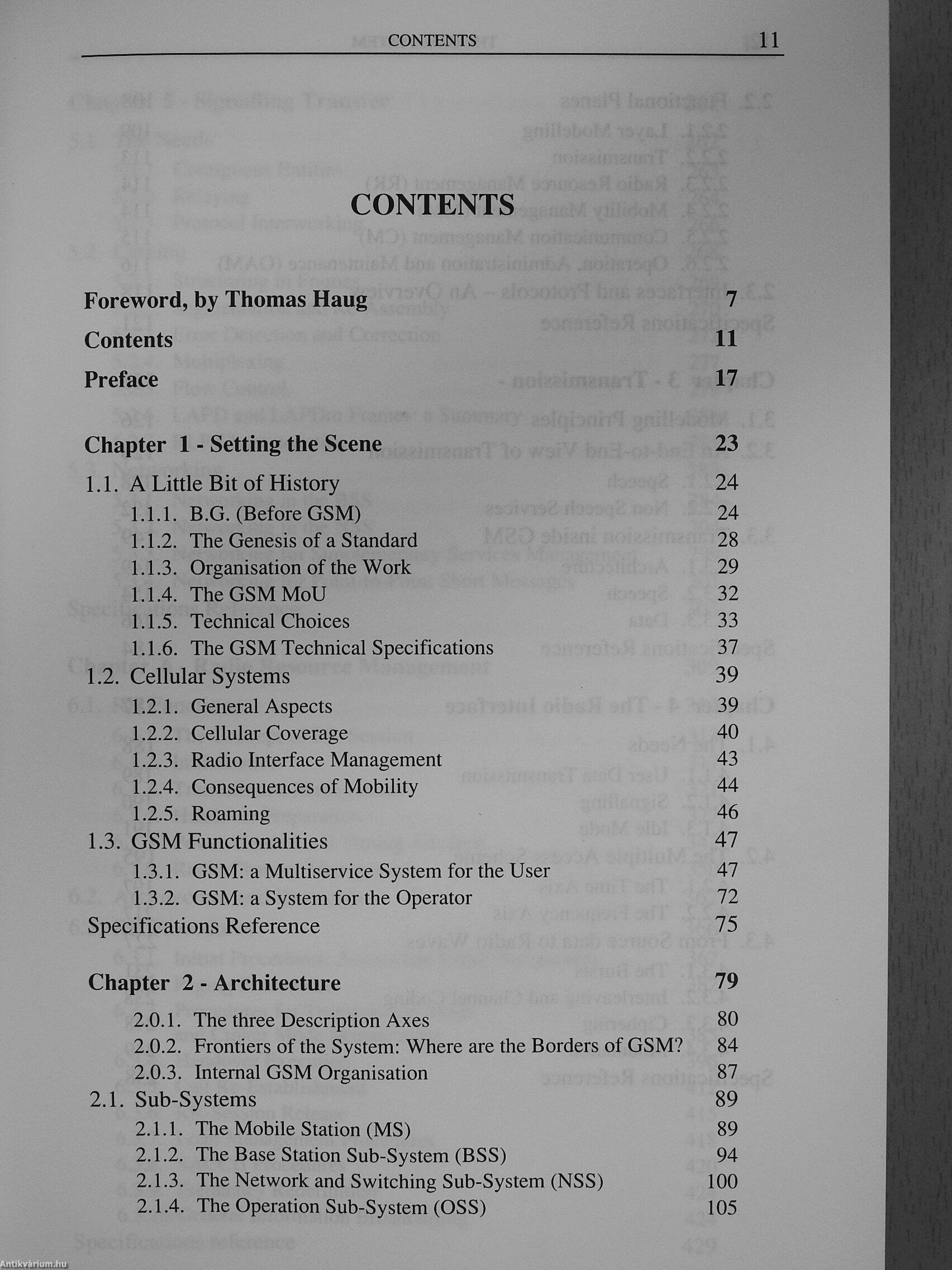
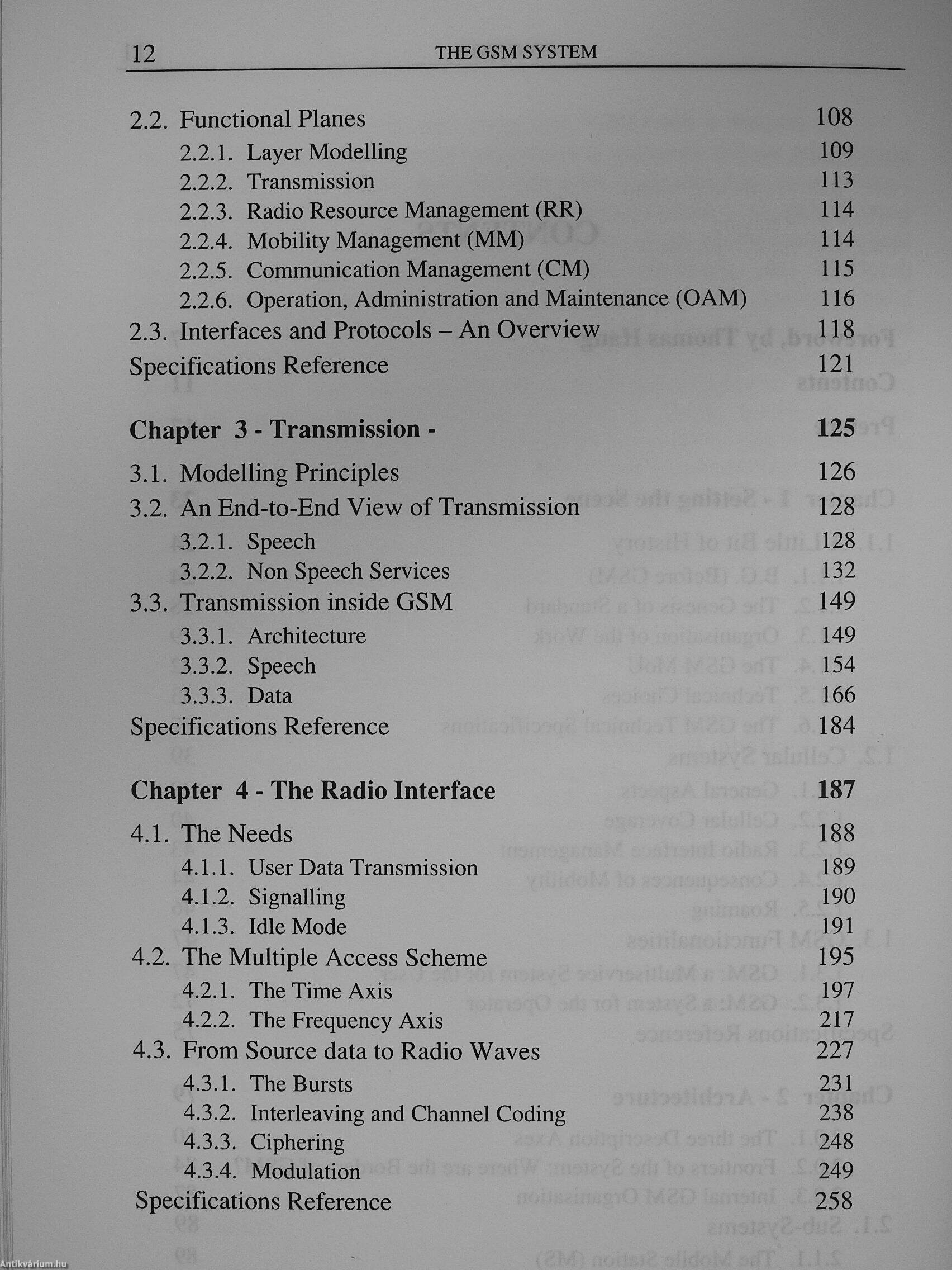
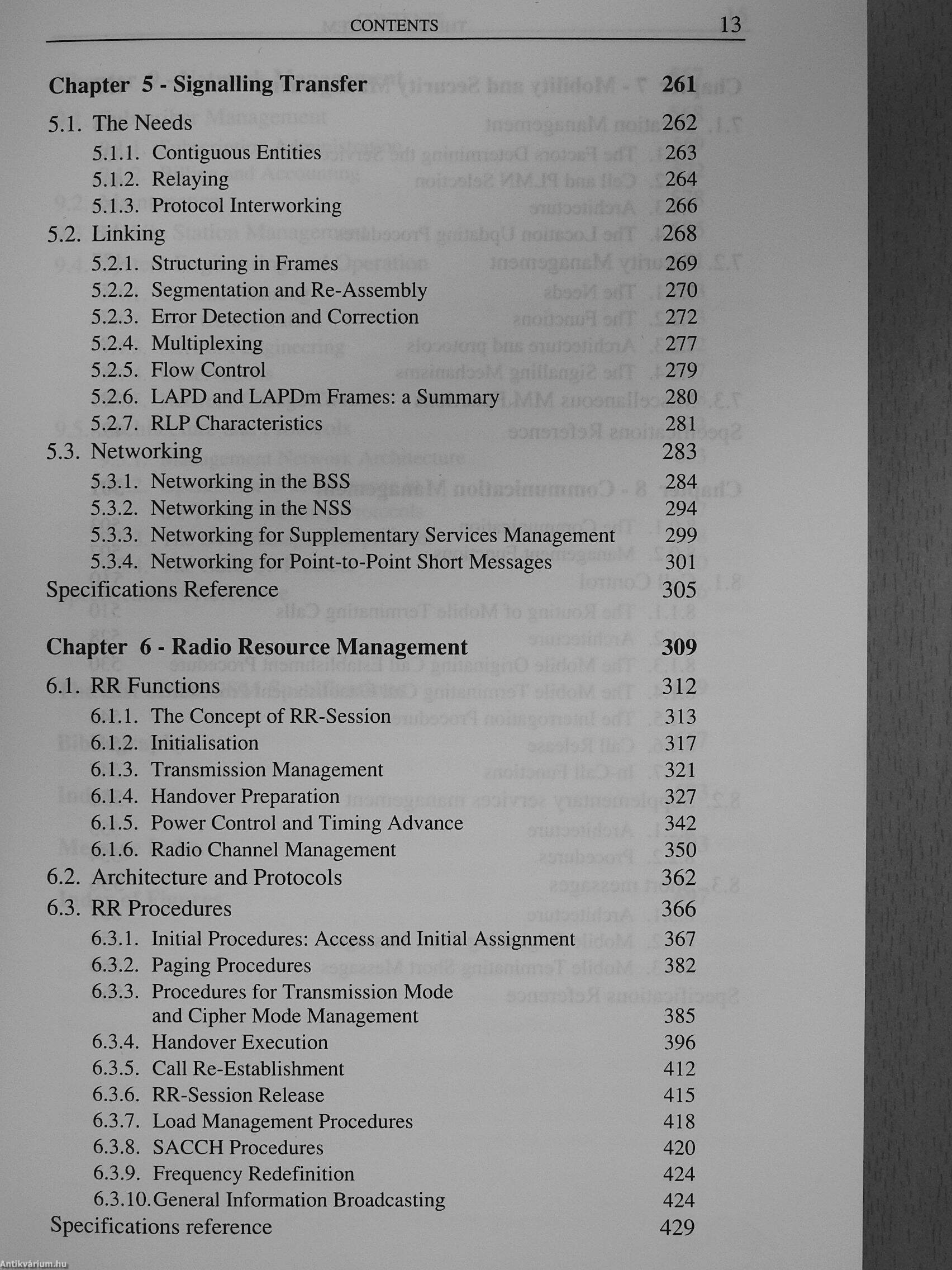
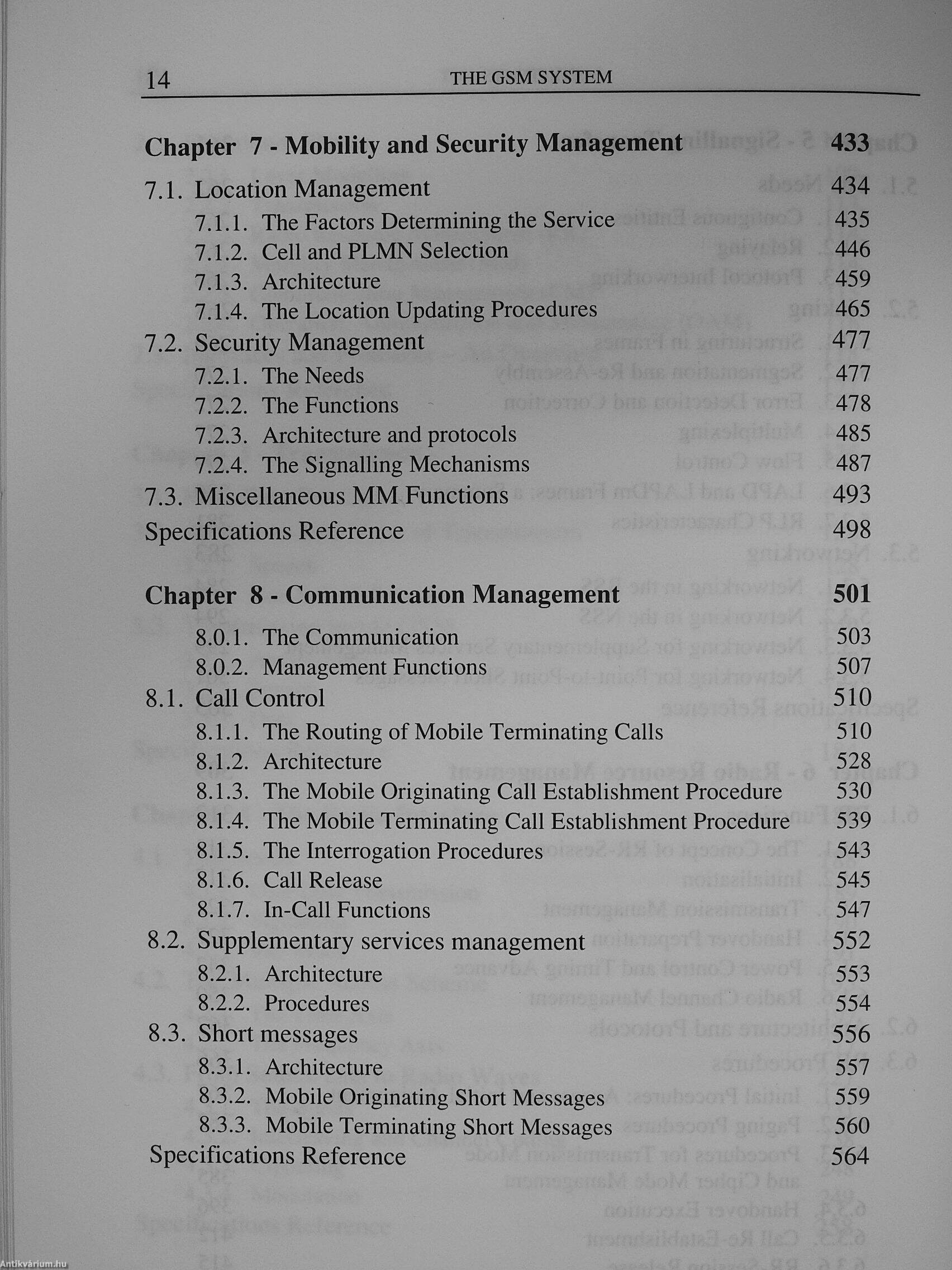
As many people will have discovered, the 5000 pages of the GSM standard is not easy to read or understand. This book aims to bridge the gap between a basic knowledge of telecommunications and the technical specifications.
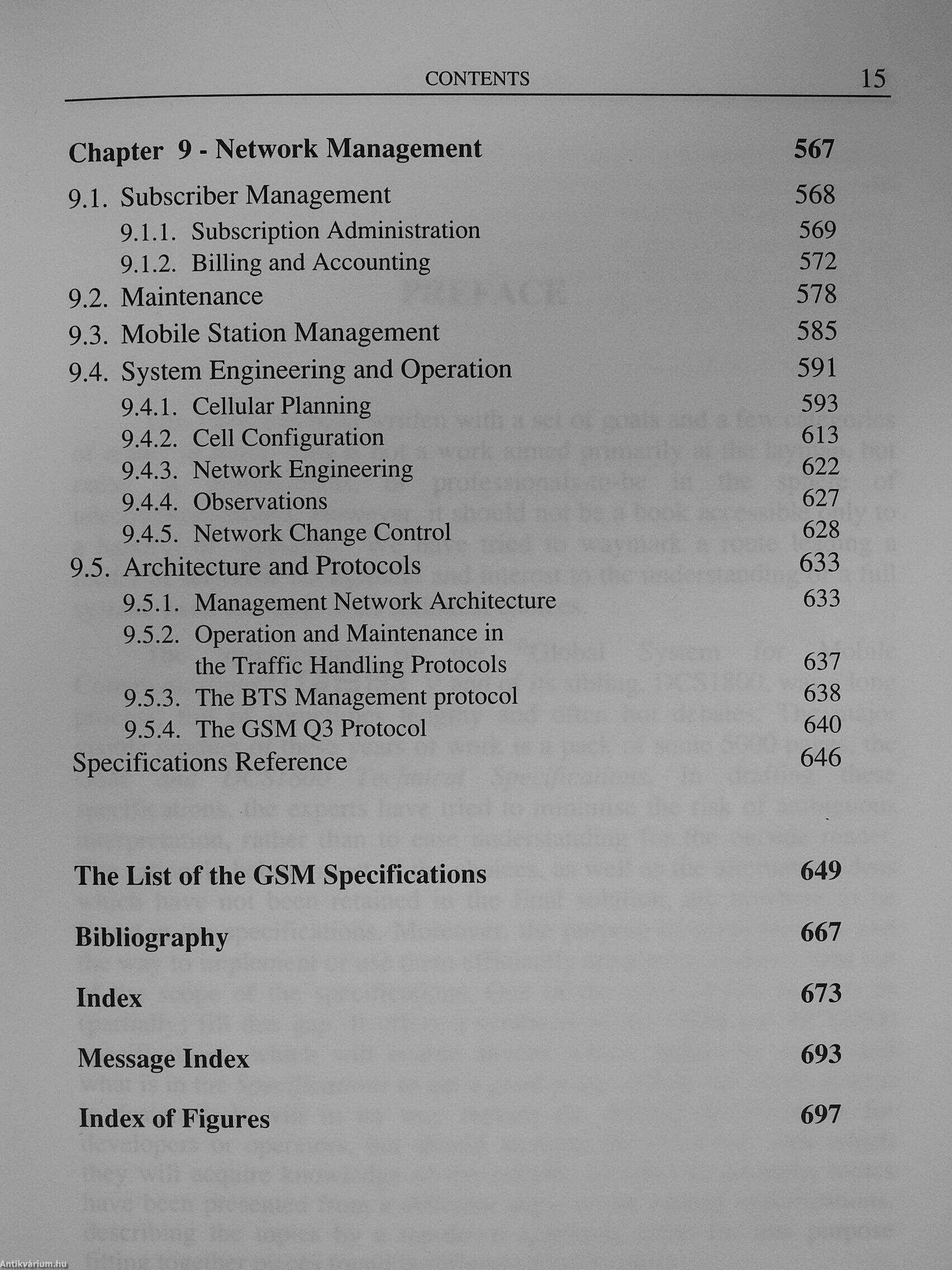
It describes the system as a whole, covering all aspects of the standard, encompassing mobile stations as well as switching equipment, the radio interface in addition to the infrastructure and the transmission methods as well as the signalling protocols.
Although this book is primarily concerned with GSM, the non-specialist will find it particularly useful as a general introduction to digital cellular systems. The book will also help the specialist to broaden his detailed knowledge of other areas; and system architects, in particular those involved in the design of personal communications systems, will find a consistent and complete description of a communications system. Vissza
Témakörök
Megvásárolható példányok
Nincs megvásárolható példány
A könyv összes megrendelhető példánya elfogyott. Ha kívánja, előjegyezheti a könyvet, és amint a könyv egy újabb példánya elérhető lesz, értesítjük.
 Folytatás Microsoft-tal