Fülszöveg
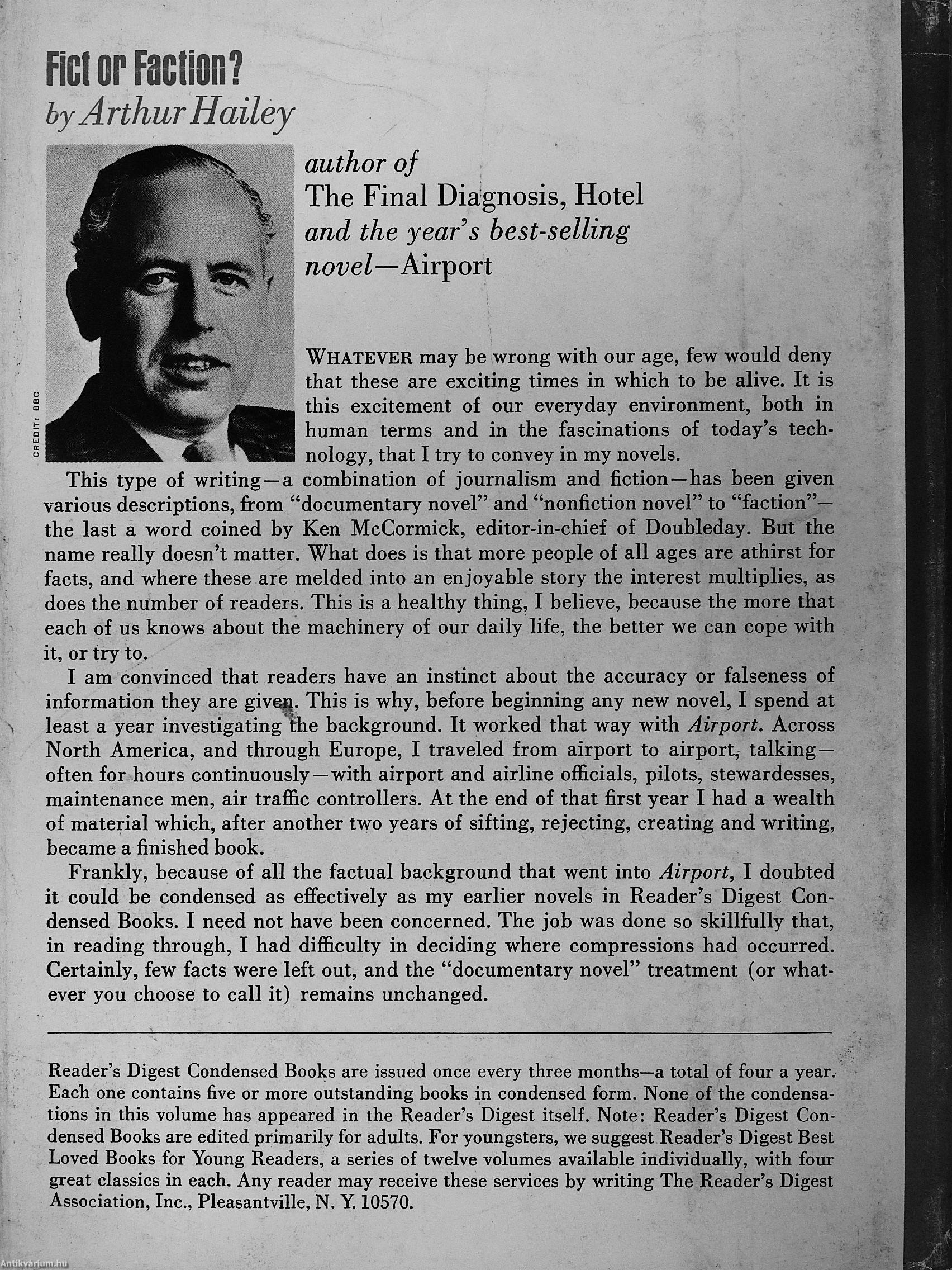
FiciorFactioii?
hy Ä rthur Hailey
author of
The Final Diagnosis, Hotel and the years best-selling /ioi;eZ—Airport
Whatever may be wrong with our age, few would deny that these are exciting times in which to be alive. It is this excitement of our everyday environment, both in human terms and in the fascinations of today's technology, that I try to convey in my novels.
This type of writing—a combination of journalism and fiction—has been given various descriptions, from "documentary novel" and "nonfiction novel" to "faction"— the last a word coined by Ken McCormick, editor-in-chief of Doubleday. But the name really doesn't matter. What does is that more people of all ages are athirst for facts, and where these are melded into an enjoyable story the interest multiplies, as does the number of readers. This is a healthy thing, I believe, because the more that each of us knows about the machinery of our daily life, the better we can cope with it, or try to.
I am convinced that...
Tovább
Fülszöveg
FiciorFactioii?
hy Ä rthur Hailey
author of
The Final Diagnosis, Hotel and the years best-selling /ioi;eZ—Airport
Whatever may be wrong with our age, few would deny that these are exciting times in which to be alive. It is this excitement of our everyday environment, both in human terms and in the fascinations of today's technology, that I try to convey in my novels.
This type of writing—a combination of journalism and fiction—has been given various descriptions, from "documentary novel" and "nonfiction novel" to "faction"— the last a word coined by Ken McCormick, editor-in-chief of Doubleday. But the name really doesn't matter. What does is that more people of all ages are athirst for facts, and where these are melded into an enjoyable story the interest multiplies, as does the number of readers. This is a healthy thing, I believe, because the more that each of us knows about the machinery of our daily life, the better we can cope with it, or try to.
I am convinced that readers have an instinct about the accuracy or falseness of information they are giveo. This is why, before beginning any new novel, I spend at least a year investigating'the background. It worked that way with Airport. Across North America, and through Europe, I traveled from airport to airport, talking— often for hours continuously—with airport and airline officials, pilots, stewardesses, maintenance men, air traffic controllers. At the end of that first year I had a wealth of material which, after another two years of sifting, rejecting, creating and writing, became a finished book.
Frankly, because of all the factual background that went into Airport, I doubted it could be condensed as effectively as my earlier novels in Reader's Digest Condensed Books. I need not have been concerned. The job was done so skillfully that, in reading through, I had difficulty in deciding where compressions had occurred. Certainly, few facts were left out, and the "documentary novel" treatment (or whatever you choose to call it) remains unchanged.
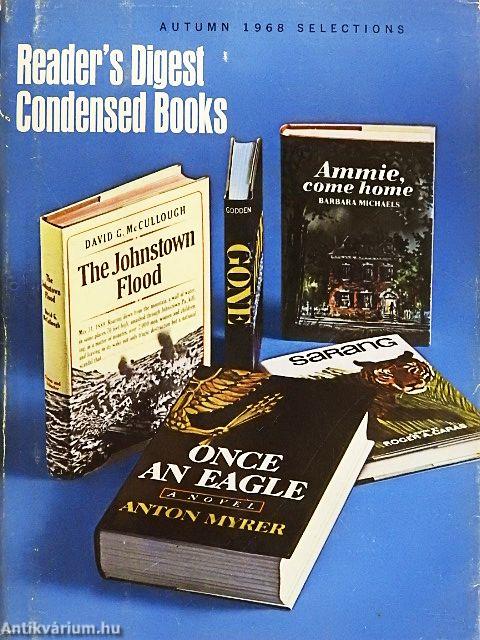
Reader's Digest Condensed Books are issued once every three months—a total of four a year. Each one contains five or more outstanding books in condensed form. None of the condensations in this volume has appeared in the Reader's Digest itself. Note: Reader's Digest Condensed Books are edited primarily for adults. For youngsters, we suggest Reader's Digest Best Loved Books for Young Readers, a series of twelve volumes available individually, with four great classics in each. Any reader may receive these services by writing The Reader's Digest Association, Inc., Pleasantville, N. Y. 10570.
Vissza 














 Folytatás Microsoft-tal