Fülszöveg
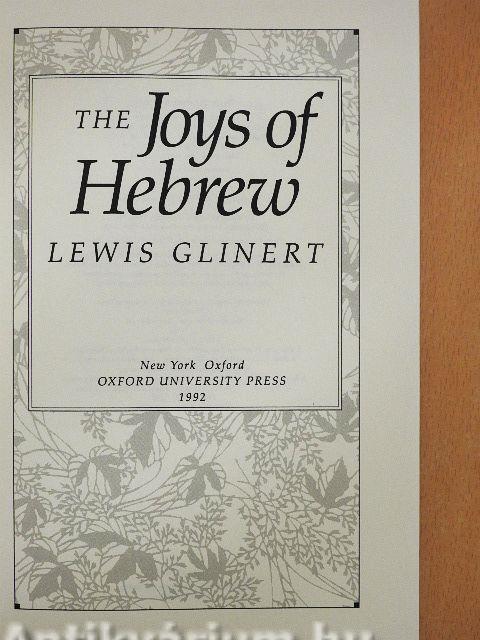
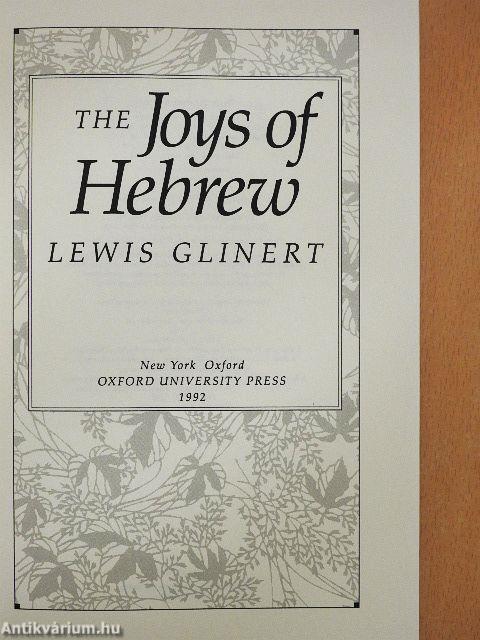
THF JOYS OF
LEWIS GLINERT
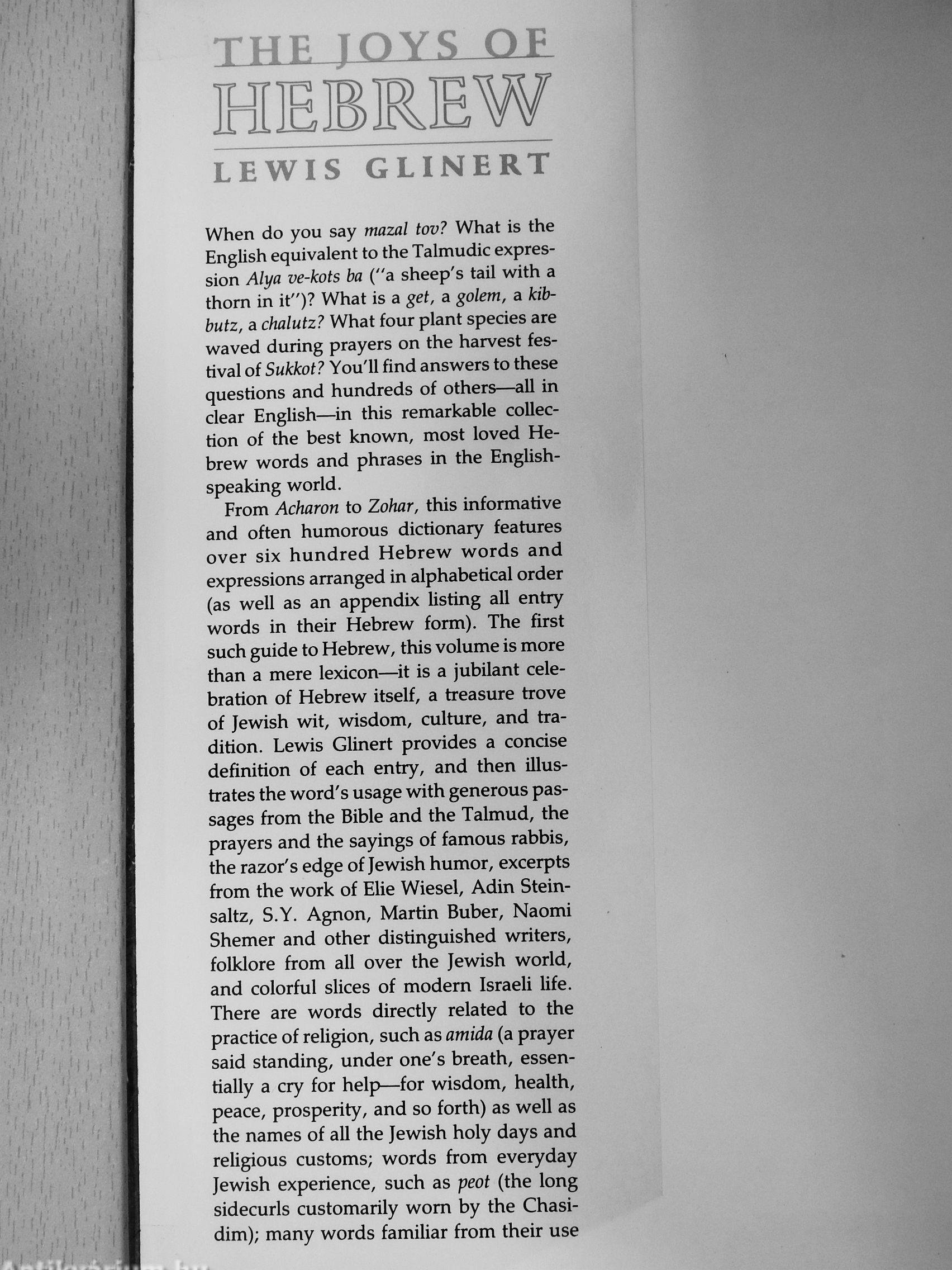
When do you say mazal tov? What is the English equivalent to the Talmudic expression Alya ve-kots ba ("a sheep's tail with a thorn in it")? What is a get, a golem, a kibbutz, a chalutz? What four plant species are waved during prayers on the harvest festival of Sukkot? You'll find answers to these questions and hundreds of others—all in clear English—in this remarkable collection of the best known, most loved Hebrew words and phrases in the English-speaking world.
From Acharon to Zohar, this informative and often humorous dictionary features over six hundred Hebrew words and expressions arranged in alphabetical order (as well as an appendix listing all entry words in their Hebrew form). The first such guide to Hebrew, this volume is more than a mere lexicon—it is a jubilant celebration of Hebrew itself, a treasure trove of Jewish vdt, wisdom, culture, and tradition. Lewis Glinert provides a concise definition of each entry, and then illustrates the...
Tovább
Fülszöveg
THF JOYS OF
LEWIS GLINERT
When do you say mazal tov? What is the English equivalent to the Talmudic expression Alya ve-kots ba ("a sheep's tail with a thorn in it")? What is a get, a golem, a kibbutz, a chalutz? What four plant species are waved during prayers on the harvest festival of Sukkot? You'll find answers to these questions and hundreds of others—all in clear English—in this remarkable collection of the best known, most loved Hebrew words and phrases in the English-speaking world.
From Acharon to Zohar, this informative and often humorous dictionary features over six hundred Hebrew words and expressions arranged in alphabetical order (as well as an appendix listing all entry words in their Hebrew form). The first such guide to Hebrew, this volume is more than a mere lexicon—it is a jubilant celebration of Hebrew itself, a treasure trove of Jewish vdt, wisdom, culture, and tradition. Lewis Glinert provides a concise definition of each entry, and then illustrates the word's usage wdth generous passages from the Bible and the Talmud, the prayers and the sayings of famous rabbis, the razor's edge of Jewish humor, excerpts from the work of Elie Wiesel, Adin Stein-saltz, S.Y. Agnon, Martin Buber, Naomi Shemer and other distinguished writers, folklore from all over the Jewish world, and colorful slices of modern Israeli life. There are words directly related to the practice of religion, such as amida (a prayer said standing, under one's breath, essentially a cry for help—for wisdom, health, peace, prosperity, and so forth) as well as the names of all the Jewish holy days and religious customs; words from everyday Jewish experience, such as peot (the long sidecurls customarily worn by the Chasi-dim); many words familiar from their use
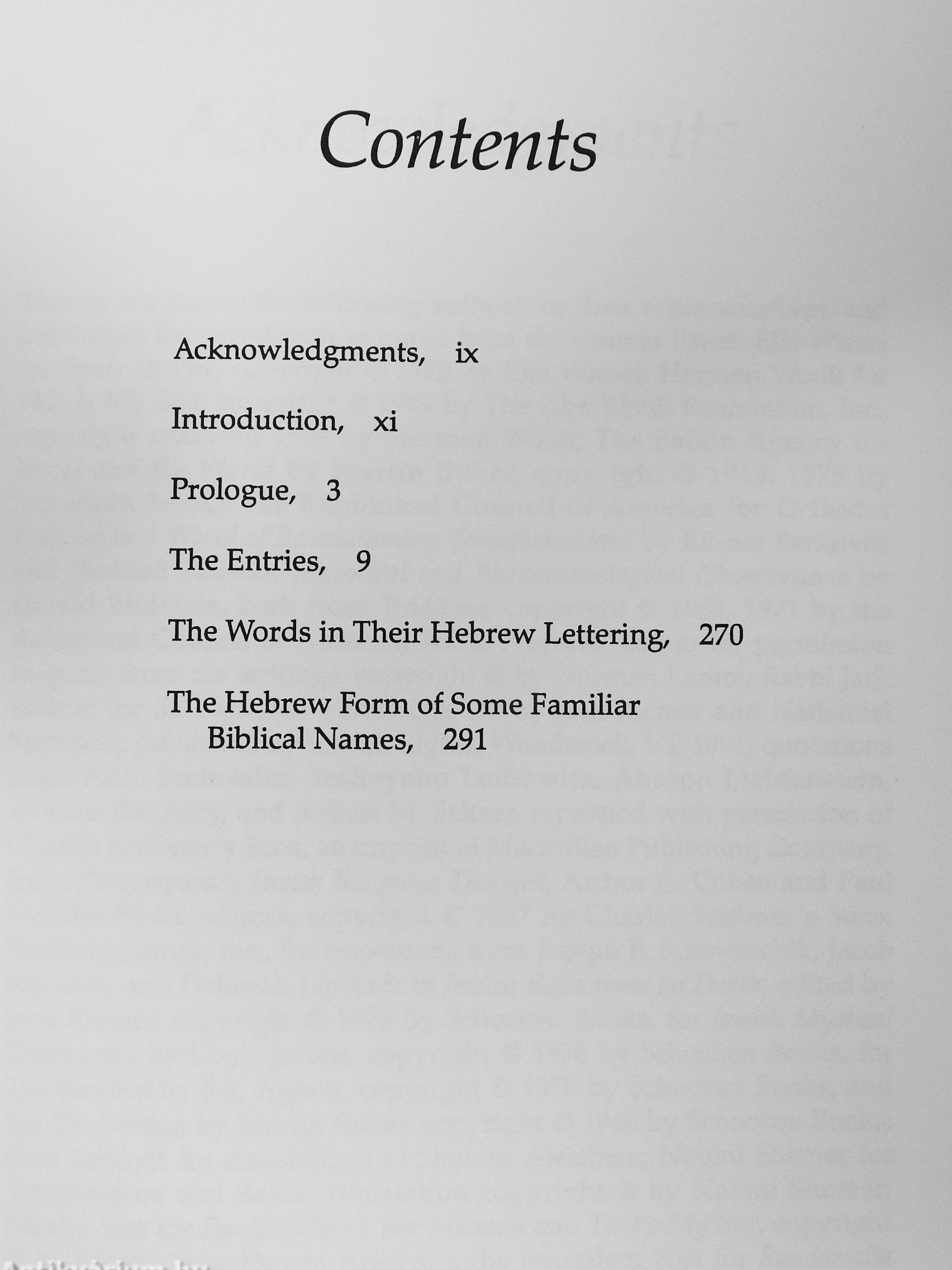
in Israel, such as rega (literally, "one moment," it is the Israeli equivalent of Mexico's manana) or miluim (army reserve service); and many traditional sayings, such as Tsarat rabim chatsi nechama ("A public woe is half a comfort"). In addition, Glinert provides at the back of the book an alphabetical list of familiar biblical names in English, Sephardi/Israeli Hebrew, and Ash-kenazi Hebrew.
This celebration of Hebrew language and culture is a joy to read and to use. Everyone from Bible students to collectors of Judaica, from Jackie Mason fans to people planning a journey to the Holy Land, will be delighted by this informative vol-
about the author
Lewis Glinert was educated at Magdalen College, Oxford and lectures at London University's School of Oriental and African Studies. He has also held appointments at the Israeli universities of Haifa and Bar-Ilan and a visiting associate professorship at the University of Chicago. The author of The Grammar of Modern Hebrew and editor of Hebrew in Ashkenaz: A Language in Exile, he has written and broadcast widely on the sociology and linguistics of Hebrew and Yiddish, including two BBC documentaries, "Tongue of Tongues" and "Golem."
OEWIS^GLINER
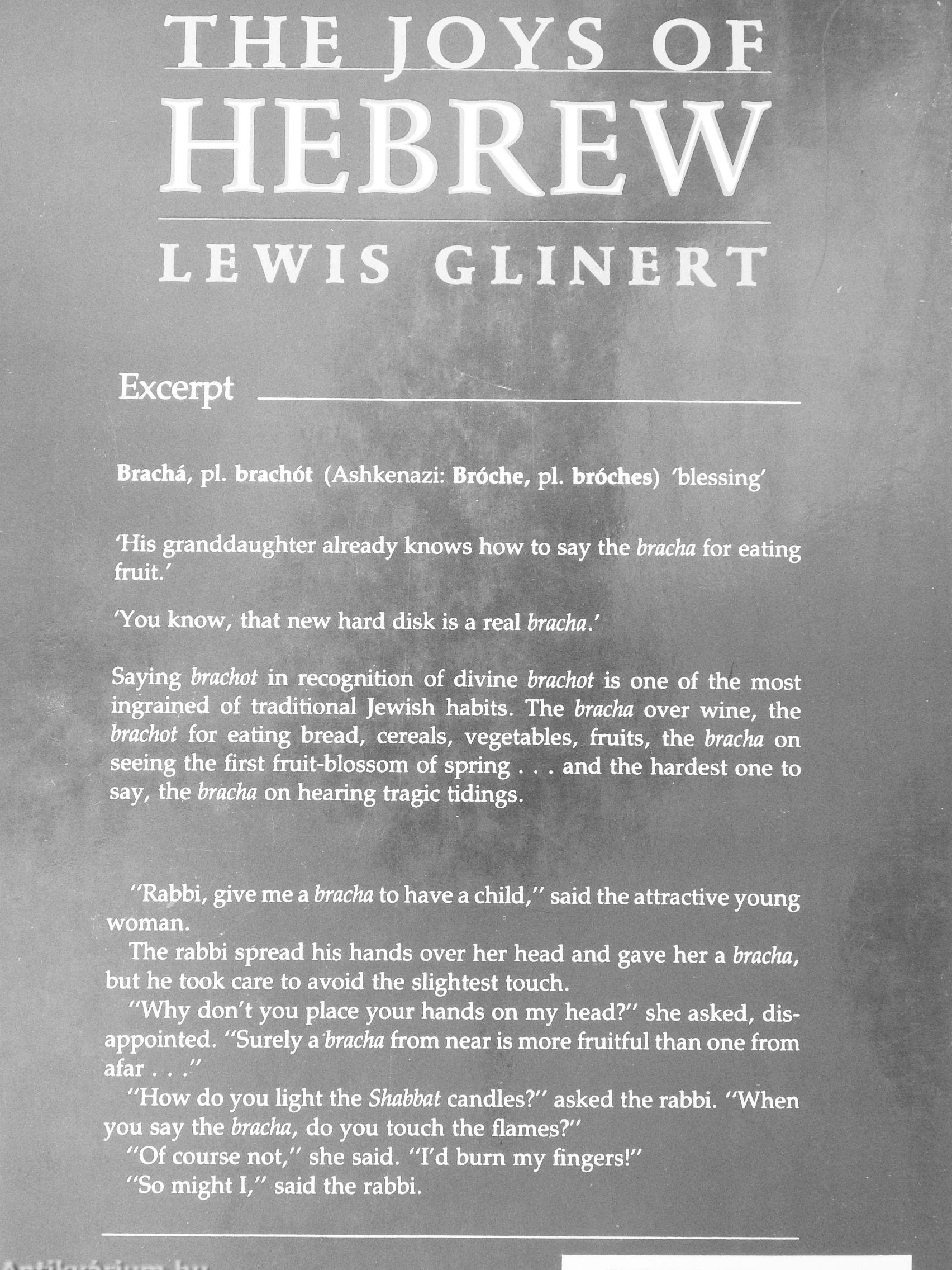
Excerpt
'm' fti
Brachi, pi. brachdt (Ashkenazi: Bidche, pi. brdches) 'blessing'
'His granddaughter already knows how to say the bracha for eating fruit.' !
'You know, that new hard disk is a real bracha.'
Sajdng brachot in recognitioh of divine brachot is one of the most ingrained of traditional Jewish habits. The bracha over wine, the brachot for eating bread, cereals, vegetables, fruits, the bracha on seeing the first hoiit-blossom of spring . . . and the hardest one to say, the bracha on hearing tragic tidings.
"Rabbi, give me a bracha to have a child," said the attractive young woman.
The rabbi spread his hands over her head and gave her a bracha, but he took care to avoid the slightest touch.
"Why don't you place your hands on my head?" she asked, disappointed. "Surely a ferflc/w from near is more fruitful than one from afar "
"How do you light the Shabbat candles?" asked the rabbi. "When you say the bracha, do you touch the flames?"
"Of course not," she said. "I'd bum my fingers!"
"So might I," said the rabbi.
Vissza 






 Folytatás Microsoft-tal