Fülszöveg
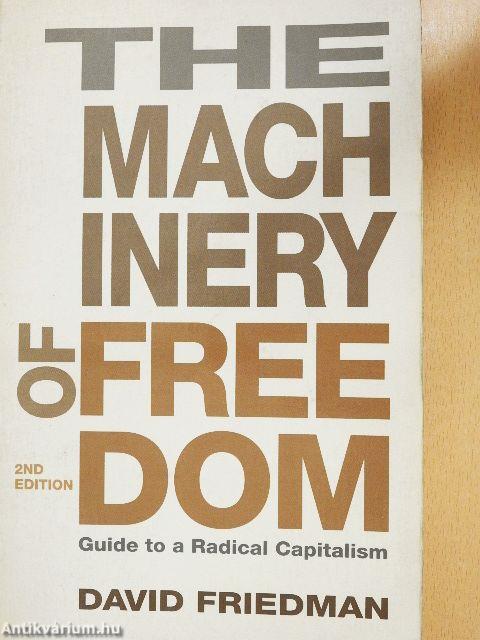
THE MACHINERY OF FREEDOM
This book argues the case for a society organized by private property, individual rights, and voluntary co-operation, with little or no government. David Friedman's standpoint, known as 'anarcho-capitalism', has attracted a growing following as a desirable social ideal since the first edition of The Machinery of Freedom appeared in 1971. This new edition is thoroughly revised and includes much new material, exploring fresh applications of the author's libertarian principles.
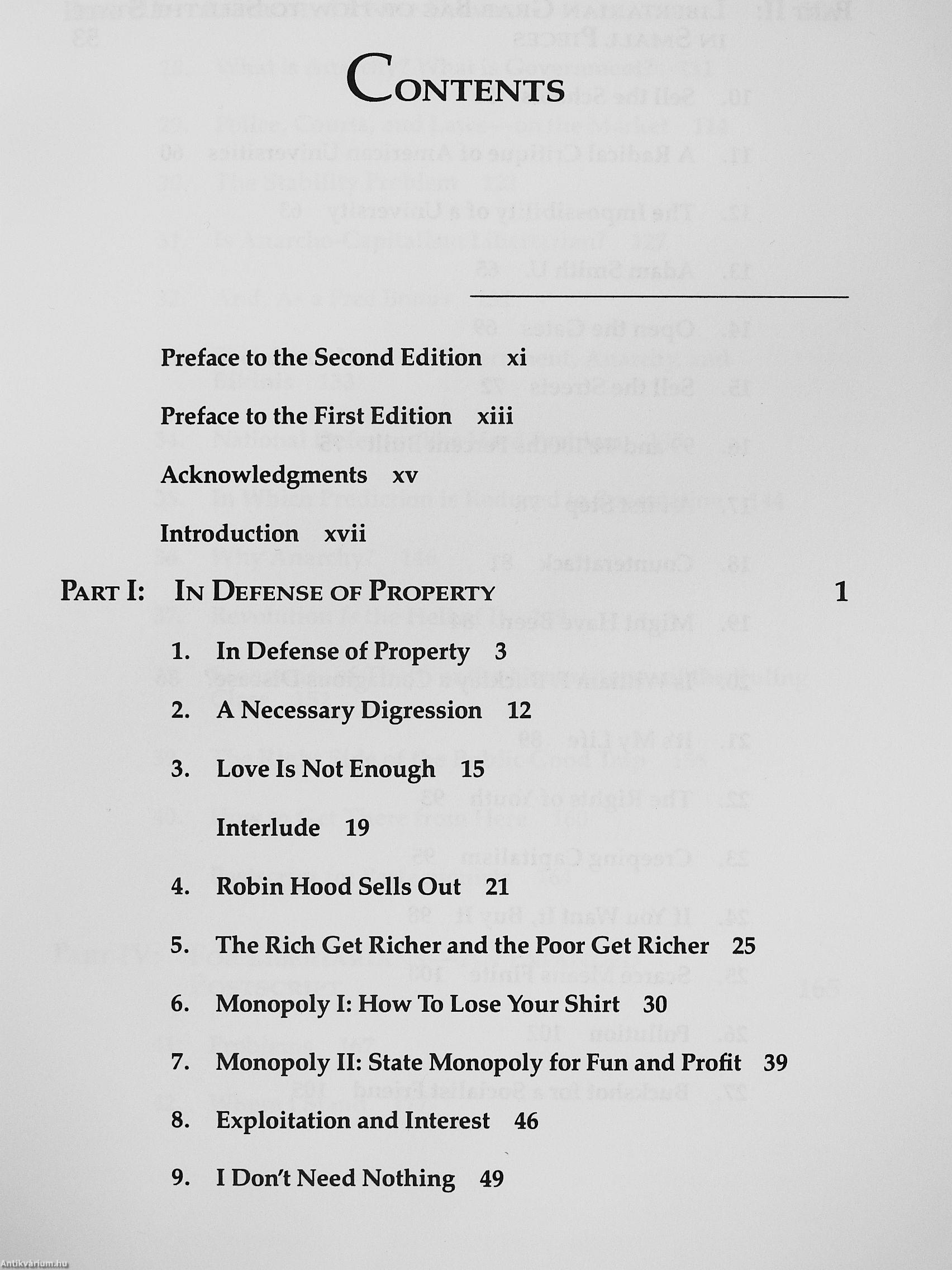
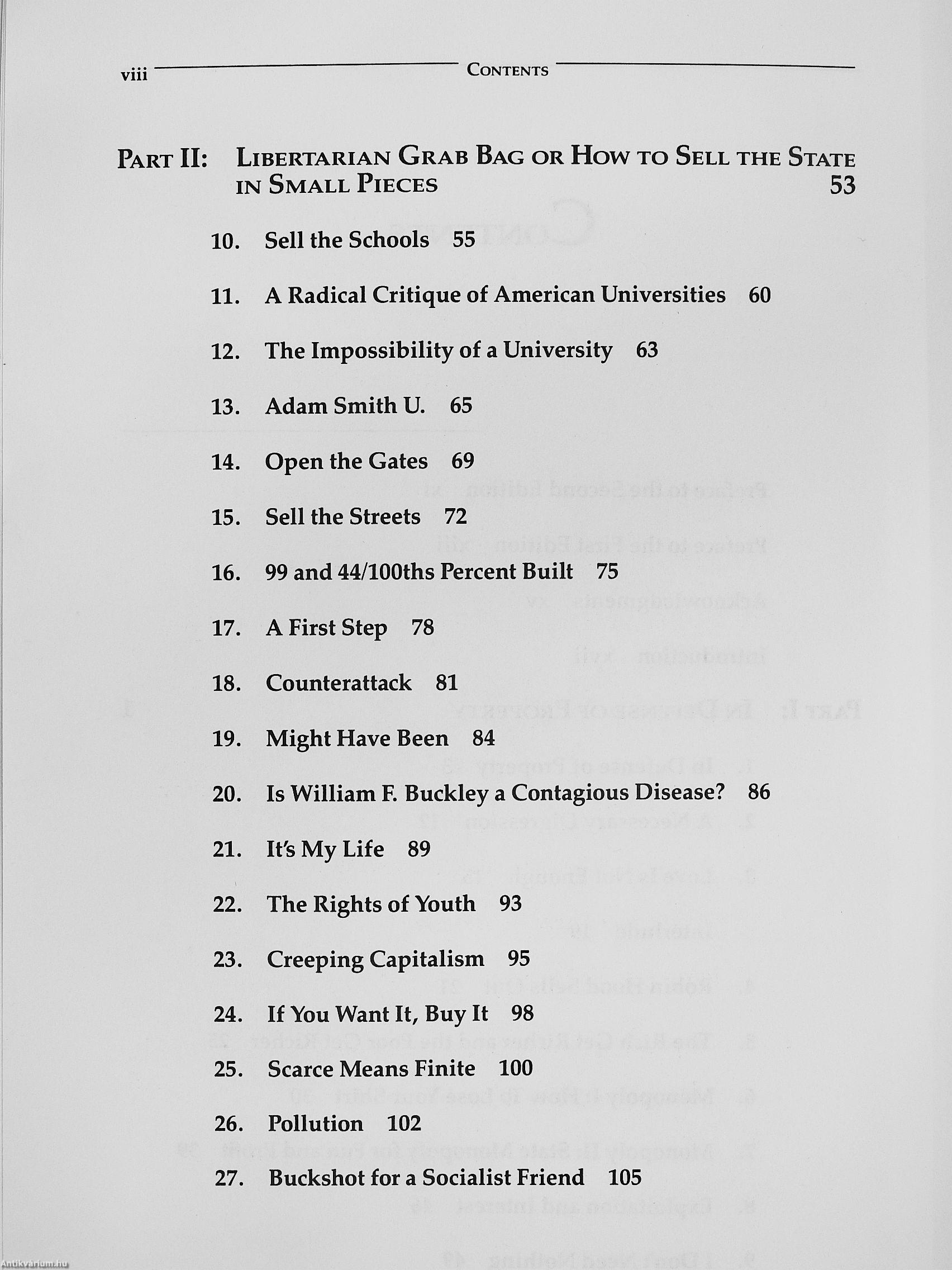
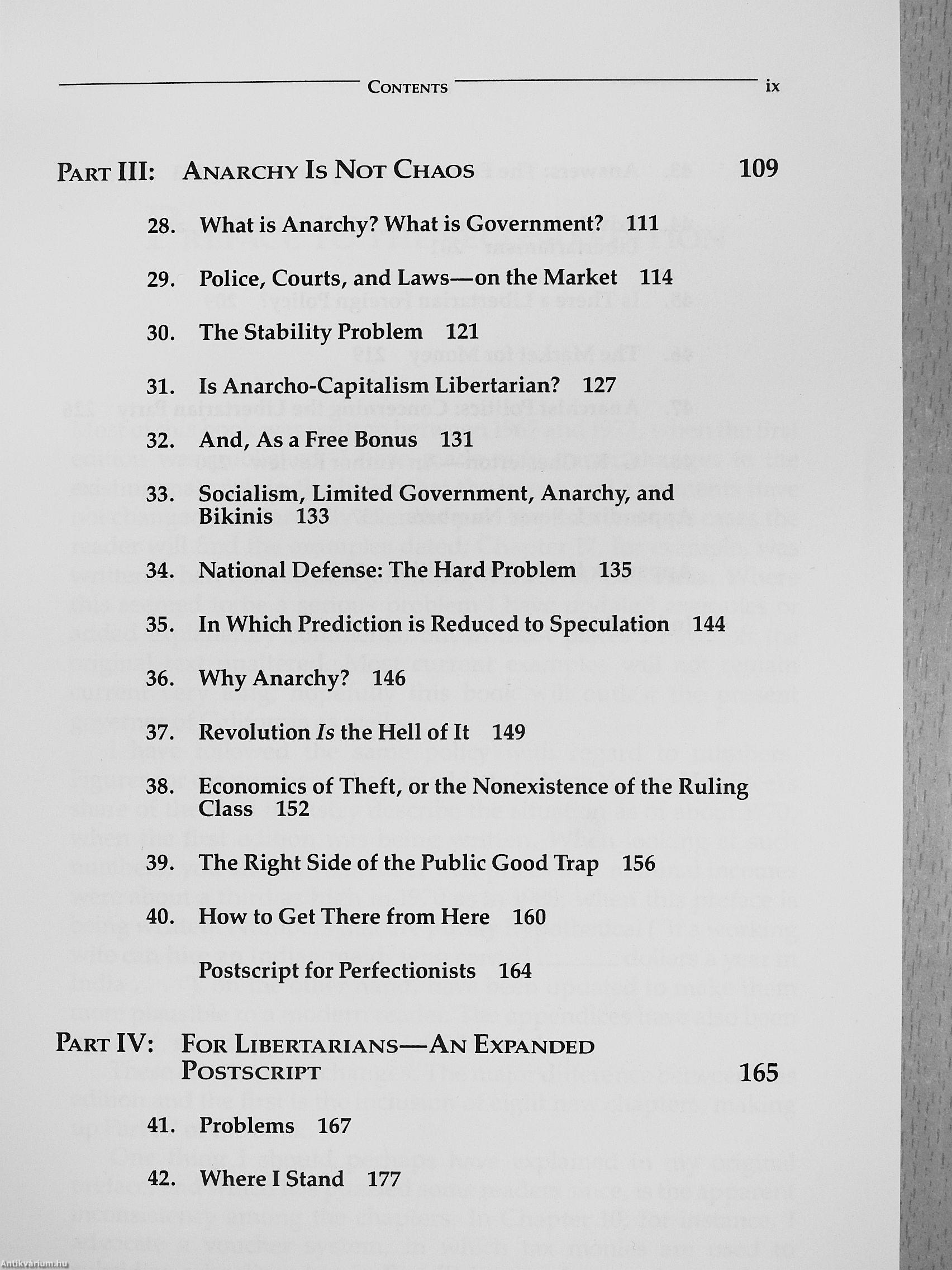
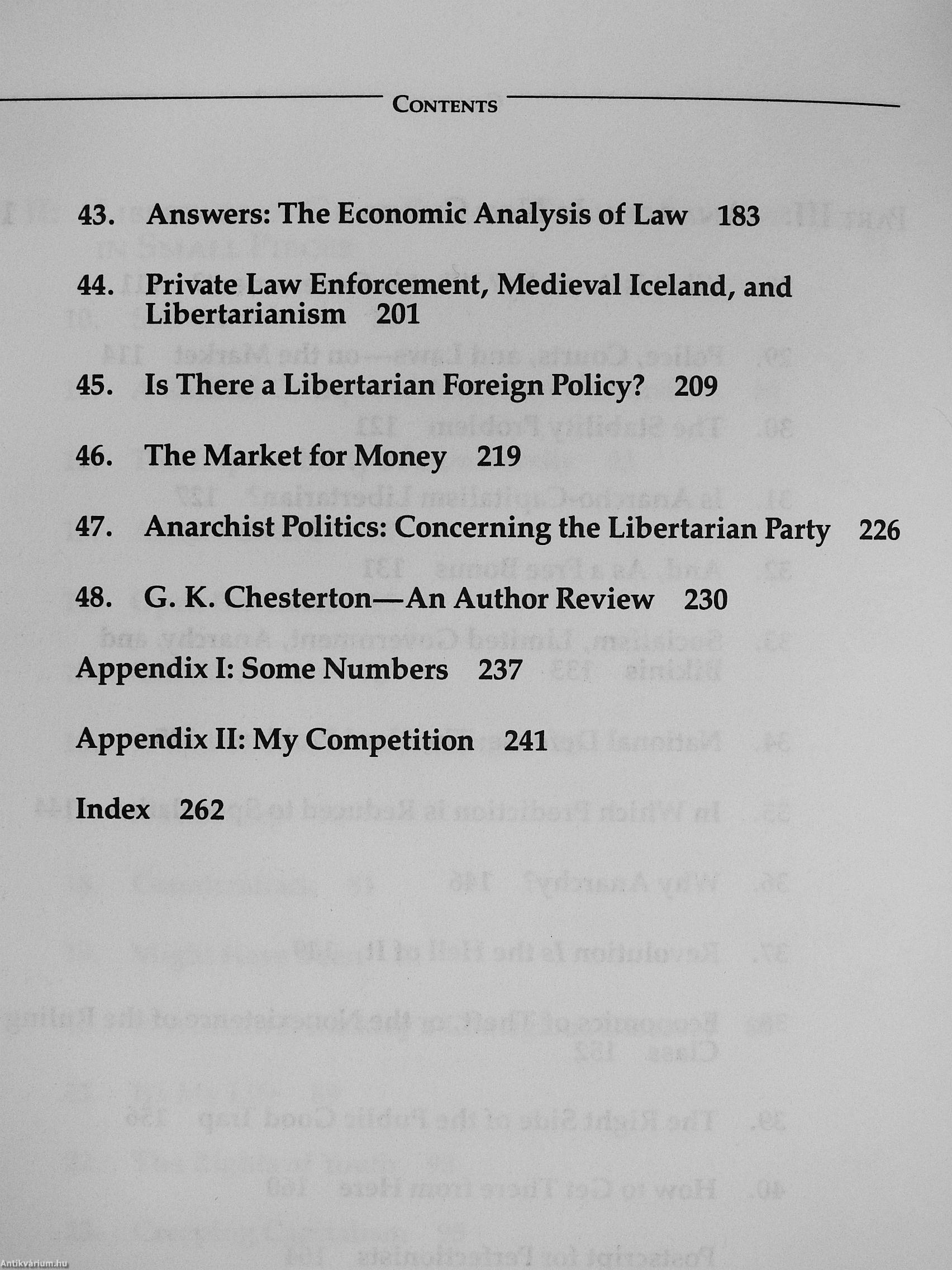
Among topics covered: how the U.S. would benefit from unrestricted immigration; why prohibition of drugs is inconsistent with a free society; why the welfare state mainly takes from the poor to help the not-so-poor; how police protection, law courts, and new laws could all be provided privately; what life was really like under the anarchist legal system of medieval Iceland; why non-intervention is the best foreign policy; why no simple moral rules can generate acceptable social...
Tovább
Fülszöveg
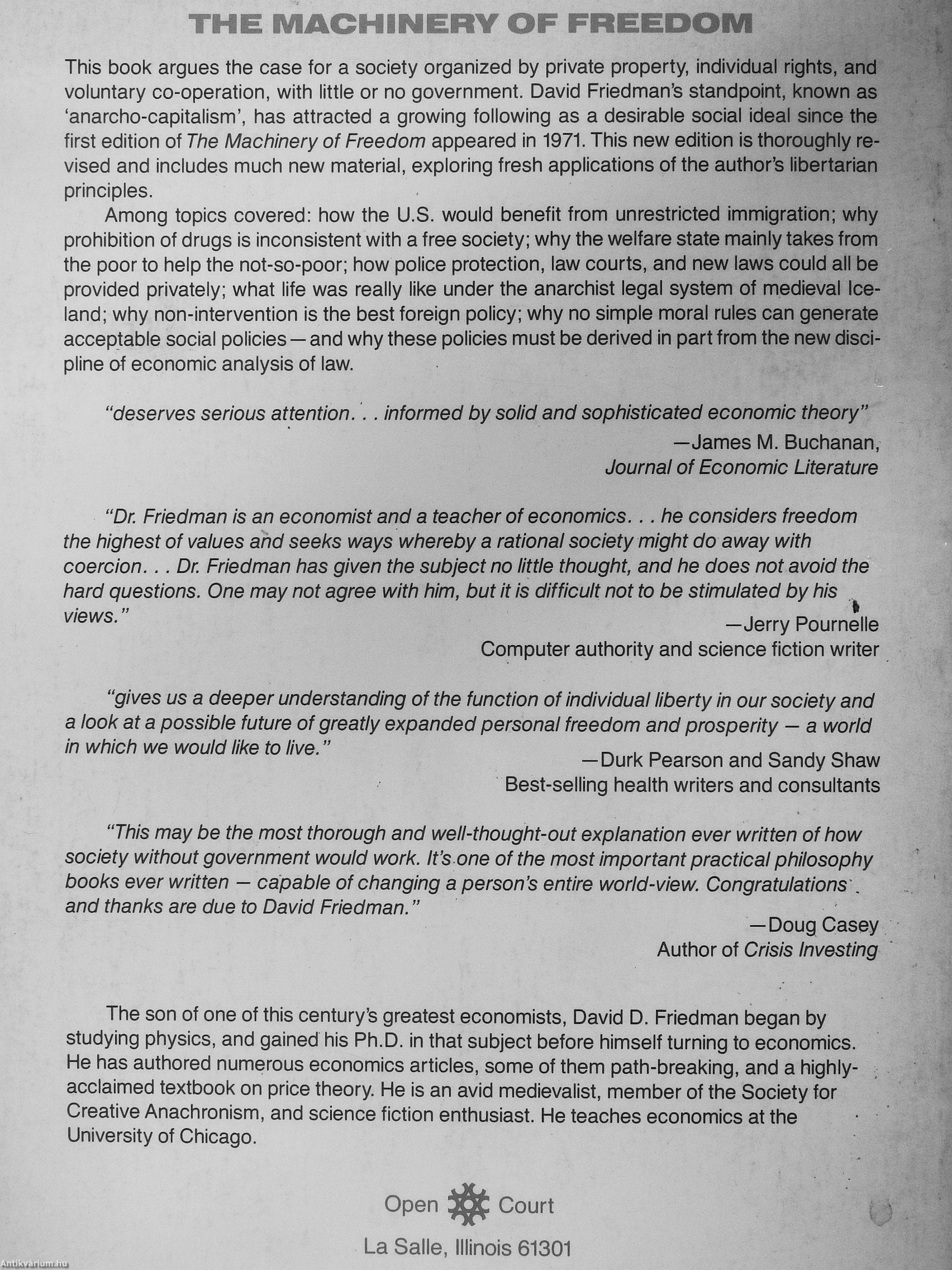
THE MACHINERY OF FREEDOM
This book argues the case for a society organized by private property, individual rights, and voluntary co-operation, with little or no government. David Friedman's standpoint, known as 'anarcho-capitalism', has attracted a growing following as a desirable social ideal since the first edition of The Machinery of Freedom appeared in 1971. This new edition is thoroughly revised and includes much new material, exploring fresh applications of the author's libertarian principles.
Among topics covered: how the U.S. would benefit from unrestricted immigration; why prohibition of drugs is inconsistent with a free society; why the welfare state mainly takes from the poor to help the not-so-poor; how police protection, law courts, and new laws could all be provided privately; what life was really like under the anarchist legal system of medieval Iceland; why non-intervention is the best foreign policy; why no simple moral rules can generate acceptable social policies — and why these policies must be derived in part from the new discipline of economic analysis of law.
"deserves serious attention informed by solid and sophisticated economic theory"
—James M. Buchanan, Journal of Economic Literature
"Dr. Friedman is an economist and a teacher of economics he considers freedom the highest of values and seeks ways whereby a rational society might do away with coercion Dr Friedman has given the subject no little thought, and he does not avoid the hard questions. One may not agree with him, but it Is difficult not to be stimulated by his
-Jerry Pournelle Computer authority and science fiction writer
"gives us a deeper understanding of the function of Individual liberty In our society and
a look at a possible future of greatly expanded personal freedom and prosperity - a world
in which we would like to live." , o o ^
— Durk Pearson and Sandy Shaw
Best-selling health writers and consultants
"This may be the most thorough and well-thought-out explanation ever written of how society without government would work. It's one of the most Important practical philosophy books ever written - capable of changing a person's entire world-view. Congratulations . and thanks are due to David Friedman."
— Doug Casey Author of Crisis Investing
The son of one of this century's greatest economists, David D. Friedman began by studying physics, and gained his Ph.D. in that subject before himself turning to economics. He has authored numerous economics articles, some of them path-breaking, and a highly-acclaimed textbook on price theory. He is an avid medievalist, member of the Society for Creative Anachronism, and science fiction enthusiast. He teaches economics at the University of Chicago.
Open ^^ Court La Salle, Illinois 61301
Vissza 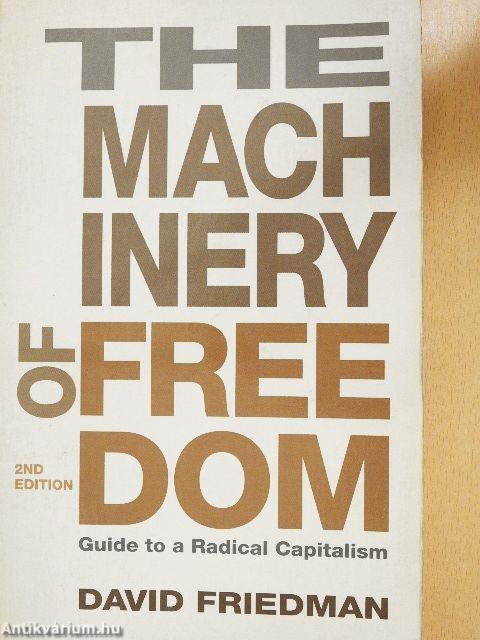



 Folytatás Microsoft-tal