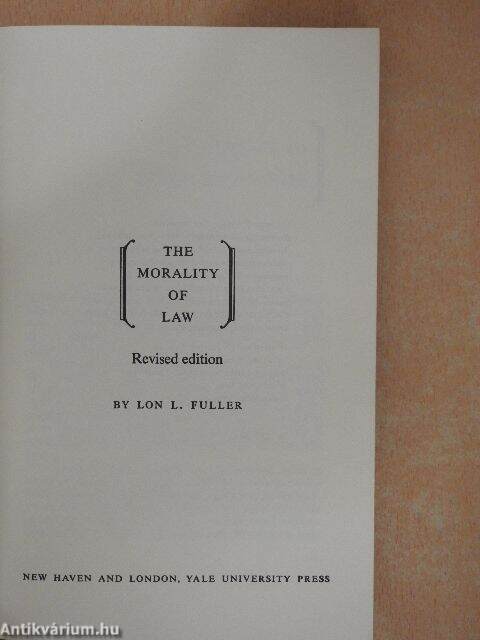
LAW
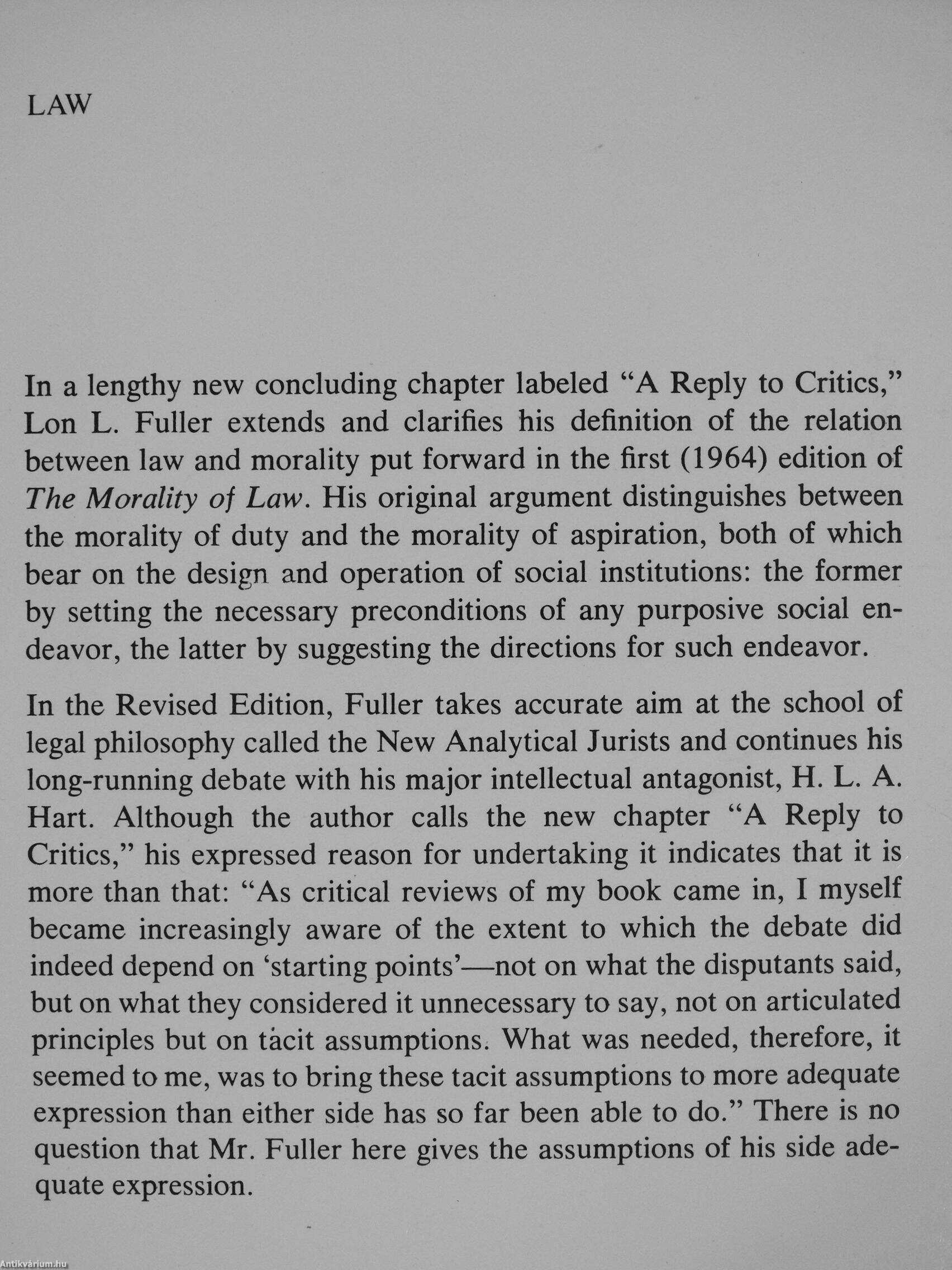
In a lengthy new concluding chapter labeled "A Reply to Critics," Lon L. Fuller extends and clarifies his definition of the relation between law and morality put forward in the first (1964) edition of The Morality of Law. His original argument distinguishes between the morality of duty and the morality of aspiration, both of which bear on the design and operation of social institutions: the former by setting the necessary preconditions of any purposive social endeavor, the latter by suggesting the directions for such endeavor.
In the Revised Edition, Fuller takes accurate aim at the school of legal philosophy called the New Analytical Jurists and continues his long-running debate with his major intellectual antagonist, H. L. A. Hart. Although the author calls the new chapter "A Reply to Critics," his expressed reason for undertaking it indicates that it is more than that: "As critical reviews of my book came in, I myself became increasingly aware of the extent to which the...
Tovább
Fülszöveg
LAW
In a lengthy new concluding chapter labeled "A Reply to Critics," Lon L. Fuller extends and clarifies his definition of the relation between law and morality put forward in the first (1964) edition of The Morality of Law. His original argument distinguishes between the morality of duty and the morality of aspiration, both of which bear on the design and operation of social institutions: the former by setting the necessary preconditions of any purposive social endeavor, the latter by suggesting the directions for such endeavor.
In the Revised Edition, Fuller takes accurate aim at the school of legal philosophy called the New Analytical Jurists and continues his long-running debate with his major intellectual antagonist, H. L. A. Hart. Although the author calls the new chapter "A Reply to Critics," his expressed reason for undertaking it indicates that it is more than that: "As critical reviews of my book came in, I myself became increasingly aware of the extent to which the debate did indeed depend on 'starting points'—not on what the disputants said, but on what they considered it unnecessary to say, not on articulated principles but on tacit assumptions. What was needed, therefore, it seemed to me, was to bring these tacit assumptions to more adequate expression than either side has so far been able to do." There is no question that Mr. Fuller here gives the assumptions of his side adequate expression.
Vissza
Google, Facebook, Apple, Microsoft fiókkal való belépés/regisztráció eseténautomatikusan elfogadja az Általános Szerződési Feltételeket.
Elfelejtett jelszó
Kérjük, adja meg azonosítóját, és a hozzá tartozó email címet, hogy jelszavát elküldhessük Önnek!
A *-gal jelölt mezők kitöltése kötelező!
Azonosító név/E-mail cím* Azonosító és e-mail cím megegyező
E-mail cím*
(2009 március óta a regisztrált ügyfelek azonosító neve megegyezik az email címmel)
Ha az azonosítóját sem tudja megadni, kérjük, hívja az ügyfélszolgálati vonalat:
+36-62-452-833
1
2
3
Regisztráció
Regisztráció
Regisztrációja sikeresen megtörtént.
Megadott e-mail címére megerősítő e-mailt küldtünk. Ahhoz, hogy a regisztrációja véglegesedjen, és le tudja adni rendeléseit, kérjük, kattintson a levélben található linkre. A megerősítő link a kiküldéstől számított 48 óráig érvényes, ezután a regisztrációs adatok törlésre kerülnek.
Kérjük, jelölje meg az érdeklődési körébe tartozó témaköröket!
Regisztráció
Az ön által megjelölt témakörök:
Temakor_1
Beállíthatja, hogy emailben értesítőt kapjon az újonnan beérkezett példányokról a bejelölt témaköröknek megfelelően.
Beállított értesítőit belépés után bármikor módosíthatja az Értesítő menüpont alatt:
létrehozhat új témaköri értesítőt
inaktiválhatja értesítőjét, ha éppen nem kíván a megadott témában értesítőt kapni
törölheti véglegesen az adott értesítőjét
szerkesztheti jelenlegi értesítőjét, ha még részletesebben szeretné megadni mi érdekli.
Az Ön választása alapján naponta vagy 3 naponta kap tőlünk emailt a beállított értesítőjéről.