
1.125.796
kiadvánnyal nyújtjuk Magyarország legnagyobb antikvár könyv-kínálatát

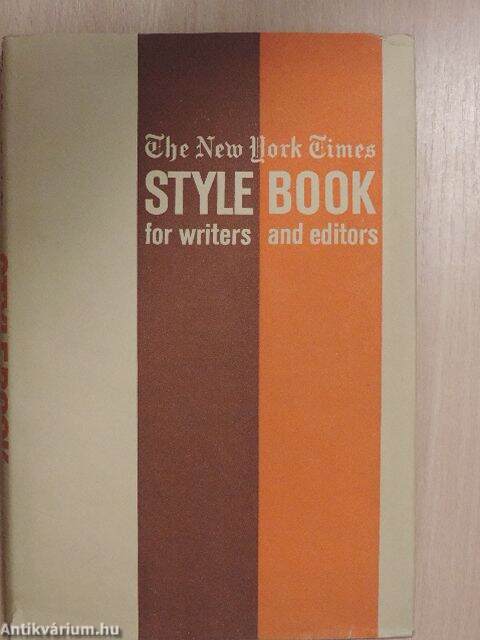
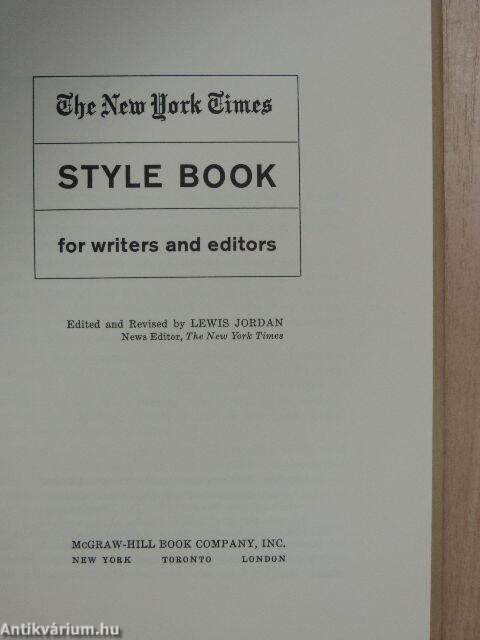
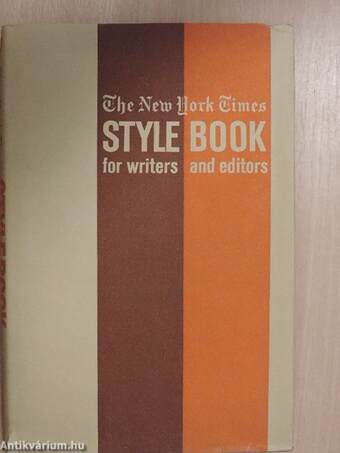
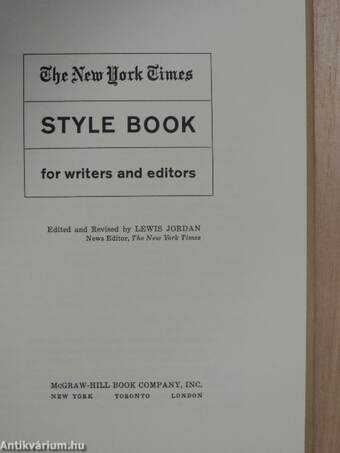
The New York Times Style Book for Writers and Editors
New York
| Kiadó: | McGraw-Hill Book Company, Inc. |
|---|---|
| Kiadás helye: | New York |
| Kiadás éve: | |
| Kötés típusa: | Fűzött keménykötés |
| Oldalszám: | 124 oldal |
| Sorozatcím: | |
| Kötetszám: | |
| Nyelv: | Angol |
| Méret: | 24 cm x 16 cm |
| ISBN: | |
Értesítőt kérek a kiadóról
A beállítást mentettük,
naponta értesítjük a beérkező friss
kiadványokról
naponta értesítjük a beérkező friss
kiadványokról
A beállítást mentettük,
naponta értesítjük a beérkező friss
kiadványokról
naponta értesítjük a beérkező friss
kiadványokról
Fülszöveg
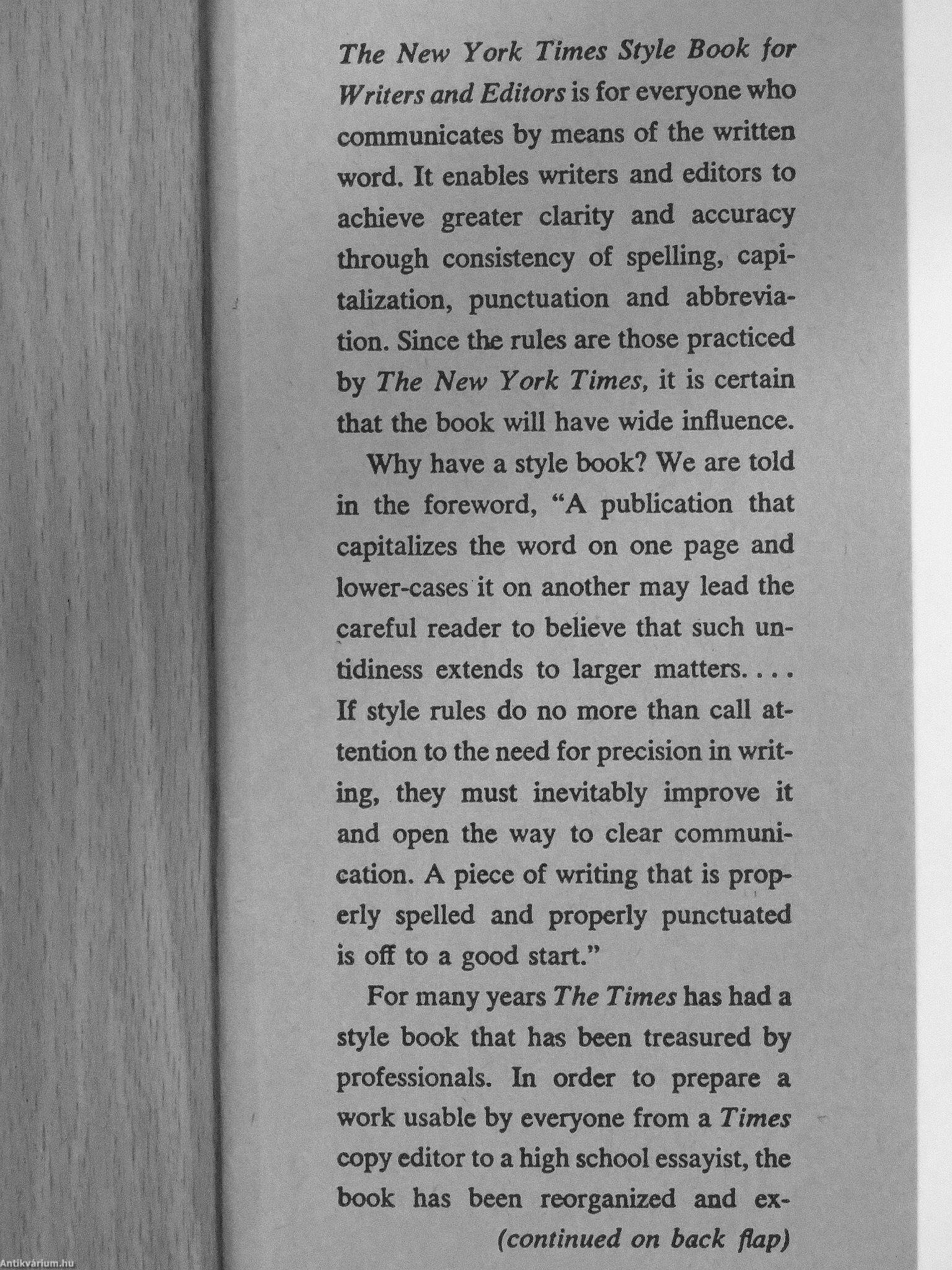
The New York Times Style Book for
Writers and Editors is for everyone who
communicates by means of the written
word. It enables writers and editors to
achieve greater clarity and accuracy
through consistency of spelling, capi-
talization, punctuation and abbrevia-
tion. Since the rules are those practiced
by The New York Times, it is certain
that the book will have wide influence.
Why have a style book? We are told
in the foreword, "A publication that
capitalizes the word on one page and
lower-cases it on another may lead the
careful reader to believe that such un-
tidiness extends to larger matters
If style rules do no more than call at-
tention to the need for precision in writ-
ing, they must inevitably improve it
and open the way to clear communi-
cation. A piece of writing that is prop-
erly spelled and properly punctuated
is off to a good start."
For many years The Times has had a
style book that has been treasured by
professionals. In order to... Tovább
Fülszöveg
The New York Times Style Book for
Writers and Editors is for everyone who
communicates by means of the written
word. It enables writers and editors to
achieve greater clarity and accuracy
through consistency of spelling, capi-
talization, punctuation and abbrevia-
tion. Since the rules are those practiced
by The New York Times, it is certain
that the book will have wide influence.
Why have a style book? We are told
in the foreword, "A publication that
capitalizes the word on one page and
lower-cases it on another may lead the
careful reader to believe that such un-
tidiness extends to larger matters
If style rules do no more than call at-
tention to the need for precision in writ-
ing, they must inevitably improve it
and open the way to clear communi-
cation. A piece of writing that is prop-
erly spelled and properly punctuated
is off to a good start."
For many years The Times has had a
style book that has been treasured by
professionals. In order to prepare a
work usable by everyone from a Times
copy editor to a high school essayist, the
book has been reorganized and ex-
(continued on back flap)
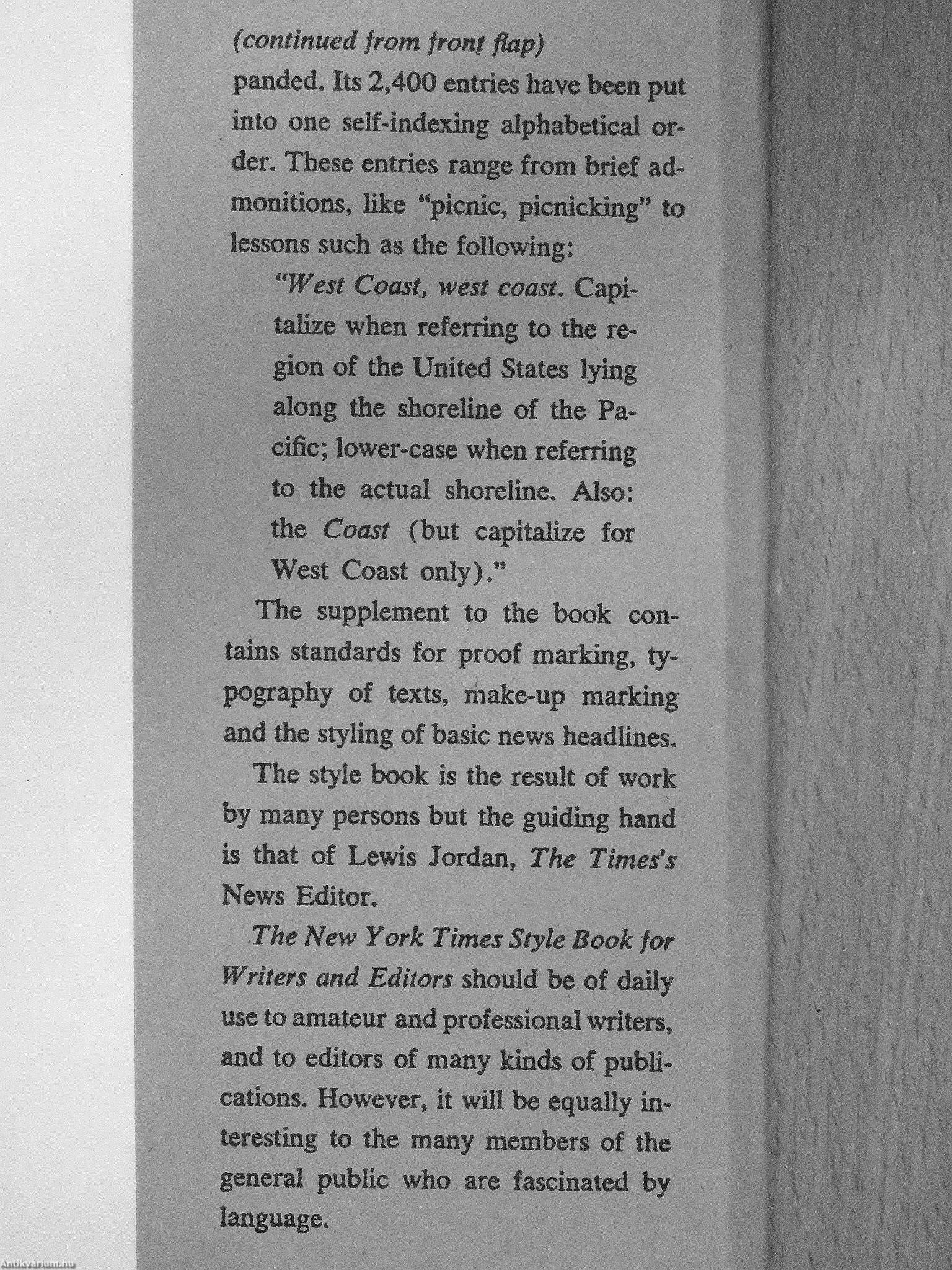
(continued from front flap)
panded. Its 2,400 entries have been put
into one self-indexing alphabetical or-
der. These entries range from brief ad-
monitions, like "picnic, picnicking" to
lessons such as the following:
"West Coast, west coast. Capi-
talize when referring to the re-
gion of the United States lying
along the shoreline of the Pa-
cific; lower-case when referring
to the actual shoreline. Also:
the Coast (but capitalize for
West Coast only)."
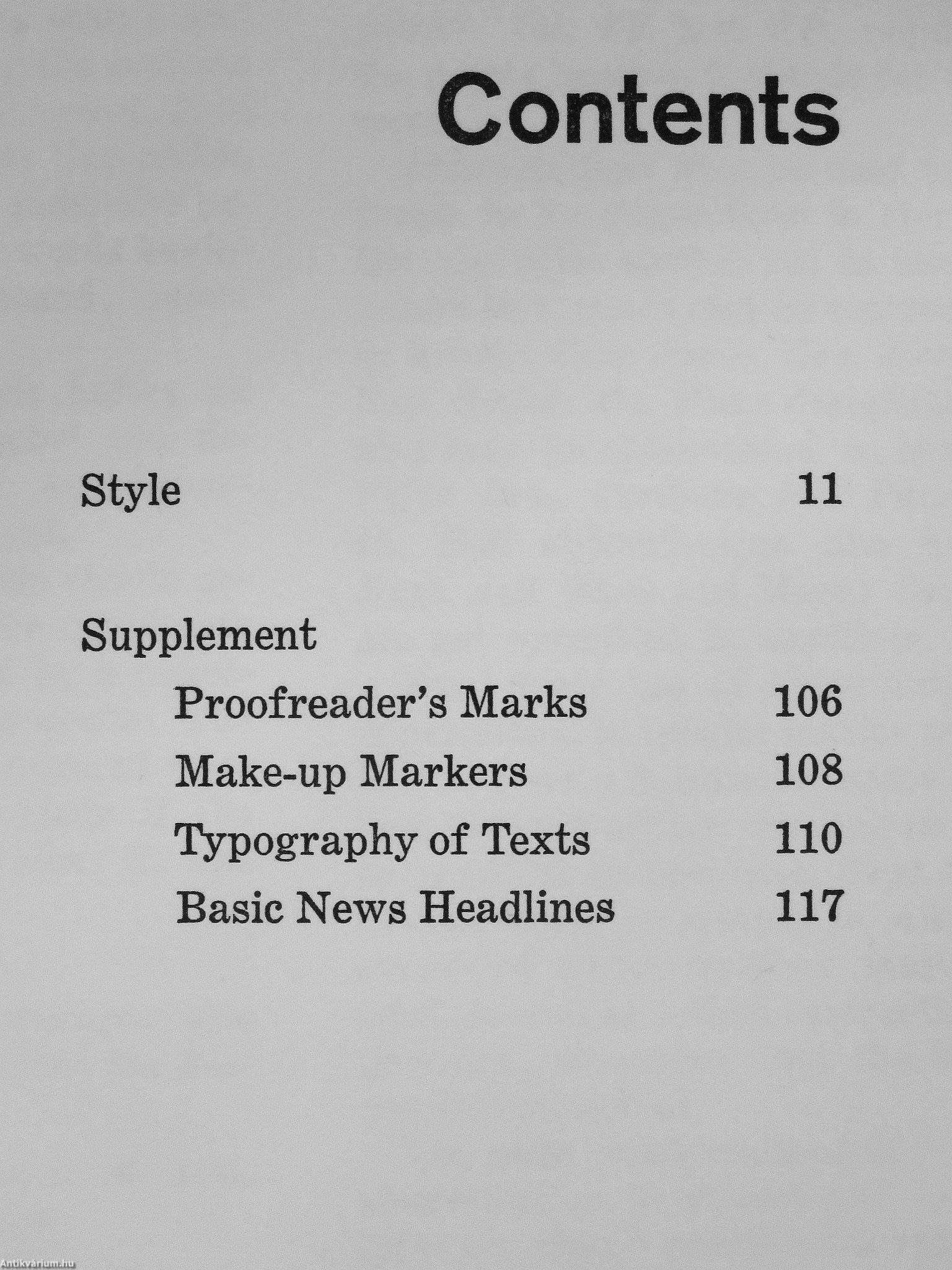
The supplement to the book con-
tains standards for proof marking, ty-
pography of texts, make-up marking
and the styling of basic news headlines.
The style book is the result of work
by many persons but the guiding hand
is that of Lewis Jordan, The Timers
News Editor,
The New York Times Style Book for
Writers and Editors should be of daily
use to amateur and professional writers,
and to editors of many kinds of publi-
cations. However, it will be equally in-
teresting to the many members of the
general public who are fascinated by
language. Vissza
Témakörök
- Művészetek > Rádió-TV-újságírás
- Idegennyelv > Idegennyelvű könyvek > Angol > Műszaki
- Idegennyelv > Idegennyelvű könyvek > Angol > Művészetek > Egyéb
- Idegennyelv > Idegennyelvű könyvek > Angol > Nyelvészet
- Nyelvészet > Kommunikáció > Írás > Egyéb
- Műszaki > Ipar > Könnyűipar > Nyomdaipar
- Idegennyelv > Idegennyelvű könyvek > Angol
- Műszaki > Idegennyelv > Angol
- Műszaki
Megvásárolható példányok
Állapotfotók
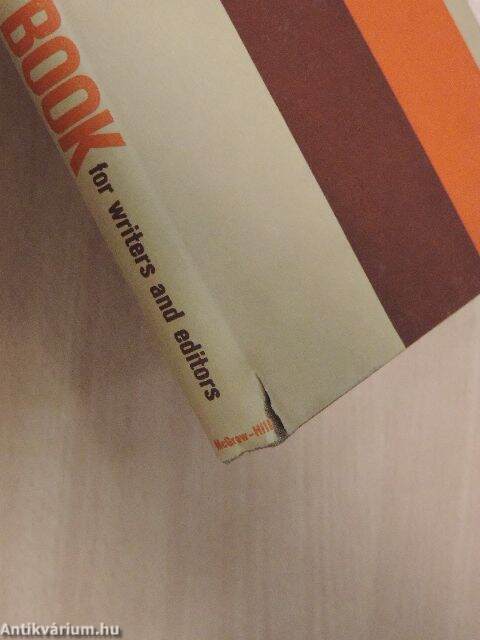
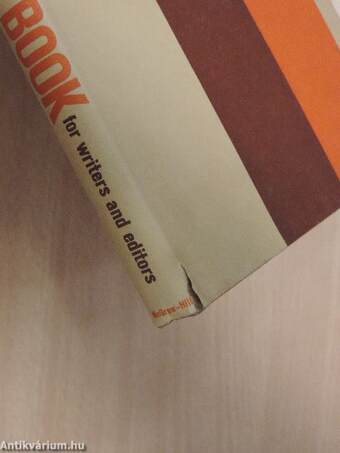
A védőborító enyhén szakadt.
Állapot:
Jó
3.640 Ft
1.820 ,-Ft 50
9
pont kapható
Kosárba
 Folytatás Microsoft-tal