Fülszöveg
"Will enthrall the hundreds of thousands of admirers of The Guns of August."—Clifton Fadiman, Book-of-the-Monlh Club Netvs
The fateful quarter-century leading up to the Great War comes magnificently to life in these pages. It was a time when the world of Privilege still existed in Olympian luxury and the world of Protest was "heaving in its pain, its power and its hate." The age was the climax of a century of the most accelerated rate of change in man's record, a cataclysmic shaping of destiny.
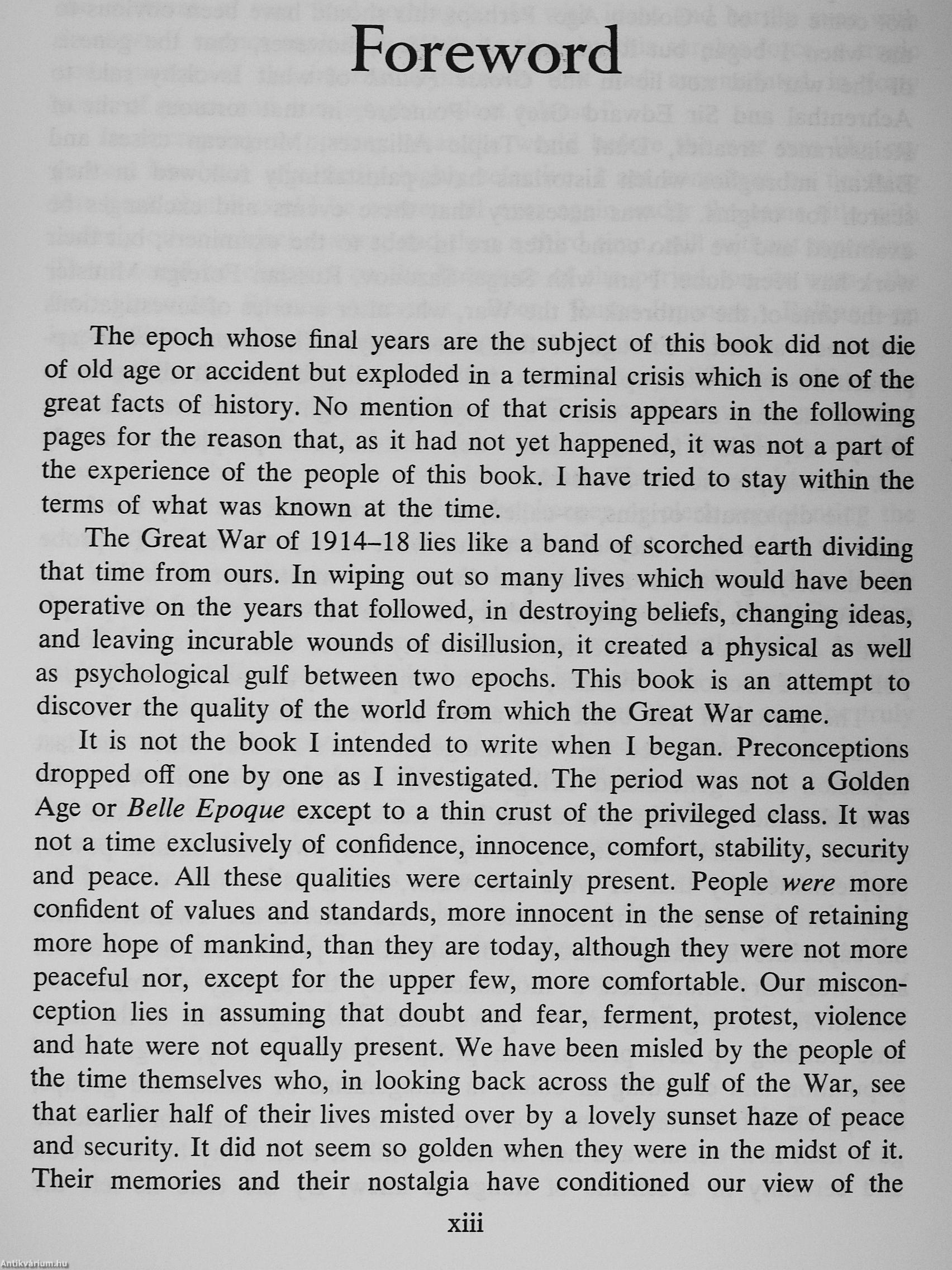
In portraying this world Barbara Tuchman concentrates on society rather than the state. Her aim, as she writes in her foreword, is "to discover the quality of the world from which the Great War came. . . . The diplomatic origins, so-called, of the War are only the fever chart of the patient; they do not tell us what caused the fever. To probe for underlying causes and deeper forces one must operate within the framework of a whole society and try to discover what moved the people in it. ....
Tovább
Fülszöveg
"Will enthrall the hundreds of thousands of admirers of The Guns of August."—Clifton Fadiman, Book-of-the-Monlh Club Netvs
The fateful quarter-century leading up to the Great War comes magnificently to life in these pages. It was a time when the world of Privilege still existed in Olympian luxury and the world of Protest was "heaving in its pain, its power and its hate." The age was the climax of a century of the most accelerated rate of change in man's record, a cataclysmic shaping of destiny.
In portraying this world Barbara Tuchman concentrates on society rather than the state. Her aim, as she writes in her foreword, is "to discover the quality of the world from which the Great War came. . . . The diplomatic origins, so-called, of the War are only the fever chart of the patient; they do not tell us what caused the fever. To probe for underlying causes and deeper forces one must operate within the framework of a whole society and try to discover what moved the people in it. . . ."
With an artist's selectivity she has chosen the movers and shakers of their era—the men, movements and crucial moments. Among these are the Edwardian patricians who were the last fully functioning aristocracy to govern in the Western world; the Anarchists of Europe and America whose practice of the Deed of Terror voiced the protest of the oppressed; the United States at a historical
(continued on back flap)
(continued from front flap)
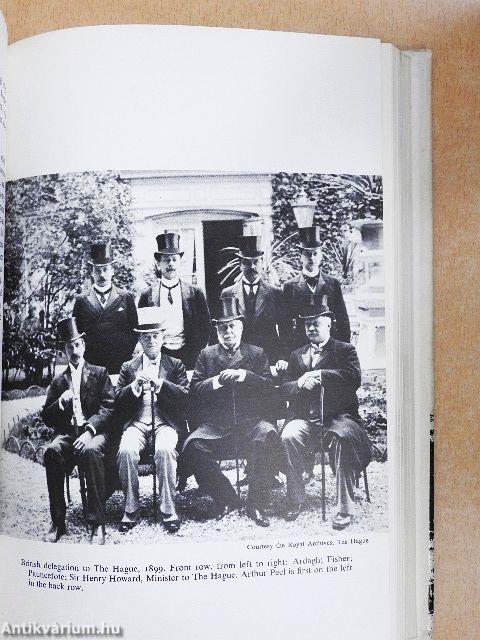
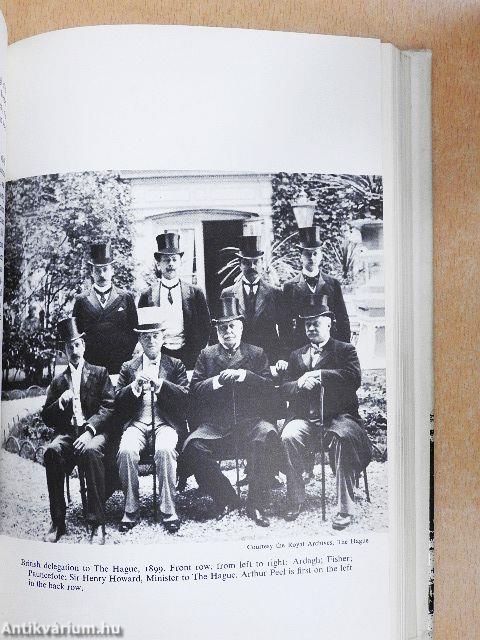
turning point when she took the path toward world power, revealed through two extraordinary figures, "Czar" Reed and Admiral Mahan; France ravaged by the Dreyfus Affair when all the moral (and immoral) passions of a nation were absorbed in a single issue; the two Peace Conferences at The Hague haunted by an awful fear of the power of new weapons; Germany portrayed through the figure of the self-depicted Hero, Richard Strauss, pre-eminent composer of his age; the sudden gorgeous blaze of Diaghilev's Russian Ballet and Stravinsky's music, symbols of the simultaneous creative surge in all the arts; the "strangely violent quarrels" of the Liberal era in England when the old belief in Progress slowly yielded to a new Pessimism; and, finally, the youth, the great ideals, the enthusiasm and the tragedy of Socialism, epitomized in the moment when the heroic Jean Jaures was shot to death on the night the War began and an epoch ended.
The Guns of August, winner of the Pulitzer Prize for General Non-Fiction for 1962, has achieved the status of a classic. The Proud Tower is a work of even greater dimension, infinitely readable, a masterpiece of the historian's art.
THE MACMILLAN COMPANY
60 fifth avenue, new york, n.y. i go i i
M
I
Vissza 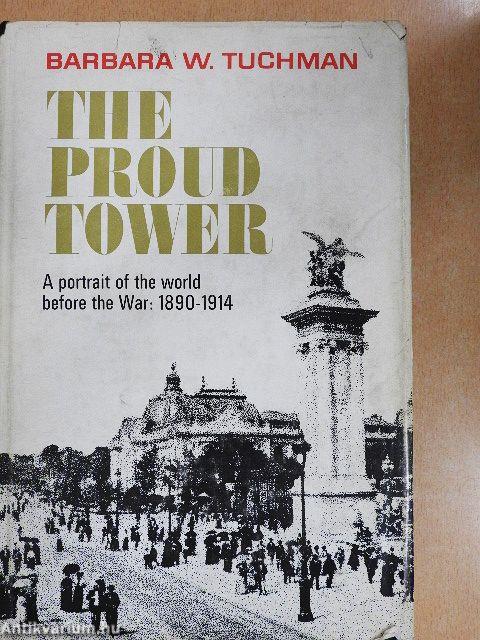


 Folytatás Microsoft-tal