Fülszöveg
Ernő Lendvai was born in 1925, in Hungary. From 1949-1957 he was the director of the Szombathely and Győr Conservatoire, and professor at the Liszt Academy in Budapest. Between 1960-1965 he was recording director of the Hungarian Radio and Television, later senior member in the Institute for Culture, Budapest. His wife is the well-known pianist, Erzsébet Tusa who was the soloist in the posthumous world premiere in 1962 of Bartók's Scherzo for piano and orchestra, op.2.
Lendvai's standard work on Bartók's music was published in seven languages and 17 editions by Boosey and Hawkes Paris, Bärenreiter Basel, Stenmore Press London, RAI Rome, Ze Non Tokyo, Bra-ziller New York, Studio Vista London, La Connaissance Brüssel, Corvina Budapest. Among his other works are books on Kodály, Toscanini, Beethoven and Verdi.
Theoretical methods show their value in that, like keys, they help to unlock hitherto unintelligible connections. Lendvai discovered the fact that Bartók's music is rooted in...
Tovább
Fülszöveg
Ernő Lendvai was born in 1925, in Hungary. From 1949-1957 he was the director of the Szombathely and Győr Conservatoire, and professor at the Liszt Academy in Budapest. Between 1960-1965 he was recording director of the Hungarian Radio and Television, later senior member in the Institute for Culture, Budapest. His wife is the well-known pianist, Erzsébet Tusa who was the soloist in the posthumous world premiere in 1962 of Bartók's Scherzo for piano and orchestra, op.2.
Lendvai's standard work on Bartók's music was published in seven languages and 17 editions by Boosey and Hawkes Paris, Bärenreiter Basel, Stenmore Press London, RAI Rome, Ze Non Tokyo, Bra-ziller New York, Studio Vista London, La Connaissance Brüssel, Corvina Budapest. Among his other works are books on Kodály, Toscanini, Beethoven and Verdi.
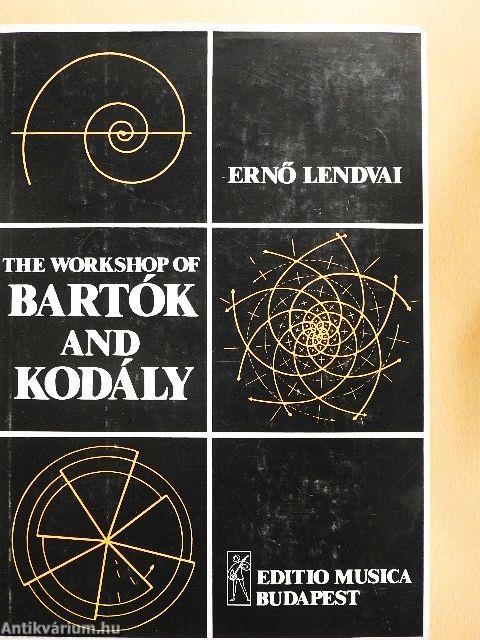
Theoretical methods show their value in that, like keys, they help to unlock hitherto unintelligible connections. Lendvai discovered the fact that Bartók's music is rooted in nature: he developed a system of integrating every aspect of the composition — form, rhythm and proportions, together with melodic and harmonic structures.
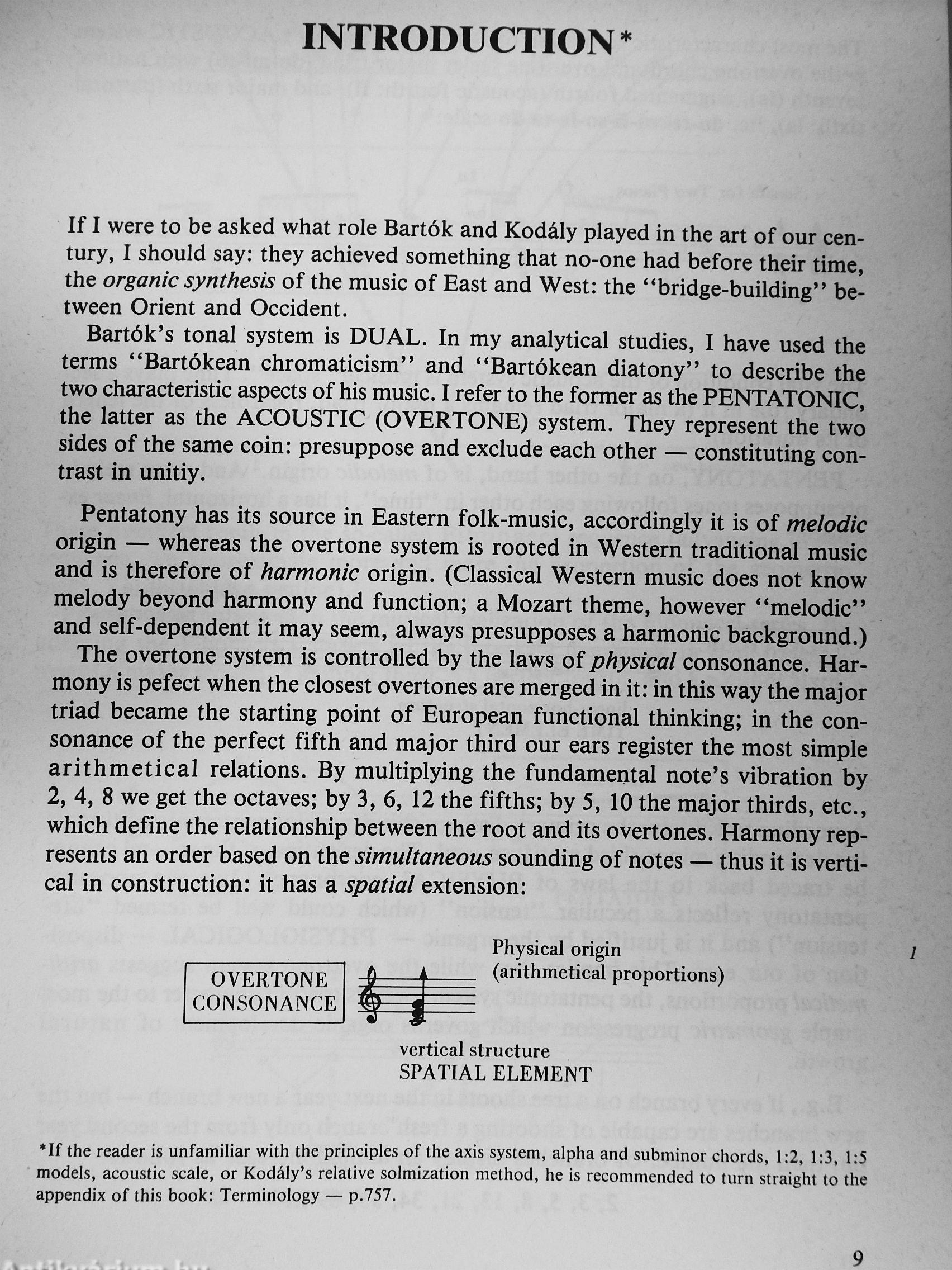
"Polymodal chromaticism", this is how Bartók himself termed his own style. The author had in mind the goal of systematizing the phenomena within the scope of polymodal chromaticism, and giving into the hands of the reader a practical method for comprehensive analysis of Bartók's music.
Lendvai discloses that at the time of composing his "Music for Strings, Percussion and Celesta", Bartók was acquainted with principles which the pioneers of modern stereo recordings — sonic stage — did not begin to develop until the early sixties
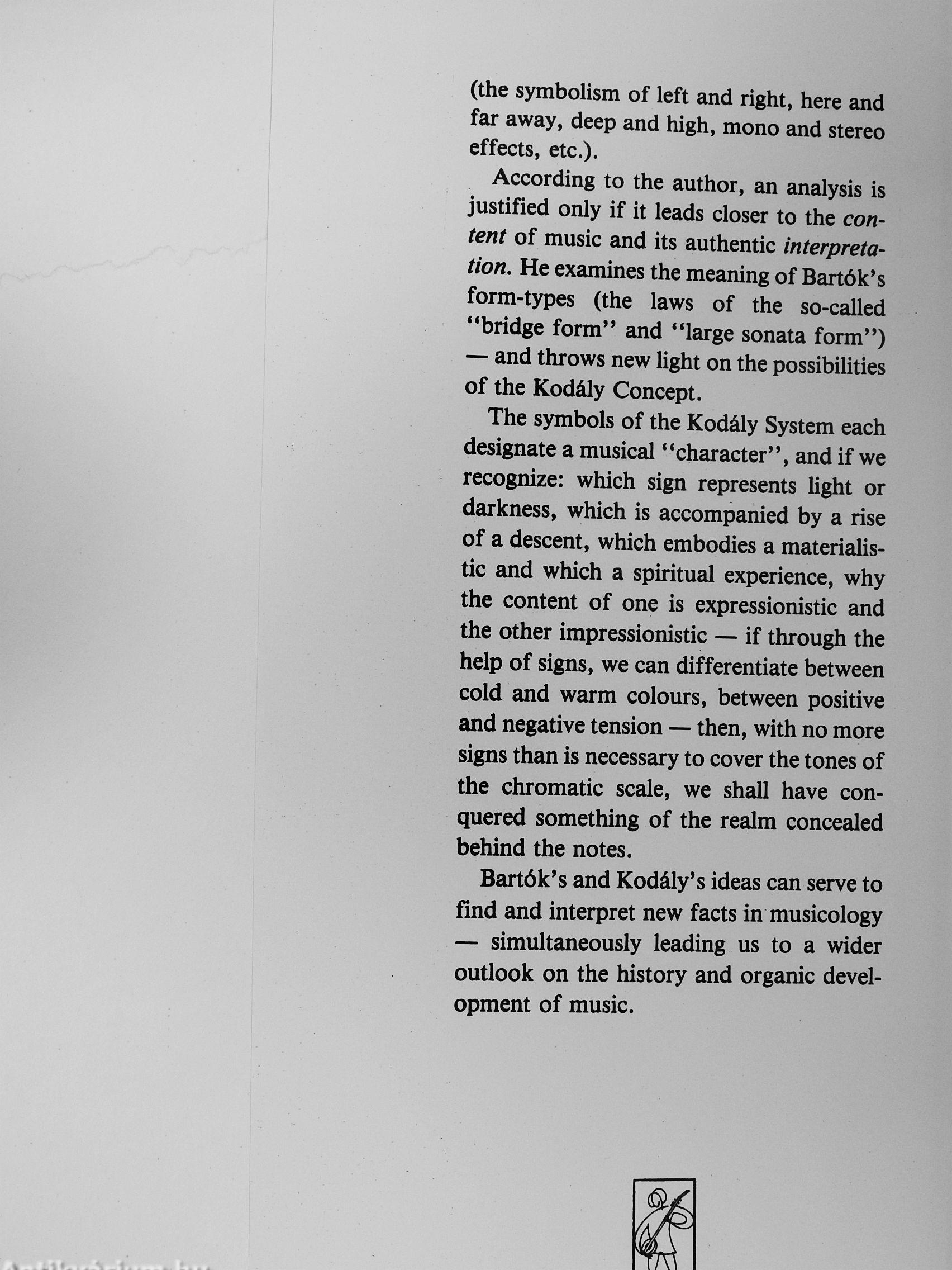
(the symbolism of left and right, here and far away, deep and high, mono and stereo effects, etc.).
According to the author, an analysis is justified only if it leads closer to the content of music and its authentic interpretation. He examines the meaning of Bartók's form-types (the laws of the so-called "bridge form" and "large sonata form")
— and throws new light on the possibilities of the Kodály Concept.
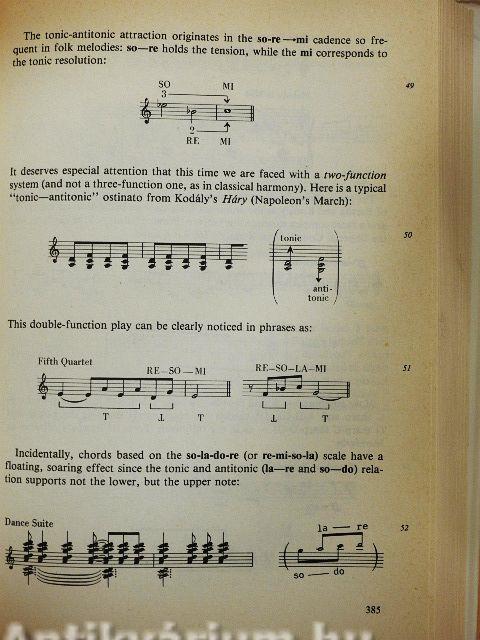
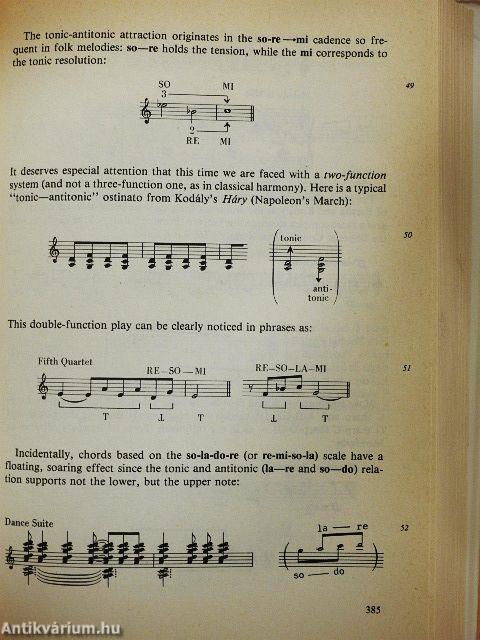
The symbols of the Kodály System each designate a musical "character", and if we recognize: which sign represents light or darkness, which is accompanied by a rise of a descent, which embodies a materialistic and which a spiritual experience, why the content of one is expressionistic and the other impressionistic — if through the help of signs, we can differentiate between cold and warm colours, between positive and negative tension — then, with no more signs than is necessary to cover the tones of the chromatic scale, we shall have conquered something of the realm concealed behind the notes.
Bartók's and Kodály's ideas can serve to find and interpret new facts in musicology
— simultaneously leading us to a wider outlook on the history and organic development of music.
Vissza 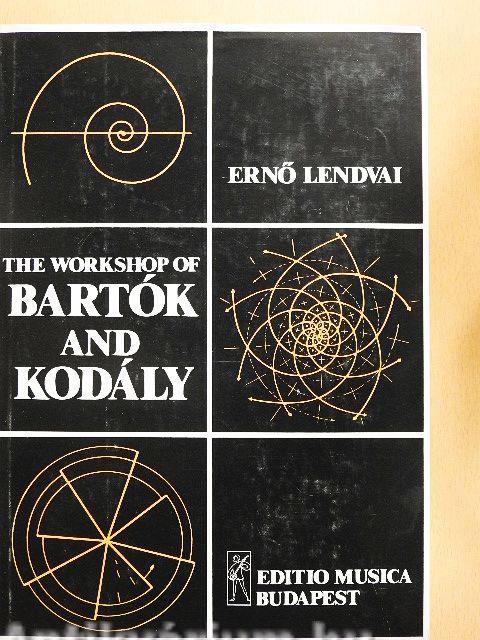






 Folytatás Microsoft-tal