
1.156.224
kiadvánnyal nyújtjuk Magyarország legnagyobb antikvár könyv-kínálatát

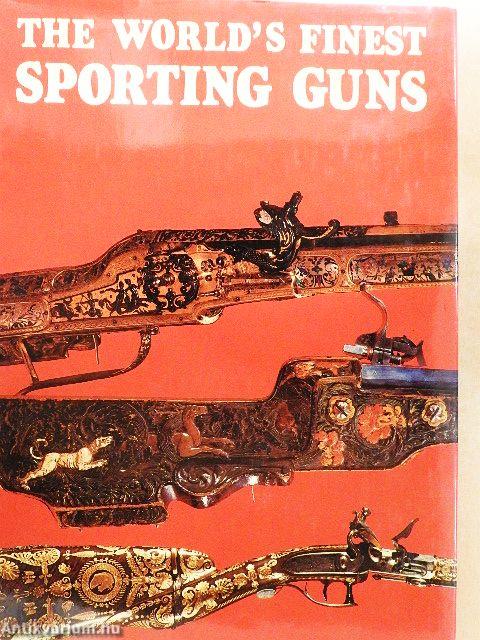
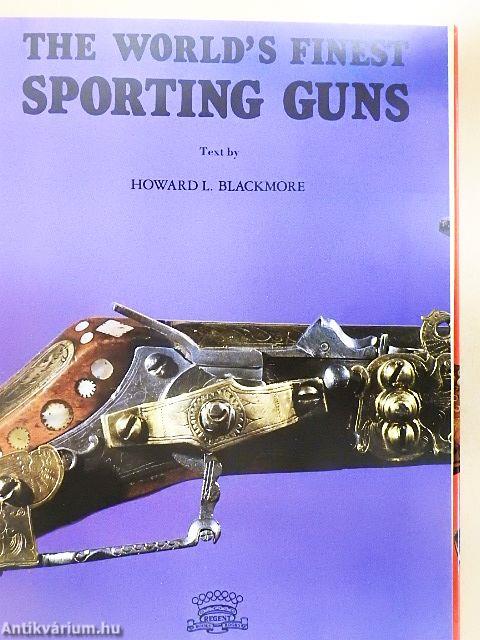
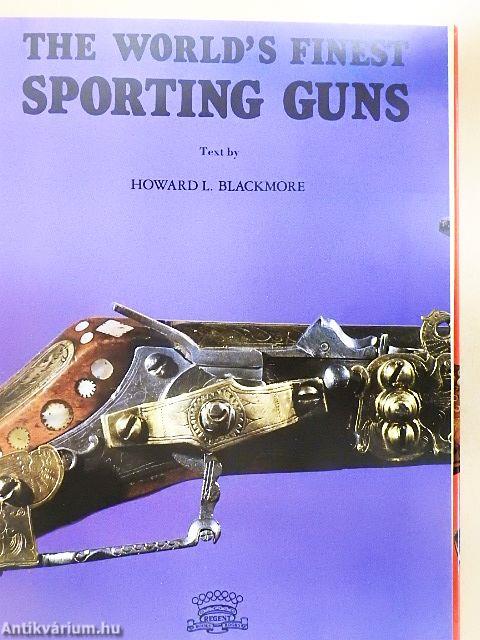
The World's Finest Sporting Guns
London
| Kiadó: | Regent Books |
|---|---|
| Kiadás helye: | London |
| Kiadás éve: | |
| Kötés típusa: | Fűzött keménykötés |
| Oldalszám: | 87 oldal |
| Sorozatcím: | |
| Kötetszám: | |
| Nyelv: | Angol |
| Méret: | 33 cm x 24 cm |
| ISBN: | |
| Megjegyzés: | Színes fotókkal. |
Értesítőt kérek a kiadóról
A beállítást mentettük,
naponta értesítjük a beérkező friss
kiadványokról
naponta értesítjük a beérkező friss
kiadványokról
A beállítást mentettük,
naponta értesítjük a beérkező friss
kiadványokról
naponta értesítjük a beérkező friss
kiadványokról
Előszó
Tovább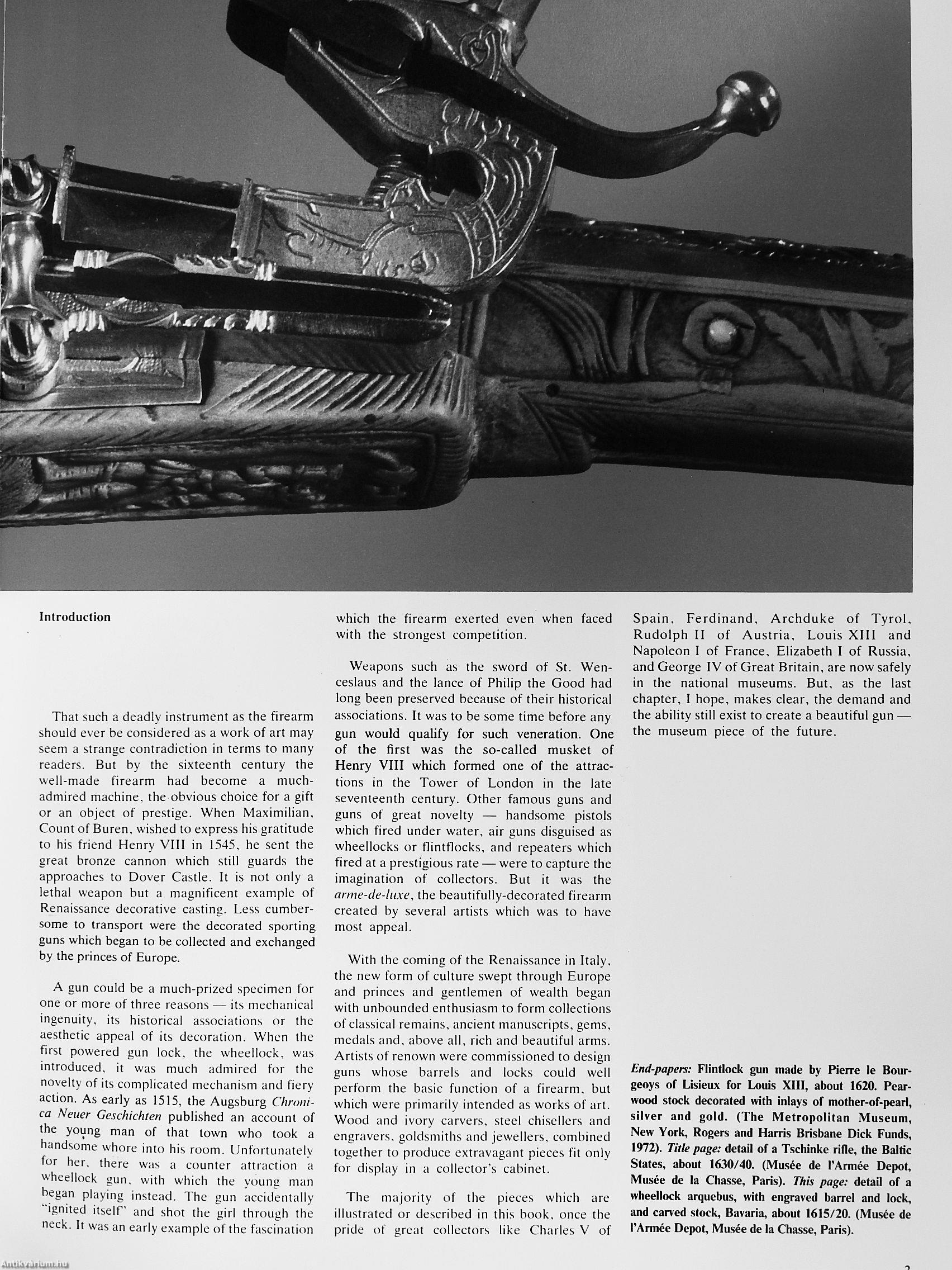
Fülszöveg
THE WORLD'S FINIST
SPORTING GUNS
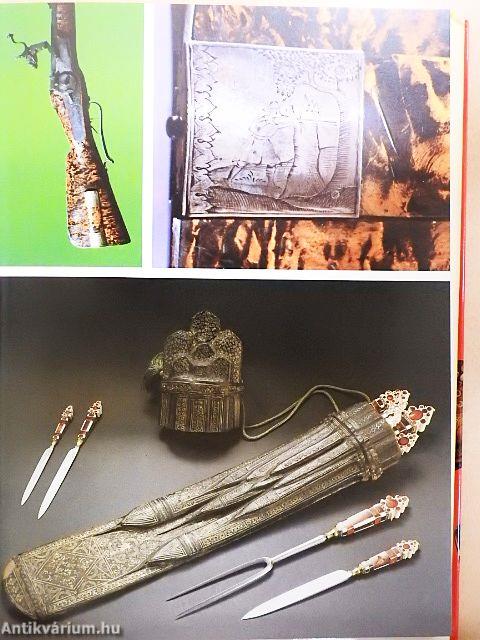
That such a deadly Instrument as the firearm should ever be considered as a work of art may seem a strange contradiction in terms to many readers. But by the sixteenth century the well-made firearm had become a much-admired machine, the obvious choice foragift or an object of prestige. When Maximilian, Count of Buren, wished to express his gratitude to his friend Henry VIII in 1 545, he sent the great bronze cannon which still guards the approaches to Dover Castle. It is not only a lethal weapon but a magnificent example of Renaissance decorative casting. Less cumbersome to transport were the decorated sporting guns which began to be collected an exchanged by the princes of Europe.
A gun could be a much-prized specimen for one or more of three reasons - its mechanical ingenuity, its historical associations or the aesthetic appeal of its decoration. When the first powered gun lock, the wheellock, was introduced, it was much admired for the... Tovább
Fülszöveg
THE WORLD'S FINIST
SPORTING GUNS
That such a deadly Instrument as the firearm should ever be considered as a work of art may seem a strange contradiction in terms to many readers. But by the sixteenth century the well-made firearm had become a much-admired machine, the obvious choice foragift or an object of prestige. When Maximilian, Count of Buren, wished to express his gratitude to his friend Henry VIII in 1 545, he sent the great bronze cannon which still guards the approaches to Dover Castle. It is not only a lethal weapon but a magnificent example of Renaissance decorative casting. Less cumbersome to transport were the decorated sporting guns which began to be collected an exchanged by the princes of Europe.
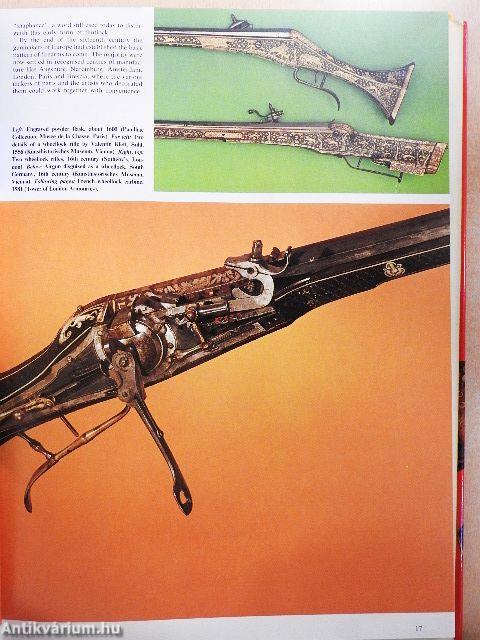
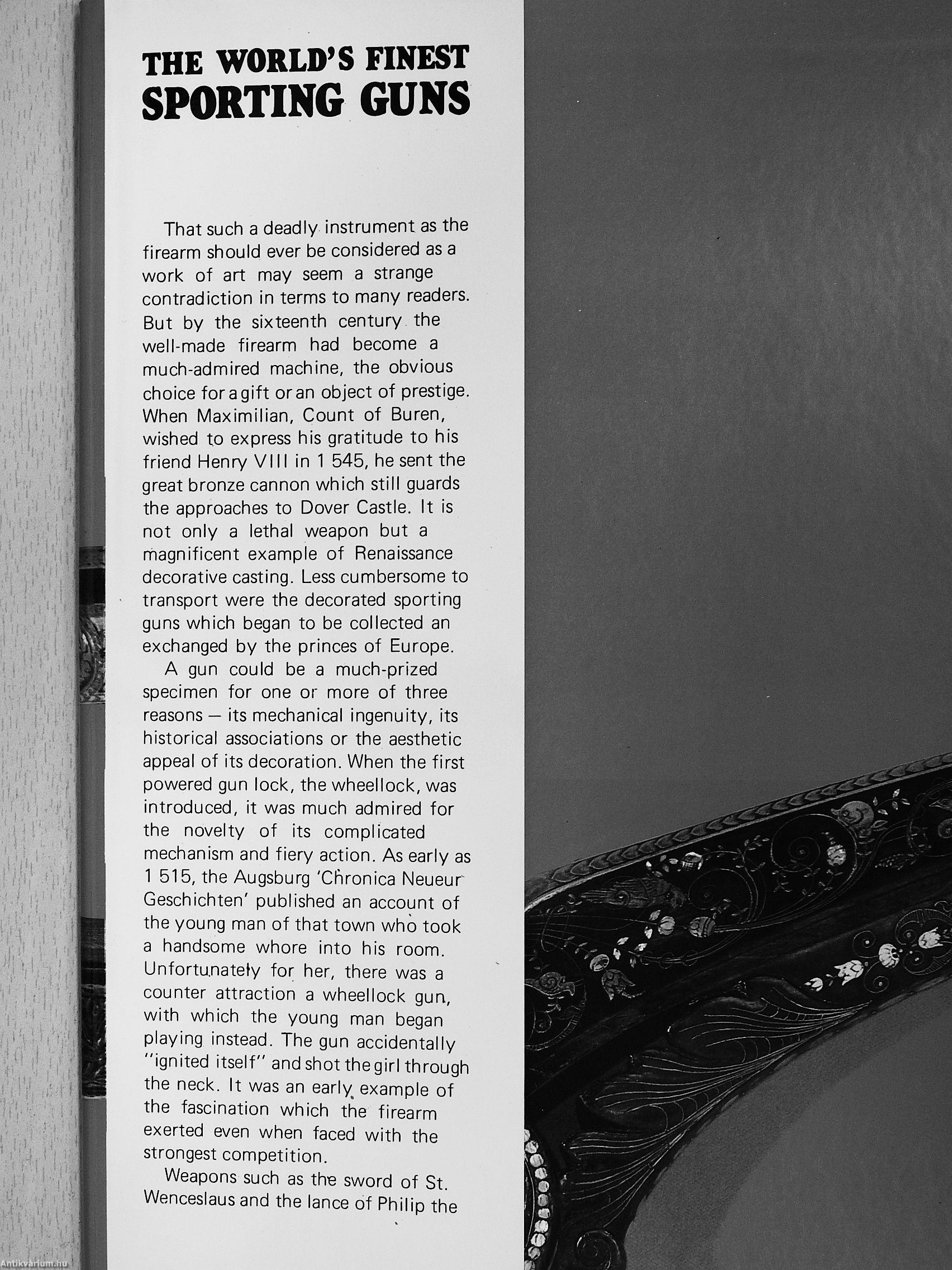
A gun could be a much-prized specimen for one or more of three reasons - its mechanical ingenuity, its historical associations or the aesthetic appeal of its decoration. When the first powered gun lock, the wheellock, was introduced, it was much admired for the novelty of its complicated mechanism and fiery action. As early as 1 515, the Augsburg 'Chronica Neueur Geschichten' published an account of the young man of that town who took a handsome whore into his room. Unfortunately for her, there was a counter attraction a wheellock gun, with which the young man began playing instead. The gun accidentally "ignited itself" and shot the girl through the neck. It was an early example of the fascination which the firearm exerted even when faced with the strongest competition.
Weapons such as the sword of St Wenceslaus and the lance of Philip the
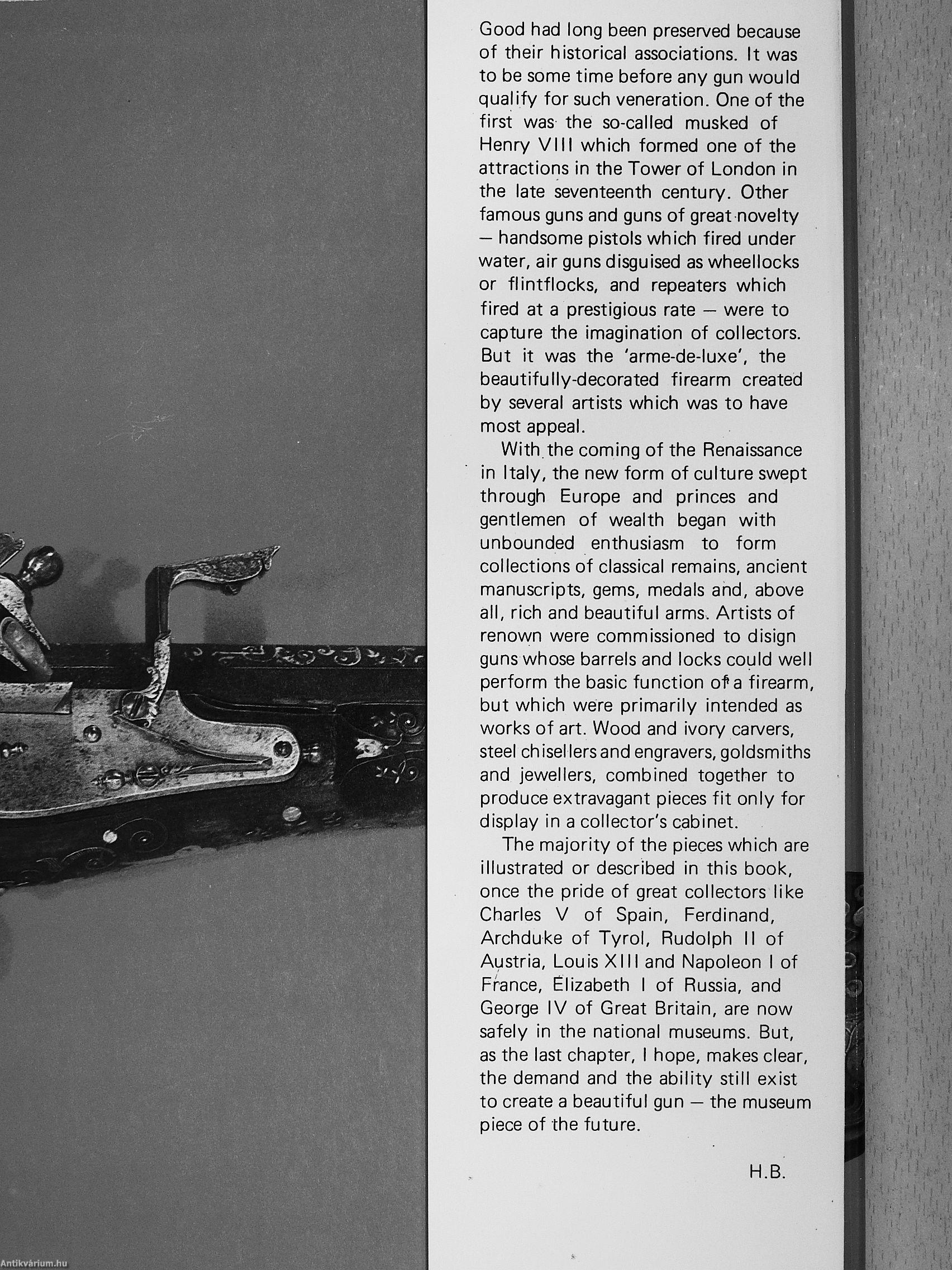
Good had long been preserved because of their historical associations. It was to be some time before any gun would qualify for such veneration. One of the first was the so-called musked of Henry VIII which formed one of the attractions in the Tower of London in the late seventeenth century. Other famous guns and guns of great novelty — handsome pistols which fired under water, air guns disguised as wheellocks or flintflocks, and repeaters which fired at a prestigious rate - were to capture the imagination of collectors. But it was the 'arme-de-luxe', the beautifully-decorated firearm created by several artists which was to have most appeal.
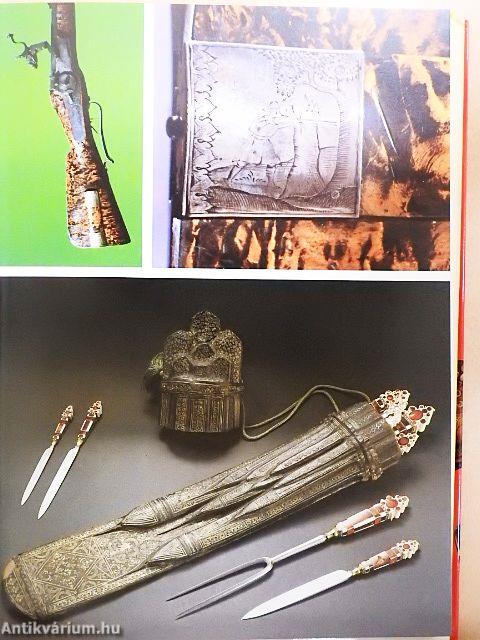
With the coming of the Renaissance in Italy, the new form of culture swept through Europe and princes and gentlemen of wealth began with unbounded enthusiasm to form collections of classical remains, ancient manuscripts, gems, medals and, above all, rich and beautiful arms. Artists of renown were commissioned to disign guns whose barrels and locks could well perform the basic function of a firearm, but which were primarily intended as works of art. Wood and ivory carvers, steel ch!sellersand engravers, goldsmiths and jewellers, combined together to produce extravagant pieces fit only for display in a collector's cabinet.
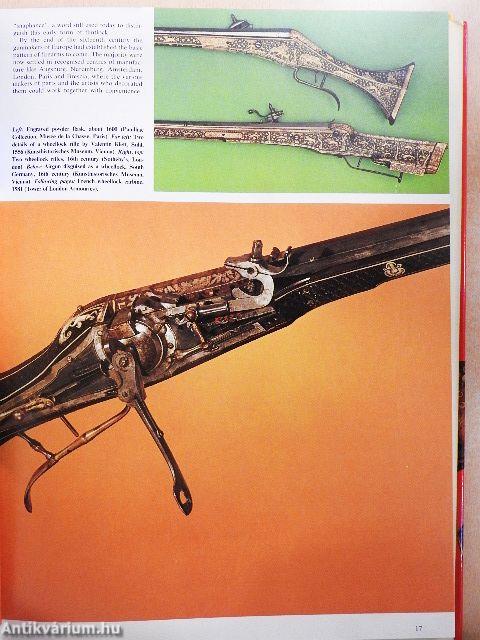
The majority of the pieces which are illustrated or described in this book, once the pride of great collectors like Charles V of Spain, Ferdinand, Archduke of Tyrol, Rudolph II of Austria, Louis XIII and Napoleon I of France, Elizabeth I of Russia, and George IV of Great Britain, are now safely in the national museums. But, as the last chapter, I hope, makes clear, the demand and the ability still exist to create a beautiful gun — the museum piece of the future.
H.B. Vissza
Témakörök
- Idegennyelv > Idegennyelvű könyvek > Angol > Műszaki
- Idegennyelv > Idegennyelvű könyvek > Angol > Művészetek > Iparművészet
- Idegennyelv > Idegennyelvű könyvek > Angol > Vadászat
- Vadászat > Vadászati ismeretek > Fegyverek, felszerelések
- Vadászat > Idegen nyelvű
- Sport > Egyéb sportágak > Lövészet
- Művészetek > Iparművészet > Idegen nyelv > Angol
- Művészetek > Iparművészet > Fém-, ötvösművészet > Fegyverek
- Idegennyelv > Idegennyelvű könyvek > Angol > Sport > Egyéb
- Műszaki > Idegennyelv > Angol
- Műszaki > Hadászat, hadtörténet

Howad L. Blackmore
Howad L. Blackmore műveinek az Antikvarium.hu-n kapható vagy előjegyezhető listáját itt tekintheti meg: Howad L. Blackmore könyvek, művekMegvásárolható példányok
Nincs megvásárolható példány
A könyv összes megrendelhető példánya elfogyott. Ha kívánja, előjegyezheti a könyvet, és amint a könyv egy újabb példánya elérhető lesz, értesítjük.
 Folytatás Microsoft-tal