
1.149.872
kiadvánnyal nyújtjuk Magyarország legnagyobb antikvár könyv-kínálatát

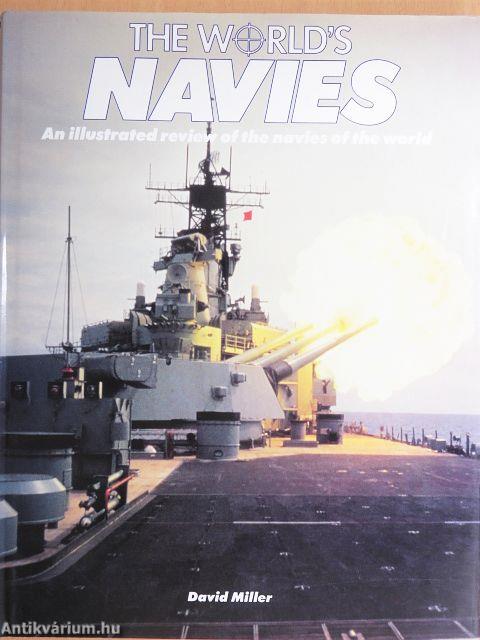
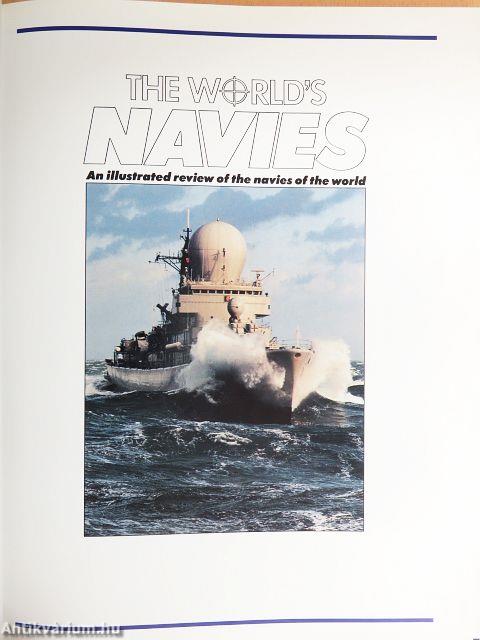
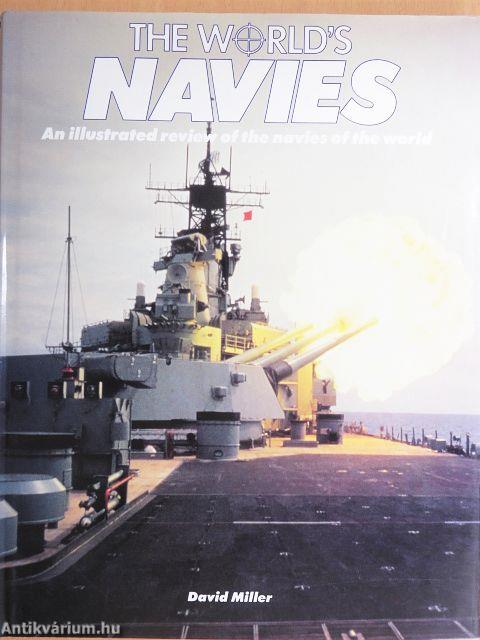
The World's Navies
An illustrated review of the navies of the world
London
| Kiadó: | Salamander Books Limited |
|---|---|
| Kiadás helye: | London |
| Kiadás éve: | |
| Kötés típusa: | Fűzött keménykötés |
| Oldalszám: | 144 oldal |
| Sorozatcím: | |
| Kötetszám: | |
| Nyelv: | Angol |
| Méret: | 34 cm x 26 cm |
| ISBN: | 0-86101-642-4 |
| Megjegyzés: | Színes fotókkal. |
Értesítőt kérek a kiadóról
A beállítást mentettük,
naponta értesítjük a beérkező friss
kiadványokról
naponta értesítjük a beérkező friss
kiadványokról
A beállítást mentettük,
naponta értesítjük a beérkező friss
kiadványokról
naponta értesítjük a beérkező friss
kiadványokról
Előszó
Tovább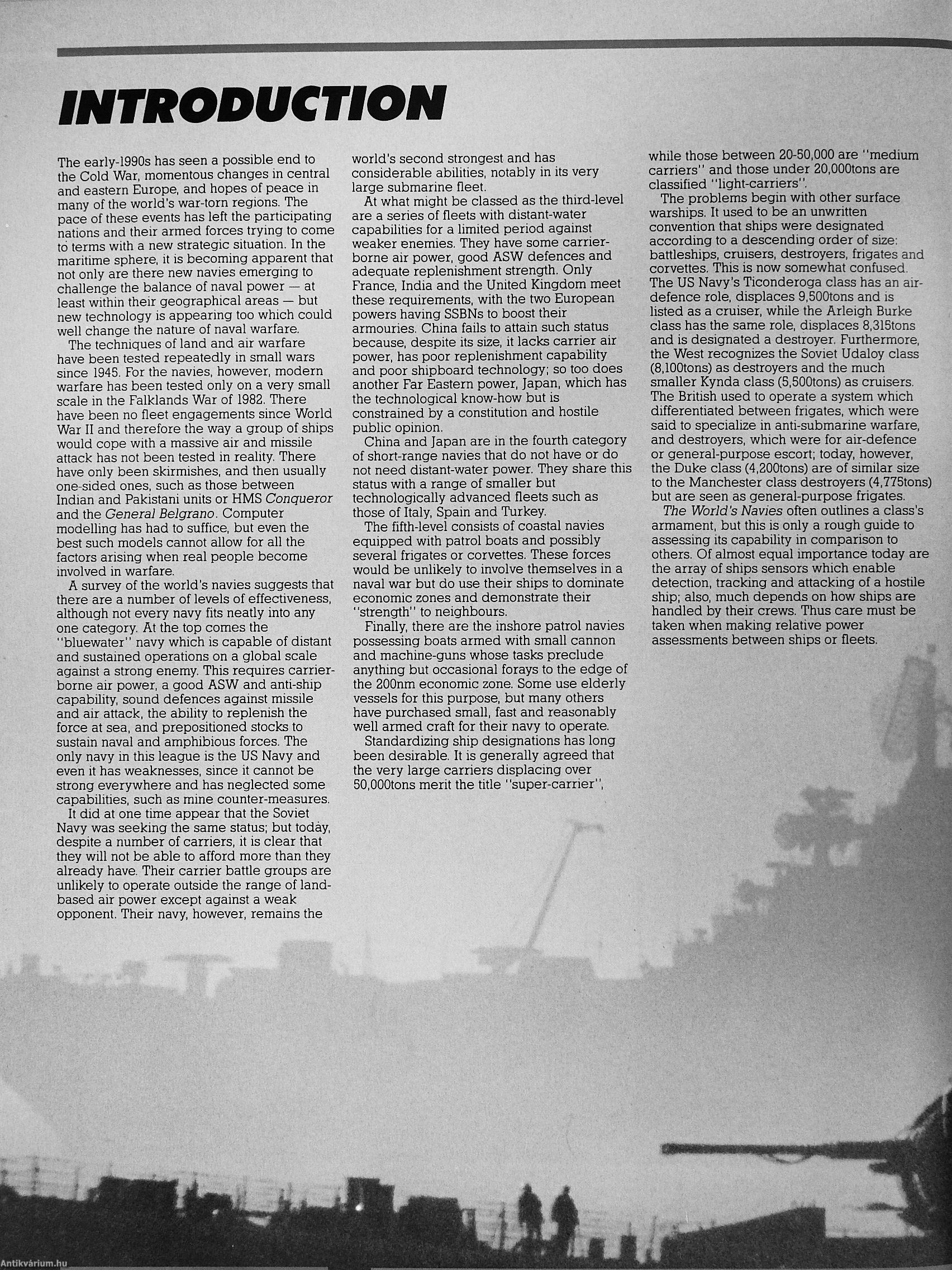
Fülszöveg
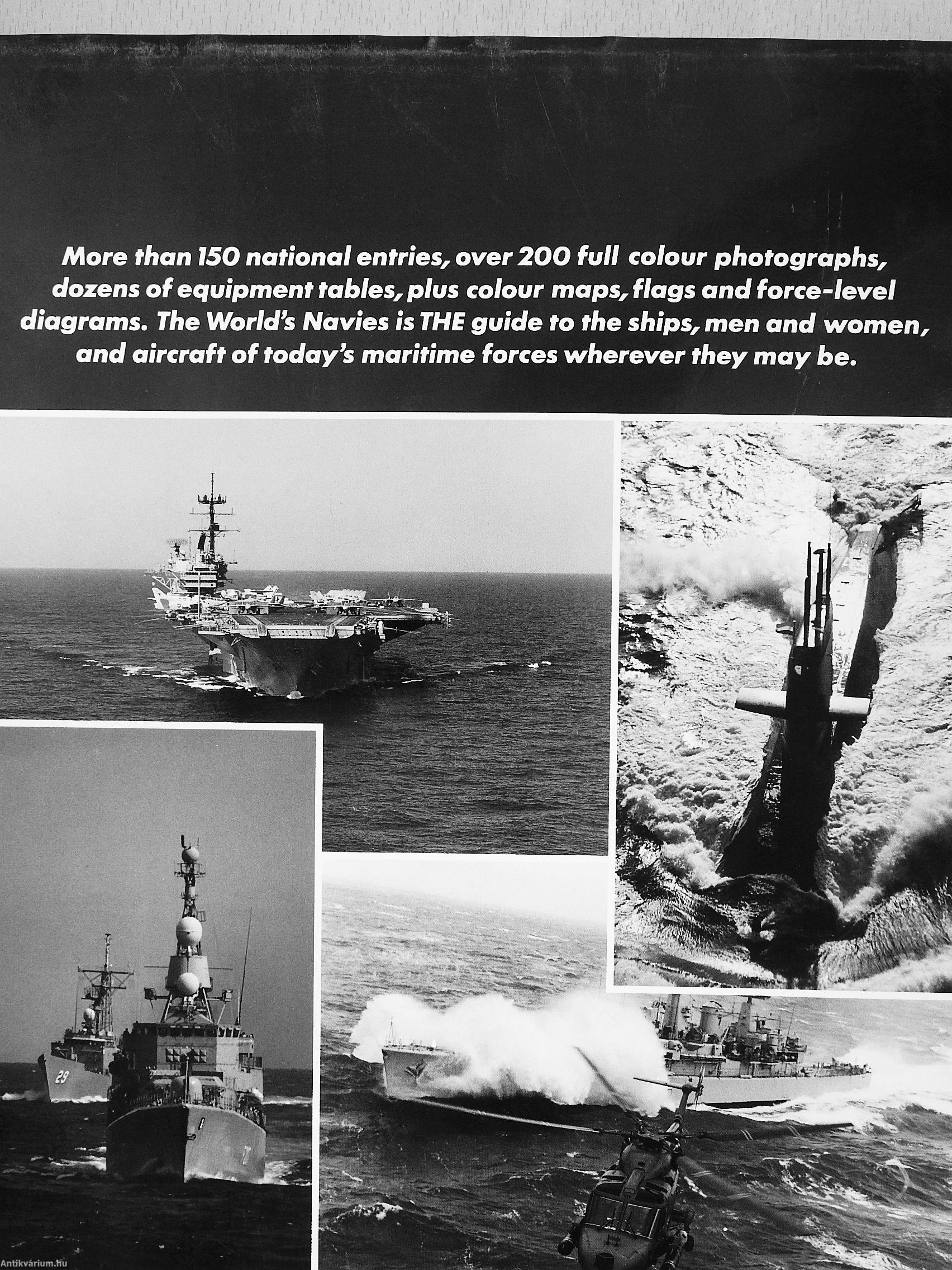
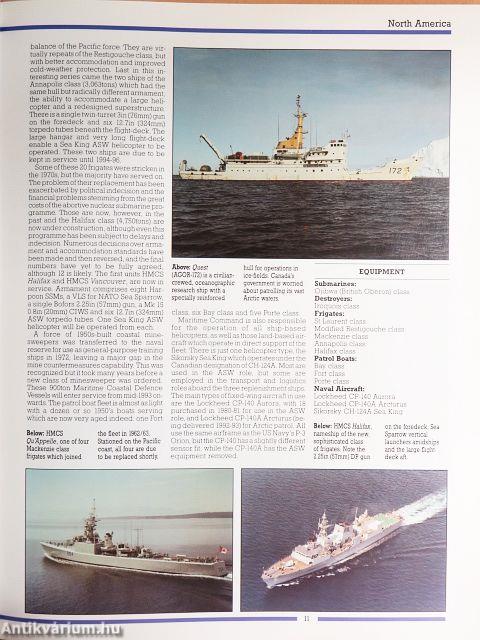
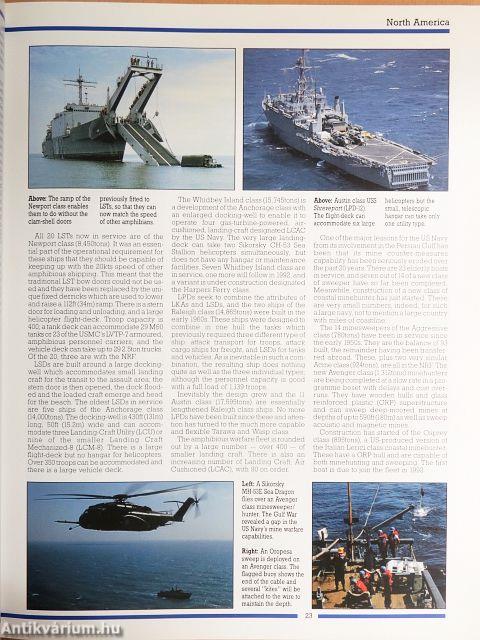
Niore than 150 national entries, over200 full colour photographs, dozens of equipntent tables, plus colour maps, flags and force-level diagrams. The World's Navies is THE guide to the ships, men and women, and aircraft of today's maritime forces wherever they may be.
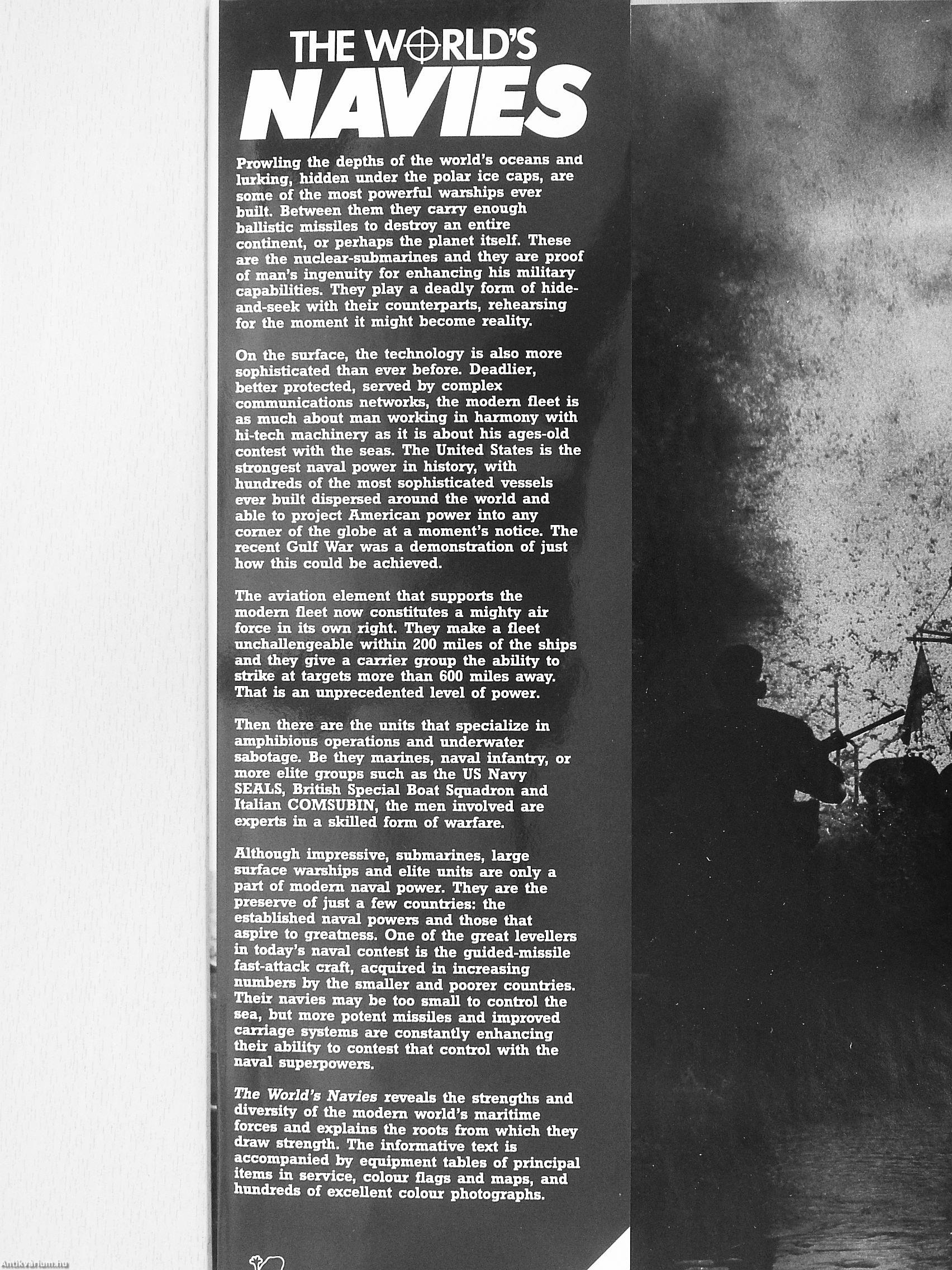
THE WORLD'S
NAVIES
Prowling the depths of the world's oceans and larking, hidden under the polar ice caps, are some of the most powerful warships ever bnilt. Between them they carry enough ballistic missiles to destroy an entire continent, or perhaps the planet itself. These are the nuclear-submarines and they are proof of man's ingenuity for enhancing his military capabilities. They play a deadly form of hide-and-seek with their counterparts, rehearsing for the moment it might become reality.
On the surface, the technology is also more sophisticated than ever before. Deadlier, better protected, served by complex communications networks, the modem fleet is as much about man vrorking in harmony with hi-tech... Tovább
Fülszöveg
Niore than 150 national entries, over200 full colour photographs, dozens of equipntent tables, plus colour maps, flags and force-level diagrams. The World's Navies is THE guide to the ships, men and women, and aircraft of today's maritime forces wherever they may be.
THE WORLD'S
NAVIES
Prowling the depths of the world's oceans and larking, hidden under the polar ice caps, are some of the most powerful warships ever bnilt. Between them they carry enough ballistic missiles to destroy an entire continent, or perhaps the planet itself. These are the nuclear-submarines and they are proof of man's ingenuity for enhancing his military capabilities. They play a deadly form of hide-and-seek with their counterparts, rehearsing for the moment it might become reality.
On the surface, the technology is also more sophisticated than ever before. Deadlier, better protected, served by complex communications networks, the modem fleet is as much about man vrorking in harmony with hi-tech machinery as it is about his ages-old contest with the seas. The United States is the strongest naval power in history, with hundreds of the most sophisticated vessels ever bnilt dispersed around the world and able to project American power into any comer of the globe at a moment's notice. The recent Gulf War was a demonstration of just how this could be achieved.
The aviation element that supports the modem fleet now constitutes a mighty air force in its own right. They mcike a fleet unchallengeable within 200 miles of the ships and they give a carrier group the ability to strike at targets more than 600 miles away. That is an unprecedented level of power.
Then there are the units that specialize in amphibious operations and underwater sabotage. Be they marines, naval infantry, or more elite groups such as the US Navy SEALS, British Special Boat Squadron and Italian COMSUBIN, the men involved are experts in a skilled form of warfare.
Although impressive, submarines, large surface warships and elite units are only a part of modem naval power. They are the preserve of just a few countries: the established naval powers and those that aspire to greatness. One of the great levellers in today's naval contest is the gnided-missile fast-attack craft, acquired in increasing numbers by the smaller and poorer countries. Their navies may be too small to control the sea, but more potent missUes and improved carriage systems are constantly enhancing their ability to contest that control with the naval superpowers.
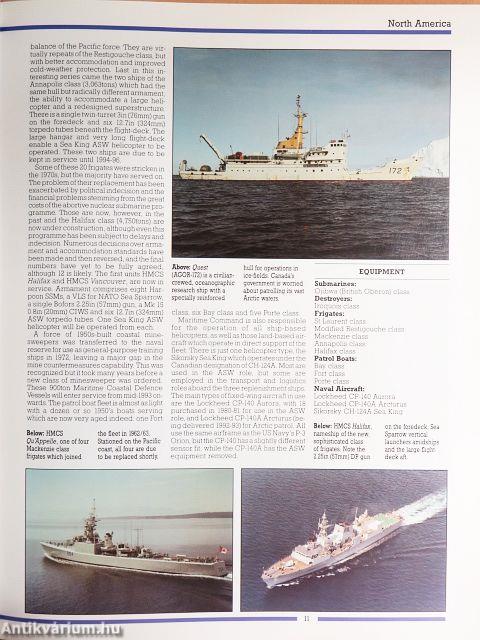
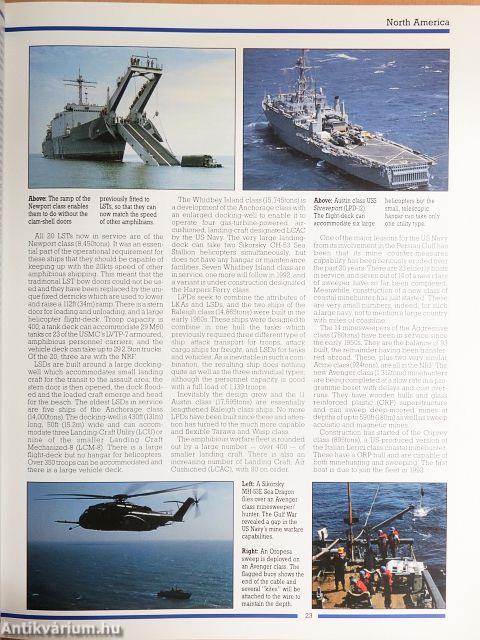
The World's Navies reveals the strengths and diversity of the modem world's maritime forces and explains the roots from which they draw strength. The informative text is accompanied by equipment tables of principal tten« in service, colour Oags and maps, and hundreds of excellent colour photographs.
Vissza
Témakörök
- Idegennyelv > Idegennyelvű könyvek > Angol > Műszaki
- Idegennyelv > Idegennyelvű könyvek > Angol > Történelem > Egyéb
- Történelem > Idegennyelvű > Angol
- Történelem > Hadtörténet > Fegyverek, fegyvernemek
- Műszaki > Idegennyelv > Angol
- Műszaki > Hadászat, hadtörténet
- Műszaki > Közlekedés > Hajózás > Egyéb

David Miller
David Miller műveinek az Antikvarium.hu-n kapható vagy előjegyezhető listáját itt tekintheti meg: David Miller könyvek, művekMegvásárolható példányok
Nincs megvásárolható példány
A könyv összes megrendelhető példánya elfogyott. Ha kívánja, előjegyezheti a könyvet, és amint a könyv egy újabb példánya elérhető lesz, értesítjük.
 Folytatás Microsoft-tal