A kosaram
0
MÉG
5000 Ft
a(z) 5000Ft-os
szállítási
értékhatárig
Ginop popup ablak bezárása

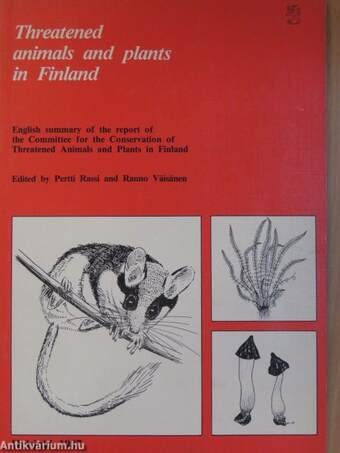
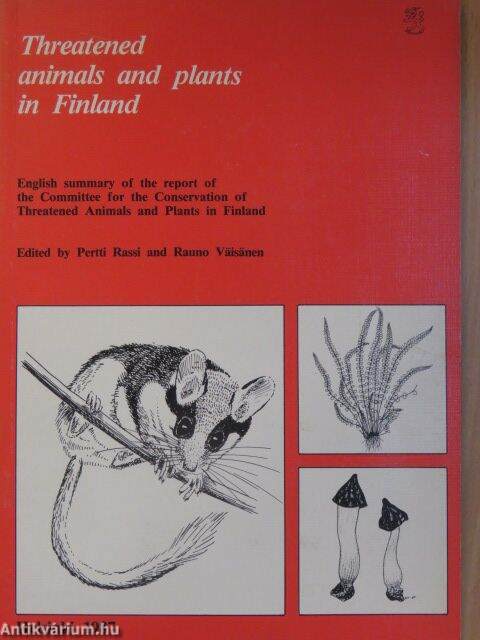
Threatened animals and plants in Finland

English summary of the report of the Committee for the Conservation of Threatened Animals and Plants in Finland

Szerkesztő
Helsinki
Kiadó: Government Printing Centre
Kiadás helye: Helsinki
Kiadás éve:
Kötés típusa: Ragasztott papírkötés
Oldalszám: 82 oldal
Sorozatcím:
Kötetszám:
Nyelv: Angol  
Méret: 25 cm x 17 cm
ISBN: 951-46-7961-X
Megjegyzés: Fekete-fehér illusztrációkkal.
Értesítőt kérek a kiadóról

A beállítást mentettük,
naponta értesítjük a beérkező friss
kiadványokról
A beállítást mentettük,
naponta értesítjük a beérkező friss
kiadványokról

Fülszöveg

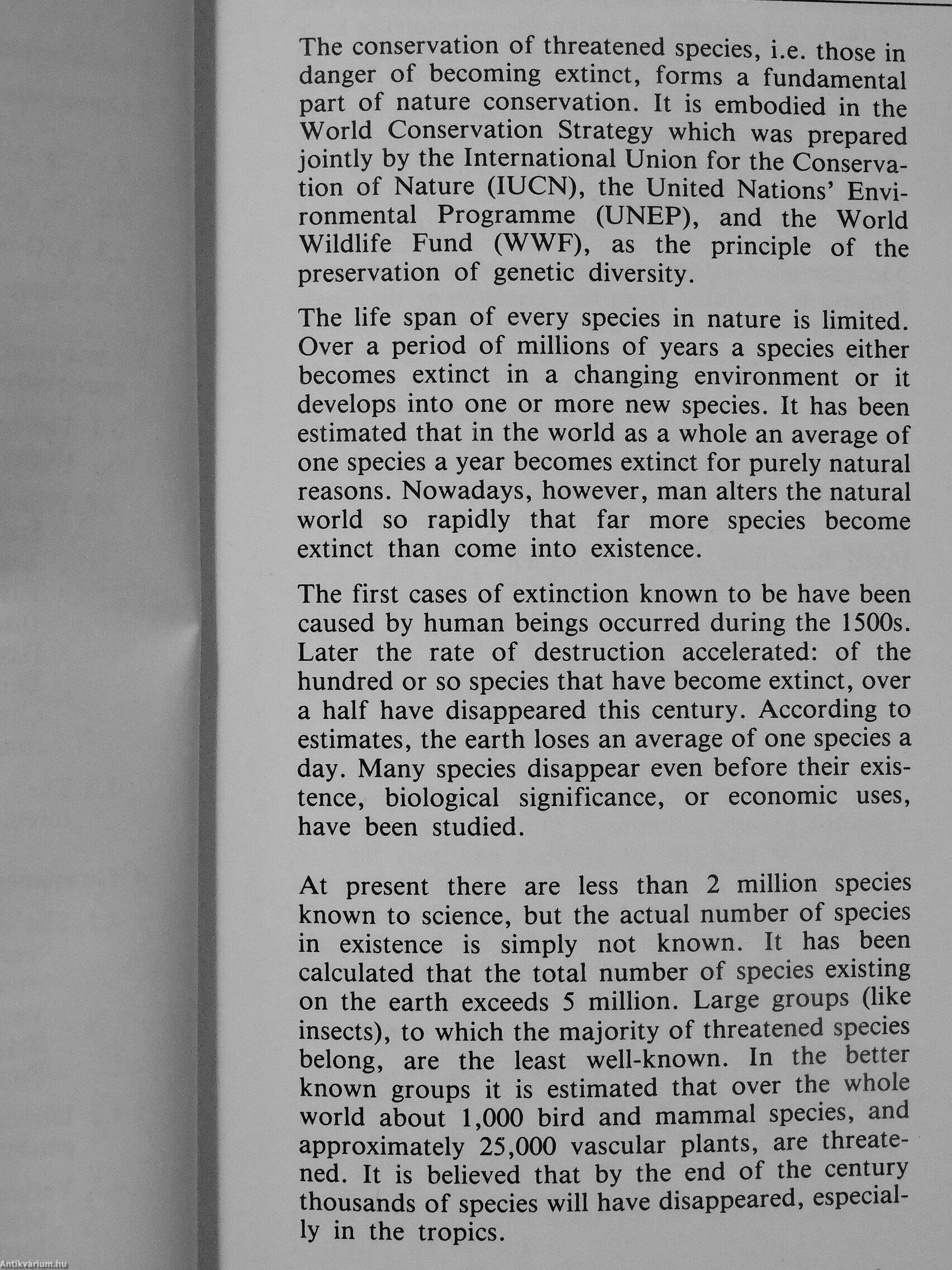
The conservation of threatened species, i.e. those in danger of becoming extinct, forms a fundamental part of nature conservation. It is embodied in the World Conservation Strategy which was prepared jointly by the International Union for the Conservation of Nature (IUCN), the United Nations' Environmental Programme (UNEP), and the World Wildlife Fund (WWF), as the principle of the preservation of genetic diversity. The life span of every species in nature is limited. Over a period of millions of years a species either becomes extinct in a changing environment or it develops into one or more new species. It has been estimated that in the world as a whole an average of one species a year becomes extinct for purely natural reasons. Nowadays, however, man altérs the natural world so rapidly that far more species become extinct than come into existence. The first cases of extinction known to be have been caused by humán beings occurred during the 1500s. Later the rate of destruction... Tovább

Fülszöveg

The conservation of threatened species, i.e. those in danger of becoming extinct, forms a fundamental part of nature conservation. It is embodied in the World Conservation Strategy which was prepared jointly by the International Union for the Conservation of Nature (IUCN), the United Nations' Environmental Programme (UNEP), and the World Wildlife Fund (WWF), as the principle of the preservation of genetic diversity. The life span of every species in nature is limited. Over a period of millions of years a species either becomes extinct in a changing environment or it develops into one or more new species. It has been estimated that in the world as a whole an average of one species a year becomes extinct for purely natural reasons. Nowadays, however, man altérs the natural world so rapidly that far more species become extinct than come into existence. The first cases of extinction known to be have been caused by humán beings occurred during the 1500s. Later the rate of destruction accelerated: of the hundred or so species that have become extinct, over a half have disappeared this century. According to estimates, the earth loses an average of one species a day. Many species disappear even before their existence, biological significance, or economic uses, have been studied. At present there are less than 2 millión species known to science, but the actual number of species in existence is simply not known. It has been calculated that the totál number of species existing on the earth exceeds 5 millión. Large groups (like insects), to which the majority of threatened species belong, are the least well-known. In the better known groups it is estimated that over the whole world about 1,000 bird and mammal species, and approximately 25,000 vascular plants, are threatened. It is believed that by the end of the century thousands of species will have disappeared, especially in the tropics. Vissza

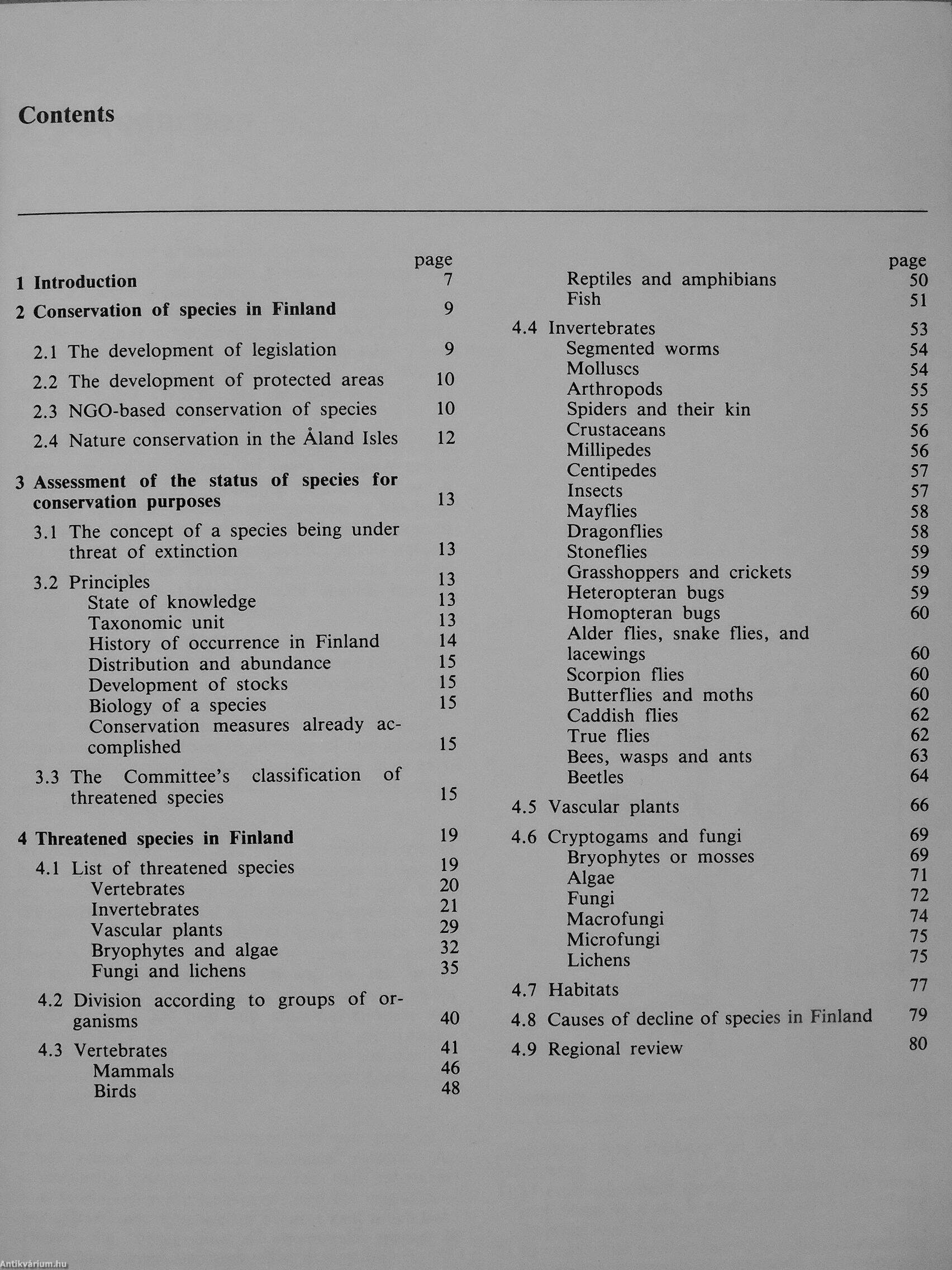
Tartalom


Vissza
Megvásárolható példányok

Nincs megvásárolható példány
A könyv összes megrendelhető példánya elfogyott. Ha kívánja, előjegyezheti a könyvet, és amint a könyv egy újabb példánya elérhető lesz, értesítjük.

Előjegyzem