
1.152.066
kiadvánnyal nyújtjuk Magyarország legnagyobb antikvár könyv-kínálatát

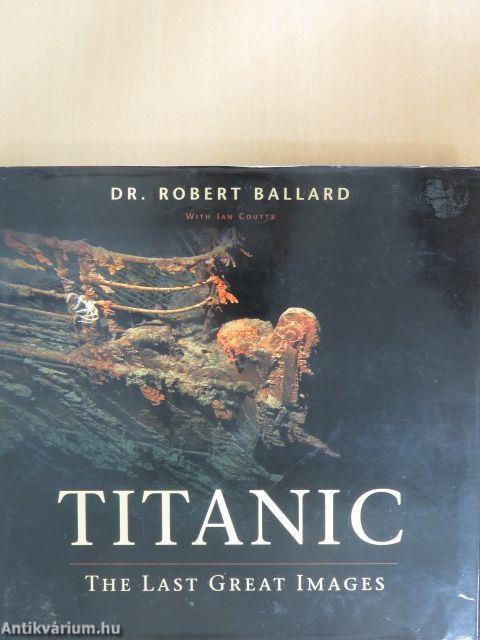
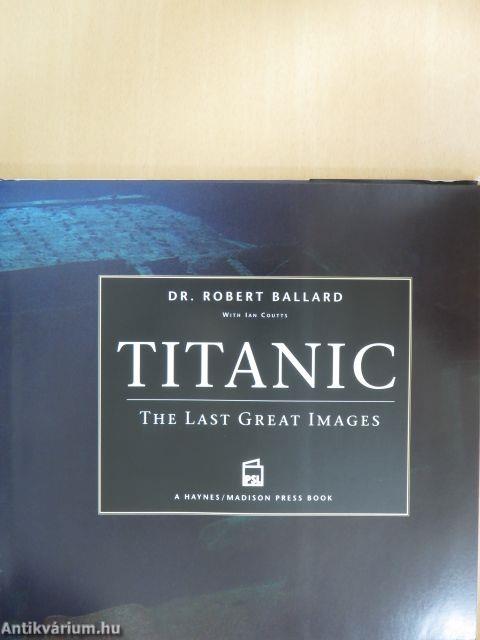
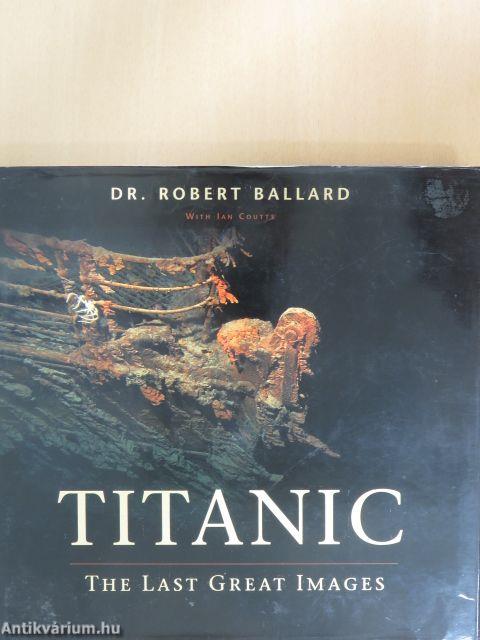
Titanic
The Last Great Images
Toronto
| Kiadó: | A Haynes-Madison Press Book |
|---|---|
| Kiadás helye: | Toronto |
| Kiadás éve: | |
| Kötés típusa: | Varrott keménykötés |
| Oldalszám: | 191 oldal |
| Sorozatcím: | |
| Kötetszám: | |
| Nyelv: | Angol |
| Méret: | 29 cm x 30 cm |
| ISBN: | 978-1-85260-615-2 |
| Megjegyzés: | Színes fotókkal illusztrálva. |
Értesítőt kérek a kiadóról
A beállítást mentettük,
naponta értesítjük a beérkező friss
kiadványokról
naponta értesítjük a beérkező friss
kiadványokról
A beállítást mentettük,
naponta értesítjük a beérkező friss
kiadványokról
naponta értesítjük a beérkező friss
kiadványokról
Előszó
Tovább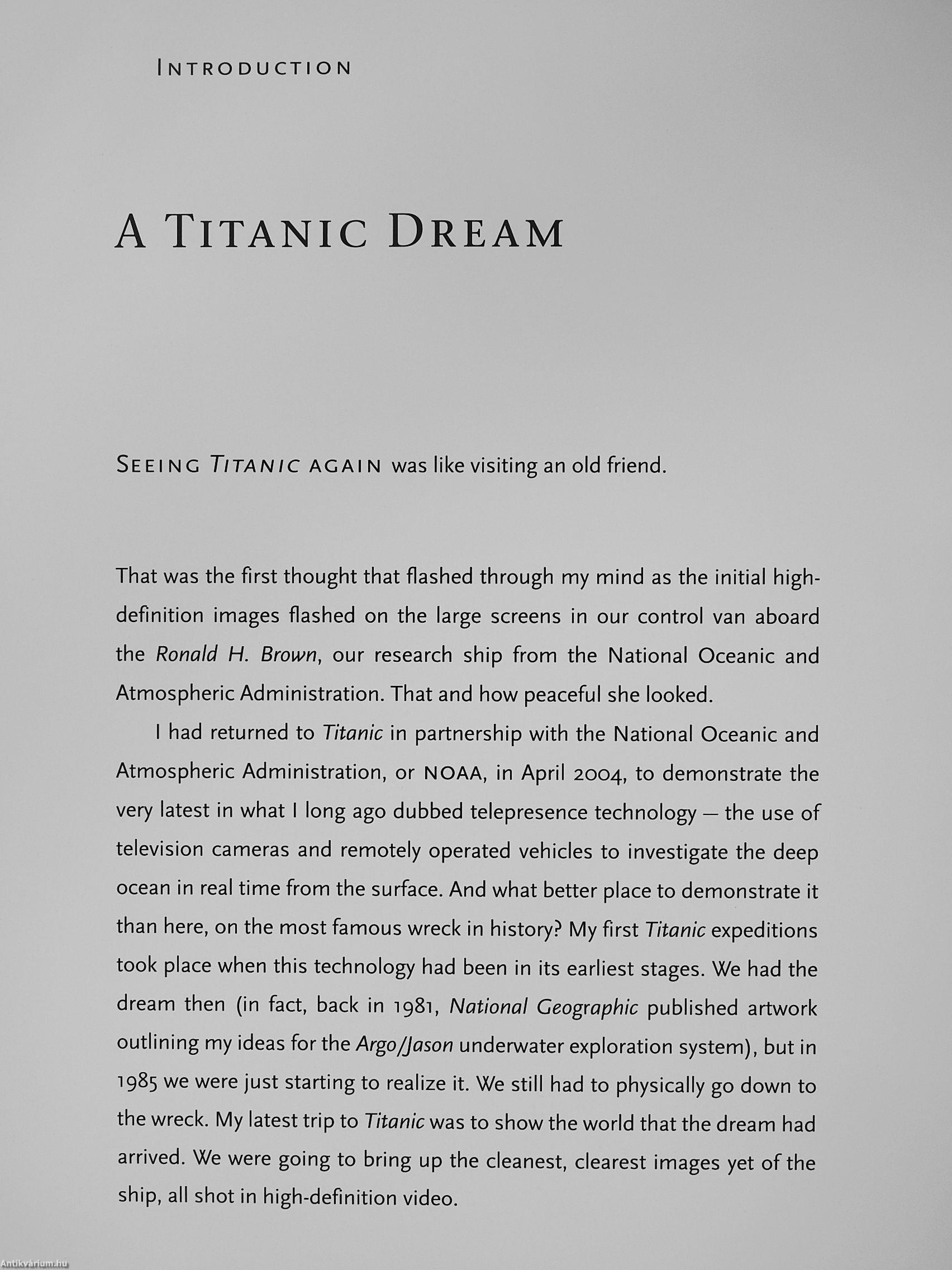
Fülszöveg
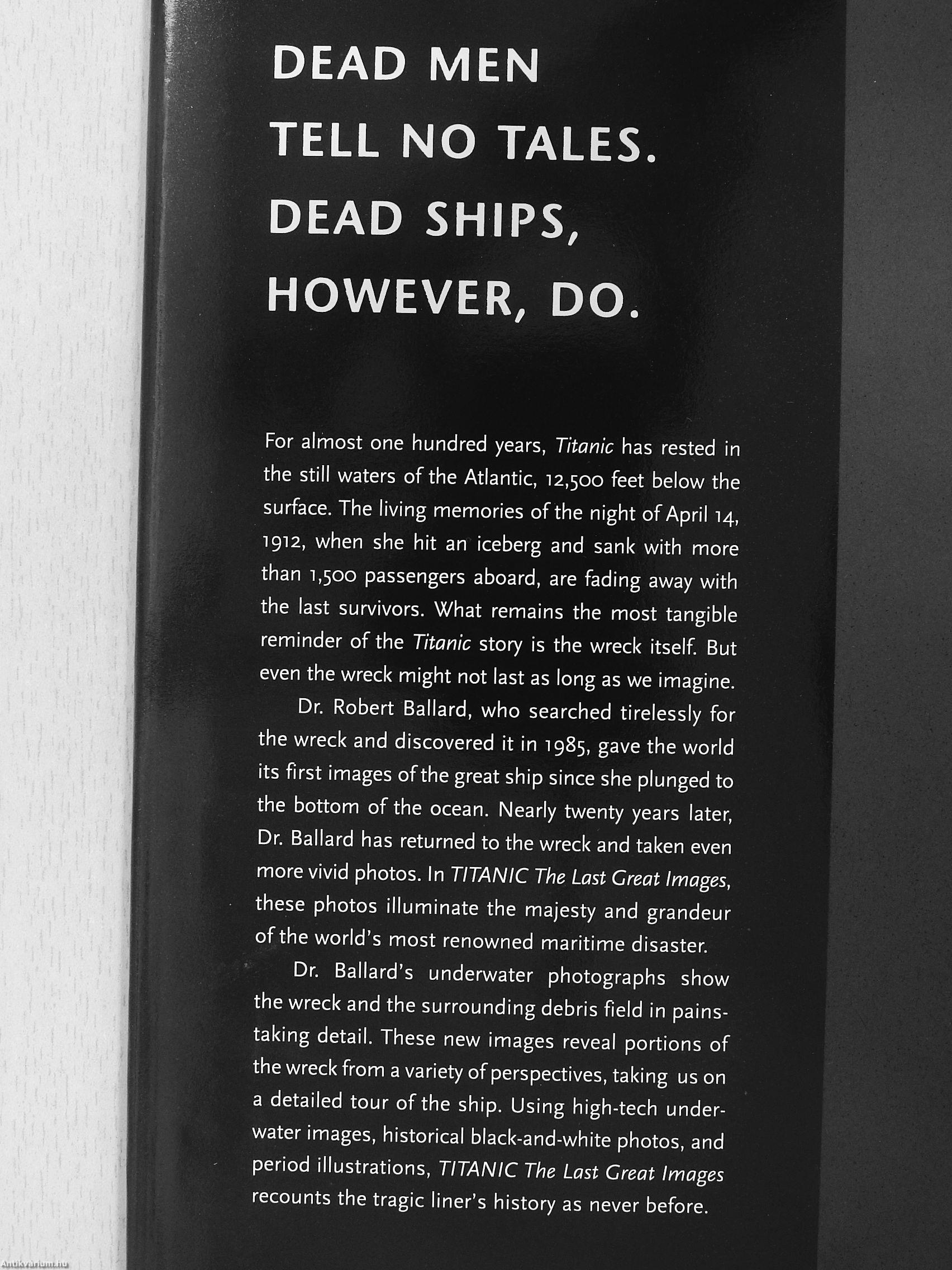
DEAD MEN TELL NO TALES DEAD SHIPS, HOWEVER, DO.
For almost one hundred years, Titanic has rested In the still waters of the Atlantic, 12,500 feet below the surface. The living memories of the night of April 14, 1912, when she hit an Iceberg and sank with more than 1,500 passengers aboard, are fading away with the last survivors. What remains the most tangible reminder of the Titanic story Is the wreck Itself But even the wreck might not last as long as we Imagine.
Dr. Robert Ballard, who searched tirelessly for the wreck and discovered It in 1985, gave the world its first images of the great ship since she plunged to the bottom of the ocean. Nearly twenty years later, Dr. Ballard has returned to the wreck and taken even more vivid photos. In TITANIC Tine Last Great Images, these photos illuminate the majesty and grandeur of the world's most renowned maritime disaster.
Dr. Ballard's underwater photographs show the wreck and the surrounding debris field in painstaking detail.... Tovább
Fülszöveg
DEAD MEN TELL NO TALES DEAD SHIPS, HOWEVER, DO.
For almost one hundred years, Titanic has rested In the still waters of the Atlantic, 12,500 feet below the surface. The living memories of the night of April 14, 1912, when she hit an Iceberg and sank with more than 1,500 passengers aboard, are fading away with the last survivors. What remains the most tangible reminder of the Titanic story Is the wreck Itself But even the wreck might not last as long as we Imagine.
Dr. Robert Ballard, who searched tirelessly for the wreck and discovered It in 1985, gave the world its first images of the great ship since she plunged to the bottom of the ocean. Nearly twenty years later, Dr. Ballard has returned to the wreck and taken even more vivid photos. In TITANIC Tine Last Great Images, these photos illuminate the majesty and grandeur of the world's most renowned maritime disaster.
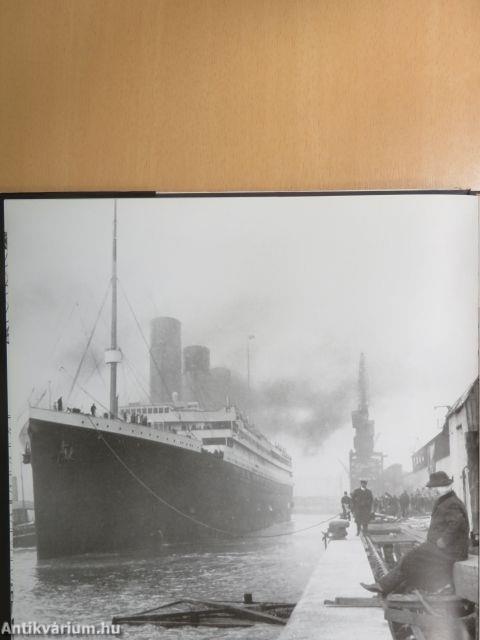
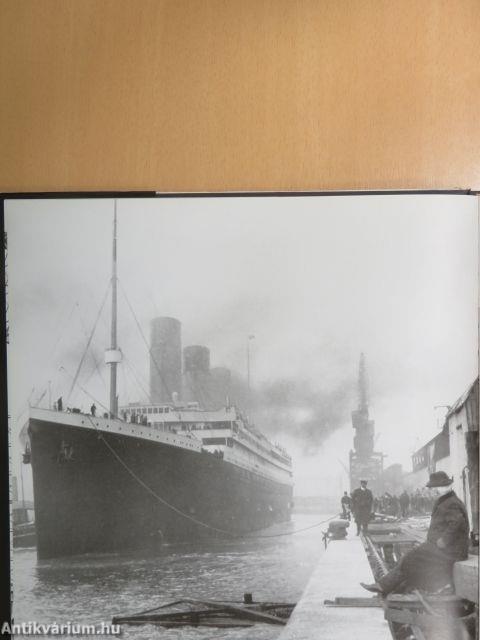
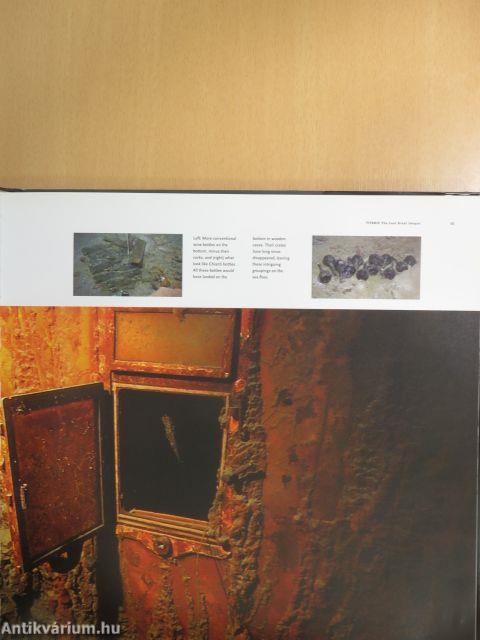
Dr. Ballard's underwater photographs show the wreck and the surrounding debris field in painstaking detail. These new Images reveal portions of the wreck from a variety of perspectives, taking us on a detailed tour of the ship. Using high-tech underwater images, historical black-and-white photos, and period illustrations, TITANIC The Last Great Innages recounts the tragic liner's history as never before.
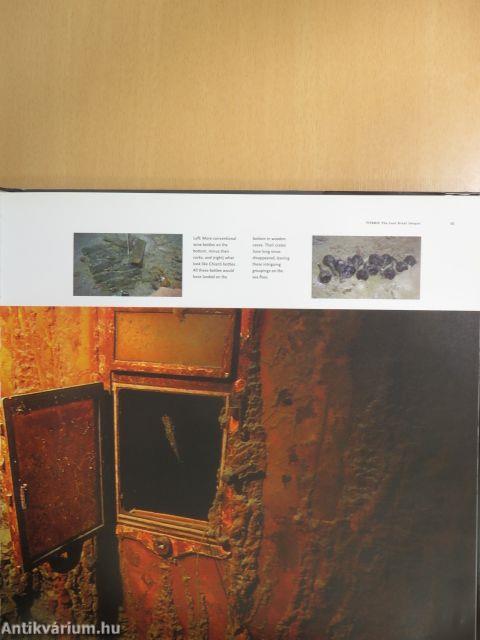
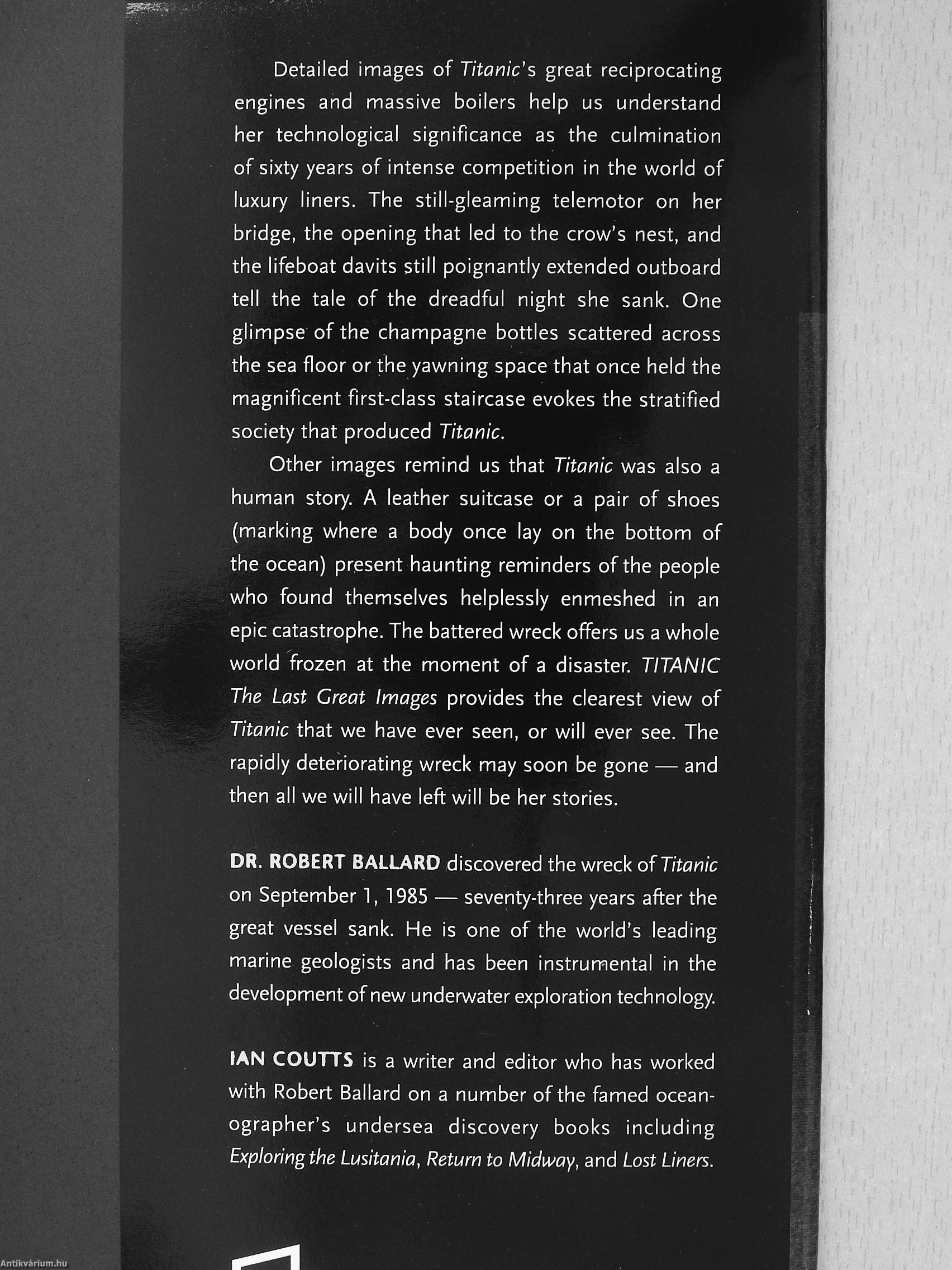
Detailed images of Titanic's great reciprocating engines and massive boilers help us understand her technological significance as the culmination of sixty years of intense competition in the world of luxury liners. The still-gleaming telemotor on her bridge, the opening that led to the crow's nest, and the lifeboat davits still poignantly extended outboard tell the tale of the dreadful night she sank. One glimpse of the champagne bottles scattered across the sea floor or the yawning space that once held the magnificent first-class staircase evokes the stratified society that produced Titanic.
Other images remind us that Titanic was also a human story. A leather suitcase or a pair of shoes (marking where a body once lay on the bottom of the ocean) present haunting reminders of the people who found themselves helplessly enmeshed in an epic catastrophe. The battered wreck offers us a whole world frozen at the moment of a disaster. TITANIC The Last Creat Images provides the clearest view of Titanic that we have ever seen, or will ever see. The rapidly deteriorating wreck may soon be gone — and then all we will have left will be her stories.
DR. ROBERT BALLARD discovered the wreck of Titanic on September 1, 1985 — seventy-three years after the great vessel sank. He is one of the world's leading marine geologists and has been instrumental in the development of new underwater exploration technology.
IAN COUTTS is a writer and editor who has worked with Robert Ballard on a number of the famed ocean-ographer's undersea discovery books including Exploring the Lusitania, Return to Midway, and Lost Liners. Vissza
Témakörök
- Idegennyelv > Idegennyelvű könyvek > Angol > Műszaki
- Idegennyelv > Idegennyelvű könyvek > Angol > Művészetek > Fotóművészet
- Idegennyelv > Idegennyelvű könyvek > Angol > Művelődéstörténet
- Művelődéstörténet > Technikatörténet > Közlekedés
- Művészetek > Fotóművészet > Albumok > Külföldi
- Művészetek > Fotóművészet > Albumok > Tematikus
- Művészetek > Fotóművészet > Idegen nyelv > Angol
- Művészetek > Fotóművészet > Témái > Fotódokumentumok
- Műszaki > Idegennyelv > Angol
- Műszaki > Közlekedés > Hajózás > Egyéb
- Műszaki > Közlekedés
Megvásárolható példányok
Nincs megvásárolható példány
A könyv összes megrendelhető példánya elfogyott. Ha kívánja, előjegyezheti a könyvet, és amint a könyv egy újabb példánya elérhető lesz, értesítjük.
 Folytatás Microsoft-tal