
1.150.760
kiadvánnyal nyújtjuk Magyarország legnagyobb antikvár könyv-kínálatát

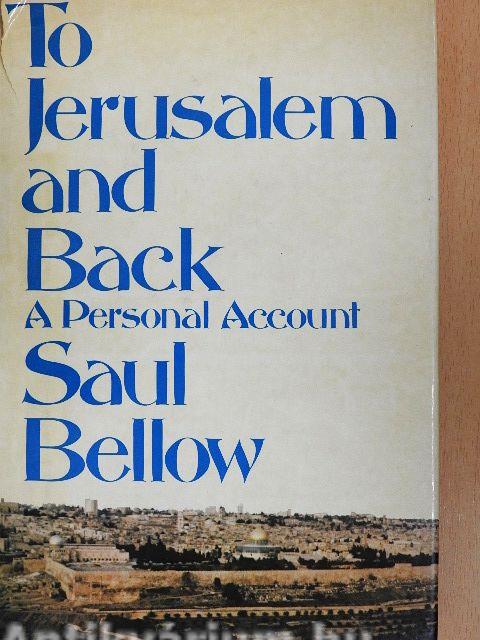
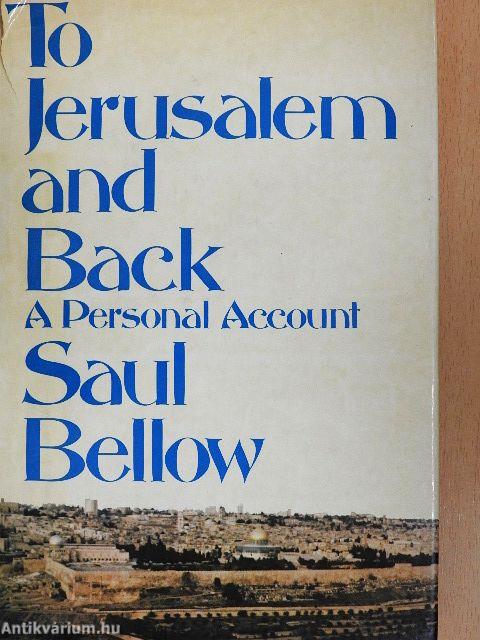
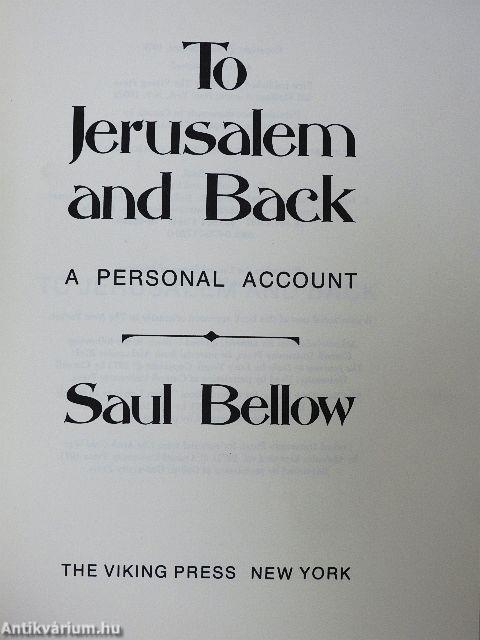
To Jerusalem and Back
A Personal Account
New York
| Kiadó: | The Viking Press |
|---|---|
| Kiadás helye: | New York |
| Kiadás éve: | |
| Kötés típusa: | Félvászon |
| Oldalszám: | 182 oldal |
| Sorozatcím: | |
| Kötetszám: | |
| Nyelv: | Angol |
| Méret: | 23 cm x 16 cm |
| ISBN: | 0-670-71729-0 |
Értesítőt kérek a kiadóról
A beállítást mentettük,
naponta értesítjük a beérkező friss
kiadványokról
naponta értesítjük a beérkező friss
kiadványokról
A beállítást mentettük,
naponta értesítjük a beérkező friss
kiadványokról
naponta értesítjük a beérkező friss
kiadványokról
Előszó
Tovább
Fülszöveg
To leriisalem ^indB^lck
Saul Bellow
This extraordinary book is the result of Saul Bellow's sojourn in Israel during several months in late 1975. It was hardly his first experience of Jerusalem—he had covered the 1967 Six Day War for Newsday—but in many ways it was his most intense. To Jerusalem and Back is his personal record of his stay in Israel, and a meditation, crackling with wit and controversy, on America's relationship with this embattled country.
To Jerusalem and Back is, among other things, a marvelous portrait gallery: Prime Minister Rabin at lunch; His Beatitude the Armenian Archbishop at a grand dinner; a nine-year-old violinist auditioning for Isaac Stern; an engineer friend, mourning his dead son as he walks in the lemon groves; the old barber who garlands his shop with portraits of Hubert Humphrey; an agnostic professor intoning the ceremonious Sabbath prayers; the novelist friend whose family has lived in Jerusalem for six generations; the Arab newspaper editor... Tovább
Fülszöveg
To leriisalem ^indB^lck
Saul Bellow
This extraordinary book is the result of Saul Bellow's sojourn in Israel during several months in late 1975. It was hardly his first experience of Jerusalem—he had covered the 1967 Six Day War for Newsday—but in many ways it was his most intense. To Jerusalem and Back is his personal record of his stay in Israel, and a meditation, crackling with wit and controversy, on America's relationship with this embattled country.
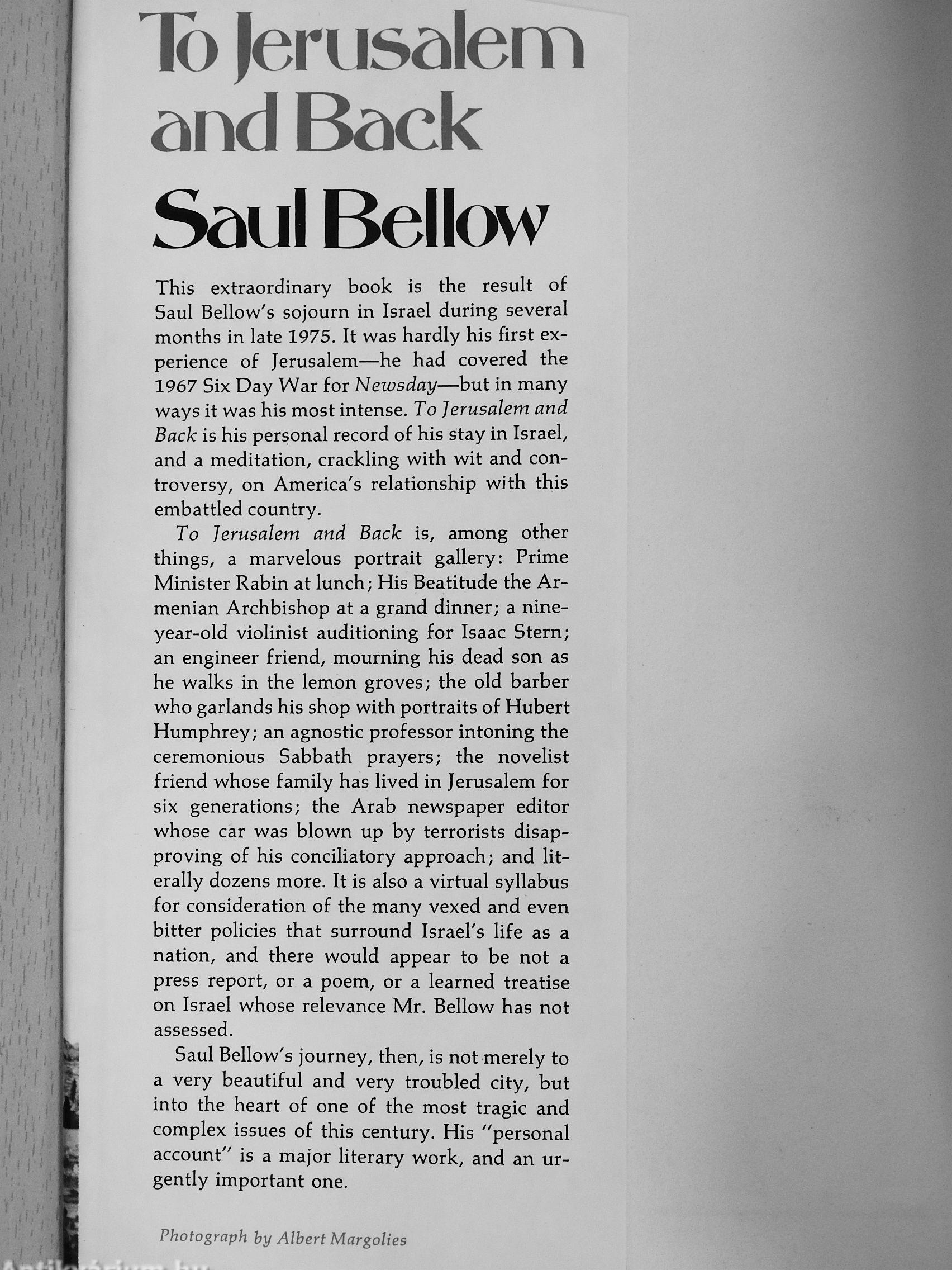
To Jerusalem and Back is, among other things, a marvelous portrait gallery: Prime Minister Rabin at lunch; His Beatitude the Armenian Archbishop at a grand dinner; a nine-year-old violinist auditioning for Isaac Stern; an engineer friend, mourning his dead son as he walks in the lemon groves; the old barber who garlands his shop with portraits of Hubert Humphrey; an agnostic professor intoning the ceremonious Sabbath prayers; the novelist friend whose family has lived in Jerusalem for six generations; the Arab newspaper editor whose car was blown up by terrorists disapproving of his conciliatory approach; and literally dozens more. It is also a virtual syllabus for consideration of the many vexed and even bitter policies that surround Israel's Ufe as a nation, and there would appear to be not a press report, or a poem, or a learned treatise on Israel whose relevance Mr. Bellow has not assessed.
Saul Bellow's journey, then, is not merely to a very beautiful and very troubled city, but into the heart of one of the most tragic and complex issues of this century. His "personal account" is a major literary work, and an urgently important one.
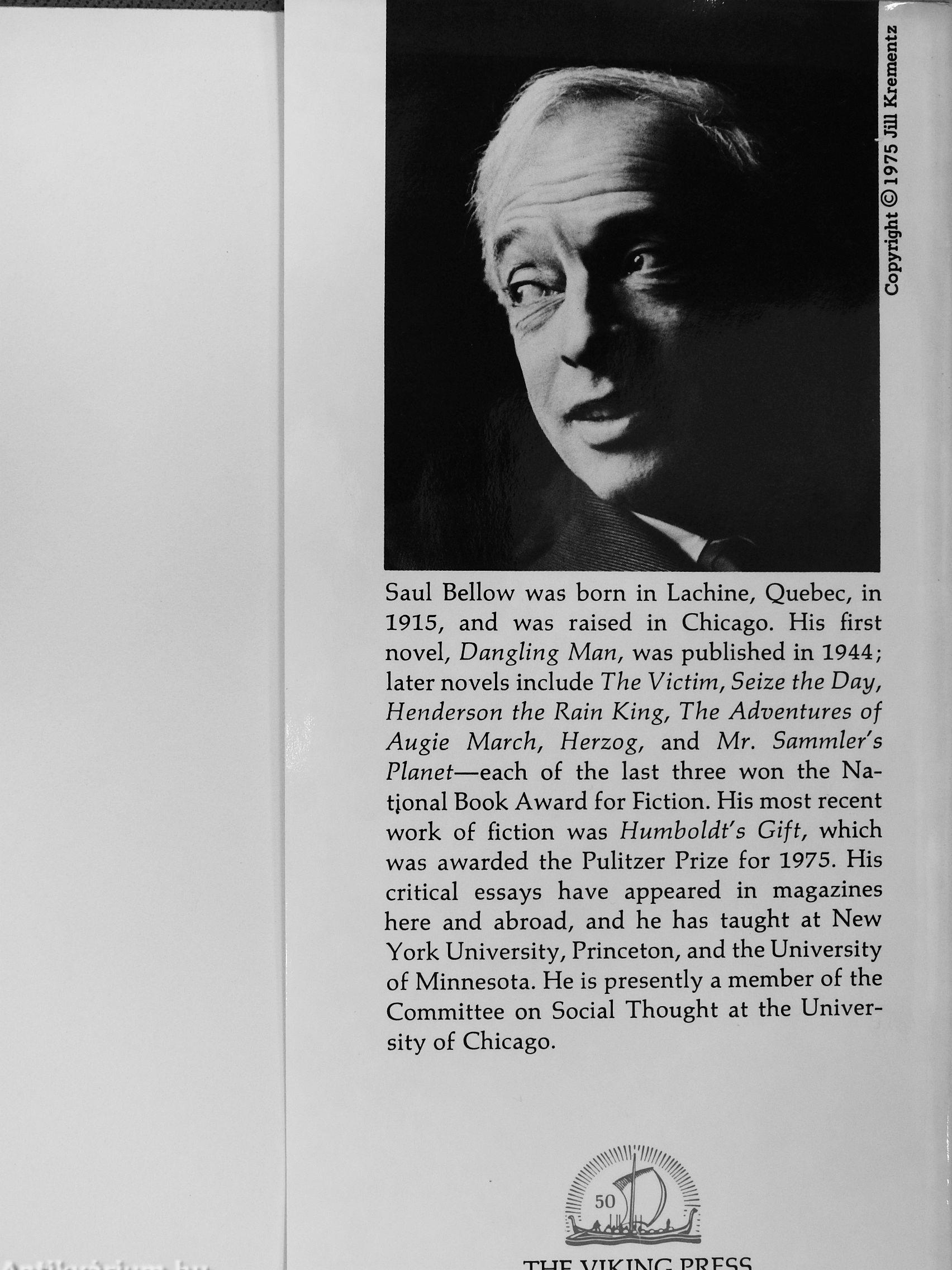
Photograph by Albert Margolies
Saul Bellow was born in Lachine, Quebec, in 1915, and was raised in Chicago. His first novel. Dangling Man, was pubHshed in 1944; later novels include The Victim, Seize the Day, Henderson the Rain King, The Adventures of Augie March, Herzog, and Mr. Sammler's Planet—each of the last three won the National Book Award for Fiction. His most recent work of fiction was Humboldt's Gift, which was awarded the Pulitzer Prize for 1975. His critical essays have appeared in magazines here and abroad, and he has taught at New York University, Princeton, and the University of Minnesota. He is presently a member of the Committee on Social Thought at the University of Chicago.
#3%
-rtjt: TriVTM/" PPPQQ
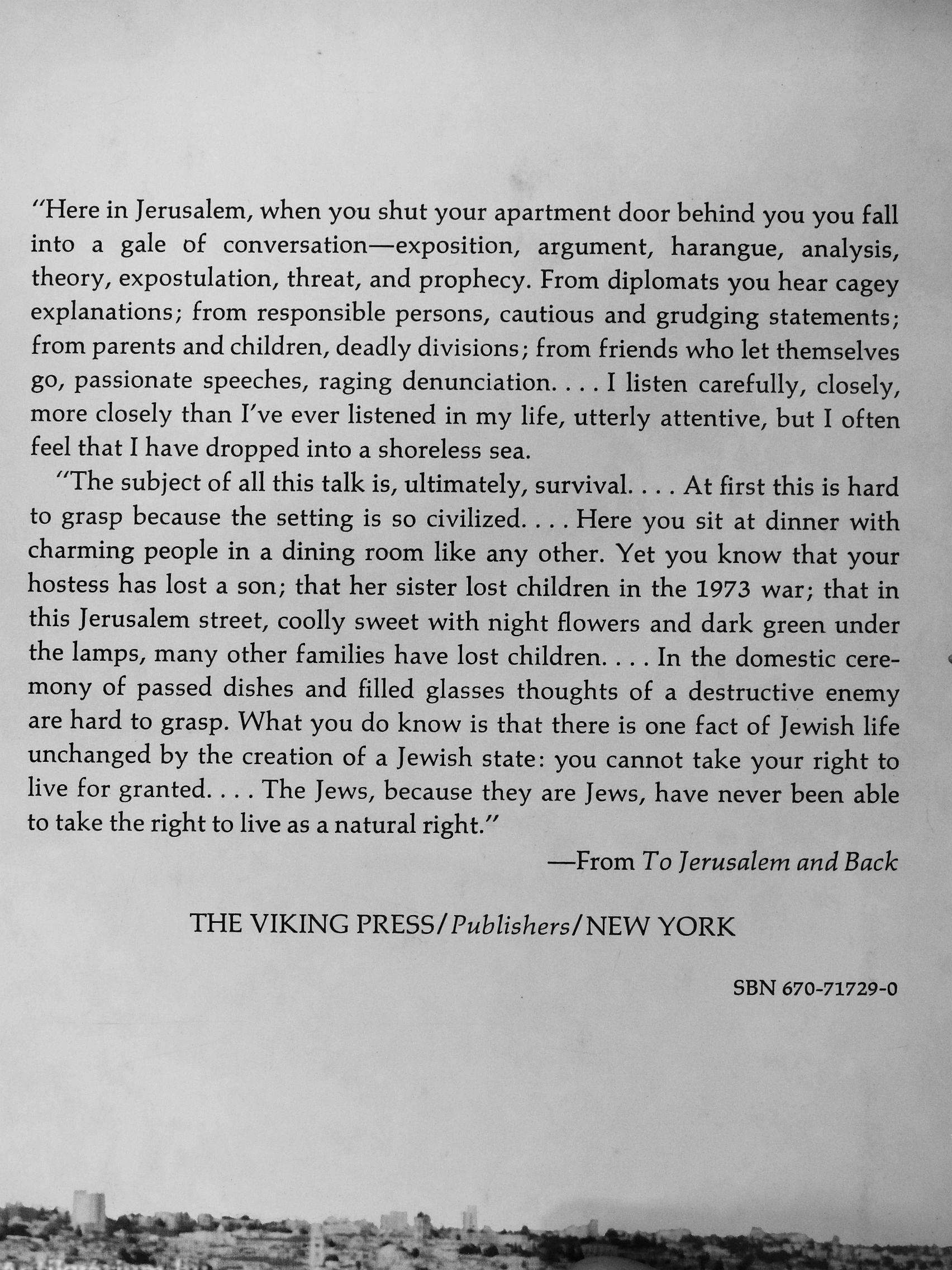
"Here in Jerusalem, when you shut your apartment door behind you you fall into a gale of conversation—exposition, argument, harangue, analysis, theory, expostulation, threat, and prophecy. From diplomats you hear cagey explanations; from responsible persons, cautious and grudging statements; from parents and children, deadly divisions; from friends who let themselves go, passionate speeches, raging denunciation. I listen carefully, closely, more closely than I've ever listened in my life, utterly attentive, but I often feel that I have dropped into a shoreless sea.
"The subject of all this talk is, ultimately, survival. At first this is hard to grasp because the setting is so civilized. . . . Here you sit at dinner with charming people in a dining room like any other. Yet you know that your hostess has lost a son; that her sister lost children in the 1973 war; that in this Jerusalem street, coolly sweet with night flowers and dark green under the lamps, many other families have lost children. In the domestic ceremony of passed dishes and filled glasses thoughts of a destructive enemy are hard to grasp. What you do know is that there is one fact of Jewish life unchanged by the creation of a Jewish state: you cannot take your right to live for granted. . . . The Jews, because they are Jews, have never been able to take the right to live as a natural right."
—From To Jerusalem and Back THE VIKING VRESS/Publishers/mW YORK
sbn 670-71729-0 Vissza
Témakörök
- Idegennyelv > Idegennyelvű könyvek > Angol > Szépirodalom > Regény, novella, elbeszélés
- Szépirodalom > Regény, novella, elbeszélés > Az író származása szerint > Amerika > Amerikai Egyesült Államok
- Szépirodalom > Regény, novella, elbeszélés > Tartalom szerint > Társadalmi csoportok > Kisebbségek > Zsidóság
- Szépirodalom > Regény, novella, elbeszélés > Tartalom szerint > Földrajzi besorolások > Ázsia
- Szépirodalom > Regény, novella, elbeszélés > Tartalom szerint > Útikalandok, útirajzok
- Szépirodalom > Regény, novella, elbeszélés > Irodalmi díjas szerzők > Nobel-díjasok
Saul Bellow
Saul Bellow műveinek az Antikvarium.hu-n kapható vagy előjegyezhető listáját itt tekintheti meg: Saul Bellow könyvek, művekMegvásárolható példányok
Állapotfotók
Jó állapotú példány. A felső lapélek színezettek.
Állapot:
Jó
2.240 ,-Ft
11
pont kapható
Kosárba
 Folytatás Microsoft-tal