1.128.694

kiadvánnyal nyújtjuk Magyarország legnagyobb antikvár könyv-kínálatát

A kosaram
0
MÉG
5000 Ft
a(z) 5000Ft-os
szállítási
értékhatárig
Ginop popup ablak bezárása

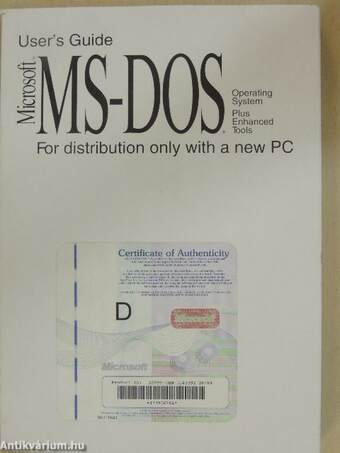
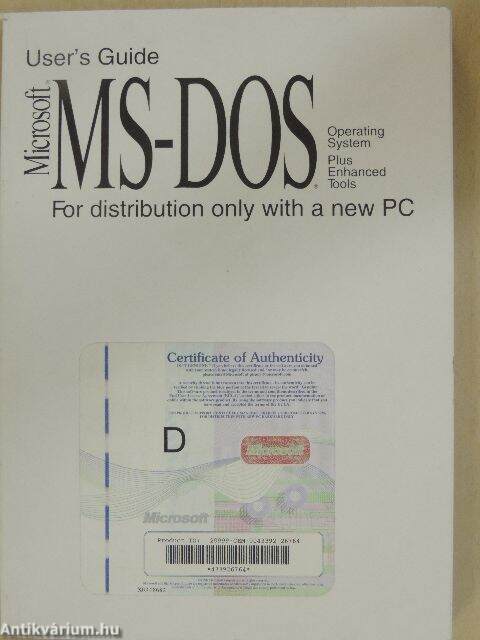
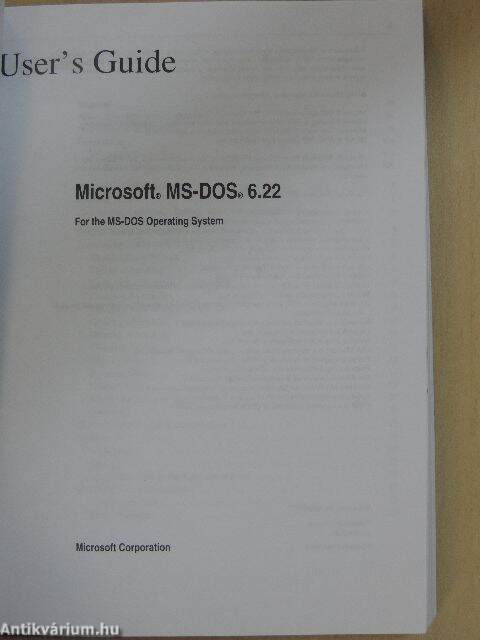
User's Guide Microsoft MS-DOS 6.22

Microsoft MS-DOS 6.22 felhasználói kézikönyv - For the MS-DOS Operating System/Az MS-DOS operációs rendszerhez


Kiadó: Microsoft Corporation
Kiadás helye:
Kiadás éve:
Kötés típusa: Ragasztott papírkötés
Oldalszám: 260 oldal
Sorozatcím:
Kötetszám:
Nyelv: Angol  
Méret: 21 cm x 15 cm
ISBN:
Megjegyzés: Néhány fekete-fehér ábrával illusztrálva.
Értesítőt kérek a kiadóról

A beállítást mentettük,
naponta értesítjük a beérkező friss
kiadványokról
A beállítást mentettük,
naponta értesítjük a beérkező friss
kiadványokról

Előszó

Welcome Welcome to Microsoft® MS-DOSthe most widely used operating system for persona] computers. This version of MS-DOS includes many new features that turn your computer into a powerful tool for... Tovább

Előszó

Welcome Welcome to Microsoft® MS-DOSthe most widely used operating system for persona] computers. This version of MS-DOS includes many new features that turn your computer into a powerful tool for business or personal use. These features are described in detail later in this introduction. If this version of MS-DOS is not yet set up on your computer, see the chapter "Getting Started" for information about how to use the Setup program. This introduction to the Microsoft MS-DOS User's Guide includes a list of the printed and online documentation included with MS-DOS, an introduction to new and improved MS-DOS features, and a list of the typographic conventions used in this guide. About Your MS-DOS Documentation MS-DOS documentation consists of the Microsoft MS-DOS User's Guide, MS-DOS Help, and several other online documents. This guide includes information for users who have little experience with computers, in addition to advanced topics for those who are familiar with MS-DOS. You can use the detailed table of contents and index to find information about the features you work with most often. MS-DOS Help is an online reference to MS-DOS commands. The reference includes information about how to type commands and their parameters and switches, notes about commands, and examples of how to use commands. After you've set up the latest version of MS-DOS on your computer, you can display the MS-DOS Help table of contents by typing help at the command prompt and then pressing ENTER. You can alsó get information about a command without displaying the table of contents. For example, to display information about the copy command, type help copy at the command prompt. For more information about using MS-DOS Help, see the chapter "MS-DOS Basics." Vissza

Tartalom

Welcome ix
About Your MS-DOS Documentation ix
New Features of MS-DOS x
Conventions xiv
Document Conventions xiv
Keyboard Conventions xiv
Chapter 1 Getting Started 1
Running Setup 1
Configuring Anti-Virus, Backup, and Undelete for Windows 2
Chapter 2 MS-DOS Basics 3
Learning MS-DOS Basics-A Tutorial 3
The Command Prompt 4
Typing a Command 4
Viewing the Contents of a Directory 5
Changing Directories 6
Changing Back to the Root Directory 8
Creating a Directory 8
Deleting a Directory 10
Changing Drives 11
Copying Files 13
Renaming Files 17
Deleting Files 19
Formatting a Floppy Disk 21
Summary 22
How MS-DOS Organizes Information 23
Files 23
Directories 23
Drives 25
Using Paths to Specify the Location of Files 26
Naming Files and Directories 27
Using Extensions 28
Using Wildcards 28
Getting Help 29
Using MS-DOS Help 30
Using Command Line Help 32
Chapter 3 Managing Your System 33
Backing Up Your Files 34
Overview of Backup 34
Ensuring a Reliable Backup 40
Using Backup 41
Running the Compatibility Test 45
Configuring Backup 47
Comparing Files 50
Restoring Files 51
If the "DMA buffer size too small" Message Appears 53
Protecting Your Computer from Viruses 54
What Are Computer Viruses? 54
Anti-Virus Help 55
Scanning for Viruses 55
Automatically Scanning for Viruses 59
Setting Anti-Virus Options 60
Getting Information About Viruses 60
Using VSafe 62
Troubleshooting Anti-Virus 65
Using SMARTDrive 71
Using the Defragmenter 72
Recovering Deleted Files 73
Configuring Delete Protection 73
Undelete for Windows 74
Undelete for MS-DOS 78
Chapter 4 Configuring Your System 81
Using CONFIG.SYS Commands to Configure Your System 82
Editing Your CONFIG.SYS File
CONFIG.SYS Commands 83!
Configuring Hardware Devices gj
Determining the Order of CONFIG.SYS Commands 87
Sample CONFIG.SYS Files o8
Specifying Startup Commands in Your AUTOEXEC.BAT File 89
Editing Your AUTOEXEC.BAT File 89
AUTOEXEC.BAT Commands 90
Sample AUTOEXEC.BAT Files 91
Bypassing CONFIG.SYS and AUTOEXEC.BAT Commands 93
Completely Bypassing Your Startup Files 93
Confirming Each CONFIG.SYS Command 94
Using Multiple Configurations 95
Overview of Procedures 95
Defining a Startup Menu 97
Defining Configuration Blocks 98
Modifying Your AUTOEXEC.BAT File for Multiple Configurations 101
Chapter 5 Freeing Disk Space 103
Deleting Unnecessary Files 104
Using ScanDisk to Free Disk Space 106
Chapter 6 Making More Memory Available 109
Identifying Your Computer' s Memory Configuration 109
Freeing Conventional Memory 111
Optimizing Memory by Using MemMaker 112
Streamlining Your CONFIG.SYS and AUTOEXEC.BAT Files 134
Running MS-DOS in the High Memory Area 135
Freeing Extended Memory 136
Freeing Expanded Memory 137
Using MS-DOS Memory Managers 138
Using the EMM386 Memory Manager 139
Chapter 7 Features for Your Laptop Computer 141
Using Interlnk to Connect Two Computers 141
What You Need to Use Interlnk 143
Establishing a Connection Between Computers 145
Breaking the Connection Between Computers 145
Using the Remote Copy Procedure 145
Conserving Power on Your Laptop Computer 146
Chapter 8 Diagnosing and Solving Problems 149
Troubleshooting During Setup 150
Setup displays the "Incompatible Partition" screen 150
Setup displays the "There is not enough free space on drive C to install
MS-DOS" screen 150
You need to copy Setup files directly to your computer 150
Troubleshooting While Running MS-DOS 151
A message states that HÍMEM.SYS is missing or not loaded 152
You installed a hardware device, and your computer stopped working
correctly 155
You need to restore files you backed up by using a backup program from an
earlier version of MS-DOS 157
An MS-DOS-based program displays an out-of-memory message 157
Using Fdisk to Configure Your Hard Disk 159
Configuring Your Hard Disk 159
Chapter 9 Customizing for International Use 173
Changing Country-Specific Conventions 174
Changing the Keyboard Layout 174
Changing Character Sets 175
An Overview of the Procedures for Changing Character Sets 177
Preparing Your Monitor for Character Sets 178
Loading National Language Support for Character Sets 179
Loading a Character Set into Memory 179
Making a Character Set Active 180
Viewing Information About Character Sets 181
Country, Keyboard, and Character Set Codes 182
Configuring Your Computer for International Use 184
Example: Changing Ali Your Country-Specific Settings 184
Explanation of Error Messages 186
You receive the "Code page specified has not been prepared" message 186
You receive the "Invalid code page" message 187
You receive the "Code page operation not supported on this device"
message 187
You receive the "Code page number not prepared for all devices"
message 187
You receive the "Failure to access code page font file" message 188
You receive the "Font file contents invalid" message 188
You receive the "Device error during prepare" message 188
Appendix A Summary of MS-DOS Commands 189
MS-DOS Commands 189
Device Drivcrs 198
Commands That Cannot Be Used with Windows 199
Commands Used in CONFIG.SYS Files 199
Commands Used in Batch Programs 199
Commands Used to Change International Settings 200
Appendix B Accessibility to MS-DOS for Individuals with Disabilities 201
Support Services for Individuals Who Are Deaf or Hard-of-Hearing 201
AccessDOS Features 202
Keyboard Layouts for Single-Handed Users 203
Documentation on Audio Cassettes and Floppy Disks 204
Getting More Information About Products and Services 205
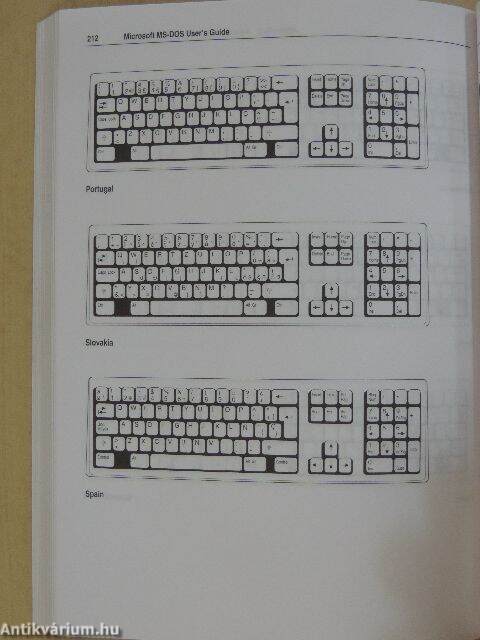
Appendix C Keyboard Layouts and Character Sets 207
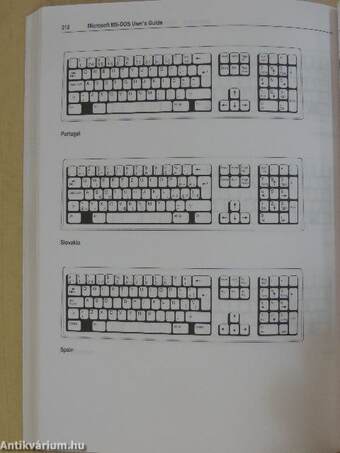
Keyboard Layouts 207
Using Keys That Have More Than Two Characters on Them 214
Creating Accented Characters on a Brazilian Keyboard 214
Character Set (Code Page) Tables 215
Appendix D Obtaining New Virus Signatures 223
Updating Your Virus Signatures 223
Appendix E Freeing Disk Space by Using DriveSpace 227
Getting Help 227
Setting Up DriveSpace 228
Using Express Setup 228
Using Custom Setup 230
Understanding Disk Compression 232
Compressed Volume Files and Host Drives 233
How DriveSpace Calculates Free Space on a Compressed Drive 234
Using DriveSpace to Manage Compressed Drives 235
Compressing Additional Drives 237
Compressing an Existing Drive 237
Creating a New Compressed Drive 238
Using DriveSpace with Floppy Disks 239
Compressing a Floppy Disk 239
Using a Compressed Floppy Disk 240
Getting Information About Compressed Drives 242
Understanding DriveSpace and Memory 243
Getting More Information About DriveSpace 244
Troubleshooting DriveSpace 244
Index 245
Coupon for the Resource Kit and Supplemental Disks
The Authorized Editions on MS-DOS from Microsoft Press
Megvásárolható példányok

Nincs megvásárolható példány
A könyv összes megrendelhető példánya elfogyott. Ha kívánja, előjegyezheti a könyvet, és amint a könyv egy újabb példánya elérhető lesz, értesítjük.

Előjegyzem