
1.155.932
kiadvánnyal nyújtjuk Magyarország legnagyobb antikvár könyv-kínálatát

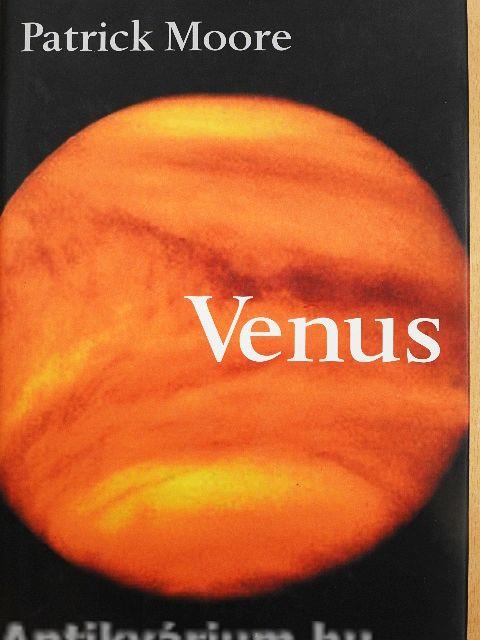
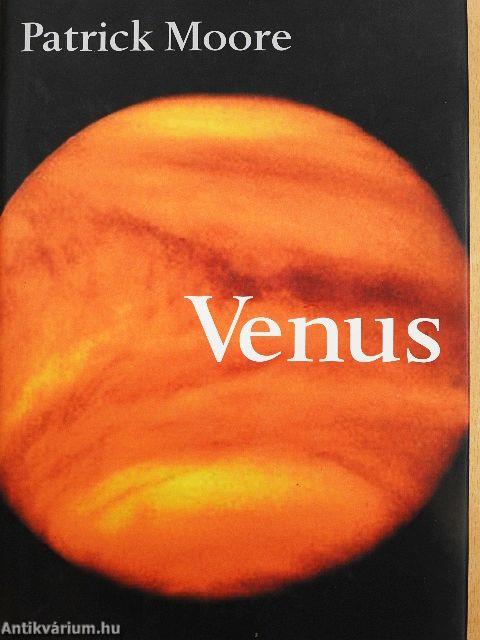
Venus
London
| Kiadó: | Cassell Illustrated |
|---|---|
| Kiadás helye: | London |
| Kiadás éve: | |
| Kötés típusa: | Varrott keménykötés |
| Oldalszám: | 191 oldal |
| Sorozatcím: | |
| Kötetszám: | |
| Nyelv: | Angol |
| Méret: | 24 cm x 17 cm |
| ISBN: | 0-304-36281-6 |
| Megjegyzés: | Színes és fekete-fehér fotókkal, illusztrációkkal. |
Értesítőt kérek a kiadóról
A beállítást mentettük,
naponta értesítjük a beérkező friss
kiadványokról
naponta értesítjük a beérkező friss
kiadványokról
A beállítást mentettük,
naponta értesítjük a beérkező friss
kiadványokról
naponta értesítjük a beérkező friss
kiadványokról
Előszó
Tovább
Fülszöveg
m
Tl^teMlEOiMniwrSfrPMHekBbm^ifaio.
re 1km'jemtl at the Skf»,
::fewewB-l*l«fceiB*e»e8emIila**eiids.
nilM, is « hostile eaviraeaieBt, an inferao wUk ¦
a aemehiag hot sniface, a fliicfc, choUag ' .
and eland eoner
atmosphoM of caAoBdiagdde and cloud cover : xich ia mtlphasle acid. The atmospheric ptessue. at th« surface is 92 tines that on EarOi. Veins is no place liDr Bflaa. ,
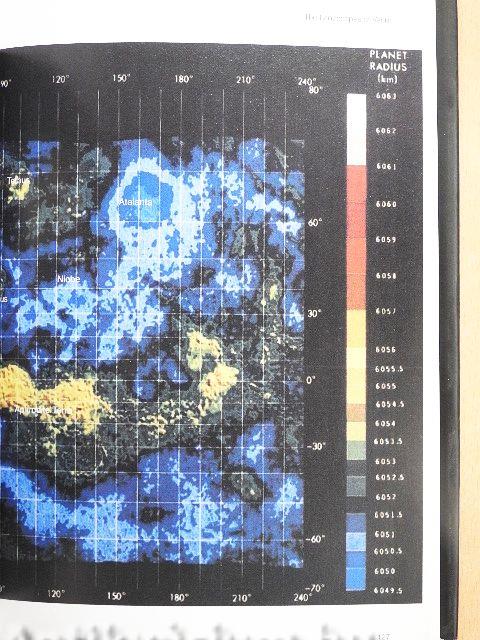
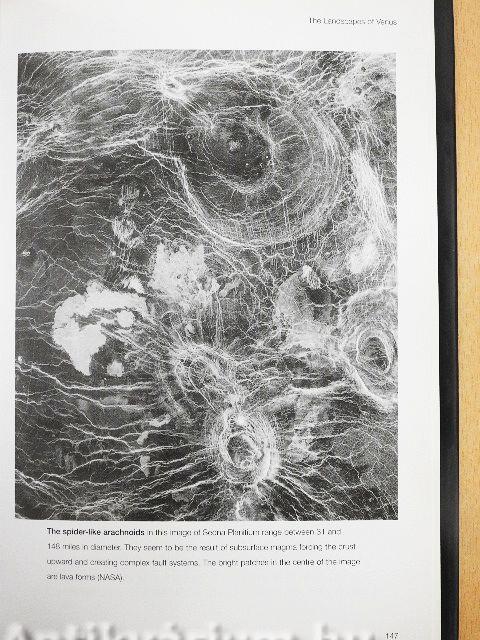
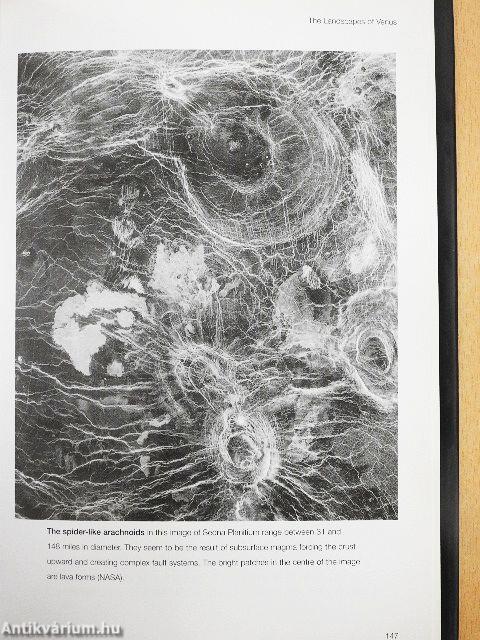
Seen through the telescope, the «wirliiig cloud • ^ that coven the planet ohscnxes the snzface completely. However, orbiting American and Russian spacecraft equipped with radar imaging systems have revealed a land of vast plains, high ^aks, impact craten, volcanoes and great lava I flows. The Russian Venera 9 and 10 spacecraft I actually went through the cloud to land on the surface, and sent back photographs of flat slabs of volcanic-like rock, before being consumed by the heat; for two hours Venera 13 sent back pictures from the surface.
g,: In his new book Sir Patrick explains how this hostile... Tovább
Fülszöveg
m
Tl^teMlEOiMniwrSfrPMHekBbm^ifaio.
re 1km'jemtl at the Skf»,
::fewewB-l*l«fceiB*e»e8emIila**eiids.
nilM, is « hostile eaviraeaieBt, an inferao wUk ¦
a aemehiag hot sniface, a fliicfc, choUag ' .
and eland eoner
atmosphoM of caAoBdiagdde and cloud cover : xich ia mtlphasle acid. The atmospheric ptessue. at th« surface is 92 tines that on EarOi. Veins is no place liDr Bflaa. ,
Seen through the telescope, the «wirliiig cloud • ^ that coven the planet ohscnxes the snzface completely. However, orbiting American and Russian spacecraft equipped with radar imaging systems have revealed a land of vast plains, high ^aks, impact craten, volcanoes and great lava I flows. The Russian Venera 9 and 10 spacecraft I actually went through the cloud to land on the surface, and sent back photographs of flat slabs of volcanic-like rock, before being consumed by the heat; for two hours Venera 13 sent back pictures from the surface.
g,: In his new book Sir Patrick explains how this hostile but beautiful planet evolved, and investigates our past and present knowledge of Venus. The earliest known observations were
f Babylonian; Venus was the 'Bright Torch of Heaven', the mother of the gods and the U personification of women. The Greeks named it after their goddess of beauty. The Maya, Aztecs and Inca all observed Venus, and of course our . r fascination with our near neighbour in space,
the brightest object in the sky after the Sun and ;;; - the Moon, continues today. This book introducei||' '^ the planet to readers looking to journey further into the mysteries of our solar system and is a fitting companion to Sir Patrick's earlier books on Mars and the Moon.
Sir Patrick Moore CBE FRS, Britain's best known astronomer, has over 50 years attracted and held a vast audience through his many books and television appearances. He has presented every edition of the The Sky at Night '?i-since it was first broadcast in April 1957, a world record in television, and to universal ^ ^^ acclaim won a Lifetime Achievement Award for ^ his services to television at the 2001 BAFTA Awards, presented to him by the astronaut Buzz % Aldrin. He is a Fellow and Past President of the Royal Astronomical Society^ was awarded the ^^ CBE in 1988 and his knighthood in 2000. An enthusiastic communicator, he has done more to popularise the study of astronomy than any J
other writer of his or subsequent generations.
m
•vi' -
I ?iAr.T-r/ifj.-J^'^i-'.si-J
r ¦r^i:'^
•¦J.' •«r-,-^'"* -v
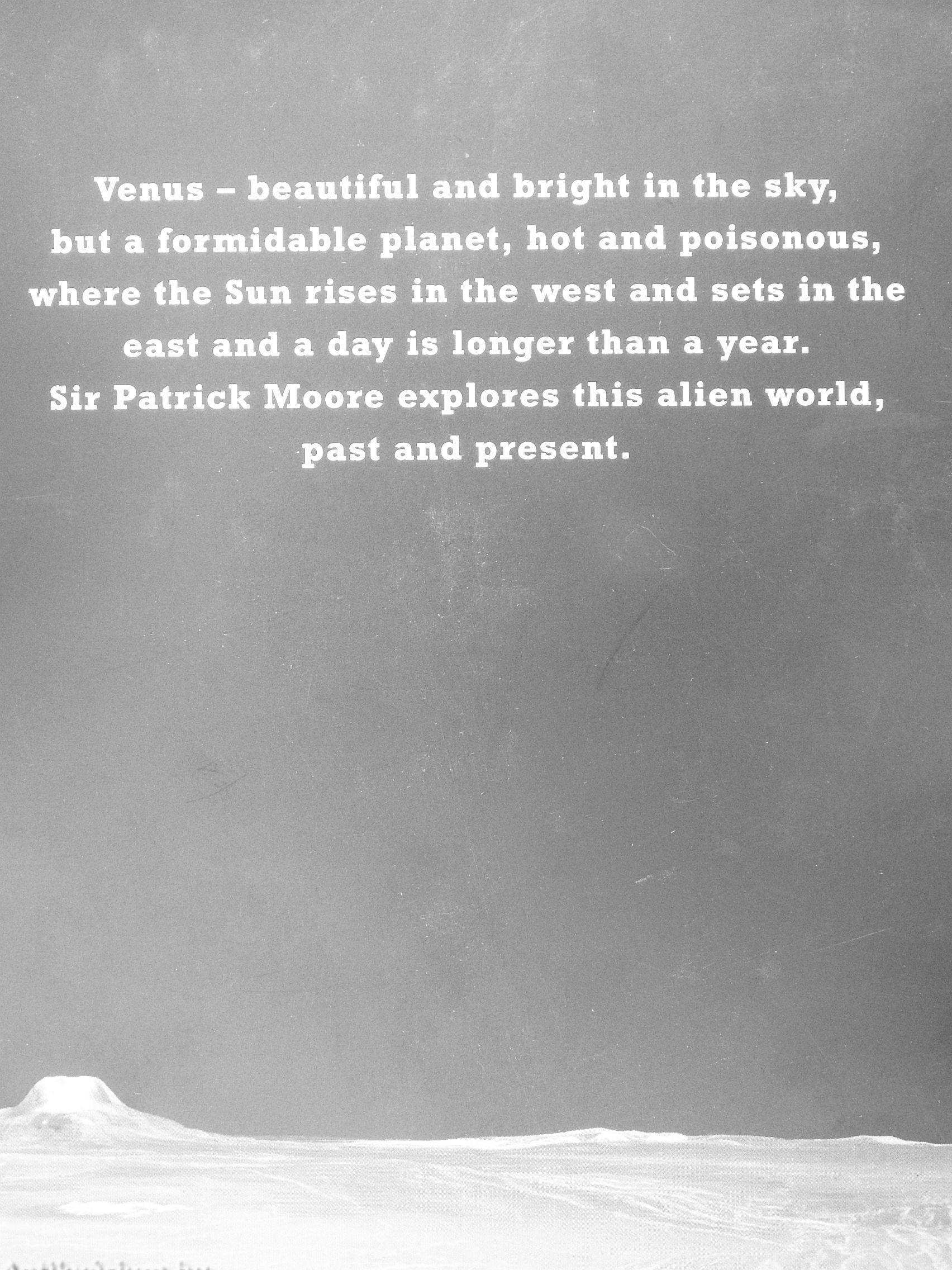
Venus - beautiful and bright in the sky,
but a formidablCp^dnet, hot and poisonous,
• ••-¦ ¦¦ . .¦ .
where the Sun rises in the west and sets in the east and a day is longer than a year. Sir Patrick Moore explores this alien world,
past and present.
y. ?»•k' -'^if ^"P--/*'
¦m.
m
Vissza

Patrick Moore
Patrick Moore műveinek az Antikvarium.hu-n kapható vagy előjegyezhető listáját itt tekintheti meg: Patrick Moore könyvek, művekMegvásárolható példányok
Nincs megvásárolható példány
A könyv összes megrendelhető példánya elfogyott. Ha kívánja, előjegyezheti a könyvet, és amint a könyv egy újabb példánya elérhető lesz, értesítjük.
 Folytatás Microsoft-tal