
1.142.771
kiadvánnyal nyújtjuk Magyarország legnagyobb antikvár könyv-kínálatát

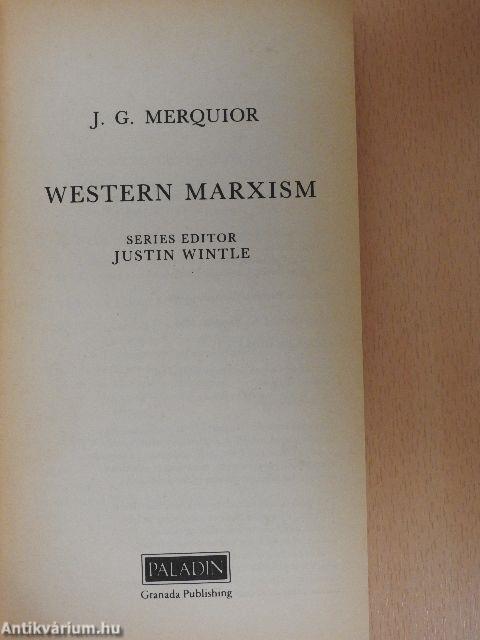
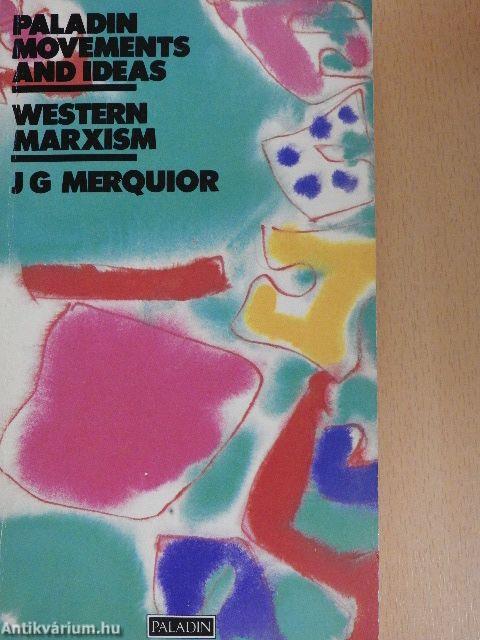
Western Marxism
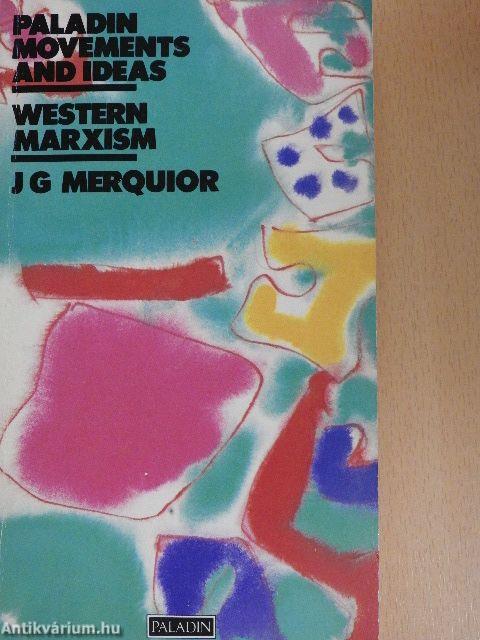
London
| Kiadó: | Paladin Books-Granada Publishing Ltd. |
|---|---|
| Kiadás helye: | London |
| Kiadás éve: | |
| Kötés típusa: | Ragasztott papírkötés |
| Oldalszám: | 247 oldal |
| Sorozatcím: | |
| Kötetszám: | |
| Nyelv: | Angol |
| Méret: | 18 cm x 11 cm |
| ISBN: | 0-586-08454-1 |
Értesítőt kérek a kiadóról
A beállítást mentettük,
naponta értesítjük a beérkező friss
kiadványokról
naponta értesítjük a beérkező friss
kiadványokról
A beállítást mentettük,
naponta értesítjük a beérkező friss
kiadványokról
naponta értesítjük a beérkező friss
kiadványokról
Előszó
Tovább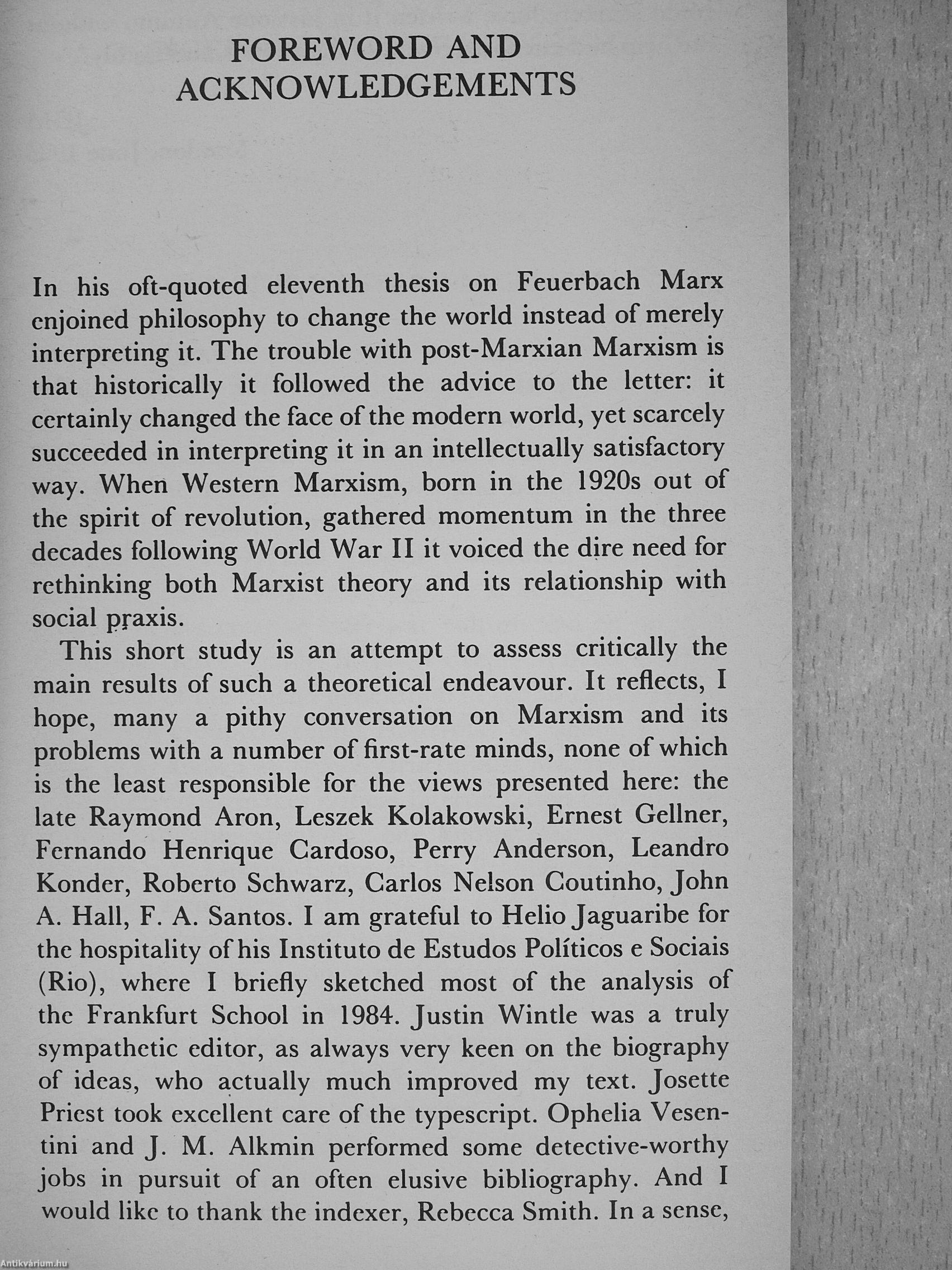
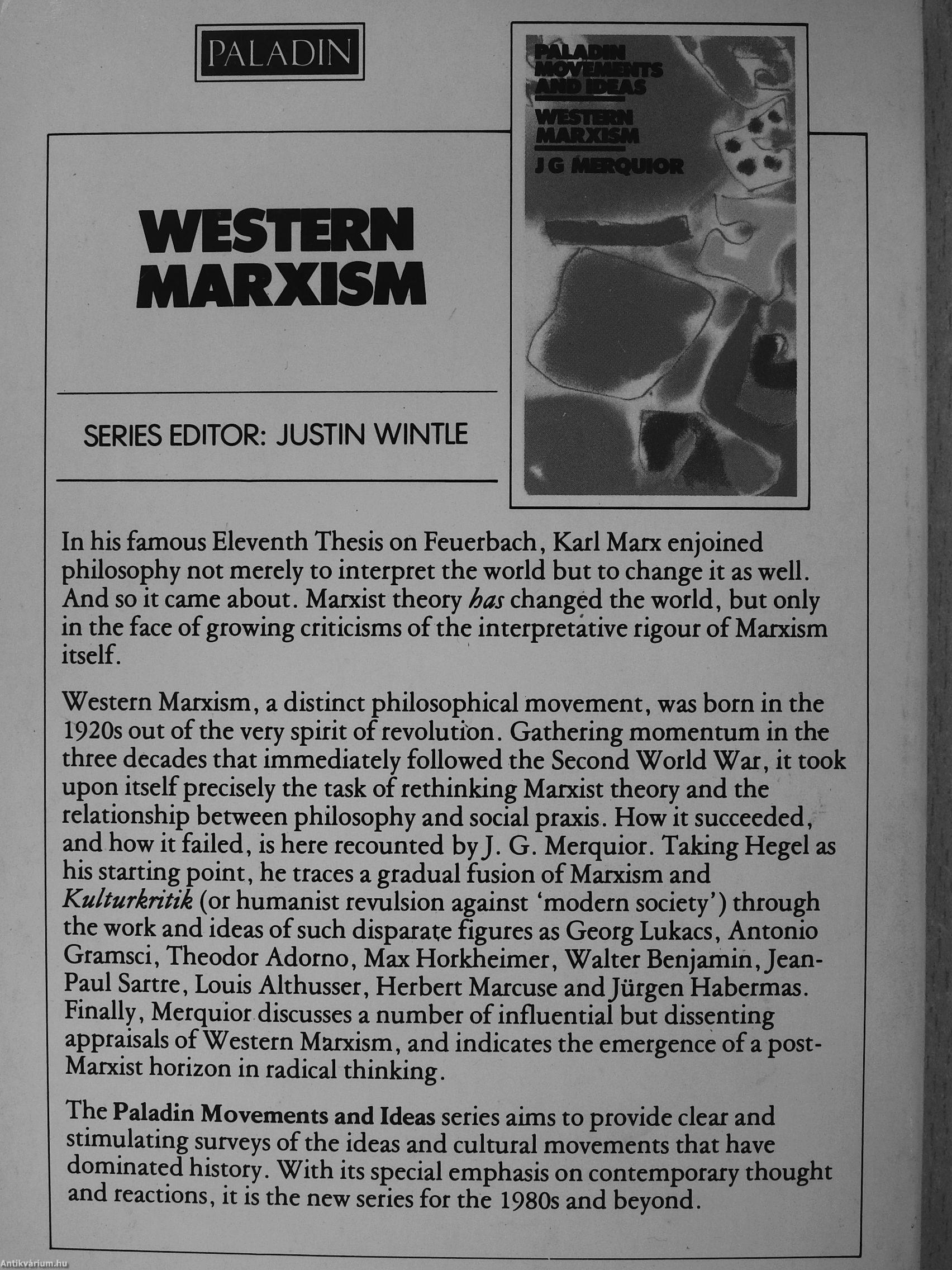
Fülszöveg
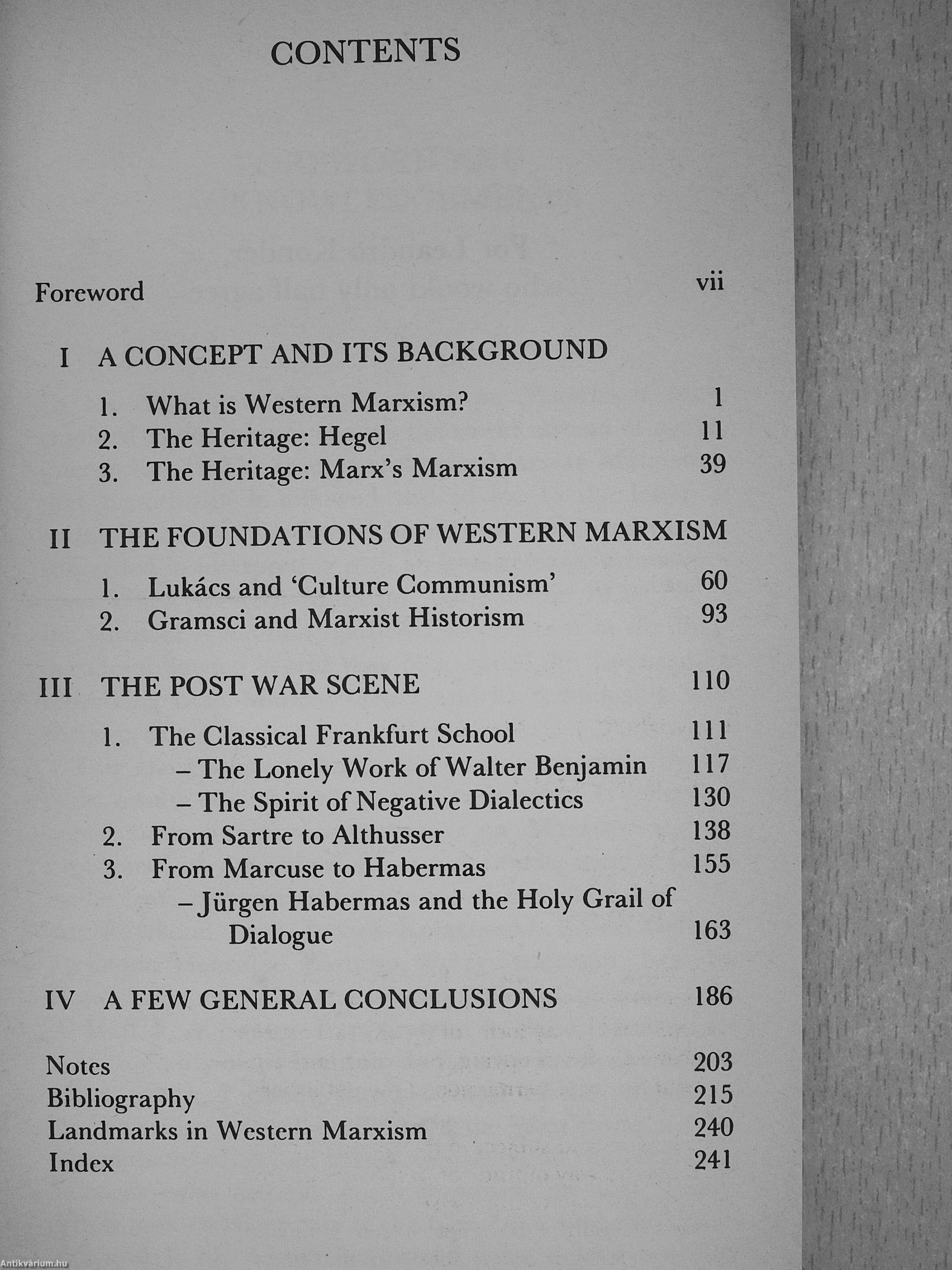
In his famous Eleventh Thesis on Feuerbach, Karl Marx enjoined philosophy not merely to interpret the world but to change it as well. And so it came about. Marxist theory has changed the world, but only in the face of growing criticisms of the interpretative rigour of Marxism itself.
Western Marxism, a distinct philosophical movement, was born in the 1920s out of the very spirit of revolution. Gathering momentum in the three decades that immediately followed the Second World War, it took upon itself precisely the task of rethinking Marxist theory and the relationship between philosophy and social praxis. How it succeeded, and how it failed, is here recounted by J. G. Merquior. Taking Hegel as his starting point, he traces a gradual fusion of Marxism and Kulturkritik (or humanist revulsion against 'modern society') through the work and ideas of such disparate figures as Georg Lukacs, Antonio Gramsci, Theodor Adorno, Max Horkheimer, Walter Benjamin, Jean-Paul Sartre, Louis... Tovább
Fülszöveg
In his famous Eleventh Thesis on Feuerbach, Karl Marx enjoined philosophy not merely to interpret the world but to change it as well. And so it came about. Marxist theory has changed the world, but only in the face of growing criticisms of the interpretative rigour of Marxism itself.
Western Marxism, a distinct philosophical movement, was born in the 1920s out of the very spirit of revolution. Gathering momentum in the three decades that immediately followed the Second World War, it took upon itself precisely the task of rethinking Marxist theory and the relationship between philosophy and social praxis. How it succeeded, and how it failed, is here recounted by J. G. Merquior. Taking Hegel as his starting point, he traces a gradual fusion of Marxism and Kulturkritik (or humanist revulsion against 'modern society') through the work and ideas of such disparate figures as Georg Lukacs, Antonio Gramsci, Theodor Adorno, Max Horkheimer, Walter Benjamin, Jean-Paul Sartre, Louis Althusser, Herbert Marcuse and Jürgen Habermas. Finally, Merquior discusses a number of influential but dissenting appraisals of Western Marxism, and indicates the emergence of a post-Marxist horizon in radical thinking.
The Paladin Movements and Ideas series aims to provide clear and stimulating surveys of the ideas and cultural movements that have dominated history. With its special emphasis on contemporary thought and reactions, it is the new series for the 1980s and beyond. Vissza
Témakörök
- Filozófia > Témaköre szerint > Ontológia (Lételmélet) > Dialektikus materializmus
- Filozófia > Témaköre szerint > Társadalomfilozófia > Történelmi materializmus
- Filozófia > Témaköre szerint > Filozófiatörténet > Összefoglalók
- Idegennyelv > Idegennyelvű könyvek > Angol > Filozófia > Témaköre szerint > Ontológia (Lételmélet) > Dialektikus materializmus
- Idegennyelv > Idegennyelvű könyvek > Angol > Filozófia > Témaköre szerint > Társadalomfilozófia > Történelmi materializmus
- Idegennyelv > Idegennyelvű könyvek > Angol > Filozófia > Témaköre szerint > Filozófiatörténet > Összefoglalók
- Filozófia > Témaköre szerint > Filozófiatörténet > Irányzatok
- Idegennyelv > Idegennyelvű könyvek > Angol > Filozófia > Témaköre szerint > Filozófiatörténet > Irányzatok
J. G. Merquior
J. G. Merquior műveinek az Antikvarium.hu-n kapható vagy előjegyezhető listáját itt tekintheti meg: J. G. Merquior könyvek, művekMegvásárolható példányok
Állapotfotók
Állapot:
Jó
3.880 ,-Ft
19
pont kapható
Kosárba
 Folytatás Microsoft-tal