
1.154.859
kiadvánnyal nyújtjuk Magyarország legnagyobb antikvár könyv-kínálatát

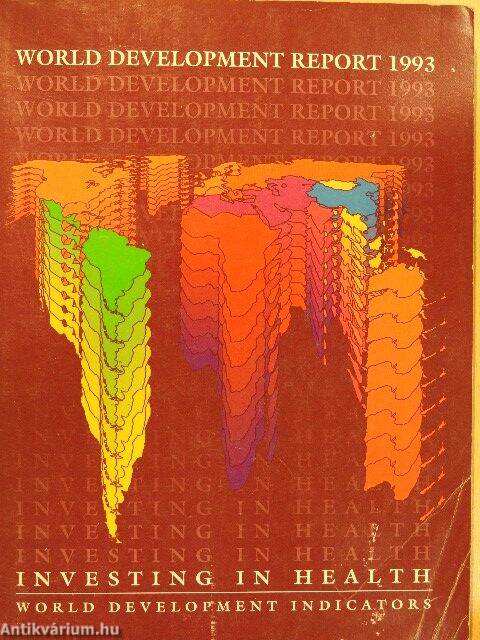
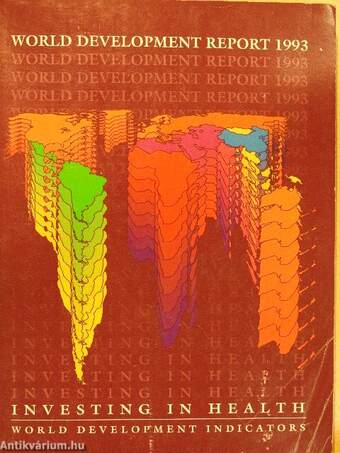
World Development Report 1993
Investing in Health
Oxford
| Kiadó: | Oxford University Press |
|---|---|
| Kiadás helye: | Oxford |
| Kiadás éve: | |
| Kötés típusa: | Ragasztott papírkötés |
| Oldalszám: | 329 oldal |
| Sorozatcím: | World Development Report |
| Kötetszám: | |
| Nyelv: | Angol |
| Méret: | 26 cm x 20 cm |
| ISBN: | 0-19-520890-0 |
| Megjegyzés: | Színes ábrákkal. |
Értesítőt kérek a kiadóról
Értesítőt kérek a sorozatról
A beállítást mentettük,
naponta értesítjük a beérkező friss
kiadványokról
naponta értesítjük a beérkező friss
kiadványokról
A beállítást mentettük,
naponta értesítjük a beérkező friss
kiadványokról
naponta értesítjük a beérkező friss
kiadványokról
Fülszöveg
f *
•1 ¦ % :
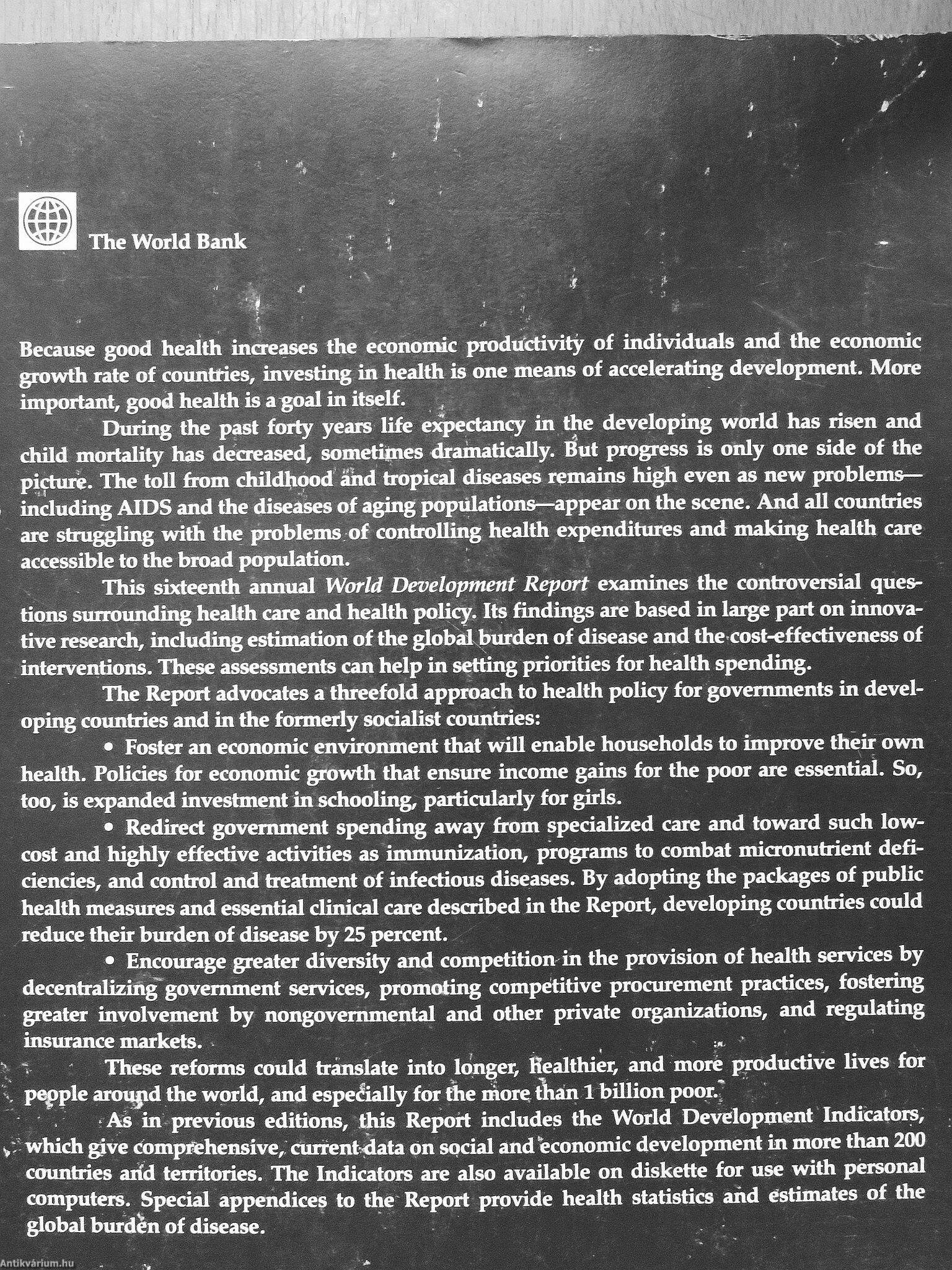
Because good health increases the economic productivity of individuals and the economic
growth rate of countries, investing in health is one means of accelerating development. More
important, good health is a goal in itself.
During the past forty years life expectancy in the developing world has risen and
child mortality has decreased, sometimes dramatically. But progress is only one side of the
picture. The toll from childhood and tropical diseases remains high even as new problems-
including AIDS and the diseases of aging populations—appear on the scene. And all countries
are struggling with the problems of controlling health expenditures and making health care
accessible to the broad population.
This sixteenth annual World Development Report examines the controversial ques-
tions surrounding health care and health policy. Its findings are based in large part on innova-
tive research, including estimation of the global burden of disease and the... Tovább
Fülszöveg
f *
•1 ¦ % :
Because good health increases the economic productivity of individuals and the economic
growth rate of countries, investing in health is one means of accelerating development. More
important, good health is a goal in itself.
During the past forty years life expectancy in the developing world has risen and
child mortality has decreased, sometimes dramatically. But progress is only one side of the
picture. The toll from childhood and tropical diseases remains high even as new problems-
including AIDS and the diseases of aging populations—appear on the scene. And all countries
are struggling with the problems of controlling health expenditures and making health care
accessible to the broad population.
This sixteenth annual World Development Report examines the controversial ques-
tions surrounding health care and health policy. Its findings are based in large part on innova-
tive research, including estimation of the global burden of disease and the cost-effectiveness of
interventions. These assessments can help in setting priorities for health spending.
The Report advocates a threefold approach to health policy for governments in devel-
oping countries and in the formerly socialist countries:
• Foster an economic environment that will enable households to improve their own
health. Policies for economic growth that ensure income gains for the poor are essential. So,
too, is expanded investment in schooling, particularly for girls.
• Redirect government spending away from specialized care and toward such low-
cost and highly effective activities as immunization, programs to combat micronutrient defi-
ciencies, and control and treatment of infectious diseases. By adopting the packages of public
health measures and essential clinical care described in the Report, developing countries could
reduce their burden of disease by 25 percent.
• Encourage greater diversity and competition in the provision of health services by
decentralizing^ government services, promoting competitive procurement practices, fostering
greater involvement by nongovernmental and other private organizations, and regulating
insurance markets.
j . » 11 !
s ~ These reforms could translate into longer, Healthier, and more productive lives for
\ pepple around the world, and especially for the more than 1 billion poor.*
As in previous editions, this Report includes the World Development Indicators,
>-• which give comprehensive, currentdata on social and economic development in more than 200
countries arid territories. The Indicators are also available on diskette for use with personal
computers. Special appendices to the Report provide health statistics and estimates of the
global burden of disease. Vissza
Témakörök
- Közgazdaságtan > Gazdaságpolitika
- Közgazdaságtan > Közgazdasági elméletek > Egyéb
- Idegennyelv > Idegennyelvű könyvek > Angol > Orvostudomány
- Idegennyelv > Idegennyelvű könyvek > Angol > Közgazdaságtan > Gazdaságpolitika
- Orvostudomány > Általános orvosi, egyéb > Egészségügy > Betegellátás
- Orvostudomány > Általános orvosi, egyéb > Idegennyelvű
- Orvostudomány > Orvosi idegennyelvű könyvek > Általános orvosi
- Szociológia > Szociálpolitika > Általában
- Idegennyelv > Idegennyelvű könyvek > Angol > Szociológia > Szociálpolitika > Általában
- Idegennyelv > Idegennyelvű könyvek > Angol > Közgazdaságtan > Közgazdasági elméletek > Egyéb
- Orvostudomány > Általános orvosi, egyéb > Egészségügy
Megvásárolható példányok
Állapotfotók






A borító enyhén töredezett, kopott, a lapélek foltosak.
Állapot:
Jó
7.300 Ft
3.650 ,-Ft 50
18
pont kapható
Kosárba
 Folytatás Microsoft-tal