Fülszöveg
Yesterday S
EINGINN^I
By LUKE FECK
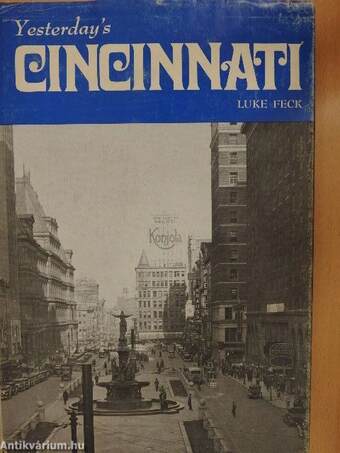
Cincinnati is, according to Winston Churchill, "the most beautiful of America's inland cities," and Longfellow called it the "Queen City of the West."
Today, Cincinnati is a hidden gem gleaming brightly in the Ohio River Valley, one of America's great undiscovered cities.
Is Cincinnati unique? Yesterday's Cincinnati helps to answer that question. The skyline is not awesome, the sturdy red bricks of early immigrants still house its people, its vistas of church spires may be matched elsewhere. But Cincinnati is different: The texture of quality, the unbroken thread of tradition weaves in and out of the fabric of life of the city.
It began in 1787 when trader Benjamin Stites chased a band of Indians into "the land between the Miamis"-the future site of Cincinnati. Stites was followed by soldiers of the Revolution looking for cheap, fertile land. Behind them came the flood of immigrants, at first mostly German, and mainly craftsmen. They gave...
Tovább
Fülszöveg
Yesterday S
EINGINN^I
By LUKE FECK
Cincinnati is, according to Winston Churchill, "the most beautiful of America's inland cities," and Longfellow called it the "Queen City of the West."
Today, Cincinnati is a hidden gem gleaming brightly in the Ohio River Valley, one of America's great undiscovered cities.
Is Cincinnati unique? Yesterday's Cincinnati helps to answer that question. The skyline is not awesome, the sturdy red bricks of early immigrants still house its people, its vistas of church spires may be matched elsewhere. But Cincinnati is different: The texture of quality, the unbroken thread of tradition weaves in and out of the fabric of life of the city.
It began in 1787 when trader Benjamin Stites chased a band of Indians into "the land between the Miamis"-the future site of Cincinnati. Stites was followed by soldiers of the Revolution looking for cheap, fertile land. Behind them came the flood of immigrants, at first mostly German, and mainly craftsmen. They gave the city its sturdy industrial base, its solid economic footing, its quest for quality.
The years following the Civil War saw the first flowering of the arts when Music Hall and the Art Museum were built, the May Festival was first sung-dynamic cultural forces that still invigorate the town.
By 1900, Cincinnati had matured. Pig blood no longer flooded the city's streets, and steamboats no longer scrambled to land at the levee, but the town was too muscle-bound to be genteel, too bright to be crude, too busy to be bothered by the political corruption that gripped it. Outlying areas were expanding, a suburban safety valve for the crowded Basin. Trollies made habitable the hillsides where only inclines clambered up the city's "Seven Hills."
By the mid-twenties, Cincinnati had become one of the country's best-governed cities, proud of that indefinable something that makes Cincinnati simply, superbly Cincinnati.
Vissza 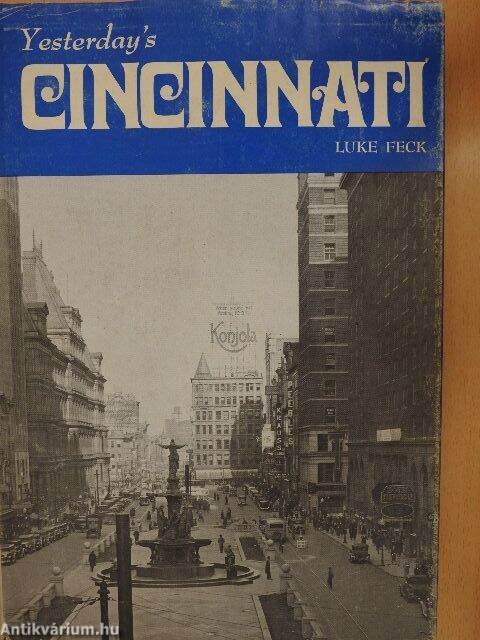



 Folytatás Microsoft-tal